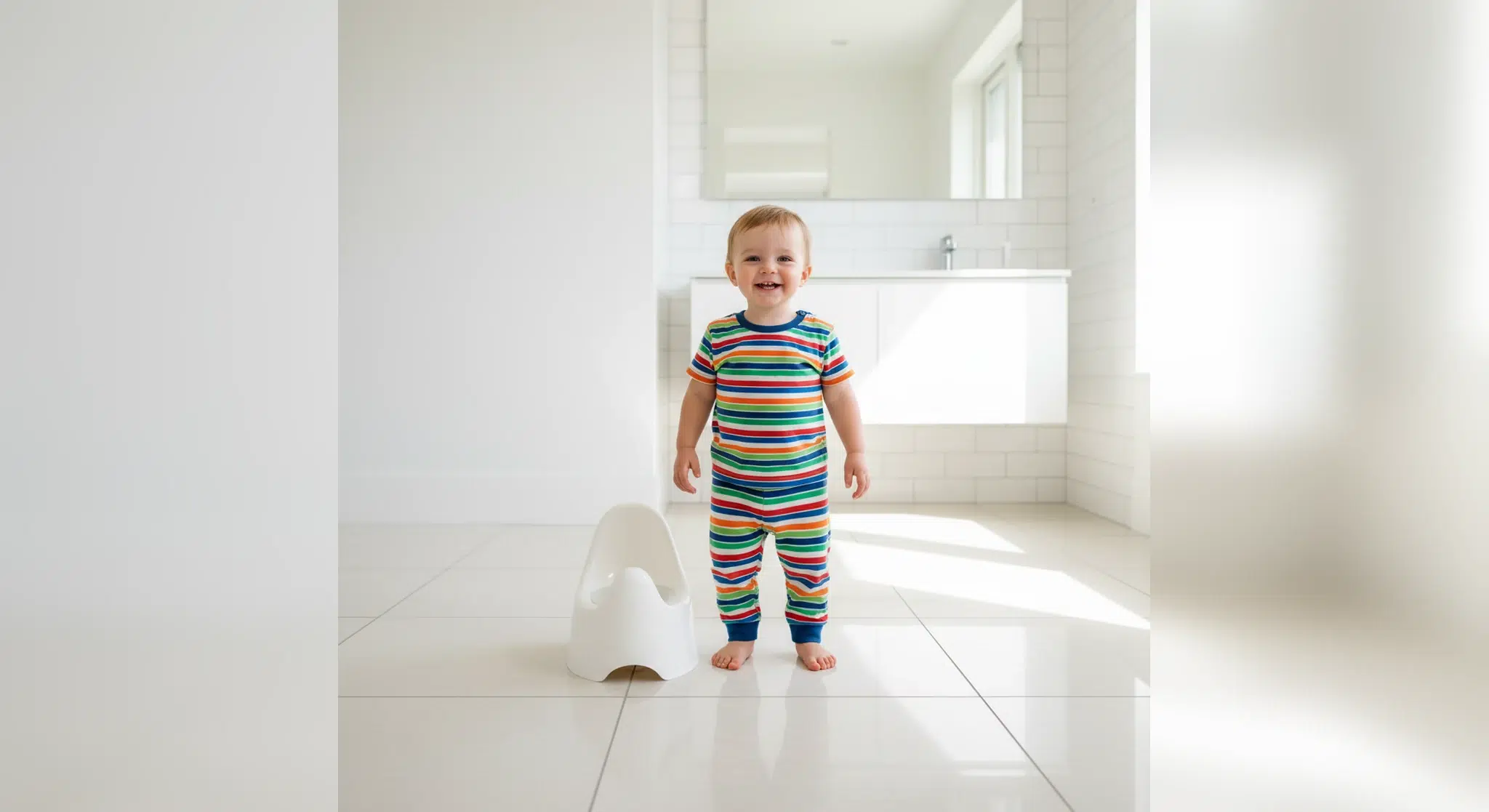
Potty training goes best when it starts from readiness rather than a calendar. A child who is showing the signs will learn far more smoothly than one who is pushed before their body and brain are ready, no matter how badly a parent wants to be done with diapers.
The good news is that potty training is less about clever tricks and more about timing, consistency, and a calm attitude. When you follow your child’s cues, keep the mood pressure free, and treat accidents as part of learning, most kids get there without a battle.
Here is how to know your child is ready, a simple step by step approach that works, how to handle accidents and setbacks, and the common mistakes that turn potty training into a struggle.
Key Takeaways
Most children show readiness signs between 18 and 30 months, but the exact timing varies widely and later is not a problem.
Readiness matters more than age: look for staying dry longer, interest in the toilet, and the ability to follow simple directions.
Keep it low pressure. Praise effort, dress your child in easy clothes, and offer regular chances to sit.
Accidents are normal and expected. Respond calmly, since punishment and pressure tend to backfire.
Nighttime dryness comes later than daytime, often months or years afterward, and is largely out of a child’s control.
Table of Contents
Signs Your Child Is Ready
Readiness is a mix of physical, cognitive, and emotional signs, and you generally want to see several before you begin. Physically, your child stays dry for around two hours or wakes dry from naps, and has predictable, formed bowel movements. Cognitively, they can follow simple instructions, and they show awareness that they are going, sometimes by hiding or telling you.
Emotionally, they show interest in the toilet or in wearing underwear, they can pull pants up and down with some help, and they dislike the feeling of a dirty diaper. Most children reach this cluster of signs somewhere between 18 and 30 months, with many closer to two and a half. Girls often show readiness a little earlier than boys, but the range is wide and completely normal either way.
How to Start Potty Training
Set the stage before the first sit. Get a child sized potty or a seat reducer, let your child pick out underwear, and read a potty book or let them watch how it works so the idea feels familiar and positive. Choose a stretch of time when life is relatively calm, without a move, a new sibling, or travel in the immediate mix.
Then keep it simple and consistent. Dress your child in clothes that are easy to pull down, offer regular chances to sit, such as after waking, before and after meals, and before outings, and stay nearby and encouraging. Teach the routine fully, including wiping, flushing, and washing hands, so the whole sequence becomes a habit rather than a series of reminders.
Struggling with your baby’s sleep?
A personalized plan meets your baby where they are, at every age and stage.
Accidents are not setbacks, they are how children learn, and every child has plenty of them. When one happens, keep your reaction neutral and matter of fact: help your child change, say something simple like next time we will try to get to the potty, and move on. Shaming or punishing accidents tends to increase anxiety and can actually slow progress or lead to withholding.
Catch and celebrate the wins instead. Genuine, specific praise for trying and for successes does far more than pressure. Keep a spare change of clothes handy when you are out, and expect more accidents when your child is engrossed in play, since holding it is still a new skill that competes with everything else going on.
When Potty Training Stalls
It is common for progress to stop and start, and a stall is rarely a sign that something is wrong. Stress is a frequent culprit, so a new sibling, a move, starting daycare, or any big change can trigger a temporary regression. In most cases the best response is to ease off the pressure, keep offering low key opportunities, and let things settle rather than pushing harder.
Watch for constipation, which is one of the most common hidden reasons potty training goes sideways. If bowel movements are hard, painful, or infrequent, a child may start holding, which snowballs into more discomfort and avoidance. Address constipation with your pediatrician, and consider pausing formal training for a few weeks if your child is genuinely resistant, then trying again when they seem more ready.
Daytime Versus Nighttime
Daytime dryness comes first, and it is the part most parents mean when they say potty training. Nighttime dryness is a separate milestone that depends on physical maturity, including how much urine the bladder can hold overnight and hormonal signals that reduce nighttime production, and it is largely outside a child’s control.
It is completely normal for a child to be reliably dry during the day for months, or even a couple of years, before they are dry overnight. Keep using a diaper or training pant at night without worry until dry nights start happening on their own. Our guide to nighttime potty training covers that later stage, including when bedwetting is worth discussing with your doctor.
Common Mistakes to Avoid
The biggest mistakes almost all come back to pressure and timing. Starting before your child shows readiness, turning the potty into a source of conflict, punishing accidents, or comparing your child to a friend’s earlier success all tend to backfire and can extend the whole process. Potty training is one of the first areas where a child has real control over their own body, so a power struggle is a fight you cannot win.
Aim instead for calm, consistent, and connected, which is the same balanced approach that helps in parenting more broadly. Follow your child’s readiness, keep the tone light, celebrate effort, and trust that nearly every child gets there. If your child is well past three and a half and showing no interest or progress, or if you have concerns about pain, constipation, or development, check in with your pediatrician.
Frequently Asked Questions
At what age should you start potty training?
Most children show readiness signs between 18 and 30 months, with many closer to two and a half. Readiness matters more than a specific age, so look for signs like staying dry for a couple of hours, interest in the toilet, and the ability to follow simple directions rather than starting on a set birthday.
What are the signs a child is ready to potty train?
Key signs include staying dry for about two hours or after naps, predictable bowel movements, following simple instructions, showing interest in the toilet or underwear, being able to pull pants up and down, and disliking a dirty diaper. Seeing several of these together is a better guide than age alone.
How long does potty training take?
It varies a lot. Some children largely get daytime training in a few days, while others take several weeks or months of practice with plenty of accidents. Staying calm and consistent, and following your child’s readiness, tends to make it faster than pushing before they are ready.
Why is my potty trained child having accidents again?
Regressions are common and usually tied to stress or change, such as a new sibling, a move, or starting daycare, or to constipation. Ease off the pressure, keep offering low key chances to go, address any constipation with your pediatrician, and dryness usually returns as things settle.