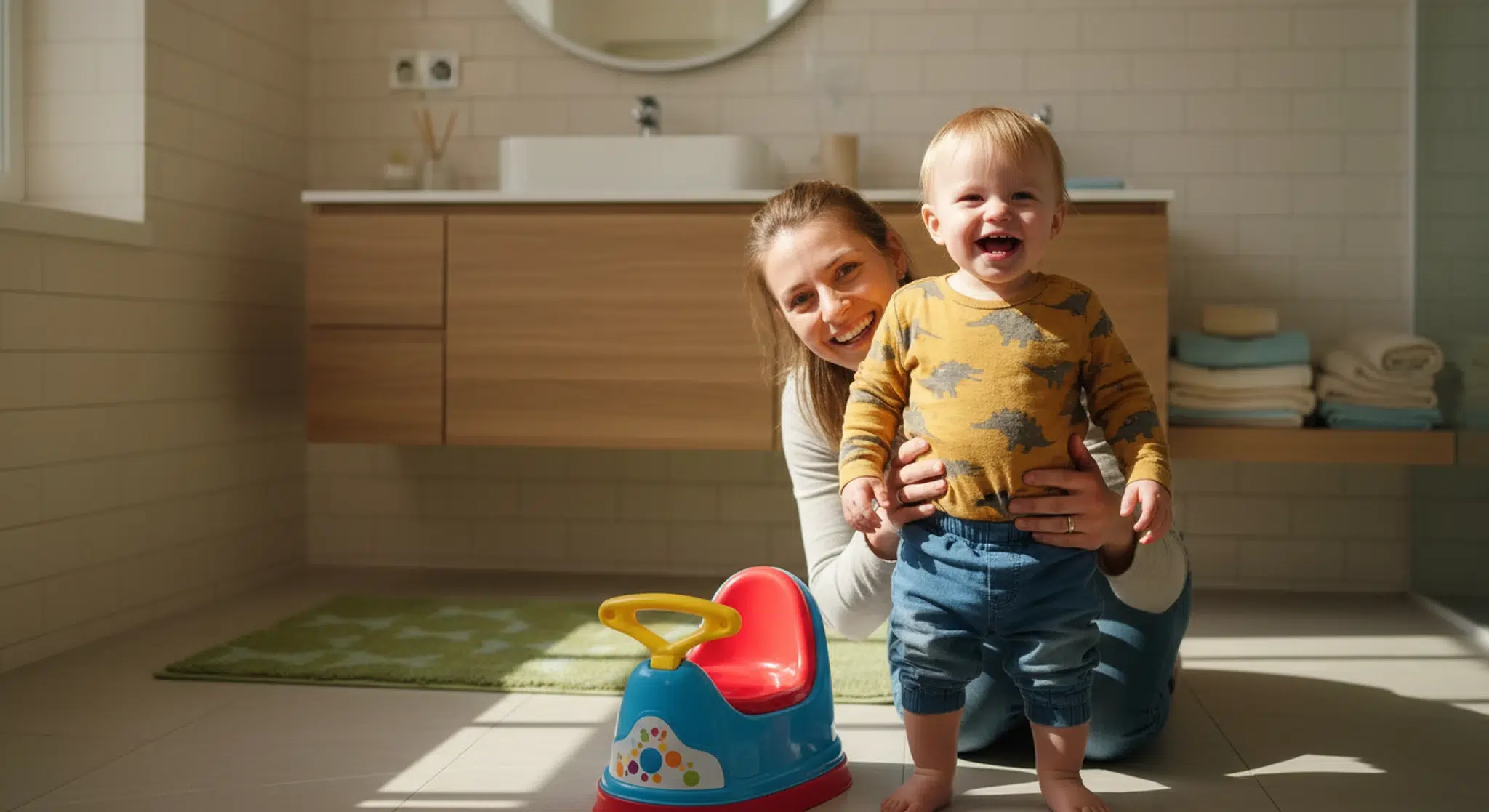
The best time to start potty training is when your child shows the signs of readiness, usually between 18 months and 3 years, not when they reach a certain age. This guide covers the readiness signs to watch for, the best age to begin, and how to start without turning the bathroom into a battle.
Almost every parent asks the same question: when should we start potty training? The honest answer is that it depends far more on your individual child than on their birthday. A child who is physically and emotionally ready trains quickly and calmly, while a child pushed to start too soon often takes longer and grows frustrated.
Below we walk through the specific readiness signs pediatricians look for, the typical age window most children fall into, the red flags that mean you should wait, and exactly how to begin once the time is right. Follow your child’s cues over any calendar, and the whole process gets easier.
Key Takeaways
Start when your child shows readiness signs, not at a fixed age; most are ready between 18 months and 3 years.
Look for a cluster of physical, cognitive, and behavioral signs before you begin.
Girls often show readiness slightly before boys, but averages are not deadlines.
Starting too early usually means training takes longer, not shorter.
Nighttime dryness is a separate, later milestone that cannot be trained on demand.
Table of Contents
The Short Answer: Readiness, Not a Birthday
Most children show the first signs of potty training readiness between 18 and 24 months, but plenty are not truly ready until they are closer to 3, and a smaller group is ready a little earlier. The American Academy of Pediatrics is clear on this point: the right time to start is when your child shows the signs of readiness, not when they hit a particular age. Starting because a relative, a daycare, or a calendar says so, before the child is physically and emotionally ready, is the single most common reason potty training stalls.
Girls, on average, tend to show readiness a month or two before boys, and children who have older siblings to watch sometimes catch on sooner. But averages are not deadlines. A child who trains at 3.5 is not behind, and a child who trains at 2 is not gifted. What matters is that you begin when the readiness signs line up, because a ready child trains faster, with fewer accidents and far less frustration for everyone.
The Signs Your Child Is Ready to Potty Train
Readiness shows up in three areas at once: the body, the mind, and behavior. You do not need every single sign, but you want to see a cluster from each group before you start. Here is what to watch for.
Physical signs. Your child stays dry for at least two hours at a time or wakes up dry from naps, which means the bladder is developing the capacity to hold. They have regular, predictable bowel movements. They can walk to the bathroom and can pull their pants up and down with a little help.
Cognitive and language signs. Your child can follow simple one and two step instructions, understands words for the bathroom like potty, pee, and poop, and can tell you, with words, signs, or a clear gesture, that they need to go or have just gone. Being able to communicate the need is one of the most important predictors of a smooth process.
Behavioral signs. Your child shows interest in the toilet or in watching family members use it, wants to be changed promptly when wet or soiled, hides or goes to a specific spot to poop, and shows a general push toward independence such as wanting to do things themselves. When you see several of these together, readiness has usually arrived.
Stays dry for two or more hours, or wakes dry from naps
Has predictable, formed bowel movements
Can pull pants up and down and sit on a potty
Follows simple instructions and knows the potty words
Tells you before or right after they pee or poop
Shows interest in the toilet and dislikes a dirty diaper
Wants to do things on their own
Signs Your Child Is Not Ready Yet
Just as important as the green lights are the red ones. Pushing ahead before a child is ready almost always backfires, turning the bathroom into a battleground and slowing everything down. Hold off, or pause and try again in a few weeks, if you notice any of the following.
They cannot stay dry for more than an hour and soak through frequently
They show no interest in the potty and resist sitting on it
They cannot tell you they are wet, dirty, or need to go
They are in the middle of a big life change, such as a new sibling, a move, or starting daycare
Every attempt turns into a power struggle or tears
There is no prize for training first, and starting early does not mean finishing early. Research and pediatric experience both show that children who start before they are ready often take longer to fully train than children who start a few months later when the readiness signs are all present.
What Is the Best Age to Potty Train?
If you want a window rather than a single number, most families find the sweet spot between 2 and 3 years old, with a large share of children fully daytime trained by around age 3. By age 4, the great majority of children are reliably using the toilet during the day. Nighttime dryness is a separate, later milestone that depends on a hormone and a bladder that mature on their own schedule, so wetting the bed at night well into the preschool and early school years is normal and not something you train away.
Age
What Is Typical
What to Do
12–18 months
Rarely ready; bladder still immature
Read potty books, let them watch, no pressure
18–24 months
Some show early readiness signs
Introduce a potty, watch for the readiness cluster
2–3 years
The most common window to start and succeed
Begin day training once signs line up
3–4 years
Most are daytime trained
Focus on consistency and public restrooms
4–6 years
Daytime is reliable; night may still lag
Be patient with nighttime; see a doctor if concerned
Typical potty training timeline. Every child is different, so follow readiness signs over the calendar.
Wondering whether your little one even counts as a toddler yet? Our guide on the toddler age range breaks down the stages so you know what is developmentally reasonable to expect.
How to Start Once Your Child Is Ready
When the signs are there, set yourself up for success rather than rushing in. Pick a stretch of a few calm days without travel or major disruptions, buy a potty chair or a seat reducer, and let your child help choose it so they feel ownership. Dress them in clothes that come off easily, and plan to be home and relaxed for the first few days.
Start by having your child sit on the potty, clothed at first, at natural times like after waking and about 20 to 30 minutes after meals when the bowel is most active. Praise every attempt, not just the successes, and stay completely calm about accidents, because accidents are part of learning and a frustrated reaction can set the whole process back. Keep the tone light, celebrate small wins, and let your child feel in control. Consistency and patience beat any single method.
Big milestones are easier after a good night of sleep.
If naps or bedtime are a struggle, our free two-minute quiz builds a gentle, personalized plan.
Different children and different families do better with different approaches, from a relaxed child-led pace to a focused few-day method. Once you have started, our step-by-step guide on how to potty train walks through the day-to-day, and we have tailored tips for potty training boys and potty training girls.
Common Potty Training Challenges
Even a well-timed start hits bumps, and knowing they are normal keeps you from panicking. Accidents will happen for weeks or even months, especially when a child is absorbed in play. Some children train easily for pee but hold their poop, which is common and usually resolves with patience, extra fiber and fluids, and never forcing them to sit. Many fully trained children also have a spell of accidents after a stressful event, an illness, or a new sibling.
That backslide has a name and it is extremely common. If your child was doing well and suddenly starts having accidents again, our guide on potty training regression explains why it happens and how to respond without losing progress. And when daytime is solid but the bed is still wet, our guide on nighttime potty training covers what is normal and what actually helps, since night dryness cannot be rushed. For more day-to-day strategies, see our potty training tips for toddlers.
When to Talk to Your Pediatrician
Potty training is developmental, so there is a wide normal range, but a few situations are worth a conversation with your child’s doctor. Reach out if your child is showing no interest and no readiness signs by around age 3, if training that was going well has completely fallen apart for more than a few weeks, if your child seems to feel pain when urinating or passing a stool, or if hard, painful stools and stool withholding become a pattern, since constipation is a leading and very treatable cause of potty training trouble.
It is also worth mentioning that sleep and toilet learning are connected in both directions. An overtired, dysregulated toddler has a much harder time tuning in to body signals and staying patient with a new skill, and the disrupted routines of a training week can rattle sleep. A predictable, well-rested day gives your child the calm and focus that make potty learning click, which is one more reason to protect naps and a consistent bedtime while you train.
Frequently Asked Questions
What is the best age to start potty training?
Most children are ready to begin potty training between 18 months and 3 years old, with the 2 to 3 year window being the most common time to start and succeed. The American Academy of Pediatrics recommends starting based on your child’s readiness signs rather than a specific age. A ready child trains faster and with fewer accidents, so watching for the signs matters more than the number on the calendar.
What are the signs a child is ready to potty train?
Readiness shows up in three areas. Physically, your child stays dry for two or more hours, has regular bowel movements, and can pull pants up and down. Cognitively, they follow simple instructions, know the potty words, and can tell you they need to go. Behaviorally, they show interest in the toilet, dislike a dirty diaper, and want to be independent. You want to see a cluster from all three groups before you start.
Is it bad to start potty training too early?
Starting before your child is ready usually backfires. Children pushed to train before the readiness signs appear often take longer to fully train, have more accidents, and are more likely to develop resistance or stool withholding. There is no advantage to training first, and starting a few months later when your child is truly ready almost always leads to a faster, calmer process.
Do boys and girls potty train at different ages?
On average, girls tend to show readiness signs a month or two before boys and are often trained slightly earlier, but the difference is small and the range for both is wide. Some boys train before some girls. Rather than comparing to a sibling or a friend, watch your individual child’s readiness signs, which are the same for both boys and girls.
Why is my potty trained child having accidents again?
A return of accidents after successful training is called regression and it is very common. It is usually triggered by a change or stress, such as a new sibling, a move, starting daycare, or an illness, and it is not a sign of failure. Stay calm, avoid punishment, and gently return to your routine. It typically resolves within a few weeks as your child settles.
Playful days, peaceful nights.
Betteroo builds a personalized sleep plan for your child. Take the free two-minute quiz to get started.