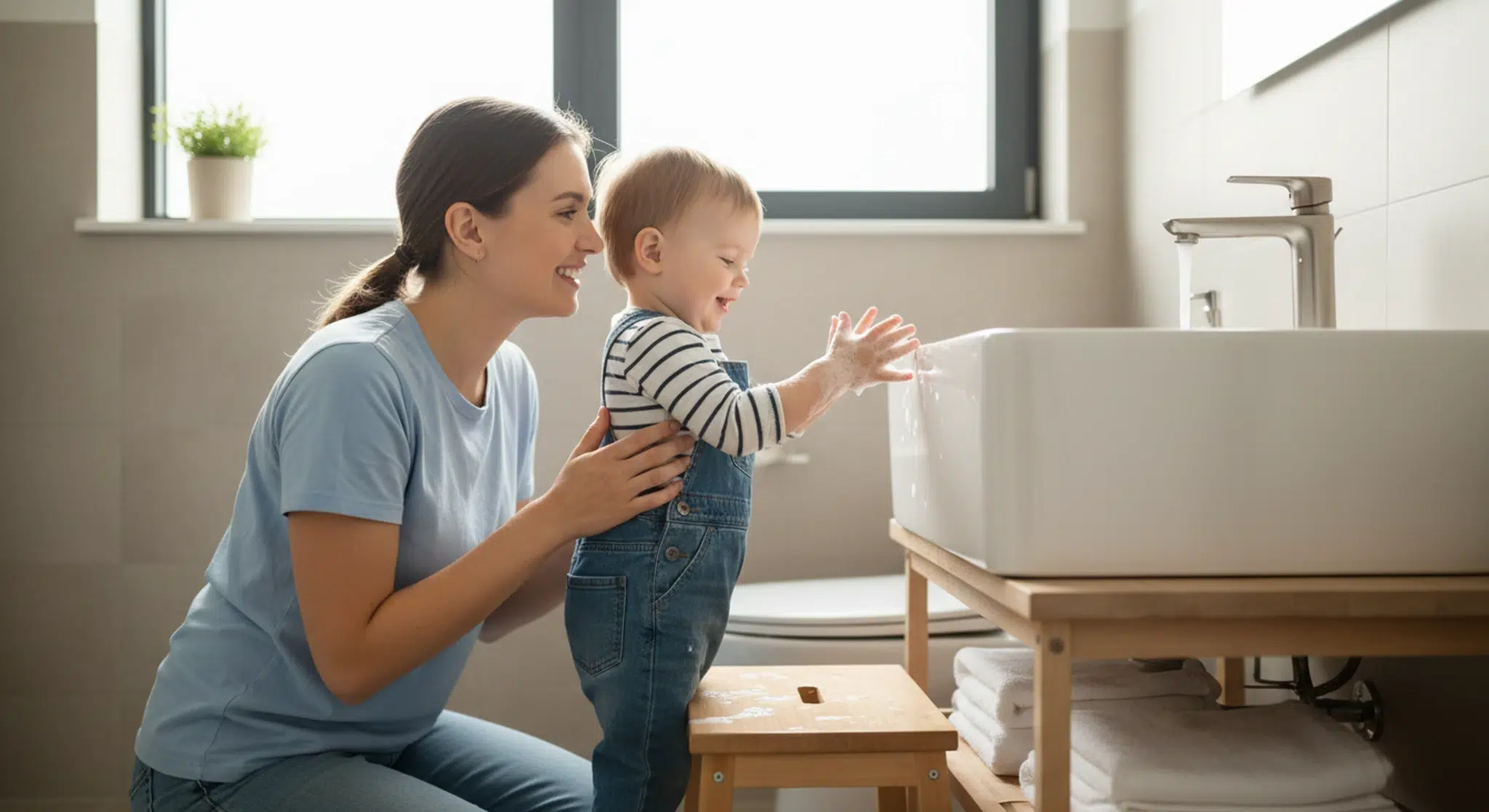
3 day potty training is an intensive, diaper-free weekend at home where you prompt your child to sit on the potty every 20 minutes or so, praise every try and handle accidents calmly; it can kickstart potty learning in a ready child, but evidence is limited and most kids still need weeks of practice.
You have probably heard friends swear by 3 day potty training: clear the calendar, ditch the diapers and be done by Monday. Some families see a big leap in a long weekend. Others find it a helpful start rather than the finish line.
Here is how the method works, how to tell if your child is ready, what to do on each day, and what the research really shows.
Key Takeaways
Start only when your child shows several readiness signs; ages vary widely and up to 4 is normal.
The method uses diaper-free awake time, frequent timed potty sits and lots of praise.
Never scold or shame; accidents are part of learning.
Naps and nights stay in diapers for now; night dryness comes later.
Evidence is limited and no method is proven best, so treat 3 days as a start, not a guarantee.
As an Amazon Associate, Betteroo earns from qualifying purchases.
Table of Contents
What Is 3 Day Potty Training?
Quick Answer
3 day potty training is an intensive, at-home approach: you clear your schedule for three days, take your child out of diapers while they are awake, sit them on the potty on a timer (Cleveland Clinic describes roughly every 20 minutes), praise every try, and clean up accidents calmly. It can kickstart potty learning in a ready child, but it is not a guarantee: expect reminders and accidents for weeks, and diapers for naps and nights.
Short, intensive training is not new. In 1973, psychologists Richard Foxx and Nathan Azrin described a “rapid method” in the journal Behaviour Research and Therapy: all 34 children in their study, who had been having toilet training problems, were trained in an average of about 4 hours. A 2019 American Family Physician review describes the related Azrin and Foxx approach, developed in 1974, as a one-day method based on operant conditioning.
Today’s “3 day” or “naked” potty training is a looser, gentler cousin. Cleveland Clinic calls it “an intensive three-day process where potty training is the only thing on the agenda.” Your child stays bare from the waist down while awake, and you watch closely so you can get them to the potty fast.
3 day (intensive) method
Gradual, child-led approach
Pace
A focused burst over a long weekend
Weeks to months, following your child’s cues
Diapers while awake
Off from the start
Phased out over time
Potty prompts
On a timer, very frequent
When your child shows the urge, plus routine times
Best fit
A ready child and a clear calendar
Any ready child, busy households
How the 3 day potty training method compares with a gradual approach.
Readiness matters more than any method. The American Academy of Pediatrics (AAP), on HealthyChildren.org, says children generally show signs of bladder and bowel control between 18 and 24 months, and that the average age toilet training begins in the United States is between 2 and 3 years. MedlinePlus (National Library of Medicine) says most children start to show readiness signs between ages 18 and 30 months. A Cleveland Clinic pediatrician adds that “upwards of 4 is still very normal.”
Look for several of these AAP readiness signs first:
Stays dry for at least two hours during the day, or wakes up dry after naps.
Shows that a pee or poop is coming: grunting, freezing, squatting or hiding.
Follows simple instructions.
Walks to and from the bathroom and can help pull pants down.
Dislikes wet diapers and wants to be changed.
Asks to use the potty or toilet, or asks for “big-kid” underwear.
A child who checks most boxes is a good candidate; one who checks one or two is better served by waiting or a slower start. Our guide on when to start potty training goes deeper, and our 2 year old milestones page shows what else is developing now.
Cleveland Clinic cautions that pushing too early can backfire: a child who cannot yet stop and get to the bathroom may start holding, which can lead to urinary tract infections or constipation.
How to Prepare: Your Weekend Checklist
Use the week before to set up:
Pick the right three days: No travel or big events. Cleveland Clinic advises against starting soon after a move, a new baby, a separation or a vacation.
Clear the calendar: Cleveland Clinic recommends having at least one caregiver home the whole time and limiting visitors. Plan easy meals ahead.
Choose a potty setup: A child-sized potty or a seat on the regular toilet both work; add a step stool for the big toilet.
Gather supplies: Underwear for after the method, spare clothes, cleaning cloths and a timer (your phone works).
Talk about it: Read a simple potty picture book and explain the plan: “Saturday, the diapers go away and we use the potty.”
Plan quiet activities: Puzzles, play dough and books near the potty make sits easy.
Day 1: A Sample Schedule
This sample follows the routine Cleveland Clinic describes: a timer about every 20 minutes, sits of two or three minutes, and about an hour on the timer after a success. If nothing happens, sitting still counts as progress.
Time
What to do
Tips
Wake up
Take off the overnight diaper and head straight to the potty.
Upbeat and matter-of-fact.
Breakfast
Offer drinks as usual and stay close by.
Keep your child bare from the waist down or in just a shirt.
Every 20 minutes
Timer goes off; sit for 2 to 3 minutes.
A short book or song.
After a success
Praise, wash hands, reset the timer to about 1 hour.
Name it: “You felt it and peed in the potty.”
Accident
Calmly say “pee goes in the potty,” go finish there, clean up together.
No scolding or shaming.
Nap
Diaper or pull-up for the nap; potty right before and right after.
Cleveland Clinic notes kids still need diapers for naps and bedtime.
Bedtime
Potty as part of the routine, then a diaper or pull-up for the night.
Day 1 is the most hands-on day. Watch for the pee dance, a pause in play or crossed legs, and guide your child to the potty calmly. Accidents are expected: the goal is to connect the feeling of needing to go with the potty.
Big days go better with a good night of sleep.
Got a little one at home too? Our free two-minute quiz builds a gentle, personalized sleep plan for babies and toddlers.
After a few successes, shift the work to your child: ask “Do you need to go?” and keep the timer as backup.
Day
Main goal
What changes
Day 2
Your child starts noticing the urge and heading to the potty, with reminders.
Stretch the timer if things go well. Try a short walk right after a successful sit.
Day 3
Your child begins to tell you or go on their own.
Fewer prompts. Practice an outing and the routine you will use at daycare and in public bathrooms.
How Day 2 and Day 3 of 3 day potty training differ from Day 1.
Cleveland Clinic suggests starting with pee, since learning to poop on the potty is harder and usually takes longer. Keep sits relaxed and never force a child to sit until they poop.
What happens on Day 4? As one Cleveland Clinic pediatrician puts it, “Potty training doesn’t end on day four.” Your child will be back in pants, will need reminders and will still have accidents. Keep offering the potty at transitions: waking, before outings, before bath and bed.
Praise, Rewards and Handling Accidents Calmly
Accidents are part of learning. MedlinePlus says to expect accidents and “Never scold your child.” Cleveland Clinic warns that scolding, yelling or shaming can make a child resistant to potty training. The 2019 American Family Physician review advises that negative language and punishment should be avoided.
This is where today’s method differs from the 1970s research: the American Family Physician review notes the Azrin and Foxx method included consequences such as cleaning up accidents and repeated practice after failures. You do not need any of that.
When an accident happens: Stay neutral: “Oops, pee goes in the potty.” Finish there and clean up without fuss.
When they succeed: Specific, warm praise: “You felt it and ran to the potty!”
Rewards: Experts differ here. A Cleveland Clinic pediatrician suggests a sticker for sitting and two for going. The AAP, on HealthyChildren.org, advises avoiding treats and punishments, explaining that power struggles, begging, rewarding and punishing can keep children from managing their own toileting. If you use a potty chart, keep it low key and fade it out once the habit sticks.
Naps, Nights and Outings
The method covers awake time only. Night dryness is a separate, later milestone. MedlinePlus notes that many children stay dry during the day long before they stay dry at night. The American Family Physician review reports that 40 percent of U.S. children continue to wet the bed after they are dry during the day.
Naps and nights: Keep a diaper or pull-up for sleep, with the potty before and after. When mornings are mostly dry, see our guide to nighttime potty training.
Short outings first: Bring spare clothes, and use the potty right before you leave and when you get back.
Public bathrooms: Cleveland Clinic suggests covering an automatic flush sensor with a sticky note.
Daycare: Share your words and routine so caregivers stay consistent. Boys and girls use the same method; see potty training boys for boy-specific tips.
Does 3 Day Potty Training Actually Work?
Honestly: it can, for some children, but the evidence is limited.
The original research is old and small: The 1973 Foxx and Azrin study trained 34 children, with an average training time of about 4 hours, and reported few accidents over four months of follow-up. But it was one small study from over 50 years ago, used a stricter procedure than today’s method, and had no comparison group.
No method has been shown to be best: The 2019 American Family Physician review tells doctors that parents should be counseled that no training method is superior to others.
Experts see it as a starting point: A Cleveland Clinic pediatrician says there is no one right way, and that for some kids three day training is “a starting point.” The article says it “might help kickstart things.”
Pros
Cons
Clear, short plan that is easy to follow
Exhausting for parents for three straight days
Lots of practice in a short time
Not a fit for a child who is not ready
Bare-bottom time helps kids notice the urge
Messy: expect accidents on floors and furniture
Pros and cons of the 3 day potty training method.
Think of the three days as an intense introduction, not the whole course. Mostly peeing in the potty with reminders by Day 3 is a strong start; pooping and dry nights can take much longer.
When to Stop and Try Again Later
Pausing is not failing. Cleveland Clinic notes that pushing too early can cause tension between caregivers and children. Consider diapers again and a retry in a few weeks if:
Your child is very upset, fearful of the potty, or refuses to sit at all.
There are no successes at all after two full days.
Your child starts holding pee or poop, or poops become hard or painful.
A big change is underway, such as a move, a new caregiver or a new sibling.
Special Cases: Constipation, Poop Refusal and a New Baby
Constipation and holding: The American Family Physician review explains that persistent constipation can overstretch the rectum and reduce a child’s ability to sense the need to poop, and that stool toileting refusal occurs in up to 20 percent of children. If poops are hard, large or painful, pause intensive training and talk with your pediatrician. See our constipation guide.
A new sibling on the way or just arrived: Cleveland Clinic advises waiting through big changes. Accidents after the baby arrives are a regression, not a failure; see potty training regression.
Developmental differences: For children with Down syndrome, cerebral palsy or autism, the review advises involving therapists. Ask your child’s doctor before an intensive method.
Most bumps are normal. Call your child’s doctor if your child (per MedlinePlus and the American Family Physician review):
Has pain when peeing or pooping.
Often has wetting issues, which can be a sign of a urinary tract infection.
Has hard, painful poops or seems to be holding stool.
Was potty trained but is suddenly having more accidents.
Does not use the toilet after 4 years of age.
The American Family Physician review says that not achieving at least daytime dryness by age 5 is unusual and warrants a closer look. Bedwetting is a different story: the National Institute of Diabetes and Digestive and Kidney Diseases (NIDDK) says about 1 in 6 children still wet the bed at age 5, and that by ages 5 or 6 it may be a problem worth discussing if the bed is wet once or twice a week over a few months.
Frequently Asked Questions
Does 3 day potty training actually work?
It can help a child who already shows readiness signs, but evidence is limited. The 1973 rapid toilet training study was small and stricter, and a 2019 American Family Physician review says no method is superior to others. Most children still need reminders and have accidents afterward.
Can a child be potty trained in 3 days?
Some children learn to pee in the potty with reminders within three days, but full training usually takes longer. Pooping often lags behind, and night dryness is a separate milestone. A Cleveland Clinic pediatrician notes that potty training does not end on day four.
What is the hardest day of potty training?
No study has measured which day is hardest. The method is designed so Day 1 asks the most of you, with frequent timed sits and constant watching while your child learns to notice the urge. The first days back in pants and out of the house can also be tricky.
What age should kids be dry overnight?
There is no single age, and night dryness usually comes well after daytime training. The NIDDK says about 1 in 6 children still wet the bed at age 5, and that by ages 5 or 6 it may be a problem if the bed is wet once or twice a week over a few months.
What is the best age for 3 day potty training?
Readiness matters more than age. The AAP says signs of bladder and bowel control generally appear between 18 and 24 months, and U.S. training typically begins between 2 and 3 years. Wait until your child stays dry for two hours and notices when they need to go.
Should I use pull-ups after 3 day potty training?
Most families keep a diaper or pull-up for naps and nighttime, which Cleveland Clinic notes children will still need. For awake time, many families move to underwear, and Cleveland Clinic suggests pull-ups can help if accidents are especially messy. Keep potty trips frequent at natural transition times.
Gentle changes, peaceful nights.
Betteroo builds a personalized sleep plan for your baby or toddler. Take the free two-minute quiz to get started.