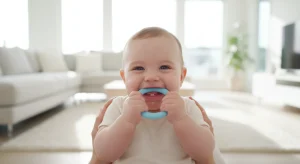


Elimination communication is a gentle way to respond to your baby’s pee and poop cues by holding them over a small potty at likely times, and you can start it full time, part time or occasionally at any age in the first year.
Elimination communication, often shortened to EC, is sometimes called infant potty training or raising a diaper free baby. Parents watch for signals and timing, offer a potty, and use a cue sound, catching some pees and poops before they land in a diaper.
This guide explains how EC works, what the limited research actually shows, how to start, a signals and timing table by age, the gear you need, nights and outings, safety rules, and how EC hands off to regular toddler potty training.
Key Takeaways
- Elimination communication means reading your baby’s cues and timing, then offering a potty, often with a cue sound.
- Research is limited to surveys, so EC is not proven to speed up toilet training.
- You can do EC full time, part time or occasionally; part time is what most families manage.
- Never leave a baby on a potty alone, keep sessions short, and never pressure.
- Independent toilet training still comes later, usually after readiness signs appear from about 18 months on.
As an Amazon Associate, Betteroo earns from qualifying purchases.
Table of Contents
What Is Elimination Communication?
Quick Answer
EC is different from the toddler potty training most U.S. families use. In regular potty training, a child who is developmentally ready learns to notice the urge, get to the potty, undress and go on their own. In EC, a parent does the noticing and the carrying. See when to start potty training for that later stage.
A 2012 review in the Canadian Medical Association Journal (CMAJ) noted that accepted norms for toilet training relate more to culture than to scientific evidence, and EC remains common in some countries.
Does EC Work? What the Research Says
Here is the honest picture: there is very little high-quality research on elimination communication, and none of it shows that EC causes earlier or easier toilet training. What exists is mostly surveys, which can show links but not cause and effect.
- Expert reviews: the 2012 CMAJ review described infant training methods that start when a baby is 2 to 3 weeks old, stated that there were no studies evaluating these methods, and noted that the American Academy of Pediatrics (AAP) and the Canadian Paediatric Society did not recommend this approach.
- A large survey from China: a 2021 study in Scientific Reports surveyed caregivers of 10,166 children aged 4 to 10. Children whose families started EC in the first year had a lower rate of bladder and bowel problems than children who never used EC. Because it relied on parents’ memories at one point in time, it shows an association only.
- A web survey from Austria: a 2023 study in Clinical Pediatrics found that babies with more diaper-free time during the day were toilet trained earlier and had fewer rashes, and that part-time EC was less effective than full-time EC. It also found that more diaper-free time meant less continuous sleep for caregivers.
What pediatric guidance does say clearly: the AAP’s HealthyChildren.org reports that children show signs of bladder and bowel control between 18 and 24 months and that most U.S. children begin toilet training between 2 and 3 years, and MedlinePlus notes that before 18 months most children cannot fully control those muscles.
EC Pros and Cons
| Possible pros | Possible cons |
|---|---|
| Fewer soiled diapers on days you catch pees and poops | Takes steady attention, especially full time |
| More diaper-free time, which a 2023 survey linked with fewer rashes | The same survey linked more diaper-free time with less continuous caregiver sleep |
| Can make babies familiar with the potty early | No good evidence it speeds up independent toilet training |
| Can be done part time, with no all-or-nothing rule | Misses and wet floors are part of it, and some parents find that stressful |
| Low cost: a small potty and some washable layers | Hard to keep up with daycare or several caregivers |
Skipping EC is a perfectly good choice. Our step-by-step how to potty train guide is built for that path.
How to Start Elimination Communication: Full Time, Part Time or Occasional
You can start EC at almost any age in the first year. Some families begin in the newborn weeks; others start later, when babies can sit with support and show clearer body language. There is no need to start from birth.
- Full-time EC: baby spends much of the day diaper free or in an easy-off layer, and you offer the potty at every likely time and cue. It asks the most of you.
- Part-time EC: baby wears a diaper, and you offer the potty at a few predictable times, often on waking, after feeds and at diaper changes. Many working families choose this. A 2023 survey found part-time EC less effective than full-time EC, but it still catches some pees and poops.
- Occasional EC: you offer the potty once or twice a day when it is easy, such as on waking from a nap or before a bath.
A simple way to begin is a few days of observation. Take the diaper off for short, warm stretches on a washable surface, and notice when your baby pees and what they do right before. Then pick one or two reliable moments, such as right after a nap, and offer the potty there every day for a week or two. Add more moments only when the first ones feel easy.
Big days go better with a good night of sleep.
Got a little one at home too? Our free two-minute quiz builds a gentle, personalized sleep plan for babies and toddlers.
Baby Signals and Timing by Age
Treat this as a guide to what parents commonly watch for, not a schedule. Some babies give obvious signals; for others, timing does most of the work.
| Age | Signals parents often notice | Common times to offer the potty |
|---|---|---|
| 0 to 3 months | Fussing or squirming for no clear reason, grunting, a pause or stillness, a change in facial expression, unlatching or fussing during a feed | On waking, during or right after feeds, at every diaper change |
| 3 to 6 months | Wiggling, arching, short cries, looking at you in a certain way, pulling at clothes | On waking from naps, after feeds, before and after car rides |
| 6 to 12 months | Pausing play, stiffening, crawling off to a corner, grunting, patting the diaper, sitting very still | On waking, after meals and drinks, before bath, before leaving the house |
| 12 to 18 months | Hiding, pointing to the potty or diaper, a sign or word for potty, pulling at pants | Same as above; many toddlers start to resist being held, so offer sitting on a small potty instead |
Some cues overlap with other needs, such as gas or tiredness, so stay flexible; our guide to baby hunger cues helps you tell them apart. If your baby is learning signs, a simple “potty” sign fits well with baby sign language.
How to Hold Your Baby Over a Potty and Use a Cue Sound
The basic “classic hold” for young babies looks like this: your baby’s back rests against your chest or belly, and you support them under the thighs so their bottom is over the potty, toilet or a basin. For a newborn, keep their head and neck well supported against your body.
- Make a cue sound: when you see or expect a pee, make a gentle sound like “psss” (or a grunt for poops). The idea, described in the CMAJ review, is that the sound becomes linked with going. Use the same sound every time.
- Keep it short: hold your baby there for a short moment, usually a minute or two. If nothing happens, put the diaper back on and try again later. If your baby arches, cries or pushes away, stop right away.
- Clean up: wipe front to back, wash your hands, and empty and rinse the potty or basin after every use.
Gear for Infant Potty Training
EC needs very little equipment, and you do not need any particular brand. These categories cover most families:
- A small potty or top-hat potty: a top-hat potty is a small, cone-shaped bowl with a wide rim that you hold under a young baby. A floor potty works once your baby sits with support. Look for smooth edges, a stable base and a removable bowl that is easy to wash.
- Easy-off clothing: pants with an elastic waist, leg warmers or split-crotch pants make it quick to get a diaper off.
- Washable layers: waterproof pads or towels for the floor, changing table and your lap during diaper-free time. Keep these out of your baby’s crib.
- Diapers or covers: cloth or disposable both work; some parents prefer cloth so they notice wetness sooner. Our guide to how to change a diaper covers quick, clean changes.
Nighttime, Outings and Childcare
Many families who practice EC keep a diaper on at night. If your baby wakes to feed and you know they usually pee then, you can offer the potty during that wake, then change into a dry diaper and lay your baby back down. Do not wake a sleeping baby just to potty them.
Safe sleep still comes first: babies under 12 months sleep alone, on their back, on a firm, flat, bare surface. Do not add waterproof pads, towels or other layers inside the crib for EC. Night dryness comes later; see nighttime potty training.
On outings, offer the potty before you leave, when you arrive and after car rides or naps in the stroller. Many parents simply use diapers when out. With daycare or a sitter, ask if they will offer the potty at one set time, such as after naps; if not, part-time EC at home still works.
Safety and Hygiene
- Never leave your baby on or over a potty alone: stay within arm’s reach with a hand on your baby the whole time, and never leave them on a sink, counter or bed edge.
- Keep sessions short and pressure free: HealthyChildren.org warns that power struggles, begging, rewarding and punishing keep children from managing their own toileting, and MedlinePlus says pressure before a child is ready may make learning take longer.
- Clean well: wash your hands after each catch and clean the potty, sink or basin every time.
- Don’t strain poops: never push on your baby’s belly or try to force a poop. If poops are hard or painful, see our guide to baby constipation.
Common Problems and When to Stop
- Lots of misses: normal. Even experienced EC parents miss pees. Count catches as a bonus, not misses as a failure.
- A “potty pause”: parents often describe stretches when an easy-to-catch baby suddenly refuses, for example around illness or new motor skills. Ease off for a while.
- You feel stressed: if EC is adding tension to your day, stop. There is no evidence that missing it harms your child.
Stop or take a long break if your baby cries or arches every time, if poops become hard or painful, or if you feel frustrated. The HealthyChildren.org constipation page notes that toddlers sometimes hold in stool to assert control, which is why it is best not to push children into toilet training.
From EC to Toddler Potty Training
An EC baby still needs to learn the toddler skills: noticing the urge, telling you, getting to the potty, pulling pants down and going alone. That usually happens in the 18 to 30 month readiness window MedlinePlus describes, and the Merck Manual notes that by 5 years of age the average child can go to the toilet alone.
EC can give you a head start on familiarity. Your toddler may already know the potty, the cue sound and the routine. When you see readiness signs, such as staying dry for at least 2 hours and following simple instructions, move from catching to teaching: let your child sit on their own potty, ask before you offer, and praise effort calmly.
- Use a potty chart if your child enjoys tracking progress, but keep it low key.
- Some families do a short, focused method like 3-day potty training once readiness signs appear.
- Expect setbacks. A potty training regression after a move, a new sibling or illness is common.
Related Betteroo Guides
- When to Start Potty Training
- How to Potty Train
- Potty Chart
- 3 Day Potty Training
- Nighttime Potty Training
- Baby Sign Language
When to Talk to Your Pediatrician
Mention EC at your baby’s next well visit. Call your pediatrician sooner if you notice:
- Hard, dry or painful poops, straining with crying, or blood on the stool or diaper (signs of constipation listed by HealthyChildren.org)
- Crying or apparent pain when peeing, or, in an older child, frequent wetting problems, which MedlinePlus notes could be a sign of a urinary infection
- Your baby seems to fight every potty offer, or EC is causing ongoing stress at home
- Later on, a child who is not using the toilet after age 4, or who was trained and starts having many more accidents
If your baby ever seems very unwell, call your pediatrician right away or seek urgent care. Otherwise, EC is an optional extra: do as much or as little as works for your family, and follow your child’s lead into regular potty training.
Frequently Asked Questions
What age should you start elimination communication?
You can start elimination communication at any point in the first year. Some families begin in the newborn weeks and others later in the first year. There is no need to begin from birth, and starting later simply means you rely more on clear body language and less on watching feeds.
Does elimination communication actually work?
It can help you catch some pees and poops, and surveys link more diaper-free time with fewer rashes. But research is limited to surveys that show associations, not cause and effect. There is no good evidence that EC makes independent toilet training happen sooner, so treat it as an optional habit, not a guaranteed shortcut.
Can you do elimination communication part time?
Yes. Many families do part-time EC, keeping a diaper on and offering the potty at a few predictable moments such as waking up, after feeds and at diaper changes. One survey found part-time EC less effective than full-time EC, but it still catches some pees and poops and fits better around work and childcare.
What are the disadvantages of elimination communication?
EC takes time and attention, misses are common, and it can be hard to continue with daycare or several caregivers. One survey linked more diaper-free time with less continuous sleep for caregivers. If it becomes stressful or turns into pressure on your baby, it can backfire, so stopping is always a reasonable choice.
How do you do elimination communication at night?
Many families keep a diaper on overnight. If your baby wakes to feed and usually pees then, you can offer the potty during that wake, then put on a dry diaper and lay your baby back down on their back in a bare crib. Never wake a sleeping baby just to potty them.
Is a baby who does EC potty trained?
No. A baby who pees when held over a potty is responding to timing and cues, not using the toilet on their own. Most children are not physically ready for independent toileting until somewhere between 18 and 30 months, so EC babies still go through a toddler potty learning stage later.
Gentle changes, peaceful nights.
Betteroo builds a personalized sleep plan for your baby or toddler. Take the free two-minute quiz to get started.
7 Sources
- Kiddoo DA. Toilet training children: when to start and how to train. CMAJ. 2012;184(5):511-512.
https://www.cmaj.ca/content/184/5/511 - Xu PC, et al. Delayed elimination communication on the prevalence of children’s bladder and bowel dysfunction. Scientific Reports. 2021;11:12366.
https://pmc.ncbi.nlm.nih.gov/articles/PMC8196082/ - Geist BK, Bammer-Zimmer R. Effects of Early Toilet Training and Elimination Communication With Respect to Diaper Types. Clinical Pediatrics. 2023;62(8):901-907. (PubMed)
https://pubmed.ncbi.nlm.nih.gov/36852780/ - American Academy of Pediatrics (HealthyChildren.org). The Right Age to Toilet Train.
https://www.healthychildren.org/English/ages-stages/toddler/toilet-training/Pages/The-Right-Age-to-Toilet-Train.aspx - American Academy of Pediatrics (HealthyChildren.org). Constipation in Children.
https://www.healthychildren.org/English/health-issues/conditions/abdominal/Pages/Constipation.aspx - MedlinePlus, U.S. National Library of Medicine. Toilet training tips.
https://medlineplus.gov/ency/patientinstructions/000944.htm - Merck Manual Professional Version. Toilet Training.
https://www.merckmanuals.com/professional/pediatrics/health-supervision-of-the-well-child/toilet-training