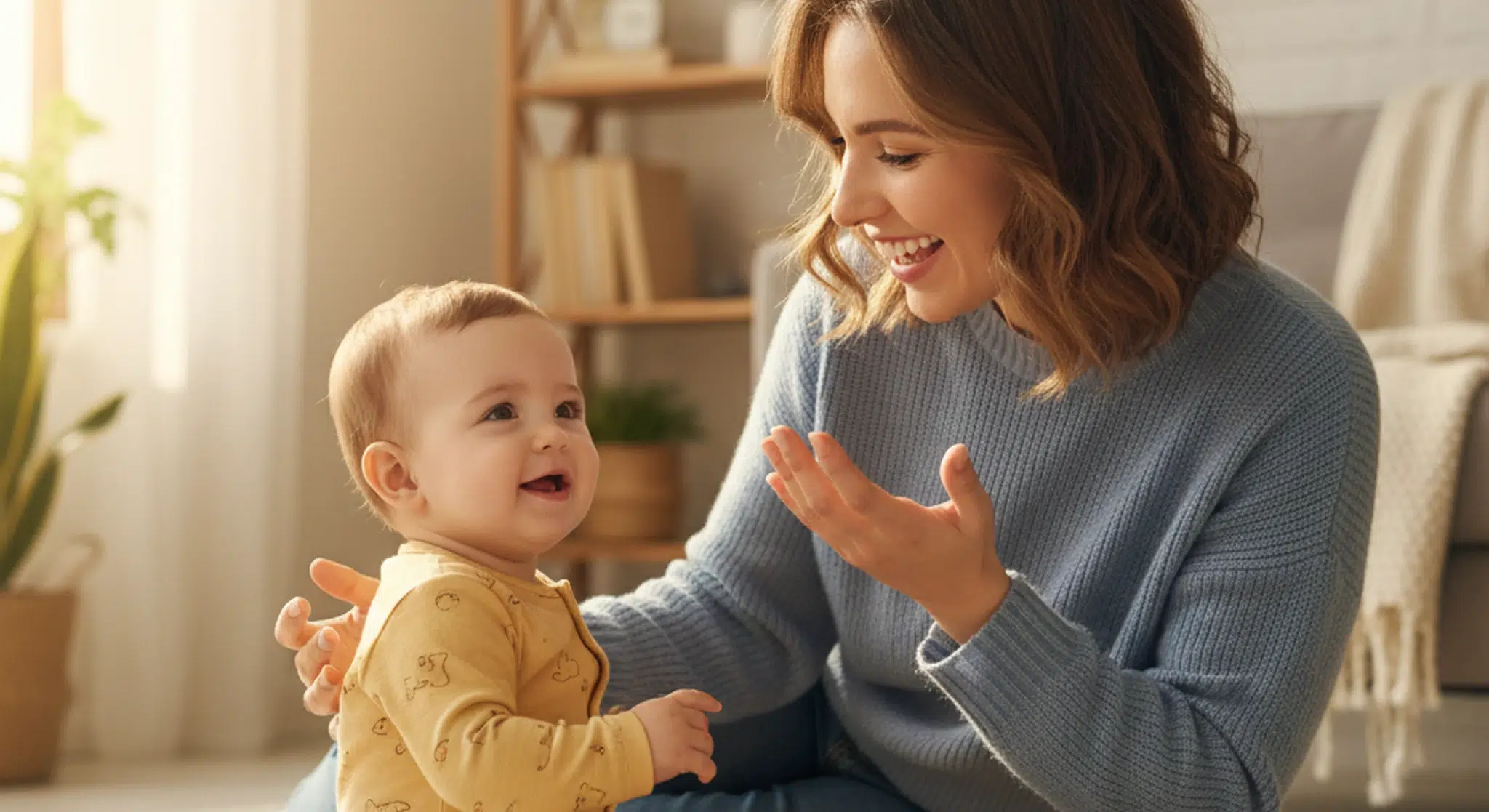
Baby sign language is a small set of simple hand gestures you teach a hearing baby so they can tell you what they need before words arrive. A tired baby who can sign milk or all done has a way to be understood, and that can take the edge off some of the hardest moments of the day.
It is worth being honest about what signing can and cannot do. It will not turn your baby into an early reader or raise their IQ, and the research does not support the biggest marketing claims. What it can do is give you and your baby a shared shortcut during the long stretch between understanding words and being able to say them.
Here is how baby sign language works, when most babies are ready, the handful of signs worth starting with, and how to weave it into ordinary days without turning it into one more thing on your list.
Key Takeaways
Baby sign language is teaching a hearing baby simple gestures to communicate before speech develops.
Most babies can start being shown signs around 6 to 8 months and often begin signing back between 8 and 12 months.
Start with a few useful signs like milk, more, eat, and all done, and always say the word as you make the sign.
Signing does not delay talking, and the evidence for lasting boosts to language or intelligence is weak.
The real payoff is fewer frustrated meltdowns because your baby has a way to be understood.
Table of Contents
What Baby Sign Language Actually Is
Baby sign language is a collection of gestures, often borrowed from American Sign Language, that stand in for common words a baby wants to use every day. The idea is simple. A baby understands far more than they can say, and the muscles used for waving and pointing mature well before the fine control needed for speech. Signing gives that early understanding somewhere to go.
You do not need to learn a full signed language, and you do not need to be perfect. Most families use a small set of borrowed ASL signs, or even homemade gestures, as long as everyone uses the same one for the same thing. The goal is communication, not fluency. If your baby pats their chest for more and the whole family knows what it means, it is working.
When Babies Are Ready to Start
There is no single right age, but many babies are ready to be shown signs around 6 to 8 months, once they are sitting with support and paying close attention to your face and hands. Showing signs earlier does no harm, it simply means you are planting seeds before your baby can copy them back.
Signing back usually comes later, often between 8 and 12 months, and sometimes closer to a baby’s first birthday. That gap is normal. This is the same window when babbling turns into more deliberate sounds, so it can help to think of signs as one more channel your baby is opening up. If you are tracking this stage, our guides on when babies start babbling and when babies start laughing map out the same months from the speech side.
Do not measure success by a calendar. Babies who see signs consistently tend to start using them when they are developmentally ready, not on the day a chart says they should.
Struggling with your baby’s sleep?
A personalized plan meets your baby where they are, at every age and stage.
Start with signs tied to things your baby wants many times a day, because repetition is what makes a sign stick. The classic starter set is milk (open and close a fist), more (tap fingertips together), eat (fingertips to the mouth), and all done or finished (turn open palms over). Many families add up, sleep, and a sign for a favorite comfort item.
Pick two or three to begin with rather than the whole list. Make the sign at the exact moment the word applies, for example signing milk right as you offer a feed, and say the word out loud every single time. Pairing the sign with the spoken word is the part that teaches language, and it is why signing supports talking rather than replacing it.
How to Fit Signing Into Real Days
The families who see results are usually the consistent ones, not the intense ones. Choose a few natural anchor points that already happen daily, like feeds, meals, and the start of the bedtime routine, and sign at those moments. You are not running lessons, you are narrating life with your hands as well as your voice.
Get other caregivers on the same page so a grandparent or partner uses the identical gesture. Keep your face friendly and your hands in your baby’s line of sight. Expect weeks, not days, before a sign comes back, and celebrate approximations. An early milk sign can look like a vague hand squeeze, and rewarding that rough version is exactly how it sharpens over time.
What the Research Does and Does Not Show
The strongest honest claim is modest and real. Teaching signs gives pre-verbal babies a way to express needs, which many parents find reduces frustration and guessing during the fussiest stretches. Pediatric groups generally agree that signing with a hearing baby is a fine, low-risk activity that will not slow speech.
The claims to be skeptical of are the big ones. Early studies suggesting signing produces lasting gains in vocabulary, reading, or intelligence have not held up well when researchers control for the extra face-to-face attention that signing families naturally give. In other words, the talking, eye contact, and responsiveness that come bundled with signing may matter more than the gestures themselves. That is good news, because it means the benefit is really about tuned-in, back-and-forth connection, which you can offer with or without formal signs.
A Few Gentle Cautions
Signing is meant to lighten the load, not add pressure. If it starts to feel like a performance metric, scale back to one sign and let it be playful again. Babies pick up on stress, and a relaxed parent is a better teacher than an anxious one.
Finally, keep normal speech front and center. Signs are training wheels for communication, so talk, read, and respond to your baby as much as ever. If your baby is not using any words or gestures by around 12 to 15 months, mention it to your pediatrician, since that is a conversation worth having regardless of whether you sign.
Frequently Asked Questions
Does baby sign language delay speech?
No. There is no good evidence that signing delays talking, and because you always say the word while making the sign, signing actually pairs each gesture with spoken language. Most children drop signs naturally as their speech takes over.
What age should I start baby sign language?
Many babies are ready to be shown signs around 6 to 8 months, when they can sit with support and watch your hands and face. You can start earlier, but expect your baby to begin signing back later, often between 8 and 12 months.
What are the best first signs to teach?
Begin with signs for things your baby wants often, such as milk, more, eat, and all done. Choose two or three, make the sign at the moment the word applies, and say the word out loud each time.
Is baby sign language actually worth it?
For many families, yes, mainly because it can reduce frustration by giving a pre-verbal baby a way to be understood. Just keep expectations realistic, since the research does not support claims that signing boosts intelligence or reading.