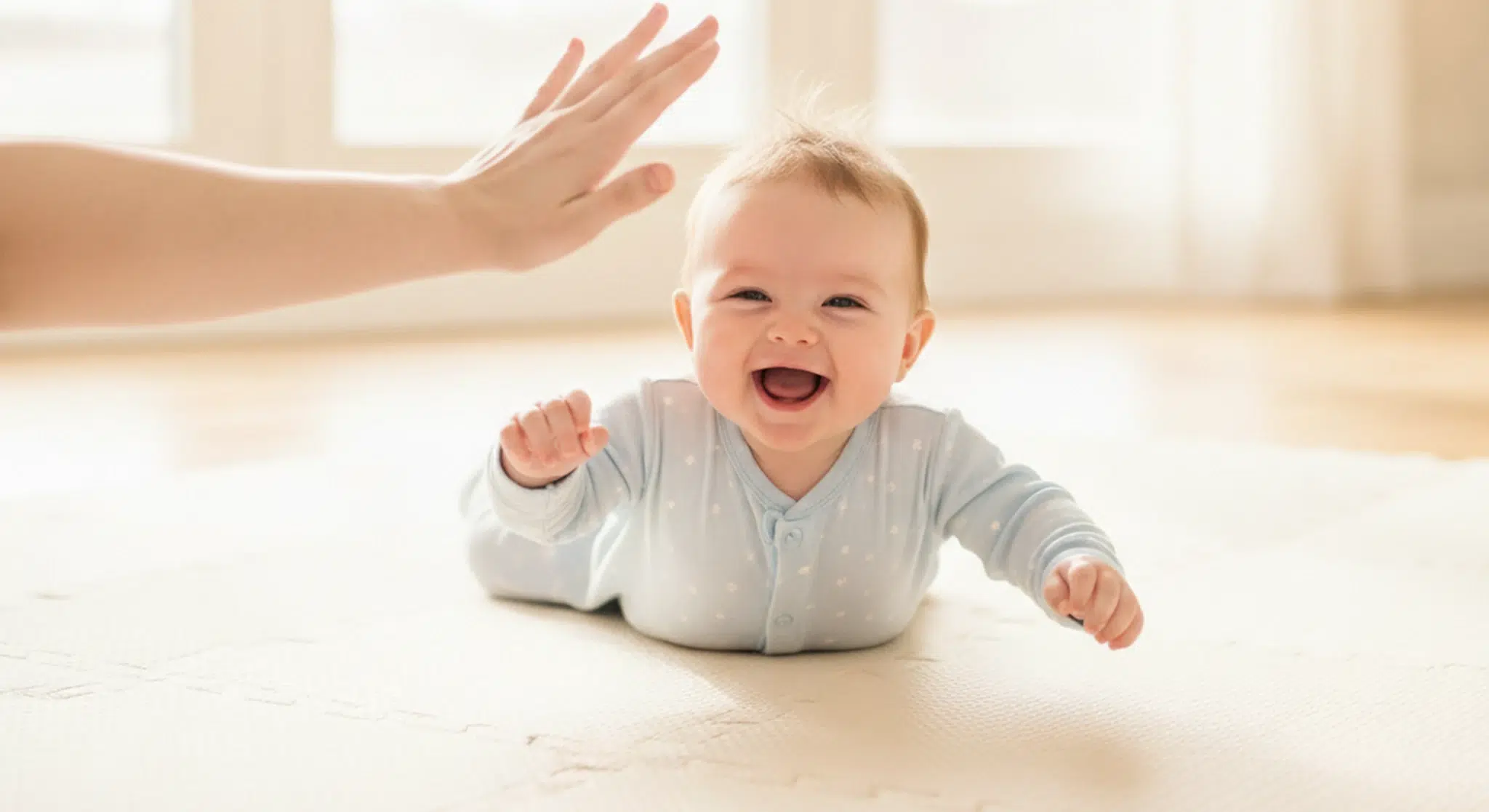
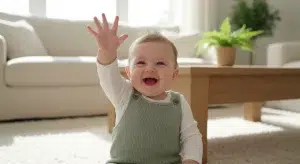
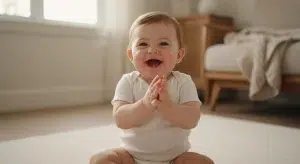
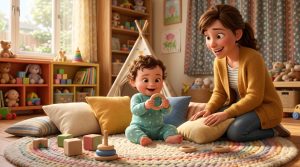
Most babies laugh out loud for the first time somewhere around three to four months of age, usually a few weeks after those first real smiles appear.
Laughter does not arrive all at once. It grows out of smiling and cooing, and every baby moves through that progression on their own timeline. Some giggle early at two months, and plenty of happy, healthy babies take until closer to five or six months to let out a real belly laugh.
This guide walks through when laughing typically starts, the stages that lead up to it, simple ways to encourage giggles, and the handful of signs that are worth mentioning to your pediatrician.
Key Takeaways
First real laughs usually appear around 3 to 4 months, after the first social smiles at about 6 to 8 weeks.
Belly laughs and repeated giggling often build over the following months, with many babies laughing hard by around 6 months.
Laughter is a social milestone, so babies often laugh most with the people and games they love.
Ranges are wide. A baby who is smiling, making eye contact, and cooing is usually on track even if the big laugh is late.
Talk with your pediatrician if your baby is not smiling or laughing by around 6 months, or if you have concerns about eye contact or sounds.
Table of Contents
When Babies Typically Start Laughing
The first genuine laugh most often lands between three and four months. It usually follows a clear sequence. Around six to eight weeks, babies produce their first true social smile, the kind aimed right at your face. Over the next several weeks they begin cooing, and those coos and smiles gradually tip over into a short, surprised sounding laugh.
From there, laughter tends to build. Many babies are giggling readily by four to five months and letting out full belly laughs by around six months. Early on, a laugh might be triggered by something physical like a gentle tickle or a bouncing knee. As babies get older, they start to laugh at things they find genuinely funny or surprising, which is why peekaboo becomes such a reliable hit.
Because laughing is a social skill, your baby will often save their best giggles for familiar, trusted people. Do not worry if the pediatrician’s office does not produce a single laugh. Babies are most playful when they feel safe and rested.
The Stages That Lead Up to Laughing
Laughter is the top of a small ladder of early communication skills. Knowing the rungs can help you see the progress even before the first real laugh:
Reflex smiles in the newborn weeks, often during sleep, which are not yet social.
First social smiles at about 6 to 8 weeks, aimed at faces and voices.
Cooing and gurgling from around 2 to 3 months, those long vowel sounds.
First laughs around 3 to 4 months, often short and a little startled at first.
Belly laughs and repeated giggling building through about 4 to 6 months and beyond.
Cooing is a close cousin of that first laugh, and it usually comes just before. If you want to see where laughing fits in the wider arc of early sounds, our guides on when babies start cooing and when babies start babbling map the months that surround it.
Struggling with your baby’s sleep?
A personalized plan meets your baby where they are, at every age and stage.
You cannot force a laugh, but you can set the stage. Babies laugh most when they are well rested, fed, and in a calm, playful mood, so the window right after a good nap is often your best shot. A tired or overstimulated baby is far more likely to fuss than giggle.
Research on what makes babies around the world laugh keeps landing on the same favorites. Try these gentle, baby led games:
Peekaboo, the classic surprise game that plays on your baby’s growing memory.
Silly faces and exaggerated expressions paired with eye contact.
Funny sounds, raspberries, and playful changes in your voice.
Light, gentle tickles and soft tummy raspberries, stopping the moment your baby signals they have had enough.
Simple anticipation games, like a slow here it comes before a gentle tickle.
Follow your baby’s lead. If they turn away, arch their back, or start to fuss, that is a sign to slow down and offer a calmer moment. The goal is shared delight, not a performance.
Sleep, Development, and Those First Giggles
The months when laughter blooms overlap with a lot of other change. Around four months, many babies go through a well known shift in how they sleep as their sleep cycles mature. If nights suddenly get bumpier right as the giggles arrive, you are not imagining it.
A well rested baby is a more social, playful baby, so protecting daytime sleep and an age appropriate rhythm helps those happy moments show up more often. Our sleep schedule by age guide lays out realistic wake windows and nap patterns for the first year, and the sleep regression ages guide explains the common windows when sleep temporarily wobbles.
Laughter and development travel together. A baby who smiles, makes eye contact, coos, and turns toward your voice is showing you the social wiring that laughter is built on, even in the weeks before the first big laugh actually arrives.
When to Talk to Your Pediatrician
Most late laughers are simply on the later end of a normal range. Still, it is always reasonable to check in, and there are a few specific things worth raising with your pediatrician:
No social smiling by around 3 months.
No laughing or limited playful vocal sounds by around 6 months.
Little or no eye contact, or your baby does not seem to respond to your face or voice.
A loss of skills your baby previously had, such as smiling or cooing that fades.
Bringing these up early is never an overreaction. Often the reassurance is all you need, and if support would help, an early conversation makes it easier to get.
Most babies laugh out loud for the first time around 3 to 4 months of age, a few weeks after their first social smiles at about 6 to 8 weeks. Full belly laughs often build over the following months, with many babies laughing hard by around 6 months.
Is it normal for a baby not to laugh at 4 months?
Yes. Ranges are wide, and some healthy babies do not laugh until closer to 5 or 6 months. If your baby is smiling, making eye contact, and cooing, that is a reassuring sign. Mention it to your pediatrician if there is no laughing or smiling by around 6 months.
What makes babies laugh the most?
Peekaboo is a research favorite around the world, along with silly faces, funny sounds, and gentle tickles. Babies laugh most when they are rested, fed, and playing with people they trust, so the period after a good nap is often the best time.
Do babies smile before they laugh?
Usually, yes. The first true social smile tends to appear around 6 to 8 weeks, followed by cooing, and then those first laughs around 3 to 4 months. Reflex smiles in the newborn weeks come even earlier but are not yet social.
When should I worry if my baby is not laughing?
Check in with your pediatrician if your baby is not smiling by around 3 months, is not laughing or making playful sounds by around 6 months, avoids eye contact, or has lost skills they once had. Early conversations are always worthwhile.
Happy days, better nights
Get a personalized plan built around your baby’s age, naps, and temperament.
Paruthi S, et al. Recommended Amount of Sleep for Pediatric Populations: A Consensus Statement of the American Academy of Sleep Medicine. Journal of Clinical Sleep Medicine, 2016. https://jcsm.aasm.org/doi/10.5664/jcsm.5866