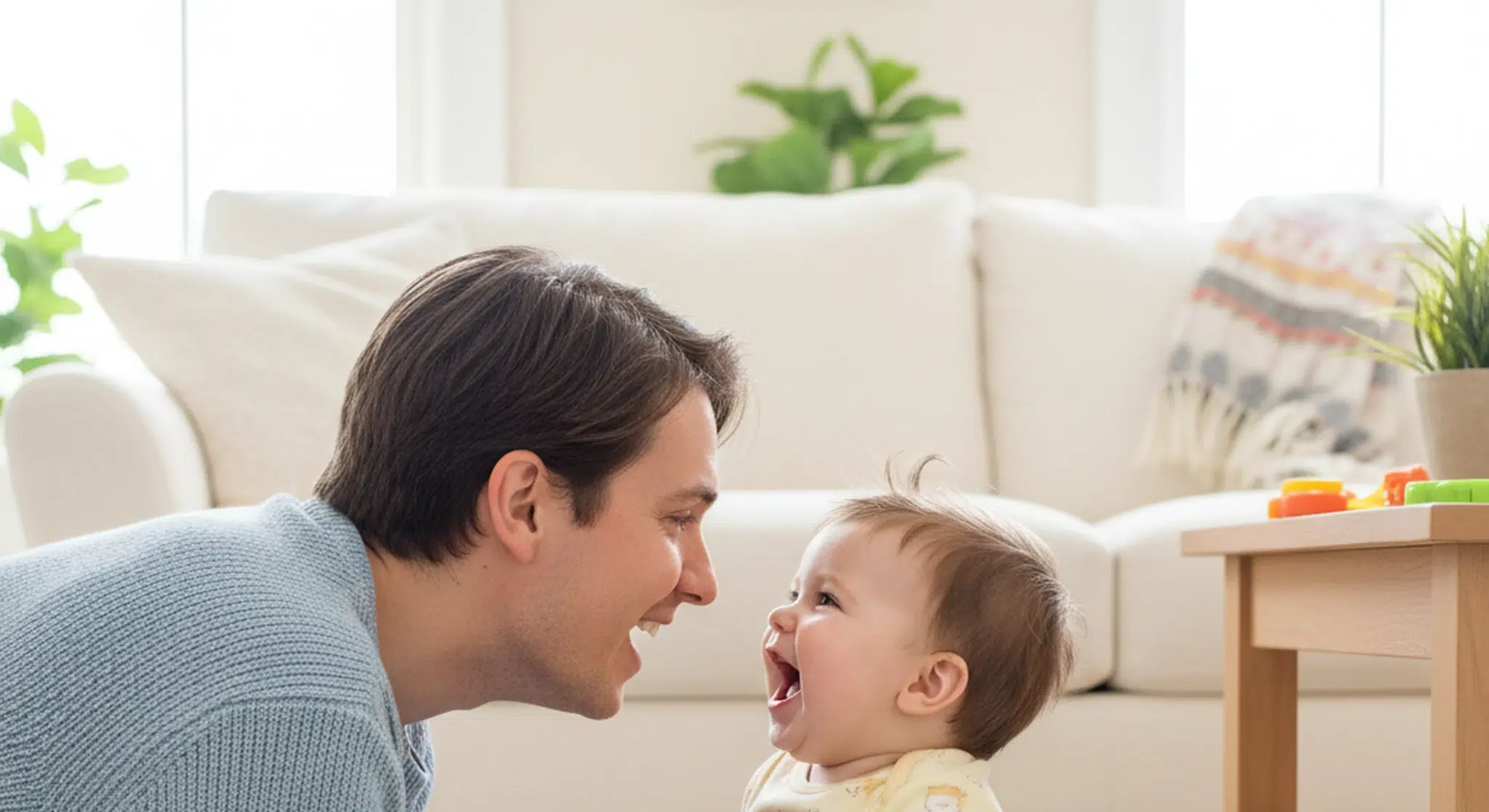
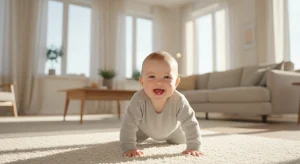
Most babies start babbling between about four and six months, stringing together playful consonant and vowel sounds like ba, ga, and da, after a cooing stage that usually begins around two months.
Babbling is one of the most delightful milestones, the moment your baby moves from soft vowel coos to bouncy, speech-like strings of sound. It is also a meaningful step in language development, because babbling is how babies practice the building blocks of talking long before their first real word.
This guide lays out the full sound timeline from cooing to first words, how to encourage it, and the signs that are worth raising with your pediatrician.
Key Takeaways
Cooing, soft vowel sounds like ooh and aah, usually starts around 2 months.
Babbling with consonants like ba and ga typically begins around 4 to 6 months.
By around 9 months, many babies use repeated sounds like mamama and dadada.
First words often arrive around 12 months, built on months of babbling practice.
Talking and responding to your baby is the best way to encourage language.
Table of Contents
The Sound Timeline From Cooing to First Words
Language builds in overlapping stages, and every baby moves through them at a slightly different pace. These ranges are typical, not deadlines.
Age
What you typically hear
About 2 months
Cooing: soft, drawn-out vowel sounds like ooh and aah.
About 4 to 6 months
Early babbling: single consonant-vowel sounds like ba, ga, and playful noises, squeals, and raspberries.
About 6 to 9 months
Canonical babbling: repeated strings like bababa and dadada with the rhythm of speech.
About 9 to 12 months
Varied babbling and jargon that sounds like sentences, plus mama and dada, often without specific meaning at first.
Around 12 months
First true words used with meaning.
A typical language timeline. Small variations in timing are completely normal.
The CDC notes that by around six months babies make sounds back and forth with you, and by nine months they make several different sounds like mamama and babababa.1 Babbling is not just noise, it is your baby rehearsing the sounds of the language they hear every day.
Cooing Versus Babbling
Parents often ask what the difference is. Cooing comes first and is made of vowel sounds, the gentle ooh and aah of a young baby who is discovering their own voice. Babbling comes later and adds consonants, which is what gives it that ba-ba-ba, speech-like quality.
The jump from cooing to babbling matters because consonants require more coordinated control of the lips, tongue, and breath. When your baby starts babbling, they are practicing the physical mechanics of speech, which is why so much back and forth sound play at this age pays off later.
How to Encourage Babbling
The best language input is simple, warm, and constant: talk to your baby throughout the day, and treat their sounds as a real conversation. When your baby babbles, babble back, pause, and let them take a turn. This serve and return is exactly how language is learned.
Narrate everyday routines: describe what you are doing as you do it.
Respond to your baby’s sounds as if they are words, and wait for a reply.
Read together daily, even with the youngest babies, using lots of expression.
Sing songs and rhymes, which highlight the rhythm and sounds of language.
Limit background screen time, which does not support early language the way live interaction does.
Watching your baby’s milestones?
A personalized plan connects your baby’s development and sleep at every stage.
You may notice more babbling right around the time sleep gets bumpy, and that is not a coincidence. Bursts of communication and other developmental leaps often overlap with temporary sleep disruptions, as a busy brain practices new skills, sometimes at 2 a.m. This is normal and passes.
If new sounds are keeping your baby up chattering in the crib, it usually settles within a week or two. For the pattern of sleep disruptions across the first years, see our guide on sleep regression ages. And for the milestones on either side of babbling, our 4 month milestones and 8 month milestones guides map what to expect.
When to Talk to Your Pediatrician
No cooing or reciprocal smiling by around 3 months.
No babbling at all by around 9 months.
No response to sounds or their name, which can be a hearing concern.
Loss of babbling, sounds, or social skills your baby previously had, at any age.
Language ranges are wide, and a quiet baby is often just a quiet baby. But because early support for hearing or language works best when started early, raise any concern with your pediatrician rather than waiting.
Most babies start babbling between about four and six months, making single consonant-vowel sounds like ba and ga along with squeals and raspberries. This follows the cooing stage, which usually begins around two months with soft vowel sounds.
What is the difference between cooing and babbling?
Cooing comes first, around two months, and is made of vowel sounds like ooh and aah. Babbling comes later, around four to six months, and adds consonants, producing speech-like strings such as bababa. Babbling reflects more coordinated control of the mouth and breath.
When do babies say mama and dada?
Many babies produce repeated sounds like mamama and dadada around nine months, though at first without specific meaning. Using mama or dada to actually mean a parent usually comes closer to twelve months, around the time of first true words.
How can I encourage my baby to babble?
Talk to your baby constantly, narrate your day, and treat their sounds as conversation by babbling back and pausing for a turn. Read and sing daily, and keep background screen time low, since live interaction supports early language far better than screens.
Should I worry if my baby is not babbling?
Talk to your pediatrician if your baby is not babbling at all by around nine months, is not cooing or smiling by three months, does not respond to sounds or their name, or loses sounds or skills they once had. Ranges are wide, but early checks are worthwhile.
Does babbling affect baby sleep?
Sometimes, indirectly. Bursts of new communication skills often overlap with temporary sleep disruptions, and some babies practice their new sounds in the crib. This usually settles within a week or two as the skill becomes familiar.
Want development and sleep in one plan?
Get a personalized plan built around your baby’s age, milestones, and temperament.