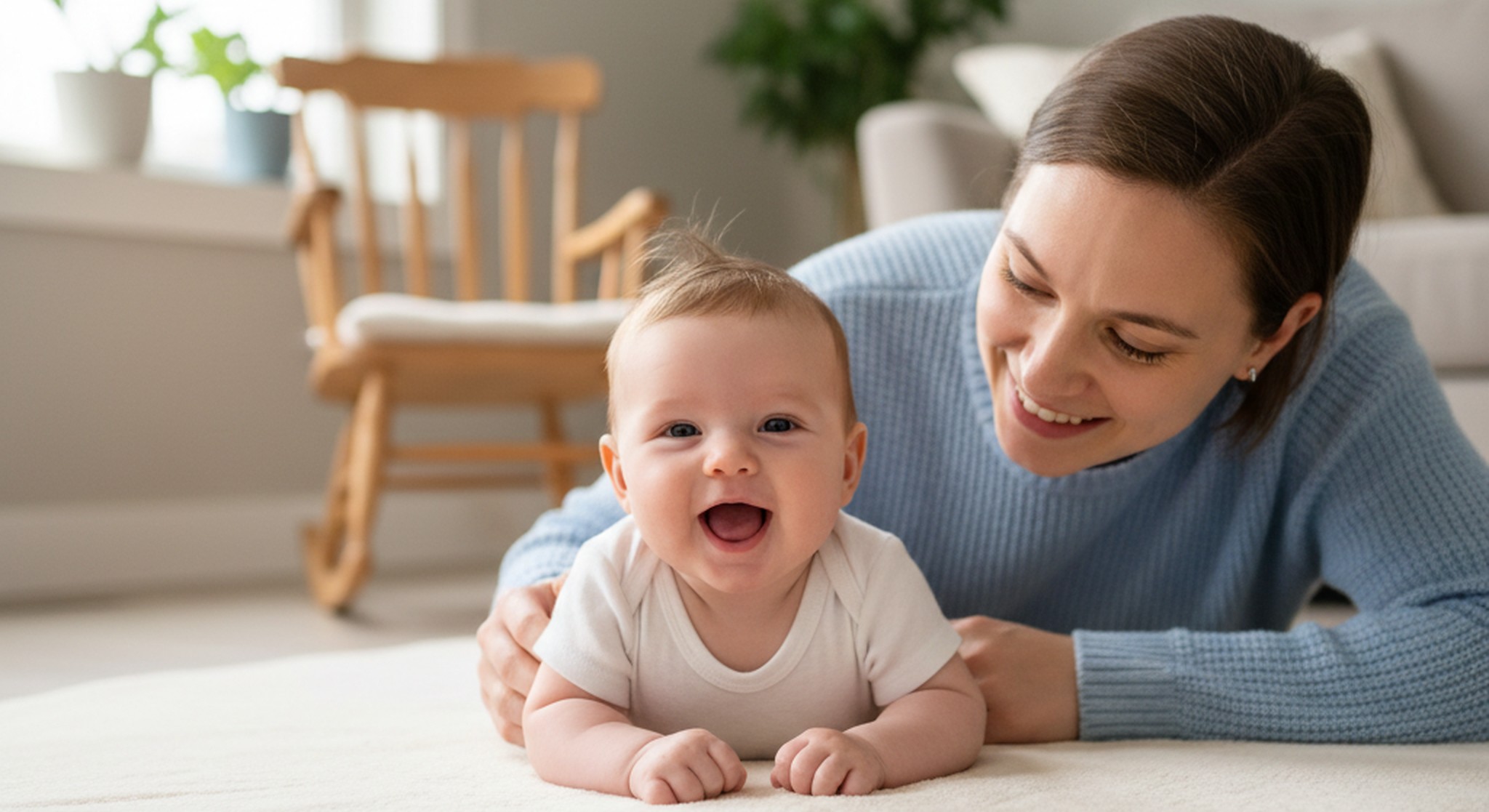
Most babies start cooing at around two months old, making soft, drawn out vowel sounds like ooh and aah, which are the first gentle step in language development and come well before the consonant filled babbling that arrives around four to six months.
That first little coo, a soft ooh or aah aimed right at your face, is one of the sweetest early milestones. It is also meaningful: cooing is your baby’s first experiment with their own voice and the opening move in learning to talk.
This guide explains when cooing typically begins, how it differs from crying and later babbling, what it tells you about your baby’s development, and how to gently encourage more of it.
Key Takeaways
Cooing usually begins around 2 months, sometimes as early as 6 weeks.
Coos are soft vowel sounds like ooh and aah, different from crying and from later babbling.
Cooing is an early sign of social and language development, especially when aimed at you.
Babbling with consonants like ba and ga typically follows around 4 to 6 months.
You encourage cooing simply by talking, smiling, and responding to your baby’s sounds.
Table of Contents
When Cooing Usually Starts
For most babies, cooing appears around the two month mark, though some start a couple of weeks earlier and others a little later. It often shows up alongside another beloved milestone, the first real social smile, because both reflect your baby waking up to the social world and wanting to connect with you.
Cooing is different from your baby’s earliest sounds, which are mostly crying and reflexive noises like grunts and sighs. A coo is voluntary and relaxed, a happy vowel sound your baby makes when content, often while gazing at a familiar face.
Age
What you typically hear
Birth to 6 weeks
Crying, grunts, sighs, and other reflexive sounds.
Around 2 months
Cooing: soft, drawn out vowel sounds like ooh and aah.
3 to 4 months
More varied coos, chuckles, squeals, and the first laughs.
4 to 6 months
Early babbling: consonant sounds like ba and ga appear.
6 to 9 months
Canonical babbling: repeated strings like bababa and dadada.
Typical ranges. Small variations are completely normal.
Cooing, Crying, and Babbling: What Is the Difference
It helps to think of these as stages that build on each other. Crying is your baby’s first communication, present from birth. Cooing comes next and is made of vowel sounds, the gentle music of a young baby discovering their voice. Babbling arrives later and adds consonants, which require more coordinated control of the lips, tongue, and breath, giving it that speech like ba-ba-ba quality.
Each stage is a rehearsal for talking. When you coo back at your baby and pause for them to respond, you are teaching the rhythm of conversation, the back and forth that all language rests on.
Struggling with your baby’s sleep?
A personalized plan meets your baby where they are, at every age and stage.
The best thing you can do is treat your baby as a conversation partner. When they coo, coo back, then wait. This serve and return teaches them that their sounds matter and invites more. Get close, make eye contact, and use the warm, sing song voice that babies find so engaging.
Respond to every coo as if it were a word, then pause for a turn.
Talk and narrate your day so your baby hears lots of language.
Make eye contact and smile, since cooing is deeply social.
Read and sing daily, even to a very young baby.
Give plenty of calm, screen free floor and cuddle time for face to face play.
When to Talk to Your Pediatrician
Ranges are wide, and a baby who is a little behind on cooing is often just fine. Still, it is worth checking in with your pediatrician if your baby is not making any sounds or cooing by around three months, is not smiling socially, does not react to loud sounds, or seems not to make eye contact. These early checks help make sure hearing and development are on track.
Cooing is the first chapter of a longer language story. See what comes next in our guide on when babies start babbling, and explore the wider picture in our toddler milestones guide. If new sounds seem to stir up night wakings, our sleep regression ages guide explains why development and sleep often overlap.
Most babies begin cooing around two months old, sometimes as early as six weeks. Coos are soft, drawn out vowel sounds like ooh and aah, and they often appear around the same time as your baby’s first social smiles.
What is the difference between cooing and babbling?
Cooing comes first, around two months, and is made of vowel sounds like ooh and aah. Babbling comes later, around four to six months, and adds consonants such as ba and ga, producing speech like strings. Babbling reflects more coordinated control of the mouth and breath.
Is cooing a sign of good development?
Yes. Cooing is an early sign that your baby is developing socially and beginning the path toward language, especially when they coo while looking at you and take turns making sounds. It shows they are engaging with the people around them.
How can I encourage my baby to coo?
Respond to your baby’s sounds as if they are conversation, cooing back and then pausing for a turn. Make eye contact, use a warm sing song voice, talk and narrate your day, and read and sing often. Face to face play matters more than any toy.
Should I worry if my baby is not cooing?
Check with your pediatrician if your baby is not making any sounds or cooing by around three months, is not smiling socially, does not respond to sounds, or does not make eye contact. Ranges vary widely, but early checks help confirm that hearing and development are on track.
Support development and sleep together
Get a personalized plan built around your baby’s age, milestones, and temperament.
Paruthi S, et al. Recommended Amount of Sleep for Pediatric Populations: A Consensus Statement of the American Academy of Sleep Medicine. Journal of Clinical Sleep Medicine, 2016. https://jcsm.aasm.org/doi/10.5664/jcsm.5866