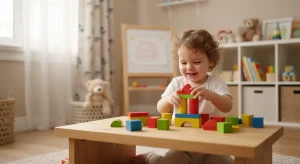
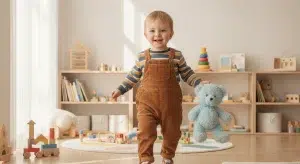
By 12 months, most babies pull up to stand, cruise along furniture, and may take their first independent steps. They typically wave bye-bye, call a parent “mama” or “dada,” use the pincer grasp to pick up small foods, drink from a cup you hold, look for hidden objects, and understand simple words like “no” and “bye-bye.” First steps and first words both cluster around this birthday, with wide normal ranges on either side.
The first birthday is a milestone in every sense. Your baby has roughly tripled their birth weight, moved from reflexes to intentions, and is standing at the edge of toddlerhood, sometimes literally, holding your coffee table. The 12 month checkup includes a developmental review, so it helps to know what your pediatrician is looking for.
This guide covers the 12 month old milestones from the CDC and AAP checklists: movement, hands, language, thinking, and social skills, plus what changes now with sleep, milk, and meals.
Key Takeaways
Pulling to stand and cruising are expected by 12 months; independent walking is a bonus, not a requirement (normal range roughly 9–18 months).
Most 1 year olds say “mama” or “dada” meaningfully and wave bye-bye; a few other words may follow quickly.
The pincer grasp, banging toys together, and putting objects in containers show fine motor skills on track.
After the first birthday, whole milk can replace formula, and bottles begin phasing out in favor of cups.
Tell your pediatrician if your baby cannot stand with support, has no gestures, or has lost any skill they once had.
Table of Contents
Movement Milestones at 12 Months
By the first birthday, most babies pull to stand easily and cruise sideways along the couch, the coffee table, and anything else at hand height. Many stand alone for a few seconds, and some have taken those electric first independent steps. If yours has not, breathe: only about half of babies walk by 12 months, and the normal window stretches to 18 months. Walking age says nothing about intelligence or athleticism; it mostly reflects temperament, build, and practice hours.
You will also see confident crawling at speed, climbing attempts on stairs and furniture, and squatting from standing to grab a toy. Babyproof one level up from wherever your child currently operates, because they are always one surprise ahead. For the full walking timeline and how to encourage it safely, see when do babies start walking.
Language: First Words and Constant Understanding
The classic 12 month language milestones: saying “mama” or “dada” to the right parent, trying to copy words you say, waving bye-bye, shaking the head for no, and understanding simple requests paired with gestures (“give me the ball”). Receptive language, what your baby understands, runs far ahead of what they can say. A 1 year old with one or two words but rich babble, strong eye contact, active pointing, and obvious understanding is developing beautifully.
Pointing deserves special mention. Around 12 months, babies start pointing to ask for things and, more importantly, to share attention: look at that dog, look at that truck. Joint attention pointing is one of the strongest early signals of social communication development, which is why pediatricians ask about it specifically.
Fine Motor and Thinking Skills
Twelve month old hands are precise little tools. Expect a clean pincer grasp on small foods, deliberate banging of two objects together, dropping items into a container and pulling them back out, and turning board book pages in clumps. Your baby looks for things they watch you hide, finds a toy under a cup, and studies cause and effect like a tiny physicist: push the button, get the music, push it forty more times to confirm.
Imitation is the main learning engine now. Twelve month olds copy stirring a pot, holding a phone to their ear, and brushing hair, the seeds of pretend play that will bloom over the next year. Simple toys beat flashy ones for this: cups, containers, balls, and books generate more practice than anything with batteries.
One year old, still not sleeping through?
Walking practice, separation anxiety, and nap transitions collide around the first birthday. Betteroo untangles them with a personalized plan.
Most 12 month olds need 11 to 14 total hours of sleep, usually 10 to 12 at night plus two naps that will consolidate into one afternoon nap sometime between 13 and 18 months. If nights wobble around the birthday, the 12 month sleep regression is usually behind it, driven by walking practice and a premature flirtation with dropping a nap. Our 11 month and 13 month sleep schedules bracket this transition.
Feeding changes are real at 12 months: with your pediatrician’s blessing, formula can end and whole cow’s milk can begin, capped around 16 to 24 ounces a day so it does not crowd out iron-rich solids. Start weaning off bottles in favor of straw or open cups, keep honey off the menu until now (it is safe after 12 months), and shift toward three meals plus two snacks of mostly table food. Appetites often drop noticeably in the second year as growth slows; serve balanced options and let your toddler decide how much.
When to Talk to Your Pediatrician
Raise it at the 12 month visit, or call sooner, if your baby:
Cannot stand while holding onto furniture or your hands
Does not crawl or have another reliable way of getting around
Does not search for things they see you hide
Says no single words and does not try to imitate sounds
Does not use gestures like waving, pointing, or shaking the head
Does not respond to their name or engage in back-and-forth games
Has lost any skill they previously had
Loss of skills at any age warrants prompt evaluation. For everything else, the 12 month visit is exactly the right forum: screenings are designed to catch what checklists miss, and early intervention referrals are free to pursue in every US state. Bring your questions written down, because toddler checkups move fast.
Frequently Asked Questions
What milestones should a 12 month old have?
By 12 months, most babies pull to stand, cruise along furniture, use a pincer grasp, put objects in containers, look for hidden things, wave bye-bye, call a parent “mama” or “dada,” respond to their name, and drink from a cup you hold. Some walk independently, though walking any time up to about 18 months is normal.
Should I worry if my 12 month old is not walking?
Not by itself. Only about half of babies walk by their first birthday, and the normal range extends to roughly 18 months. What matters at 12 months is that your baby can bear weight, pull to stand, and cruise while holding on. If your child cannot stand with support by 12 months, mention it to your pediatrician.
How many words should a 12 month old say?
One to three words is typical, usually including “mama” or “dada” used for the right person. Understanding matters more than word count at this age: responding to their name, following simple gestured requests, waving, and pointing all show language is on track even if spoken words are still few.
When do I switch from formula to milk?
At 12 months, most babies can switch from formula to whole cow’s milk, ideally served in a cup rather than a bottle. Aim for about 16 to 24 ounces a day so milk does not displace iron-rich solid foods. Breastfeeding can simply continue as long as you and your child want. Confirm timing with your pediatrician at the 12 month visit.
What are red flags at 12 months?
Discuss with your pediatrician if your 12 month old cannot stand with support, has no way of moving around, does not search for hidden objects, says no words and imitates no sounds, uses no gestures like waving or pointing, or has lost any previously mastered skill. Loss of skills at any age should be evaluated promptly.
Year one is done. Make year two better rested.
Betteroo builds a personalized sleep plan for your one year old, including the two-to-one nap transition ahead.