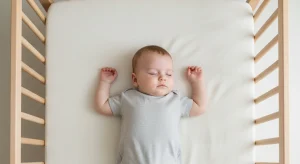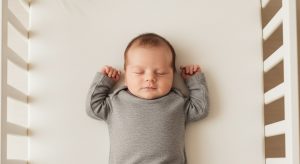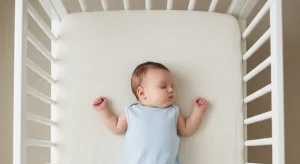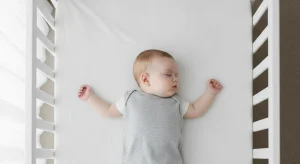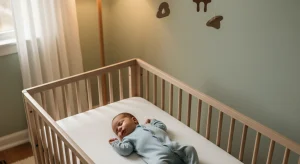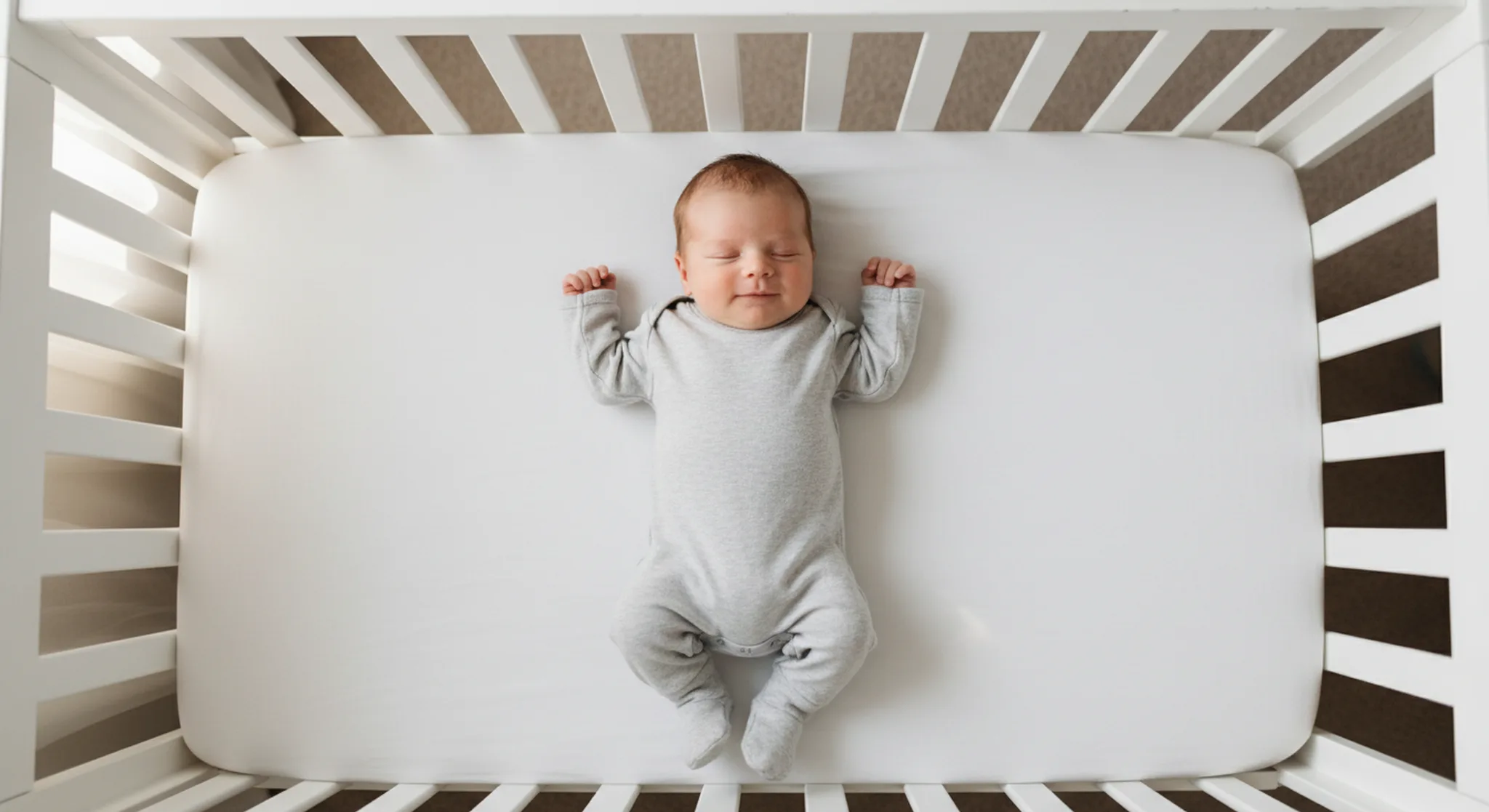


Babies smile in their sleep mostly because of spontaneous reflexes fired during REM (active) sleep, the busy dreaming-stage that fills about half of a newborn’s sleep. These sleep smiles appear from birth (even in the womb), are not caused by gas, and are not yet emotional. Real social smiles, the awake kind aimed at you, come later, around 6 to 8 weeks.
It is one of the sweetest sights in parenting: a sleeping newborn’s mouth curling into a grin, sometimes with a flutter of eyelids or a tiny chuckle. Grandmothers will say it is gas, older baby books say it is angels, and the internet says it is dreams. The science is more interesting than all three.
This guide explains why babies smile in their sleep: what is happening in the brain during active sleep, whether babies can actually dream, the difference between reflex smiles and social smiles, what sleep laughing and twitching mean, and the rare signs worth mentioning to your pediatrician.
Key Takeaways
- Sleep smiles are spontaneous reflexes generated by the brainstem during REM (active) sleep, which makes up roughly half of newborn sleep.
- They start before birth: ultrasounds catch fetuses smiling in the third trimester, so day-one sleep smiles are expected, not mysterious.
- Gas is not the explanation: gas discomfort makes babies grimace and squirm, not produce serene symmetrical smiles.
- Sleep smiles are practice: along with twitches, they help wire facial muscles and brain pathways that later power real social smiling around 6 to 8 weeks.
- Mention it to your pediatrician only if smiling comes in repetitive stereotyped spells with stiffening, eye deviation, or unresponsiveness, or if no awake social smile has appeared by 3 months.
Table of Contents
The Science: Active Sleep Is a Busy Place
Newborns spend about 16 or so hours a day asleep, and unlike adults they enter sleep through REM, called active sleep in infants. During active sleep the brain runs hot: blood flow rises, breathing gets irregular, eyes dart under lids, and the body produces a stream of twitches, sucks, grimaces, and smiles. Adults are paralyzed during REM; newborns are not yet, so all that brain activity leaks out onto the face.
Researchers believe these spontaneous movements are not random noise but self-testing: the developing nervous system firing circuits to map and strengthen connections between brain and muscles. A sleep smile, in this view, is the facial equivalent of the arm and leg twitches you also see, rehearsal for equipment the baby will soon use deliberately. The same active-sleep bursts explain baby twitching in sleep and much of the grunting and squeaking of the newborn soundtrack.
Do Babies Dream When They Smile?
Honest answer: nobody knows, but probably not in the way adults imagine. Dreaming as we experience it depends on cognitive machinery (imagery, narrative, a sense of self) that develops over years; many researchers doubt rich dreaming happens in the newborn months at all. What newborn brains clearly do during REM is process: consolidating the flood of new sensory experience from their waking hours.
So a smiling sleeper is not necessarily replaying your face in a dream, as lovely as that sounds. The smile is the brain exercising its social hardware, which might be even better: your baby is literally practicing the expression they will soon aim at you on purpose.
Reflex Smiles vs Social Smiles: How to Tell
- Timing: reflex smiles happen during sleep or drowsiness from day one; social smiles happen awake, in response to you, starting around 6 to 8 weeks.
- Trigger: reflex smiles fire at random with no audience; social smiles are provoked by a face, a voice, a game.
- Engagement: a social smile comes with locked-on eye contact and often the whole body joining in, wiggles, coos, brightening eyes. Reflex smiles are face-only and fleeting.
- Duration: reflex smiles flicker for a second; social smiles hold and repeat when you smile back.
The awake social smile around 2 months is a genuine developmental milestone, one of the first proofs that your baby’s social brain is online. If it has not appeared by 3 months, mention it at your next visit. You can see where it fits among the other 2 month milestones and what typically follows in baby milestones by month.
More sleep means more sweet moments
Take Betteroo’s free quiz for a personalized baby sleep plan, and catch more of those sleepy grins yourself.
What About Laughing, Grimacing, and Frowning in Sleep?
The same active-sleep mechanism produces the whole facial repertoire. Many babies chuckle or outright laugh in their sleep weeks before they laugh awake (awake laughing typically lands around 3 to 4 months). Sleep frowns, pouts, and grimaces are equally normal and equally uninformative about mood: your baby is not having a bad dream any more than the smiler is having a good one.
Digestive sensations can accompany the show (a baby working on a bowel movement may grimace mid-sleep), but the myth that sleep smiles are gas has it backwards: gas discomfort produces squirming and crying, not calm symmetrical smiles. That myth survives because both smiles and gas are abundant in newborns; correlation, meet coincidence.
The First Year of Smiles: A Timeline
- In the womb to birth: reflex smiles during sleep, visible on third-trimester ultrasounds and from day one.
- 6 to 8 weeks: the first social smile, awake, aimed at faces and voices, and repeatable when you smile back.
- 3 to 4 months: awake laughter arrives, usually provoked by touch and surprise (this is peak tickle-and-peekaboo season).
- 6 months: smiling becomes selective and communicative; your baby smiles to start interactions, not just to answer them.
- 9 to 12 months: humor proper appears; babies laugh at absurdity, like a cup worn as a hat, proof they now hold expectations the joke can violate.
Sleep smiles do not disappear on this schedule; they gradually thin out as the proportion of REM sleep falls from about half of sleep at birth toward a quarter by age 2 to 3. Toddlers and even adults still occasionally smile mid-dream, so catching a 2 year old grinning at 1 a.m. is a bonus, not a mystery.
Enjoying the Show (and Filming It Wisely)
Two practical notes for the sweet weeks while sleep smiles are frequent. First, resist the urge to investigate: leaning over the crib, giggling, or gently poking a smiling sleeper is a great way to convert active sleep into an awake and unhappy baby. Active sleep is noisy, twitchy, and light; the smiler who seems on the verge of waking will usually cycle back into deep sleep within minutes if left alone. This is the same reason experts advise pausing before responding to every squeak on the monitor.
Second, film through the lens of the monitor or from the doorway rather than up close with a flash. Beyond preserving sleep, video has clinical value in the rare cases that need review: if you ever observe the stereotyped repetitive spells described below, a 30 second clip tells a pediatrician more than ten minutes of description.
When to Mention Sleep Smiling to Your Pediatrician
Almost never, is the honest answer. But two patterns deserve a conversation:
- Stereotyped spells: smiling or laughing episodes that repeat identically many times a day, especially with stiffening, jerking, eye rolling or deviation, color change, or unresponsiveness, warrant evaluation to rule out rare seizure types (gelastic seizures). Video on your phone is gold for the pediatrician.
- Missing social smiles: no awake, responsive smiling by 3 months, particularly alongside poor eye contact or no response to your voice, is a milestone flag worth a screening conversation.
- Otherwise: smiles, twitches, and chuckles confined to sleep in a baby who feeds, grows, and engages normally while awake are development doing its job.
Frequently Asked Questions
Why do babies smile in their sleep?
Because of spontaneous reflexes fired during REM (active) sleep, which makes up about half of newborn sleep. The brainstem generates bursts of activity that move facial muscles, producing smiles, grimaces, and twitches. These smiles start before birth, are not emotional yet, and help wire the circuits your baby will later use for real social smiling.
Are sleep smiles caused by gas?
No. Gas discomfort makes babies squirm, grunt, and cry; it does not produce relaxed, symmetrical smiles. The gas explanation is folklore that survives because newborns have plenty of both smiles and gas. Sleep smiles are a normal neurological feature of active sleep, present from the first days of life.
Do babies dream about anything when they smile?
Probably not the way adults dream. Rich narrative dreaming depends on brain development that takes years. During REM sleep newborn brains consolidate sensory experience and fire practice signals to muscles, and smiles are part of that rehearsal. Whether any experience accompanies it is unknown, but the smile itself is reflexive.
When do babies start smiling for real?
Social smiles, aimed at people and provoked by interaction, typically appear between 6 and 8 weeks of age. You will know the difference: your baby locks eyes, brightens, and smiles back at you while fully awake. If no social smile has appeared by 3 months, bring it up with your pediatrician.
Is laughing in sleep normal for babies?
Yes. Sleep chuckles and laughs come from the same active-sleep bursts that produce smiles, and many babies laugh in sleep weeks before their first awake laugh around 3 to 4 months. It only needs medical attention if laughing occurs in identical repeated spells with stiffening, unusual eye movements, or unresponsiveness.
Decode the sleep, keep the smiles
Betteroo’s free quiz turns your baby’s age and habits into a personalized sleep plan in 2 minutes.
3 Sources
- American Academy of Pediatrics, HealthyChildren.org: Ages & Stages, Baby (Development)
https://www.healthychildren.org/English/ages-stages/baby/Pages/default.aspx - Nemours KidsHealth: Sleep and Your Newborn
https://kidshealth.org/en/parents/sleepnewborn.html - CDC: Developmental Milestones (Learn the Signs. Act Early.)
https://www.cdc.gov/act-early/milestones/index.html