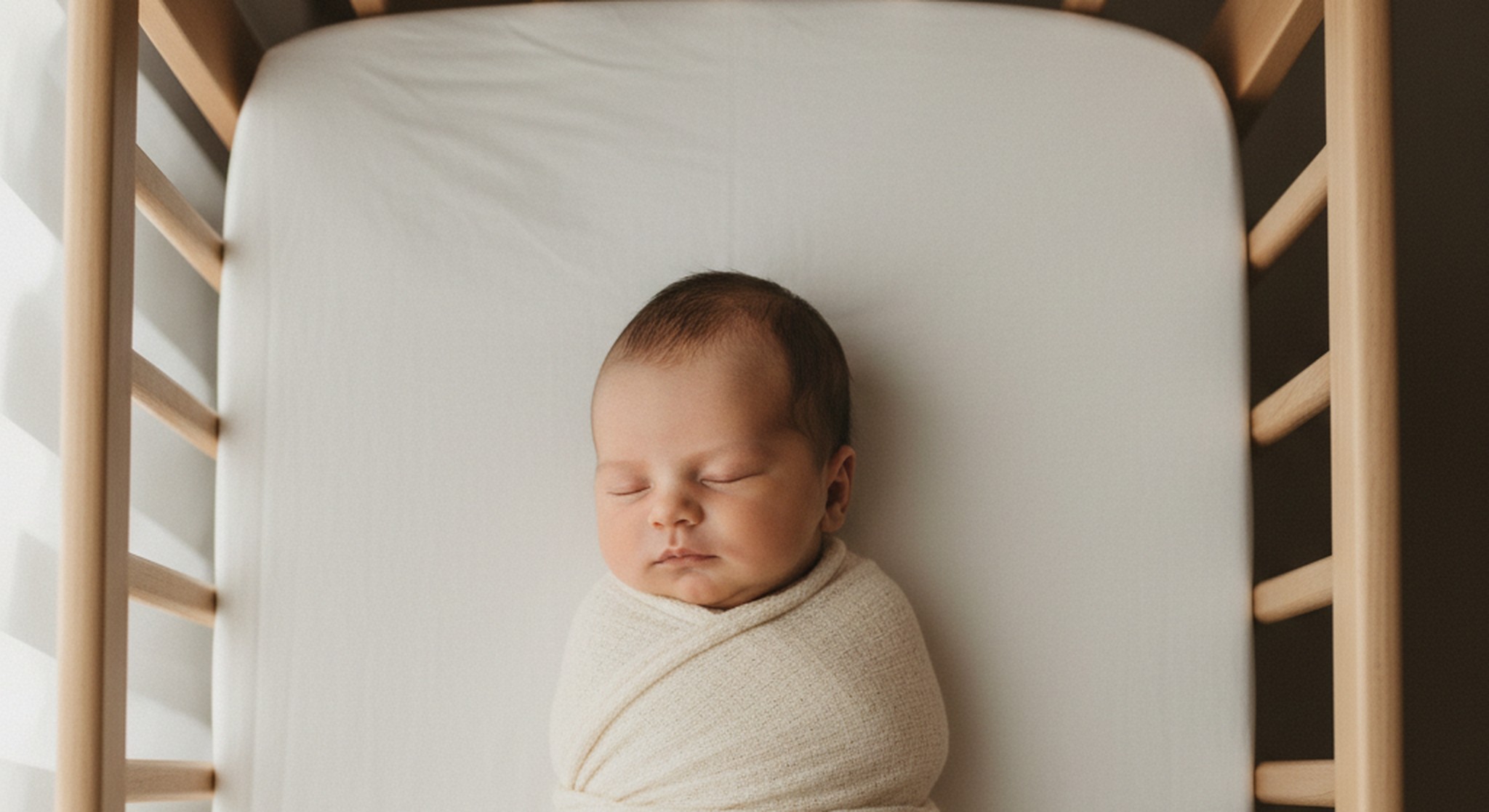


Twitching during sleep is almost always normal in babies, usually caused by the busy active sleep stage that fills much of a newborn’s night, or by a harmless pattern called benign sleep myoclonus, and it is rarely a cause for concern.
If you have ever watched your sleeping baby jerk an arm, flutter their eyelids, or twitch their fingers and wondered whether something is wrong, you are in very good company. These little movements are one of the most common things new parents notice and worry about.
This guide explains why babies twitch in their sleep, what is completely normal, the difference between harmless twitching and the rare signs that need attention, and when to check in with your pediatrician.
Key Takeaways
- Most sleep twitching comes from active sleep, the light, dream like stage babies spend lots of time in.
- Benign sleep myoclonus causes brief jerks during sleep and is harmless, stopping when the baby wakes.
- Harmless twitches happen only during sleep and stop if you gently wake your baby.
- Movements that continue while awake, are rhythmic and whole body, or come with other symptoms deserve a call.
- When in doubt, filming an episode to show your pediatrician can be very helpful.
Table of Contents
Why Babies Twitch in Their Sleep
Newborns spend a large share of their sleep in active sleep, the equivalent of REM or dream sleep, far more than adults do. In this stage the brain is highly active, breathing is irregular, the eyes move under the lids, and the body twitches, wriggles, and makes small sounds. Researchers think these twitches may even help the developing brain map the body and refine movement.
On top of that, young babies still have an immature nervous system and lively reflexes, such as the startle reflex, which can cause sudden jerks. All of this adds up to a sleeper who looks a lot busier than a grown up, with plenty of normal movement.
Active Sleep Versus Benign Sleep Myoclonus
Two harmless patterns explain most sleep twitching. The first is simply active sleep, described above, where twitches are scattered among wriggles, facial expressions, and noises. The second is benign neonatal sleep myoclonus, a specific pattern of repeated jerking movements, often of the arms or legs, that happens only during sleep.
The reassuring hallmark of benign sleep myoclonus is that it stops the moment the baby wakes up. The baby is otherwise completely well, feeds normally, and develops on track. It usually appears in the newborn weeks and fades over the first several months. Because it can look like other things, it is worth mentioning to your pediatrician, who can confirm it is nothing to worry about.
| Feature | Normal sleep twitching |
|---|---|
| When it happens | Only during sleep. |
| What stops it | Gently waking the baby stops the movement. |
| Baby’s condition | Feeding, growing, and developing normally. |
| Look | Scattered jerks, wriggles, and facial movements. |
Struggling with your baby’s sleep?
A personalized plan meets your baby where they are, at every age and stage.
When Twitching Might Need Attention
Harmless twitching happens in sleep and stops when your baby wakes. The picture is different, and worth a prompt call to your pediatrician, if movements continue after your baby is awake, involve rhythmic jerking of the whole body or one side, or come with other symptoms.
Signs that deserve medical attention include stiffening or rhythmic jerking that does not stop when you gently rouse your baby, movements paired with a change in color, breathing, or alertness, eyes rolling or a fixed stare with jerking, poor feeding, unusual floppiness, or a baby who is not developing as expected. These features can point to a seizure or another issue that a doctor should evaluate.
- Jerking that continues while your baby is fully awake.
- Rhythmic, whole body or one sided movements that do not stop when you rouse them.
- Twitching with color change, breathing trouble, or reduced alertness.
- Eyes rolling or a fixed, staring gaze during the movements.
- Poor feeding, unusual floppiness, or a loss of skills.
What You Can Do
For ordinary sleep twitching, no treatment is needed, and you do not have to wake your baby. A snug swaddle can reduce startle related jerks in young newborns who are not yet rolling, which may help everyone sleep. Just remember to stop swaddling once your baby shows signs of rolling.
If you are unsure whether what you are seeing is normal, record a short video on your phone. Being able to show your pediatrician exactly what the movements look like, and whether they stop when your baby wakes, makes it much easier to get a clear, reassuring answer.
Twitching is one of many normal newborn sleep behaviors. Our guides on crying in sleep and grunting in sleep cover others, and for safe wrapping see when to stop swaddling. For the bigger picture, visit our sleep schedule by age guide.
Related Reading
Frequently Asked Questions
Is it normal for my baby to twitch in their sleep?
Yes, it is very common and almost always normal. Babies spend a lot of time in active sleep, a light dream like stage full of movement, twitches, and facial expressions. A harmless pattern called benign sleep myoclonus can also cause brief jerks that stop when your baby wakes.
What is benign sleep myoclonus in babies?
It is a harmless pattern of repeated jerking movements, often of the arms or legs, that happens only during sleep and stops as soon as the baby wakes. The baby is otherwise well and developing normally. It usually appears in the newborn weeks and fades over the first several months.
How can I tell normal twitching from a seizure?
Normal twitching happens only during sleep and stops when you gently wake your baby, who is otherwise healthy. Seek medical advice if movements continue while awake, are rhythmic and whole body or one sided, do not stop when you rouse your baby, or come with color changes, breathing problems, staring, or poor feeding.
Should I wake my baby when they twitch in their sleep?
No, ordinary sleep twitching needs no treatment and you do not have to wake your baby. If you want to check whether the movements are harmless, you can gently rouse your baby, since normal sleep twitches stop on waking. Otherwise, let them sleep.
When should I see a doctor about my baby’s twitching?
Contact your pediatrician if the movements continue when your baby is awake, are rhythmic and whole body or one sided, do not stop when you rouse them, or come with color changes, breathing trouble, staring, poor feeding, or floppiness. Recording a short video of an episode can help your doctor assess it.
Understand your baby’s sleep
Get a personalized plan built around your baby’s age, patterns, and temperament.
4 Sources
- American Academy of Pediatrics, HealthyChildren.org. Newborn Reflexes and Behavior.
https://www.healthychildren.org/English/ages-stages/baby/Pages/Newborn-Reflexes.aspx - American Academy of Pediatrics. Sleep-Related Infant Deaths: Updated 2022 Recommendations for Reducing Infant Deaths in the Sleep Environment. Pediatrics, 2022.
https://publications.aap.org/pediatrics/article/150/1/e2022057990/188304 - Paruthi S, et al. Recommended Amount of Sleep for Pediatric Populations: A Consensus Statement of the American Academy of Sleep Medicine. Journal of Clinical Sleep Medicine, 2016.
https://doi.org/10.5664/jcsm.5866 - Iglowstein I, et al. Sleep Duration From Infancy to Adolescence: Reference Values and Generational Trends. Pediatrics, 2003.
https://publications.aap.org/pediatrics/article/111/2/302/28983
- Related: why babies smile in their sleep
- Related: baby coughing in sleep