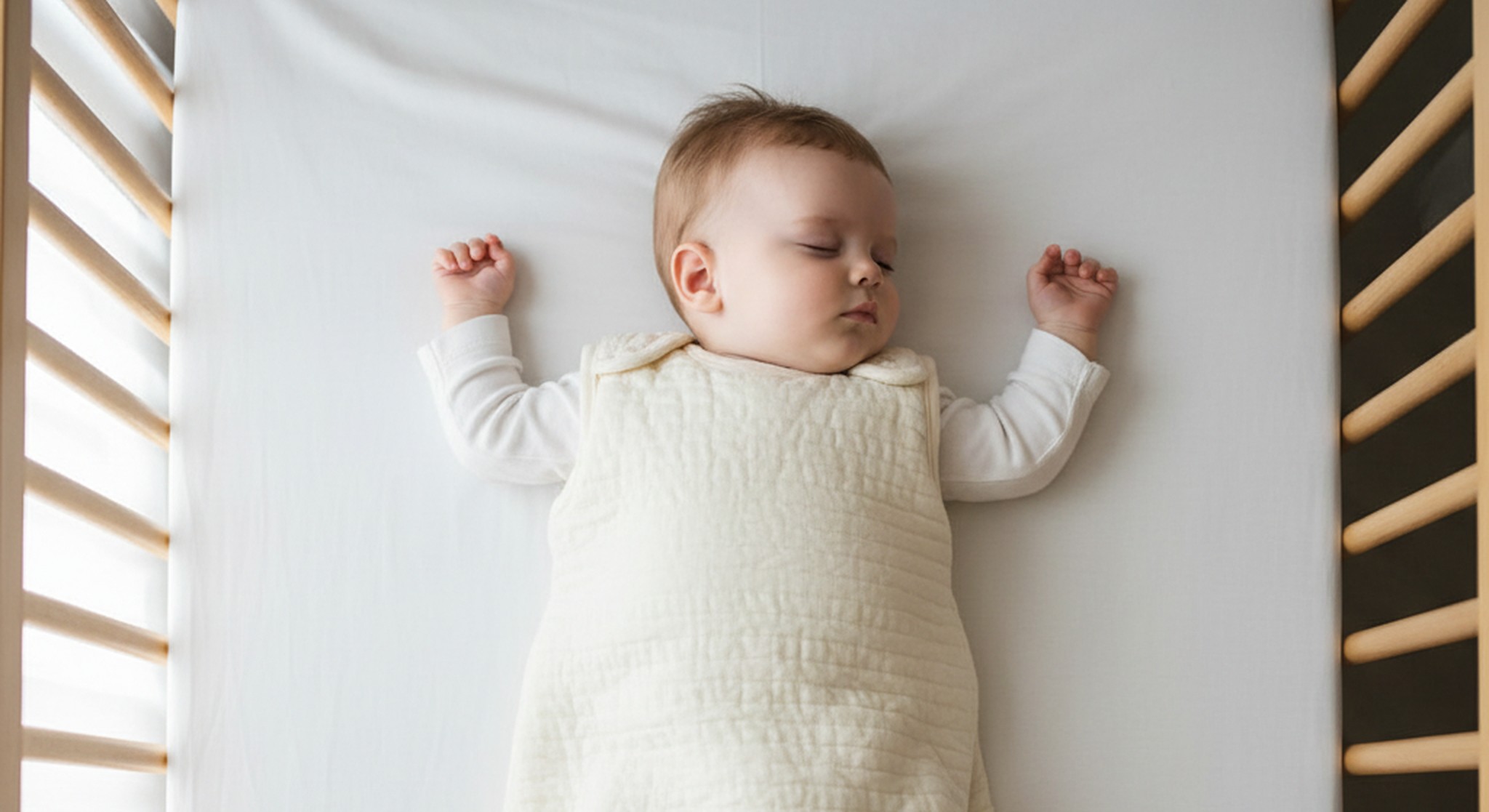
Most experts advise waiting until your baby is at least twelve months old before adding a loose blanket to the crib, and using a wearable blanket or sleep sack until then, because soft bedding raises the risk of suffocation for younger infants.
A soft blanket feels like the coziest possible thing to give a sleeping baby, so it surprises many parents to learn that loose bedding is one of the things safe sleep guidance specifically warns against in the first year.
This guide explains the safe age for a blanket, why the recommendation exists, and how to keep your baby comfortably warm without one until they are ready.
Key Takeaways
Keep loose blankets out of the crib until your baby is at least 12 months old.
Many experts prefer waiting closer to 18 months, when toddlers can easily move bedding away.
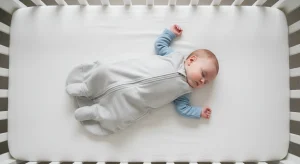
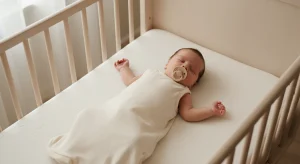
Until then, a wearable blanket or sleep sack keeps your baby warm safely.
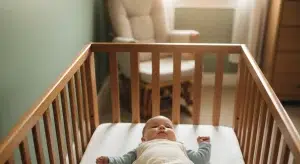
For the first year, the crib should have only a firm mattress and a fitted sheet.
Keep the room at a comfortable temperature and dress your baby in light layers to avoid overheating.
As an Amazon Associate, Betteroo earns from qualifying purchases.
Table of Contents
The Safe Age for a Blanket
Safe sleep guidance from the American Academy of Pediatrics is clear that soft objects and loose bedding, including blankets, quilts, pillows, and bumpers, should be kept out of the sleep space for the first year. The commonly cited milestone is the first birthday: after twelve months, the suffocation risk drops considerably because babies are stronger, more mobile, and able to move a blanket off their face.
Many pediatric sleep specialists suggest being even more cautious and waiting until around eighteen months, especially for a large or heavy blanket. There is no need to rush. A sleep sack keeps working well into toddlerhood, and plenty of toddlers happily use one past their second birthday.
Age
Safe bedding
0 to 12 months
Firm mattress and fitted sheet only. Use a swaddle for young newborns or a sleep sack.
12 to 18 months
A small, thin blanket can be introduced with caution. A sleep sack is still a great option.
18 months and older
A lightweight blanket is generally considered safe for most toddlers.
Typical ranges. Small variations are completely normal.
Why Loose Bedding Is Risky for Babies
Young babies do not yet have the strength or coordination to push a blanket away from their face if it rides up during sleep. A blanket can also become bunched, wrapped, or pulled over the head, which raises the risk of suffocation and overheating. Both of these are linked to sleep related infant death.
That is why the safest crib in the first year is a boring one: a firm, flat mattress, a snugly fitted sheet, and nothing else. No pillows, no stuffed animals, no bumpers, and no blankets. Your baby stays warm through what they wear, not what covers them.
Blankets can cover the face and restrict breathing.
Loose bedding can cause overheating, a known risk factor.
Babies cannot reliably remove bedding until they are older and stronger.
A bare crib removes the guesswork and keeps sleep safe.
Struggling with your baby’s sleep?
A personalized plan meets your baby where they are, at every age and stage.
A wearable blanket, often called a sleep sack, is the simplest solution. It goes on like a sleeveless garment and cannot ride up over the face. Sleep sacks come in different weights, measured as a TOG rating, so you can match the warmth to the room temperature and season.
A helpful rule of thumb is to dress your baby in one more layer than you would wear to be comfortable in that room. Keep the nursery at roughly 68 to 72 degrees Fahrenheit, and watch for signs of overheating such as sweating, damp hair, flushed cheeks, or a hot chest. Feet and hands often feel cool even when your baby is perfectly warm, so judge temperature by the chest or back of the neck instead.
Use a sleep sack matched to the room temperature.
Dress your baby in one more layer than you would wear.
Keep the room around 68 to 72 degrees Fahrenheit.
Check warmth at the chest or back of the neck, not the hands or feet.
Most experts recommend waiting until your baby is at least 12 months old before introducing a loose blanket, and many suggest waiting closer to 18 months. Before then, a wearable blanket or sleep sack is the safe way to keep your baby warm.
Why can’t babies have blankets before one year?
Young babies cannot reliably move a blanket away from their face, so loose bedding raises the risk of suffocation and overheating, both linked to sleep related infant death. Keeping the crib bare for the first year removes that risk.
What can my baby use instead of a blanket?
A wearable blanket, or sleep sack, is the recommended alternative. It keeps your baby warm without any loose fabric that could cover the face. Sleep sacks come in different weights so you can match them to the room temperature.
Is it safe for a one year old to sleep with a blanket?
After 12 months the risk drops considerably, so a small, thin blanket is generally considered acceptable. If you prefer extra caution, wait until around 18 months or simply keep using a sleep sack, which works well for toddlers.
How do I know if my baby is warm enough without a blanket?
Feel the chest or the back of the neck rather than the hands and feet, which often run cool. Dress your baby in about one more layer than you would wear, keep the room around 68 to 72 degrees Fahrenheit, and watch for sweating or a hot chest as signs of overheating.
Safe, restful sleep at every age
Get a personalized plan that keeps safety and good sleep front and center.
Paruthi S, et al. Recommended Amount of Sleep for Pediatric Populations: A Consensus Statement of the American Academy of Sleep Medicine. Journal of Clinical Sleep Medicine, 2016. https://doi.org/10.5664/jcsm.5866