White noise can genuinely help babies sleep by masking household sounds, and it is safe as long as you keep it at or below about fifty decibels and at least seven feet from the crib.
White noise is one of the most popular baby sleep tools for good reason: a steady wall of sound smooths over the little disturbances that pull a lightly sleeping baby out of a nap or an early-evening stretch. Used well, it is a simple, low-cost helper.
This guide explains whether white noise really helps, how it works, whether it is safe, the exact volume and distance to aim for, how to use it correctly, and what to do about the sleep association it can create.
Key Takeaways
White noise helps mainly by masking sudden household sounds that would otherwise wake a lightly sleeping baby.
It is safe when kept at or below about 50 decibels and at least 7 feet (2 meters) from the crib.
Never use the maximum volume setting; a 2014 Pediatrics study found many machines exceed safe levels up close.
Running it continuously through sleep works better than a short timer that clicks off mid-nap.
White noise can become a harmless sleep association and can be weaned by lowering the volume over one to two weeks.
As an Amazon Associate, Betteroo earns from qualifying purchases.
Table of Contents
Does White Noise Help Babies Sleep?
For many babies, yes. White noise is a steady, consistent sound that spans a broad range of frequencies, and it does two useful things for infant sleep. It recreates the constant whooshing environment of the womb, which is far from silent, and it masks the sudden household noises, a door closing, a sibling shouting, a dog barking, that would otherwise startle a lightly sleeping baby awake.
That masking effect is the real workhorse. Babies cycle through light sleep often, and a predictable wall of sound smooths over the little disturbances that cause brief wakings, particularly during naps and the early evening. White noise will not fix an overtired baby or an off wake window, but as one supportive ingredient in a calm sleep environment, it genuinely helps a lot of families.
How White Noise Works
The idea is signal versus background. When the room is silent, every unexpected sound stands out sharply against the quiet and can jolt a baby. A continuous, unchanging sound raises the background floor so that those spikes are far less noticeable, which keeps your baby in the flow of sleep instead of surfacing at each noise.
Some families prefer pink noise or brown noise, which emphasize lower frequencies and sound softer and deeper, like steady rain or a low rumble, rather than the harsher hiss of true white noise. For sleep purposes the differences are minor; the best choice is whichever steady sound your baby settles to and that you can keep at a safe, low volume.
Is White Noise Safe for Babies?
White noise is safe when it is used at a sensible volume and distance. The concern is not the sound itself but the possibility of prolonged exposure to sound that is too loud, played too close to a baby’s ears, which over time could affect hearing. The fix is simple and entirely within your control: keep it quiet and keep it away from the crib.
A frequently cited 2014 study in the journal Pediatrics tested infant sound machines at maximum volume and found that many exceeded safe levels when measured close to the crib, with some reaching levels above eighty-five decibels. That is a caution about misuse, not a reason to avoid white noise. Used correctly, it stays well within safe limits.
Safe Volume and Distance
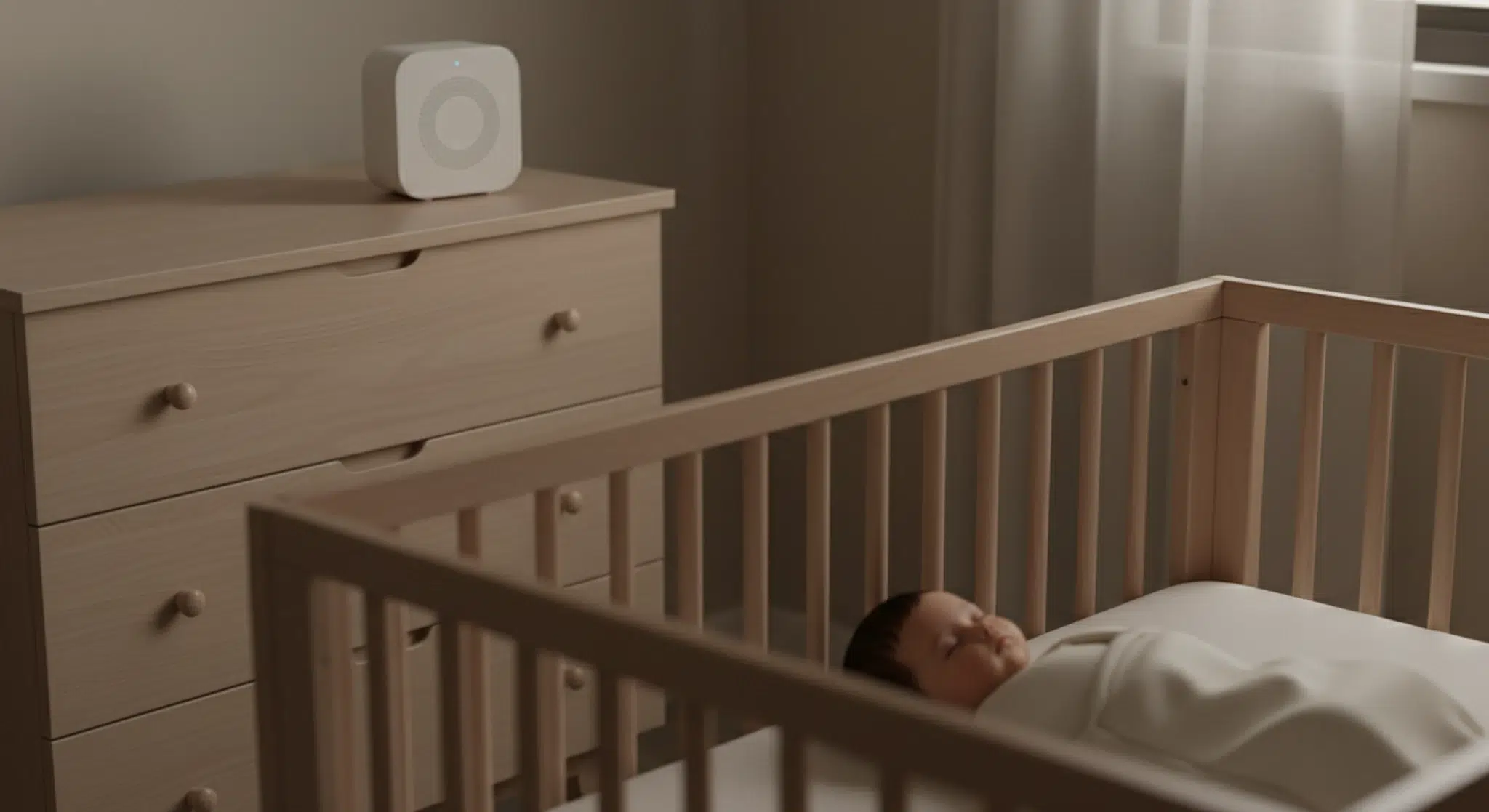
Two numbers keep white noise safe. Keep the volume at or below about fifty decibels, roughly the level of a quiet refrigerator hum or a soft shower, and place the machine at least seven feet, or about two meters, away from your baby’s sleep space rather than on the crib rail. Never run it at the maximum setting.
Aim for 50 decibels or lower, about the sound of a quiet refrigerator
Place the machine at least 7 feet (roughly 2 meters) from the crib
Never use the maximum volume setting
Use the lowest volume that still masks background noise
A quick check: if it is loud enough to disrupt your own conversation nearby, it is too loud
A good habit is to set the volume no higher than needed to cover the sounds you are trying to mask, then leave it there. Louder is not more effective for sleep; it only raises the exposure without adding benefit.
Building a calmer sleep setup?
White noise is one piece of the puzzle. Our free quiz builds a full sleep plan matched to your baby’s age and stage.
Turn the machine on as part of your wind-down, just before you place your baby down for naps and at bedtime. Running it continuously through the whole sleep period, rather than on a short timer that clicks off mid-nap, tends to work better, because the sudden silence when a timer stops can itself wake a baby between sleep cycles.
Keep the rest of the environment consistent with it: a dark room, a comfortable temperature, and a firm, flat, bare sleep surface. White noise pairs naturally with a predictable routine, so it becomes a reliable cue that sleep is coming. For the wider picture, see our guide to building a safe sleep environment.
Will My Baby Become Dependent on White Noise?
White noise can become a sleep association, meaning your baby links it with falling asleep, but this is not a harmful dependency and it is easy to manage. Many families happily use white noise for years with no downside, and it is portable enough to bring to grandparents’ houses or on trips to keep sleep consistent.
If you ever want to phase it out, simply lower the volume gradually over one to two weeks until the machine is off. There is no rush and no medical reason to stop, so the decision is entirely about what works for your family. A steady sound cue can be a genuinely helpful part of healthy sleep habits.
A Note on Safe Use
The safety story here is entirely about dose. Sound that is moderate and kept at a distance is fine for nightly use, while sound that is loud and right next to the ears, night after night, is the thing to avoid. Because you control both the volume dial and where the machine sits, staying in the safe zone is easy.
Set it low, set it far, and leave it there. If you follow those two rules, white noise is a safe, effective, and portable part of a healthy sleep routine that many families rely on for years.
Frequently Asked Questions
Does white noise really help babies sleep?
For many babies, yes. White noise recreates the constant whooshing sound of the womb and masks sudden household noises that would otherwise startle a lightly sleeping baby. It works best as one part of a calm, consistent sleep environment rather than as a fix for overtiredness or an off schedule.
How loud should white noise be for a baby?
Keep it at or below about fifty decibels, roughly the level of a quiet refrigerator, and never use the maximum setting. Use the lowest volume that still masks background sound. If it is loud enough to disrupt a normal conversation nearby, it is too loud.
How far should a sound machine be from the crib?
Place it at least seven feet, or about two meters, from your baby’s sleep space, not on the crib rail. A 2014 study in Pediatrics found many infant machines exceeded safe levels at maximum volume when measured close to the crib, so distance plus a low volume keeps exposure safe.
Should white noise run all night or on a timer?
Running it continuously through the whole nap or night usually works better than a short timer. When a timer clicks off mid-sleep, the sudden silence can wake a baby between sleep cycles. Keep it at a low, steady volume the whole time.
Will my baby get dependent on white noise?
White noise can become a sleep association, but that is not harmful and is easy to manage. Many families use it for years with no downside. If you want to stop, gradually lower the volume over one to two weeks until it is off. There is no medical reason you must wean it.
Dial in your baby’s whole sleep setup
Take our free 3-minute sleep quiz for a plan matched to your baby’s age, temperament, and current sleep habits.