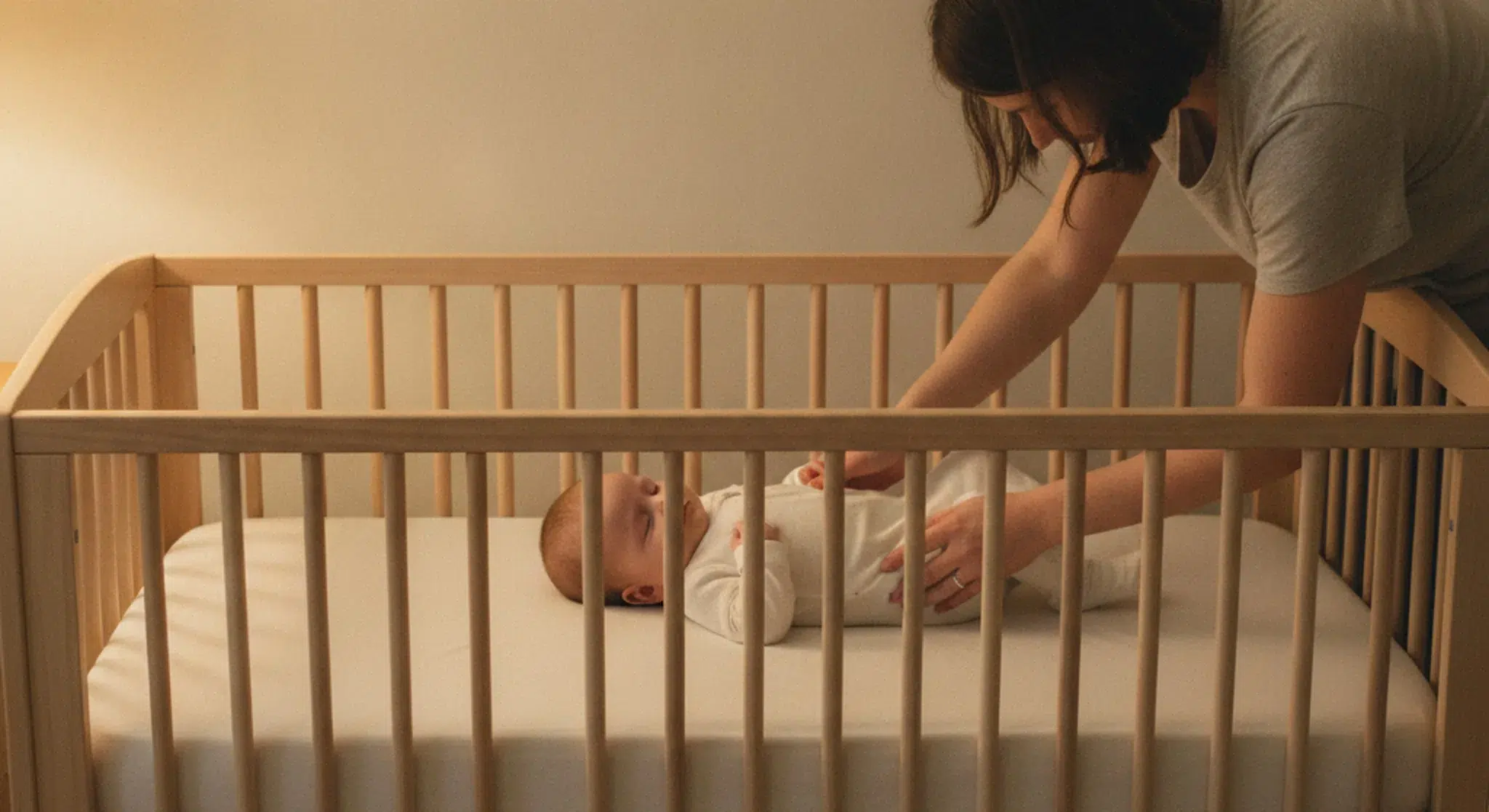
Putting a baby to sleep is less about a magic trick and more about timing, a calm routine, and a safe, predictable space.
When you catch the right window, wind your baby down gently, and lay them in a consistent sleep spot, sleep tends to follow with far less fighting than the endless bounce-and-pray approach.
This guide walks through the steps that work at almost any age: reading sleepy cues, building a short wind-down, placing your baby down drowsy but awake, and using safe soothing tools without creating traps.
Key Takeaways
Timing beats technique. Watch wake windows and early sleepy cues so you catch the window before overtiredness sets in.
A short, predictable wind-down routine tells your baby’s brain that sleep is coming.
Aim to put your baby down drowsy but awake so they learn to fall asleep in their own space.
Swaddling, white noise, and gentle motion soothe newborns without becoming problems if you fade them over time.
Always place your baby on their back on a firm, flat, bare surface for every sleep.
The window that makes it easy
The biggest difference between a smooth bedtime and a battle is catching your baby before they are overtired. Yawns, red or glazed eyes, staring off, and fussiness are early signals. Once a baby is past that window, stress hormones make settling much harder, so start your wind-down at the first cues, not the last.
Table of Contents
Step 1: Watch the Clock and the Cues
Babies can only stay comfortably awake for a limited stretch, called a wake window, and it grows as they age. A newborn may last only 45 to 60 minutes, while an older baby can handle a few hours. Getting the timing right is the foundation everything else rests on.
Pair the clock with your baby’s own signals. Early sleepy cues include yawning, looking away, glazed or reddening eyes, and slowing down. Crying and back-arching are late cues that usually mean you have already missed the easy window.
Step 2: Build a Short Wind-Down Routine
A consistent routine is one of the most evidence-backed sleep tools there is. It does not need to be long. Three or four calming steps in the same order each time train your baby to associate the sequence with sleep.
Dim the lights and lower the noise to signal that the day is winding down.
Change the diaper and put on a sleep sack or swaddle.
Offer a feed if it fits your baby’s schedule, keeping it calm and low-key.
Add one soothing anchor: a short song, a few quiet words, or a cuddle.
Move to the sleep space while your baby is calm and drowsy.
Step 3: Put Your Baby Down Drowsy but Awake
The phrase drowsy but awake is the heart of independent sleep. When you lay your baby down relaxed but still slightly aware, they get the chance to make the final drift into sleep in their own space, which helps them link sleep cycles later without needing you each time.
This is a skill that develops with practice, and newborns need more help than older babies. If your very young baby only sleeps fully out, that is normal for now. As the weeks pass, aim to put them down a little more awake so the habit can grow.
Step 4: Use Safe Soothing Tools
Swaddling calms the startle reflex in young babies. Stop at the first sign of rolling and switch to a sleep sack.
White noise at a steady, moderate volume masks household sounds and mimics the womb.
Gentle motion or patting can settle a fussy baby. Fade it gradually so it does not become the only way they fall asleep.
A pacifier at sleep time, once feeding is established, can soothe and is linked with safer sleep.
A calm, low-stimulation room: dim, quiet, and comfortably cool.
Step 5: Keep the Sleep Space Safe
Every soothing choice sits inside safe sleep. Place your baby on their back, on a firm, flat surface, in a crib or bassinet with a fitted sheet and nothing else. No loose blankets, pillows, bumpers, or toys.
Room-share without bed-sharing for at least the first 6 months, keep the room smoke free, and dress your baby in a sleep sack rather than covering them with blankets. A safe space is not just about risk, it also removes the distractions and disruptions that wake babies up.
Catch the right window using wake windows and early sleepy cues, run a short calming wind-down routine, and place your baby down drowsy but awake in a safe, bare crib. Good timing does more than any single technique.
What does drowsy but awake mean?
It means laying your baby down relaxed and sleepy but not fully asleep, so they can make the final drift into sleep in their own space. This helps them learn to connect sleep cycles without needing you each time.
Should I let my newborn fall asleep on me?
In the early weeks it is normal and fine while you are awake and supervising. For sleep-time placement, always move your baby to their back on a firm, flat, bare surface. Over time, aim to put them down a little more awake.
How long should a baby’s bedtime routine be?
Short and consistent works best, often just 15 to 30 minutes of three or four calming steps in the same order. Predictability, not length, is what signals to your baby’s brain that sleep is coming.
What soothing tools are safe for helping a baby sleep?
Swaddling for young babies, steady white noise, gentle motion, and a pacifier once feeding is established are all safe and helpful. Stop swaddling at the first sign of rolling, and fade motion so it does not become the only way to sleep.
4 Sources
Paruthi S, et al. Recommended Amount of Sleep for Pediatric Populations: A Consensus Statement of the American Academy of Sleep Medicine. Journal of Clinical Sleep Medicine, 2016. https://jcsm.aasm.org/doi/10.5664/jcsm.5866