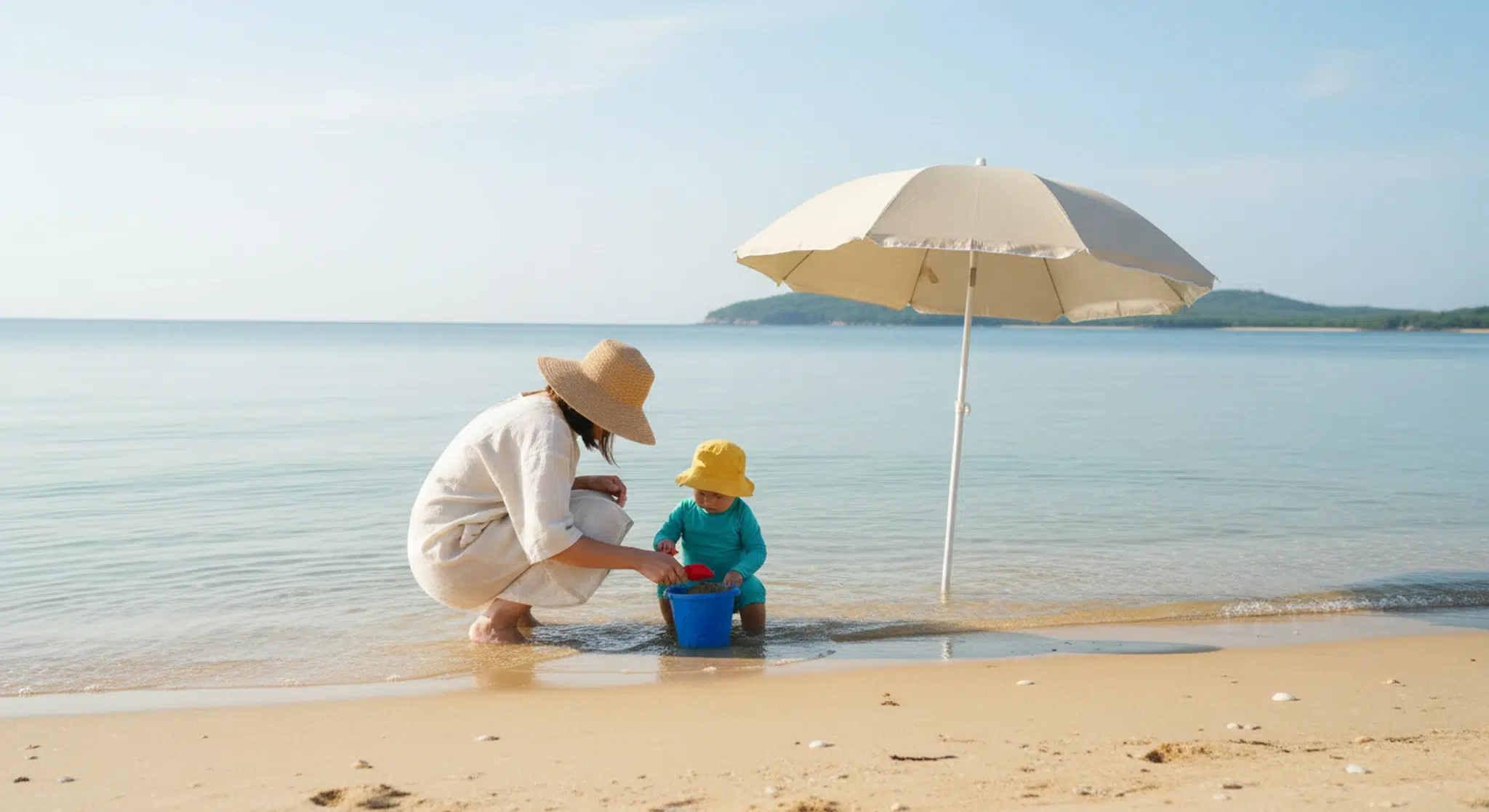
The best family beach vacations for babies and toddlers combine calm water, lifeguards in season and shade nearby, such as Mission Bay in San Diego, Clearwater and Siesta Key in Florida, Cape Cod’s bay side, Oahu’s Ala Moana and Aruba’s Baby Beach.
A beach is one of the easiest vacations with little kids: a baby is happy with a shady spot and a bucket of sand, and a toddler can spend hours at the water’s edge. But not every beach suits small children. Big surf, rip currents, long walks from parking and no lifeguards can turn a dream trip stressful.
We checked 19 family beach destinations on their official park, city and tourism pages in November 2026 for water type, lifeguard seasons and family amenities. Below you’ll find a comparison table, a baby or toddler tip for each beach, and AAP-based guidance on sun, water safety, heat, packing and naps.
Key Takeaways
Bays, sounds and reef-protected lagoons are the gentlest water for babies and toddlers.
Lifeguard seasons vary widely; many end at Labor Day, so check official dates.
Keep babies under 6 months in shade and covering clothing, per the AAP and FDA.
Stay within arm’s reach of toddlers in the water and use a Coast Guard approved life jacket.
Schedule beach time around a midday nap in a dark room, and keep sleep spaces safe.
As an Amazon Associate, Betteroo earns from qualifying purchases.
Table of Contents
The Best Family Beach Vacations at a Glance
Quick Answer
The best family beach vacations for babies and toddlers pair gentle water with lifeguards, shade and nearby restrooms. Calmest picks: Mission Bay (San Diego), Clearwater and Siesta Key (Florida), Cape Cod’s bay side, Oahu’s Ala Moana and Aruba’s Baby Beach. For boardwalks and guarded beaches: Ocean City, NJ, Virginia Beach and Hilton Head.
Details checked on official city, county, state park, National Park Service and tourism board pages in November 2026. Lifeguard schedules change, so confirm before you go.
Destination
Region
Water type
Best for ages
Best months
Mission Bay, San Diego
California
Calm bay, no surf
Babies and up
Summer
Ala Moana, Oahu
Hawaii
Reef-protected lagoon
Babies and up
Year round
Indiana Dunes
Lake Michigan
Freshwater lake
Toddlers and up
Late May to early Sept.
Clearwater and Fort De Soto
Florida Gulf
Gentle surf
Babies and up
April to Sept.
Siesta Key
Florida Gulf
Calm, clear water
Babies and up
Spring, fall
Destin
Florida Panhandle
Gulf surf
Toddlers and up
Spring, fall
Gulf Shores
Alabama
Gulf surf
Toddlers and up
Spring, fall
Galveston
Texas
Gulf and bay
Toddlers and up
Summer
Hilton Head Island
South Carolina
Atlantic
Toddlers and up
April to Sept.
Jekyll Island
Georgia
Atlantic, tidal
Toddlers and up
Spring, fall
Myrtle Beach State Park
South Carolina
Atlantic surf
Toddlers and up
Mid-May to mid-Sept.
Outer Banks
North Carolina
Surf plus sound
Preschool and up
Late May to Oct.
Virginia Beach
Virginia
Surf plus bay
Toddlers and up
Summer
Cape Henlopen
Delaware
Ocean and bay
Toddlers and up
Late May to early Sept.
Ocean City
New Jersey
Atlantic surf
Toddlers and up
Late May to mid-Sept.
Cape Cod
Massachusetts
Calm bay side
Babies and up
Late June to early Sept.
Luquillo and Boquerón
Puerto Rico
Shallow, calm
Babies and up
Year round
Trunk Bay, St. John
U.S. Virgin Islands
Clear Caribbean
Preschool and up
Year round
Baby Beach
Aruba
Shallow lagoon
Babies and up
Year round
Family beach destinations compared. Best months follow lifeguard seasons where published; ages are our suggestion.
Calm-Water Family Beaches on the Gulf Coast
The Gulf is often gentler than the open Atlantic, but it still has surf days, so check the flag every morning.
Clearwater and Fort De Soto, Florida: the local tourism office describes gentle surf and warm water, plus Pier 60’s playground and nightly sunset celebration. Pinellas County’s Fort De Soto Park adds two swim centers, playgrounds and a barrier-free nature trail, with seasonal lifeguards April to September. Baby tip: the Clearwater Marine Aquarium is a shady midday break.
Siesta Key, Florida: Sarasota County cites calm, clear water and nearly 100% quartz sand that stays cool, plus a playground, concessions and a daily lifeguard presence. Baby tip: cool sand is kind to crawling hands.
Destin, Florida: Henderson Beach State Park has white dunes, a dune boardwalk, a nature trail and shower stations. The park requires day-use reservations from May 15, 2026, and lists no lifeguards. Baby tip: use it for walks and wading.
Gulf Shores, Alabama: Gulf State Park’s beach pavilion has bathrooms with showers next to the sand, plus a Nature Center. Text ALBEACHES to 888777 for daily flag updates. Baby tip: purple flags mean dangerous marine life.
Galveston, Texas: the Beach Patrol staffs 24 towers from East Beach Park to 61st Street in season and warns that jetties generate rip currents. Galveston Island State Park has a bay side, a weekend Nature Center and a Junior Ranger program. Baby tip: set up near a tower, away from jetties.
Southeast Atlantic Beaches for Babies and Toddlers
Hilton Head Island, South Carolina: the town’s beach season runs April 1 to September 30, with lifeguards at Alder Lane, Coligny, Driessen, Folly Field and Islanders beach parks. Ask a lifeguard before swimming under a yellow, red or purple flag. Baby tip: those parks keep restrooms close.
Jekyll Island, Georgia: the Golden Isles tourism office calls Great Dunes Beach Park the most popular family beach, with play areas and restrooms. Visit Driftwood Beach near low tide, see the Georgia Sea Turtle Center, and ride more than 20 miles of flat, paved trails. Baby tip: bring a bike trailer or stroller.
Myrtle Beach State Park, South Carolina: Horry County lifeguards cover the park’s north section from mid-May through mid-September, with boardwalks, outdoor showers, a nature center and a pier. Baby tip: a quieter alternative to the busy strand.
Outer Banks, North Carolina: Nags Head Ocean Rescue guards stands from Memorial Day through October, 10 a.m. to 6 p.m. when staffed. Double red flags close the ocean. Jockey’s Ridge State Park has a swim beach on Roanoke Sound. Best for: preschoolers and up.
Mid-Atlantic and New England Family Beaches
Virginia Beach, Virginia: the Lifesaving Service runs 50 Oceanfront stations from 1st to 89th Streets plus Croatan Beach, and asks swimmers to stay within 50 yards of shore. First Landing State Park’s Chesapeake Bay beach has playgrounds and crabbing programs but no lifeguards. Baby tip: swim at the Oceanfront, explore the bay on foot.
Cape Henlopen State Park, Delaware: a guarded swimming beach from Memorial Day weekend to Labor Day, plus the Seaside Nature Center’s touch tank and a program for ages 3 to 5. Baby tip: the touch tank makes a perfect cool-down.
Ocean City, New Jersey: the self-styled “America’s Greatest Family Resort” has lifeguards from Memorial Day weekend to mid-September and urges swimming only at guarded beaches. Baby tip: the boardwalk is an easy evening stroller loop.
Cape Cod, Massachusetts: the National Park Service says lifeguards are typically on duty at six National Seashore beaches from late June through Labor Day. The Chamber of Commerce notes calm surf at Herring Cove and warm, shallow water and tide pools at bay side Skaket, while Atlantic beaches have big surf. Baby tip: choose the bay side and avoid swimming near seals.
Big days go better with a good night of sleep.
Got a little one at home too? Our free two-minute quiz builds a gentle, personalized sleep plan for babies and toddlers.
West Coast, Hawaii, Great Lakes and Island Beaches
Mission Bay, San Diego: San Diego Lifeguards report no significant currents and no surf. Most beaches are guarded daily in summer, on weekends through October, and not at all from November to spring break. Baby tip: some beaches drop off steeply, so stay at arm’s length.
Ala Moana, Oahu, Hawaii: Hawaii’s tourism site says a fringing reef keeps the water calm and calls Magic Island’s shallow lagoon perfect for keiki (children). Lifeguards are listed. Baby tip: read our flying with a baby guide first.
Indiana Dunes, Indiana: freshwater, no salt sting. The National Park Service guards West Beach from Memorial Day weekend through Labor Day, 10 a.m. to 6 p.m., and calls rip currents Lake Michigan’s top drowning threat. Baby tip: keep young children within arm’s reach, as the park advises.
Puerto Rico: no passport needed for U.S. citizens. Discover Puerto Rico says Luquillo’s Balneario La Monserrate has shallow water and lifeguards, and Boquerón’s water is almost waveless. Baby tip: balnearios have showers.
Trunk Bay, St. John, U.S. Virgin Islands: in Virgin Islands National Park: an underwater snorkel trail, family-style restrooms, showers and life jacket rentals. Best for: preschoolers floating beside a parent.
Baby Beach, Aruba: passports required. Aruba’s tourism site describes a calm, shallow lagoon, free shade huts and restrooms, ideal for small kids. Baby tip: claim a hut early.
Gentle water: bays, sounds, lagoons and reef-protected beaches.
Lifeguards in season. Many seasons end at Labor Day.
A short walk to sand, restrooms, showers and shade.
A too-hot backup: a nature center, aquarium or boardwalk.
Travel time that fits around naps, and a dark room for sleep.
Sun and Heat Safety for Babies and Toddlers
The AAP says to keep babies under 6 months out of direct sunlight in body-covering clothing, using sunscreen on small areas like the face only when shade and clothing are not available. The FDA recommends shade, long sleeves, a brimmed hat and a pediatrician check before any sunscreen under 6 months.
For older kids, the AAP advises broad-spectrum SPF 15 or higher, applied 15 to 30 minutes before going out and reapplied every 2 hours and after swimming. Limit sun from 10 a.m. to 4 p.m.
The AAP warns a heat index of 90 degrees or more can be dangerous for young children. Offer toddlers water often; babies under 6 months should not get water, so offer extra breast milk or formula (see when babies can drink water). Watch for fussiness and redness, and treat heat stroke as an emergency. Heat can also bring heat rash.
Water Safety and Rip Currents
The AAP calls drowning the leading cause of death in children 1 to 4, and it can happen silently in an inch or two of water.
Use “touch supervision”: stay within arm’s length.
Rotate a “water watcher” every 15 to 20 minutes.
Use a U.S. Coast Guard approved life jacket in open water, not floaties.
The National Weather Service says rip currents often form near sandbar gaps, jetties and piers. Swim near a lifeguard. If caught, don’t fight it: swim parallel to shore, or float and wave for help. See our baby swimming guide.
Hit the beach in the morning, nap in a dark room through the hottest hours, and return late afternoon. Our nap length by age chart helps you plan.
Babies under 12 months sleep alone, on their back, on a firm, flat, bare surface: never on a lounger, towel or in a beach tent. See baby sleep while traveling and our safe sleep checklist.
The best family beach vacations with little kids are rarely about the most famous sand. Choose calm water, lifeguards in season, shade and restrooms close by, and a home base where your baby can nap. Check lifeguard schedules and flags on the official beach pages before you go, keep babies under 6 months in the shade, stay within arm’s reach in the water, and protect at least one nap a day. Ask your pediatrician about sunscreen for babies under 6 months and any health questions before a big trip.
Frequently Asked Questions
What are the best family beach vacations with toddlers?
Look for calm water, lifeguards and amenities close to the sand. Mission Bay in San Diego, Clearwater and Siesta Key in Florida, the bay side of Cape Cod, Ala Moana on Oahu and Baby Beach in Aruba all have gentle water. Hilton Head, Virginia Beach and Ocean City, New Jersey add seasonal lifeguards and easy boardwalks or bike paths.
Is it safe to take a newborn or young baby to the beach?
Yes, with precautions. The AAP says babies under 6 months should stay out of direct sunlight, wear clothing that covers the body and use sunscreen only on small areas if shade and clothing are not available. Keep them in deep shade, avoid the midday hours, offer extra breast milk or formula, and watch for signs of overheating.
What beach has the calmest water for kids in the U.S.?
Protected water is calmest. San Diego Lifeguards say Mission Bay has no significant currents and no surf, Hawaii’s tourism site says Ala Moana is protected by a fringing reef, and Cape Cod’s bay side beaches have calmer surf than the Atlantic side. Even calm beaches can have sudden drop-offs, so stay within arm’s reach.
Can I put sunscreen on my baby under 6 months?
The FDA says to check with your pediatrician before using sunscreen on babies younger than 6 months. The AAP says it may be used on small areas, such as the face, when shade and protective clothing are not available. Shade, a brimmed hat and lightweight long sleeves and pants are the first line of protection.
What should I pack for a beach trip with a baby or toddler?
Pack shade such as an umbrella or pop-up tent, long-sleeve swimwear, a wide-brim hat, sunscreen for babies over 6 months, a Coast Guard approved life jacket that fits, swim diapers, water shoes, a cooler with water, milk or formula and snacks, towels, a change of clothes, sand toys, and your usual sleep items.
How do I keep naps on track during a beach vacation?
Plan beach time for the morning and late afternoon, and nap in a dark, cool room during the hottest midday hours. Bring familiar sleep cues like a sleep sack and white noise. Babies under 12 months should always sleep on their back on a firm, flat, bare surface, never on a lounger, towel or in a beach tent.
Gentle changes, peaceful nights.
Betteroo builds a personalized sleep plan for your baby or toddler. Take the free two-minute quiz to get started.