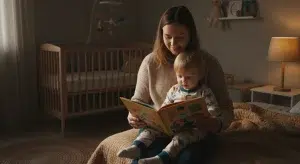
Affirmations for kids are short, true, positive sentences that help children remember they can try, cope and grow, and the 152 original affirmations below are sorted by theme and age.
The ones that work best are simple enough for your child to believe, said in a warm voice, and tucked into a routine you already have, like breakfast or the last hug at bedtime. Research on self-affirmation is mostly in teens and adults, and repeating sentences that feel untrue can backfire, so every affirmation here leans on effort, feelings and kindness rather than empty labels.
You’ll find sets for confidence, big feelings, friendship, school, mornings and bedtime, very short phrases for toddlers, realistic ones for tweens and teens, and encouraging words parents can say. We also cover how to use them by age, the praise research worth knowing, and the mistakes that turn affirmations into pressure.
Key Takeaways
Good affirmations are short, believable and in your child’s own words.
Self-affirmation research is mostly in teens and adults; affirmations are not a treatment for anxiety.
Praising effort and strategies is linked to more persistence than labels like “you’re so smart.”
Acknowledge feelings first; never use a positive phrase to shut a feeling down.
Attach one affirmation to a daily routine, such as morning or bedtime, and repeat it for a week.
As an Amazon Associate, Betteroo earns from qualifying purchases.
Table of Contents
What Are Affirmations, and How Do They Help Kids?
Quick Answer
Affirmations for kids are short, positive, true statements a child says or hears to remember what they can do and who they are, such as “I can do hard things, one small step at a time.” They work best when they are short, believable, in your child’s own words, and tied to a daily routine like getting dressed or bedtime. Below you will find 152 original affirmations sorted by theme and age, plus what research does and does not show.
An affirmation is a sentence that points a child toward a helpful way of thinking about themselves. “I am learning to ride my bike” reminds a child that skills grow with practice. “I can take a slow breath and start again” gives them a tool for a hard moment. Good affirmations are not magic words or compliments to recite. They are reminders of something real.
Kids hear thousands of messages a day from adults, siblings, classmates and screens. Affirmations are one small way to make sure some of those messages are steady, kind and true. They fit easily into what you already do: a sentence at the breakfast table, a note on the mirror, or a quiet line at lights out.
Age
What works
Example
Toddlers (1 to 3)
2 to 4 words, said by you, repeated often
“I can try.”
Preschoolers (3 to 5)
One short sentence, paired with an action or routine
“I can take a slow breath and start again.”
School age (6 to 9)
Specific skills and feelings; let them pick and write their own
“A wrong answer is a clue, not a failure.”
Tweens (10 to 12)
Realistic, private, never forced
“One bad day does not define my week.”
Teens
Values and choices, in their own words
“I can set boundaries and still be a good friend.”
How to match affirmations to your child’s age.
Do Affirmations Really Work? What the Research Shows
Here is the honest picture. Most of the scientific research on “self-affirmation” was done with adolescents and adults, and it studied something a little different from repeating positive sentences.
Values-based self-affirmation: In a 2014 Annual Review of Psychology paper, psychologists Geoffrey Cohen and David Sherman reviewed studies in which people typically wrote about personal values that matter to them. Timely affirmations of this kind improved some education, health and relationship outcomes, sometimes for months or years. The main school studies were with middle school students, and other studies were with college students and adults. The authors are clear that these interventions did not cure serious problems and that results depended on timing and context.
Repeating positive self-statements: A 2009 study in Psychological Science by Joanne Wood and colleagues found that people with high self-esteem felt somewhat better after repeating “I’m a lovable person,” but people with low self-esteem felt worse. The likely reason is that a statement that does not feel true can highlight the gap.
Realistic self-talk: Child Mind Institute clinicians advise against meeting a child’s harsh self-talk with overly optimistic positive thinking. They suggest realistic statements instead, ones that admit a situation is hard while pointing toward a likely good outcome.
What this means for your family: there is no strong research showing that reciting affirmations by itself changes how young children feel or behave, and affirmations are not a treatment for anxiety, low mood or behavior problems. What the evidence does support is the spirit behind good affirmations: true statements, a focus on effort and values, and a warm relationship with an adult who says them. That is why the lists below use “I can” and “I am learning” much more than “I am the best.”
How to Use Affirmations With Kids (and Mistakes to Avoid)
Keep it short and true: Pick sentences your child can actually believe today. “I am learning to swim” beats “I am an amazing swimmer” for a child who is nervous in the pool.
Use their words: Ask, “What would you tell a friend who felt like this?” and turn their answer into an affirmation. Kids own what they help write.
Pair it with a routine: Affirmations stick when they ride along with something that already happens every day, like brushing teeth or the last hug at bedtime. A visual schedule or chore chart can include an affirmation step.
Choose one at a time: One affirmation for a week is plenty. Swap it when your child is ready.
Model it yourself: Say your own out loud: “I made a mistake on that email. I can fix it.” Kids learn self-talk by hearing yours.
Mistakes to avoid:
Using affirmations to shut feelings down: “Say ‘I am happy’” to a crying child tells them their sadness is not welcome. Name the feeling first (“You’re really disappointed”), stay close, and only offer an affirmation once they are calmer.
Toxic positivity: Not everything is fine, and kids know it. “This is hard, and I can keep trying” is more useful than “Everything is great.”
Forcing it: Making a child repeat a sentence on command turns it into a chore. Offer, don’t require.
Big empty labels: Repeated “You’re the smartest” or “You’re perfect” can backfire, as the praise research below shows.
Expecting a fix: If worries, sadness or self-criticism are frequent, last for weeks, or affect sleep, eating, school or friendships, talk with your pediatrician rather than relying on affirmations.
Big days go better with a good night of sleep.
Got a little one at home too? Our free two-minute quiz builds a gentle, personalized sleep plan for babies and toddlers.
“I can ask for help, and that is a strong choice.”
“I am proud of how hard I tried today.”
“Mistakes help my brain learn new things.”
“I like the way I see the world.”
“I get to decide who I want to be.”
“Practice makes me better, not perfect.”
“I can say no when something doesn’t feel right.”
“I am good at some things and still learning others.”
“My family loves me just the way I am.”
“When something feels tricky, I can slow down and try again.”
“There is only one me, and that is a good thing.”
Affirmations for calm and big feelings
Use these after the storm, not during it. When your child is mid-meltdown, connection comes first: get low, stay calm, and name what you see. When their body settles, one of these can help them remember what worked.
“All my feelings are allowed, and I can choose what I do with them.”
“Big feelings come and go like clouds.”
“I can take a slow breath and start again.”
“It is okay to feel mad. It is not okay to hurt.”
“I can find my calm spot inside me.”
“When I feel wobbly, I can ask for a hug.”
“Crying helps my body let the sad out.”
“I can wait, even when waiting is hard.”
“This feeling is big, but it will not last forever.”
“I can use my words to say what I need.”
“I can take a break and come back.”
“Worries are thoughts, and thoughts can change.”
“I can count to five and feel my feet on the floor.”
“Feeling nervous means I care.”
“I am safe, and the grown-ups around me will help.”
“I can talk to myself the way I talk to a friend.”
“Slow breath in, slow breath out. I am okay.”
“I can calm my body, and then my thoughts can follow.”
Kindness and friendship affirmations
“I can be a kind friend today.”
“I can make room for someone new to play.”
“Sharing my turn shows I care.”
“I can say sorry and mean it.”
“I notice when someone needs a friend.”
“My kind words can make someone’s day brighter.”
“I can disagree and still be kind.”
“Friends can be different from me, and that is fun.”
“I treat others the way I want to be treated.”
“I can stand up for someone who is being left out.”
“Helping at home is one way I show love.”
“I can forgive, and I can start fresh.”
“Being kind to animals and nature matters too.”
“I can listen with my ears, eyes and heart.”
“A small kindness is still a big deal.”
“I can be kind to myself, too.”
Affirmations for School and Learning
School affirmations work best when they focus on effort, strategy and progress, the same ideas behind “growth mindset” research. Say one in the car on the way in, or tuck one into a lunchbox.
“My brain grows every time I practice.”
“I don’t know it yet, and that is okay.”
“I can raise my hand even if I’m not sure.”
“Reading gets easier the more I read.”
“Math puzzles are just problems waiting for me.”
“I can try a new way when the first way doesn’t work.”
“Asking questions is how smart people learn.”
“I can focus for one more minute.”
“My teacher is here to help me learn.”
“A wrong answer is a clue, not a failure.”
“I can finish my work one piece at a time.”
“Everyone learns at their own speed, including me.”
“I can make a new friend at school this week.”
“I bring something special to my class.”
“Tests show what I know today, not who I am.”
“I can be patient with myself while I learn.”
“Learning something hard makes me proud.”
“I can do my best and let that be enough.”
Morning Affirmations for Kids
Morning affirmations for kids set the tone before the day gets busy. Keep the ritual tiny so it survives rushed mornings: one sentence at breakfast, a sticky note on the bathroom mirror, or a quick “What’s your sentence today?” while you tie shoes. If your mornings follow a picture routine, add a smiley-face square for the affirmation step.
“Good morning, today is a fresh start.”
“I am ready to learn something new today.”
“Today I will notice one thing that makes me smile.”
“I can handle whatever today brings.”
“My body is rested and ready to move.”
“I choose to be kind today.”
“Today I will try one thing that feels a little hard.”
“Yesterday is done, and today is mine.”
“I am excited to see my friends today.”
“I can get dressed and ready all by myself.”
“Today I will ask for help if I need it.”
“I have a plan for today, and I can follow it.”
“Even if today is bumpy, I will be okay.”
“I bring my sunshine wherever I go.”
“My family believes in me today and every day.”
“Today is a good day to be curious.”
Bedtime Affirmations to End the Day
Bedtime is a natural fit because your child is already slowing down and close to you. Add one affirmation as the last step of your bedtime routine, after the bath, pajamas, teeth and book. Keep it the same each night for a while, since predictability is part of what makes a routine calming.
For toddlers: keep it to a few words, say it for them, and attach it to a moment. “I can try” while they work a puzzle. “My grown-up comes back” at daycare drop-off. Toddlers learn these by hearing them many times in a warm voice, not by reciting them.
“I can try.”
“I am loved.”
“I can wait.”
“I am strong.”
“I can help.”
“I am safe.”
“Big breath. All better.”
“I can share.”
“I am kind.”
“My body can move.”
“I can do it myself.”
“My grown-up comes back.”
“Uh oh is okay.”
“I am a good helper.”
For tweens and teens: older kids can spot a hollow phrase instantly, so these are realistic and private. Leave one on a sticky note on their door, or text it, rather than asking them to say it out loud. Better yet, invite them to write their own. For more, see our quotes for teens.
“My worth is not measured in likes or grades.”
“I can change my mind when I learn more.”
“I am allowed to take up space.”
“I can set boundaries and still be a good friend.”
“I don’t need to have it all figured out yet.”
“Comparing myself to others is not the whole story.”
“I can handle hard conversations with honesty.”
“Rest is part of doing well, not a reward for it.”
“One bad day does not define my week.”
“I get to choose the people who lift me up.”
“I can make a mistake, own it and move forward.”
“My body deserves care, not criticism.”
“I am growing into someone I respect.”
“It is okay to ask a trusted adult for support.”
“I can be proud of progress, even if it is slow.”
“My future has room for many different paths.”
Encouraging Words for Kids: What Parents Can Say
Affirmations are not only things kids say to themselves. The words you say to them become, over time, the voice in their head. Research on praise suggests that how you praise matters more than how much.
Mueller and Dweck, 1998: Across six studies with fifth graders, published in the Journal of Personality and Social Psychology, children praised for intelligence (“you must be smart”) showed less persistence and enjoyment and performed worse after a failure than children praised for effort, and they were more likely to see intelligence as fixed.
Gunderson and colleagues, 2013: In a Child Development study, researchers recorded everyday praise from parents of 53 children at ages 1, 2 and 3. Children whose parents used a higher share of process praise (praise for effort, strategies and actions) were more likely at ages 7 to 8 to prefer challenges and to believe abilities can be developed. The total amount of praise did not predict these outcomes. This was an observational study, so it shows a link, not proof of cause.
Instead of (person praise)
Try (process praise)
“You’re so smart.”
“You kept trying different ways until it worked.”
“You’re a natural artist.”
“I love how you mixed those colors. How did you get that green?”
“Good girl” or “Good boy.”
“You waited for your turn. That was patient.”
“You’re the best player.”
“You practiced that kick all week, and it showed.”
“Don’t be sad.”
“You’re sad, and that makes sense. I’m right here.”
Swapping person praise for process praise and validation.
The American Academy of Pediatrics, on HealthyChildren.org, also encourages praising effort as well as achievement, noticing small improvements, and giving feedback soon after the activity. Here are encouraging words for kids you can use any day:
“I love being your parent.”
“I noticed how hard you worked on that.”
“You kept going even when it got tricky.”
“I’m here, and I’m not going anywhere.”
“You can feel upset, and I will stay with you.”
“I like the way you figured that out.”
“It’s okay to make mistakes. That’s how we all learn.”
“You were a good friend when you helped your sister.”
“I believe you can solve this. Want to think it through together?”
“Thank you for telling me how you feel.”
“I love spending time with you.”
“You tried a new strategy, and it worked.”
“Nothing you do could make me stop loving you.”
“I can see you’re proud, and I’m proud of you too.”
Affirmation Jar, Mirror Notes and Other Easy Ideas
You do not need a printable to start. A few simple setups make affirmations visible and fun:
Affirmation jar: Write favorites on folded slips of paper and keep them in a clean jar. Your child pulls one at breakfast or bedtime. Add a blank slip now and then for them to fill in.
Mirror notes: Write one affirmation on a sticky note on the bathroom mirror and change it weekly. Pre-readers can have a simple drawing next to it, like a heart or a sun.
Pocket card: Tuck a small card in a backpack or lunchbox before a test, a game or a first day.
Bedtime ritual: End the night with the same three steps: one thing you’re thankful for, one thing you’re proud of, and one affirmation for tomorrow.
Turn-it-around game: When your child says “I can’t do this,” play detective together: “What’s a true sentence that is a little kinder?” (“I can’t do this yet” or “I can do the first part.”)
Family affirmation board: A cork board or fridge spot where everyone, adults included, posts one sentence for the week.
Movement affirmations: Say one while doing a power pose, jumping jacks or a big stretch. Active kids often prefer this.
Your child says
A true, kinder version
“I’m bad at reading.”
“Reading is hard for me right now, and I’m getting better.”
“Nobody likes me.”
“Today was lonely. I can try to play with someone tomorrow.”
“I always mess up.”
“I made a mistake. I can fix it or try again.”
“I’m scared of the dark.”
“I feel scared, and I’m safe in my room.”
Turning harsh self-talk into realistic affirmations.
The best affirmations for kids are short, true, and said often by someone who loves them. Start with one sentence, attach it to a routine like breakfast or bedtime, and let your child help choose the words. Focus your own encouraging words on effort, strategies and kindness, and always make room for real feelings before reaching for a positive phrase.
Affirmations are a kind habit, not a treatment. If your child’s worries, sadness or harsh self-talk last for weeks or get in the way of sleep, school or friendships, check in with your pediatrician or a child mental health professional.
Frequently Asked Questions
What are good affirmations for kids?
Good affirmations for kids are short, positive and believable, such as I can do hard things one small step at a time, I can take a slow breath and start again, or my brain grows every time I practice. Choose sentences that are true for your child today, use their own words when you can, and focus on effort, feelings and kindness.
Do positive affirmations for kids actually work?
Research on self-affirmation is mostly in adolescents and adults and usually involves writing about personal values, not repeating positive sentences. Studies of simple self-statements show they can backfire when they do not feel true. Affirmations are most useful for kids when they are realistic, tied to a routine, and said within a warm relationship. They are not a treatment for anxiety.
At what age can kids start using affirmations?
Toddlers can benefit from hearing very short phrases like I can try or I am safe from a parent many times a day. Preschoolers can start saying one short sentence during a routine. By school age, kids can choose or write their own. For tweens and teens, keep affirmations private and realistic and never force them.
What are morning affirmations for kids?
Morning affirmations are short sentences said at the start of the day to set a hopeful tone, such as today is a fresh start or I can ask for help if I need it. Keep the ritual tiny so it survives busy mornings, like one sentence at breakfast, a sticky note on the mirror, or a quick line while tying shoes.
What are encouraging words to say to a child?
Encouraging words focus on effort, strategies and connection, for example I noticed how hard you worked on that, you kept going even when it got tricky, or I’m here and I’m not going anywhere. Research on praise suggests that praising effort and process supports persistence better than labels like you’re so smart.
How do I teach my child to use affirmations?
Start by modeling them out loud in your own life. Pick one affirmation together, attach it to a daily routine such as bedtime, and repeat it for a week. When your child says something harsh about themselves, help them find a truer, kinder sentence. Offer affirmations rather than requiring them, and always acknowledge feelings first.
Gentle changes, peaceful nights.
Betteroo builds a personalized sleep plan for your baby or toddler. Take the free two-minute quiz to get started.
Cohen GL, Sherman DK. The psychology of change: self-affirmation and social psychological intervention. Annual Review of Psychology. 2014;65:333-371. PubMed. https://pubmed.ncbi.nlm.nih.gov/24405362/
Wood JV, Perunovic WQE, Lee JW. Positive self-statements: power for some, peril for others. Psychological Science. 2009;20:860-866. PubMed. https://pubmed.ncbi.nlm.nih.gov/19493324/
Mueller CM, Dweck CS. Praise for intelligence can undermine children’s motivation and performance. Journal of Personality and Social Psychology. 1998;75(1):33-52. PubMed. https://pubmed.ncbi.nlm.nih.gov/9686450/
Gunderson EA, Gripshover SJ, Romero C, Dweck CS, Goldin-Meadow S, Levine SC. Parent praise to 1- to 3-year-olds predicts children’s motivational frameworks 5 years later. Child Development. 2013. PubMed. https://pubmed.ncbi.nlm.nih.gov/23397904/