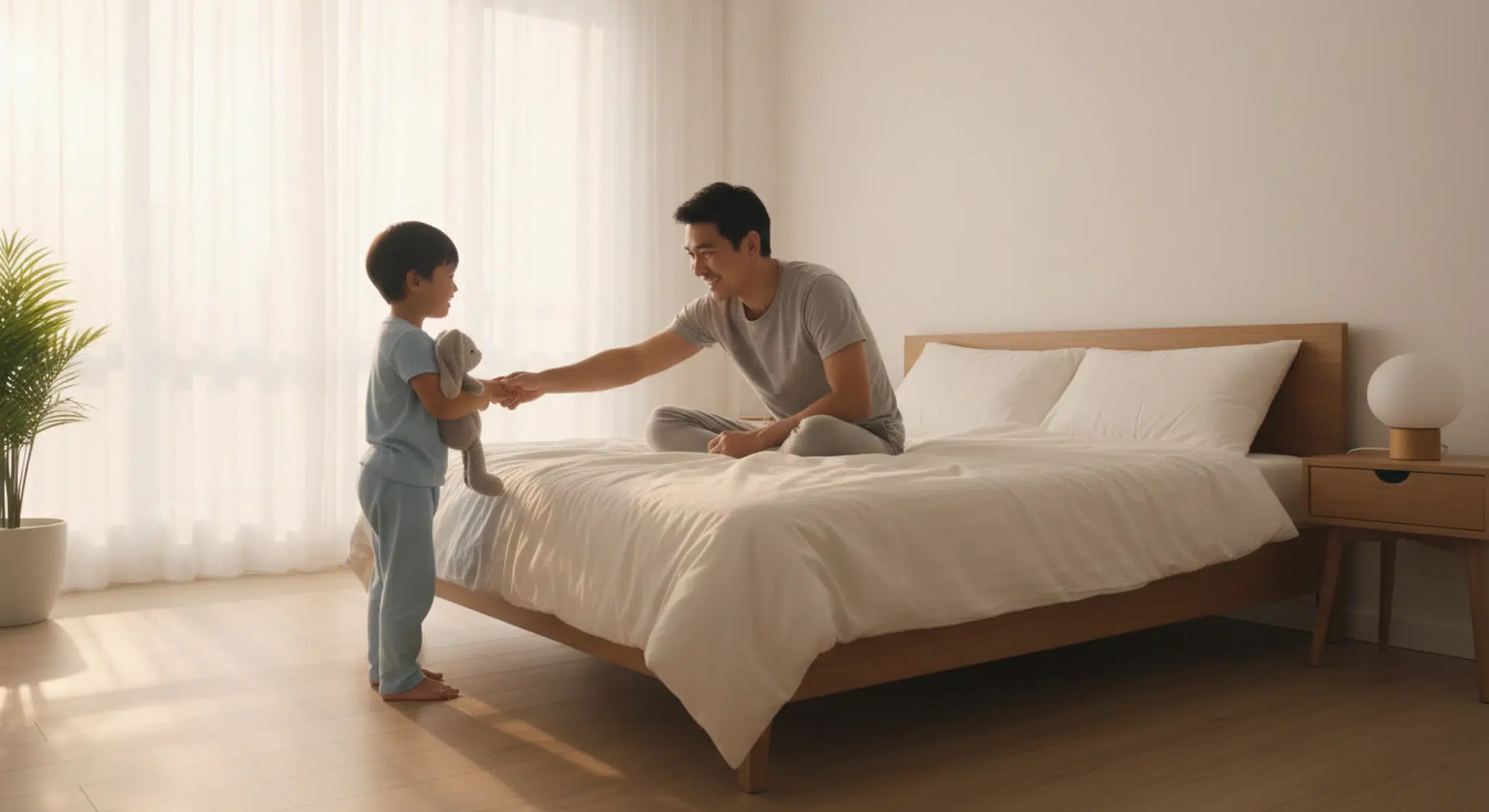
A child sleeping in parents’ bed, or climbing in at 3 a.m., is common and not harmful in itself, even at age 5, but it is worth changing if it is costing anyone sleep or you want your bed back.
If your 5 year old still wakes at night and climbs into your bed, you are far from alone. Night fears, habit, a new sibling or a big change at school are the usual reasons, and most children can learn to stay in their own bed with a calm, consistent plan.
Below: why kids come in, what the research says, a sleep-need check, a step-by-step return-to-bed plan and what to do at 3 a.m.
Key Takeaways
It is common for preschool and school-age kids to come into their parents’ bed at night.
Research on toddlers who bed-share has not found harm to behavior or learning at age 5.
Change it if anyone is losing sleep or you want your bed back, and decide as a team first.
Comfort at bedtime, walk them back every time with few words, and praise in the morning.
Babies under 12 months never share a bed with adults or siblings, per AAP safe sleep advice.
As an Amazon Associate, Betteroo earns from qualifying purchases.
Table of Contents
Child Sleeping in Parents’ Bed: The Short Answer
Quick Answer
Yes, it is common for a 4, 5 or 6 year old to wake at night and climb into your bed, and research on toddlers who share a bed with a parent has not found harm to behavior or learning by age 5. It is worth changing when it is costing anyone sleep or when you simply want your bed back. The fix is a calm, boring walk back to their own bed every time, a little comfort at bedtime, and praise in the morning.
A child sleeping in parents’ bed is not a problem by definition. Some families choose a shared bed and are happy with it; others are exhausted and getting kicked in the ribs at 3 a.m. Only the second situation needs a plan. If your child is still a baby, the rules are different: see our co-sleeping guide for infant safe sleep.
Is It Normal for a 5 Year Old to Still Climb Into Our Bed?
Yes. A 5 year old who wakes, feels lonely or scared, and pads down the hall to you is doing something very ordinary.
Night fears are part of it for many kids. The MGH Clay Center for Young Healthy Minds at Massachusetts General Hospital cites a study of Dutch children (Muris and colleagues, 2001) in which over 73% of children aged 4 to 12 said they had fears at night.
What matters more is how it is working in your house. Ask three questions:
Is anyone losing sleep?: If anyone wakes up tired, it is worth changing.
Is it getting more frequent?: Once a week turning into every night usually means your bed has become where nights end.
Are the adults on the same page?: Decide together before changing anything.
If the honest answers are “no, no and yes,” you may not need to change anything.
Why Kids Come Into Your Bed at Night
Most children who climb into their parents’ bed are not being defiant. Usually one or more of these is going on:
Night fears: Monsters, shadows, a scary scene from a movie. Our guide to a toddler afraid of the dark covers night-lights, brave practice and fading yourself out.
Habit: If coming into your bed has led to staying there, your child has learned that it works.
Wanting closeness: After a busy day at school, nighttime can be when a child misses you most, especially after a period of separation anxiety.
Big changes: A new baby, a move, starting kindergarten, a parent traveling, or family stress.
Bad dreams: A child who wakes up scared from a nightmare and remembers it may run straight to you. A night terror is a different thing, and our guides on nightmares and night terrors explain the difference.
Falling asleep with you: If your child falls asleep with you beside them, waking alone at 2 a.m. sends them looking for you.
A frightened child needs more comfort in their own room; a child coming in out of habit needs a consistent, low-key response.
Is It Bad for My Child to Sleep in My Bed?
For a healthy child past infancy, the research that exists is reassuring. In a study of 944 low-income U.S. families published in Pediatrics in 2011 (Barajas and colleagues), bed-sharing with a mother at ages 1 to 3 was not linked to poorer behavior or thinking skills at age 5 once child and family characteristics were taken into account. Research on older children is thinner, so no one can promise outcomes either way.
There is a practical downside. The American Academy of Pediatrics (AAP), on its HealthyChildren.org page about bedtime battles, advises against letting your child sleep in the same bed with you because it can make it harder for them to fall asleep on their own.
The fair summary: a family bed is a family choice. It becomes a problem when a child cannot settle without you, or nobody in the bed is sleeping well.
Stuck on night two or three?
Our free two-minute quiz builds a gentle, personalized sleep plan that adapts when progress stalls.
Before you start, make sure the schedule is not working against you. The American Academy of Sleep Medicine (AASM) consensus statement, published in 2016, recommends these amounts per 24 hours:
Age
Recommended sleep per 24 hours (AASM)
What it can look like
3 to 5 years
10 to 13 hours, including naps
Bedtime around 7:30 p.m. with a 6:30 a.m. wake-up gives 11 hours
6 to 12 years
9 to 12 hours
Bedtime around 8:30 p.m. with a 7:00 a.m. wake-up gives 10.5 hours
Recommended sleep by age from the American Academy of Sleep Medicine consensus (Paruthi et al., 2016). Example times are illustrations, not prescriptions.
If your 5 year old still naps late in the afternoon and then fights bedtime, the nap may be eating into night sleep. If they are rarely in bed for 10 hours, an earlier bedtime may cut down on night waking. Our guide to preschooler sleep goes deeper on schedules.
How to Stop a Child Sleeping in Parents’ Bed: A Step-by-Step Plan
This plan combines children’s hospital and AAP advice: comfort at bedtime, a calm return every time, and praise for success. Start on a quiet week or weekend.
Step
What to do
Why it helps
1. Decide as a team
Everyone who handles nights agrees on the plan and the exact words.
KidsHealth NZ stresses that everyone caring for the child should follow the same plan.
2. Talk about it in the daytime
Explain simply: “Big kids sleep in their own beds all night. If you wake up, I’ll walk you back.” Let them pick a sticker chart or a new stuffed animal for bed.
A chosen comfort object can help them feel safe.
3. Tighten the bedtime routine
Short, calm and the same every night. Handle water and potty before lights out.
The AAP recommends a quiet routine and the same bedtime every night, with needs handled before bed. See our toddler bedtime routine.
4. Make their room feel safe
A dim night-light, the door ajar, a favorite stuffed animal, no scary shows.
Cincinnati Children’s says dim light at bedtime is fine as long as it does not interfere with falling asleep.
5. Fade yourself out at bedtime
If your child needs you to fall asleep, sit in a chair by the bed instead of lying down. Every few nights, move the chair farther away until you are outside the door.
This is the “camping out” method described by KidsHealth NZ.
6. Walk them back, every time
Take their hand and walk them back. Few words, a quick tuck-in, then leave.
Cincinnati Children’s advises taking a child who comes to your bedroom back to their own bed.
7. Optional step-down for a scared child
A sleeping bag or small mattress on the floor of your room (children over 1 year only), moved toward the door and then back to their room.
A temporary bridge for a child with real night fears, not a new habit.
8. Praise and reward in the morning
A sticker for each night in their own bed, plus specific praise.
KidsHealth NZ suggests rewarding in the morning and notes rewards work best soon after the behavior.
A gentle plan for a child who keeps coming into your bed at night.
If bedtime itself has turned into a long negotiation, fix that first: our guide to bedtime stalling covers the bedtime pass and scripts for the “one more” requests, and how to get a toddler to stay in bed covers the first hour after lights out.
What to Do at 3 a.m.
The middle of the night is where most plans fall apart. Decide now so you do not have to think at 3 a.m.:
Respond quickly and calmly: Get up as soon as you notice them.
Use the same short script: “It’s sleep time. I’ll walk you back to your bed.”
Comfort in their room, not yours: If they are truly scared, sit with them for a minute in their room and remind them they are safe and you are close. Cincinnati Children’s advises comforting children in their own room.
Keep it dim and dull: No phone screens, no snacks, no chatting.
If they come back, repeat: Expect several trips at first. Stay calm and use the same words.
Bad dream?: Comfort first. A child who has had a nightmare needs reassurance, then a gentle return to bed once they are calm.
What to Expect in the First Week or Two
Expect pushback: your child has lost something they liked. That does not mean the plan is failing.
The first nights can bring more trips and more tears than before you started.
Progress is rarely a straight line. A good night followed by a rough one is common, especially after illness, a late night or a weekend away.
KidsHealth NZ suggests sticking with a strategy for several nights, about 3 to 7 days, before judging it, and says the camping out method can take 7 to 21 nights to work.
One night of letting them stay can restart the habit. If you need a break (illness, travel), say so clearly: “Tonight is a special night because you’re sick.”
Keep the tone warm. The goal is a child who feels safe in their own bed, not pushed away.
If There Is a Baby in the House: A Safe Sleep Note
The baby’s rules do not change. The AAP’s 2022 safe sleep policy recommends that babies sleep in the parents’ room but not in the parents’ bed, ideally for at least the first 6 months, and the AAP advises avoiding bed-sharing with a baby under any circumstances. The baby belongs in their own crib, bassinet or play yard: on their back, on a firm, flat, bare surface, with no pillows, blankets or bumpers.
That means an older child should never climb into the baby’s sleep space, and the baby should never be brought into a bed with an older sibling or adults, even for a nap. A new sibling can also be what sets off night visits, so extra one-on-one time during the day can help.
How Betteroo Can Help
If night visits are part of a bigger sleep struggle, Betteroo builds a personalized sleep plan for your child’s age and situation. The free sleep quiz is a quick way to see where to start.
Talk with your pediatrician if you notice any of these alongside the night visits:
Snoring or breathing problems at night: The AAP lists frequent snoring, problems breathing during the night, sleepiness during the day, difficulty paying attention and behavior problems as possible signs of sleep apnea, and says to let your pediatrician know right away. Call 911 if your child’s breathing stops for more than 20 seconds or their skin turns pale, bluish or grayish.
Very frequent waking: Many wake-ups a night, every night, despite a steady routine.
Daytime effects: Your child is sleepy, irritable or struggling at school.
Big or lasting fears: Cincinnati Children’s advises considering a formal psychological evaluation if fears and anxieties continue, are severe, or also show up during the day.
If something about your child’s sleep worries you, it is always reasonable to ask.
Frequently Asked Questions
Is a child sleeping in parents bed at 5 years old normal?
Yes, it is common. Many 4 to 6 year olds wake at night and want a parent close, often because of night fears, habit or a recent change. It is not harmful in itself for a healthy child. It is worth changing if it disrupts anyone’s sleep or if you simply want your bed back.
At what age should a child stop sleeping with their parents?
The pediatric sources we reviewed give no set age for older children. Many families move a child to their own bed when the shared bed stops working for someone, whether that is at 3, 5 or 8. For babies the rule is different: the AAP advises against bed-sharing with infants under any circumstances.
Why does my child keep coming into my bed at night?
Common reasons include fear of the dark or bad dreams, habit, wanting closeness after a busy day, and changes such as a new baby, a move or starting school. If your child falls asleep with you beside them, waking alone in the night can also send them looking for you.
How do I get my 5 year old to sleep in their own bed?
Agree on a plan with your partner, explain it during the day, and keep bedtime calm and predictable. If your child needs you to fall asleep, sit in a chair and move it farther away every few nights. Walk them back quietly each time they come in, and praise them in the morning.
Is it bad for a child to sleep with their parents?
For a healthy child past infancy, research is reassuring: a 2011 study of 944 families found no negative links between toddler bed-sharing and behavior or thinking skills at age 5. The AAP notes it can make falling asleep alone harder, so change it if it is not working for your family.
Should I let my child sleep in my bed after a nightmare?
Comfort your child first, because a frightened child needs reassurance. Then help them settle back into their own bed, staying with them for a few minutes in their room if needed. Children’s hospital guidance suggests comforting children in their own room rather than bringing them into yours.
Gentle changes, peaceful nights.
Betteroo builds a personalized sleep plan for your baby or toddler. Take the free two-minute quiz to get started.
Paruthi S, et al. Recommended Amount of Sleep for Pediatric Populations: A Consensus Statement of the American Academy of Sleep Medicine. J Clin Sleep Med. 2016;12(6):785-786. https://pubmed.ncbi.nlm.nih.gov/27250809/