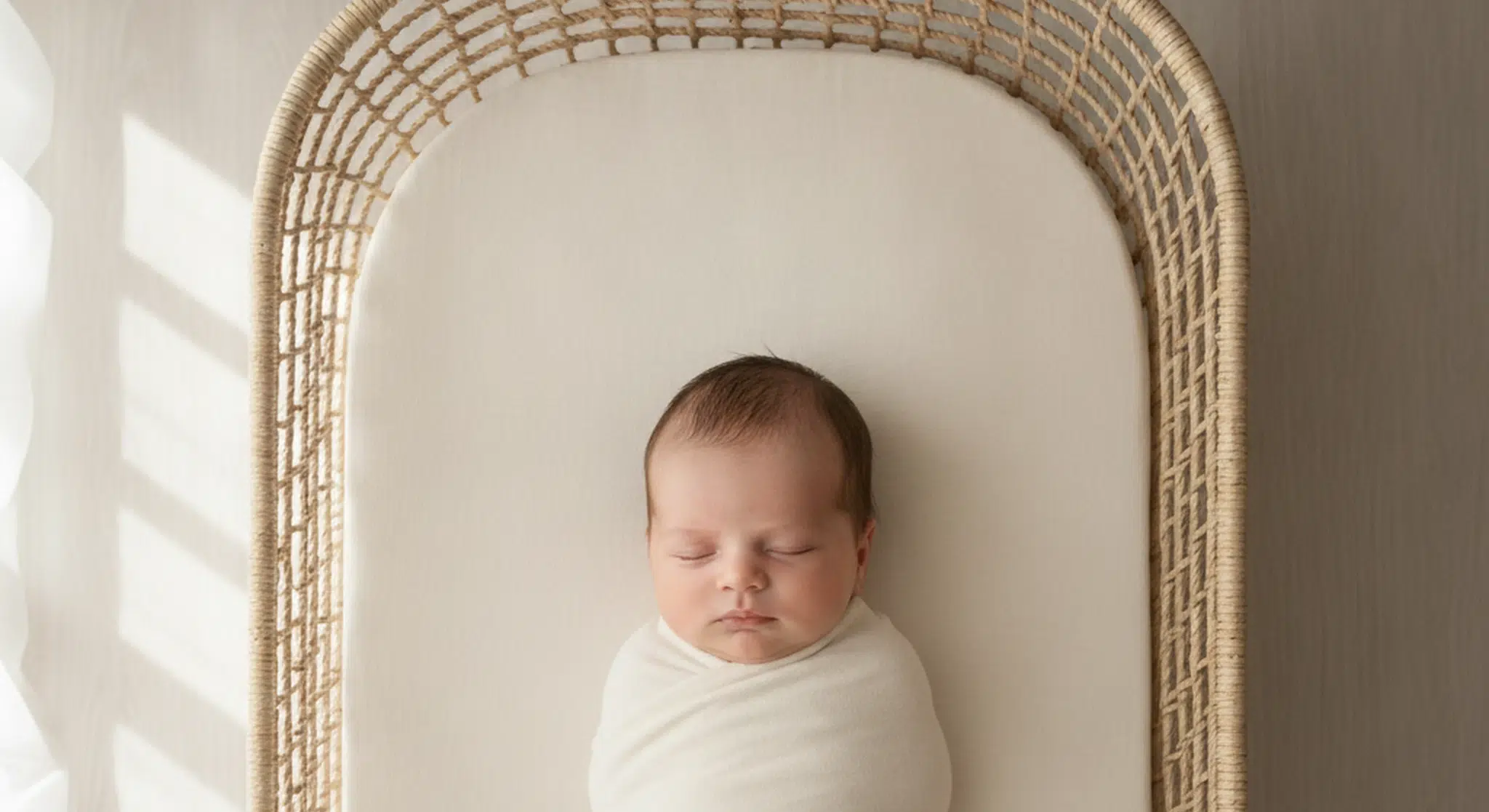
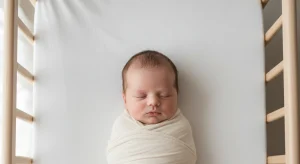
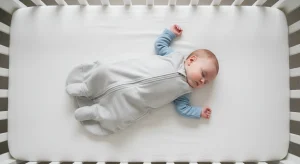
Side sleeping is not safe for newborns. The American Academy of Pediatrics is clear that every baby should be placed on their back for every sleep, day and night, until their first birthday. Side sleeping raises the risk of a baby rolling onto their stomach and is linked to a higher risk of sudden infant death.
This can feel confusing, because a baby often looks comfortable on their side, and older generations were sometimes told different things. But the guidance has changed for a good reason, and back sleeping is one of the most protective choices you can make.
This guide explains why side sleeping is unsafe, what to do if your newborn keeps rolling or seems to prefer their side, and how to keep the whole sleep space safe.
Key Takeaways
Always place your newborn on their back for every sleep, until 12 months. Side and stomach are not safe starting positions.
Side sleeping is risky mainly because babies can easily roll to their stomach, and it is linked to higher sudden infant death risk.
Do not use wedges, positioners, or rolled blankets to hold a baby on their side or back. They are not safe.
Once a baby can roll both ways on their own, you can leave them in the position they choose, but still start every sleep on the back.
If your baby has reflux or a flat head concern, back sleeping is still recommended. Talk to your pediatrician rather than switching positions.
Table of Contents
Why Side Sleeping Is Not Safe
The core problem is stability. The side position is unstable, and a newborn placed on their side can easily roll onto their stomach, which is the highest risk position for sudden infant death. Decades of research behind the Back to Sleep, now Safe to Sleep, campaign show that back sleeping dramatically lowers the risk. Since the guidance shifted to back sleeping only, sudden infant death rates fell substantially.
Some parents worry that back sleepers might choke on spit up. Healthy babies have a protective airway reflex that clears fluids, and research has not shown higher choking risk for back sleepers. Back is safest even for babies who spit up, including most with reflux.
What About Reflux or a Preference for the Side?
If your newborn seems to settle better on their side, it is understandable to be tempted, but the safe answer stays the same: place them on their back. For reflux, the AAP still recommends back sleeping, along with upright holding after feeds and unhurried, well burped feeding rather than a side or inclined position. Never prop your baby or use an inclined sleeper, which has been linked to infant deaths.
For gassy or refluxy discomfort, soothe your baby while they are awake and upright (see our guide to a gassy baby at night), then lay them down on their back to sleep.
When Rolling Changes the Rules
Here is the reassuring part. Once your baby can roll both ways independently, from back to tummy and tummy to back, usually somewhere around 4 to 6 months, you do not need to keep flipping them back over all night. Keep placing them on their back to start every sleep, keep the crib bare, and let them settle into whatever position they roll to on their own. And once rolling begins, stop swaddling, so a baby who rolls to their tummy can free their arms. See our guide on when to stop swaddling.
Keeping the Whole Sleep Space Safe
Position is one piece. The rest of safe sleep matters just as much:
Back to sleep, every sleep, for naps and nights until 12 months.
Firm, flat mattress with a fitted sheet only, in a crib, bassinet, or play yard that meets current safety standards.
Nothing else in the bed. No pillows, blankets, bumpers, wedges, positioners, or stuffed toys.
Room share without bed sharing for at least the first 6 months, ideally 12.
No hats indoors, avoid overheating, and offer a pacifier at sleep once feeding is going well.
Building safe sleep habits from day one?
Get a personalized plan built around your baby’s age, patterns, and temperament.
Check in if your baby has reflux that seems severe or is affecting weight, if a flat spot is developing on the head (which more tummy time while awake and alternating head position can help), or if you have any doubt about how to position your baby for a specific medical condition. The default, though, is simple and protective: back to sleep, bare crib, every time.
No. The AAP recommends placing babies on their back for every sleep until 12 months. Side sleeping is unstable, a baby can easily roll to their stomach, and it is linked to a higher risk of sudden infant death.
What if my newborn keeps rolling to their side?
Before your baby can roll both ways on their own, gently return them to their back. Once they can roll both directions independently, usually around 4 to 6 months, you can leave them in the position they choose, but still start every sleep on the back and keep the crib bare.
Is side sleeping okay for a baby with reflux?
No. Even with reflux, the AAP recommends back sleeping. Help reflux with upright holding after feeds and calm, well burped feeding rather than a side or inclined position, and talk to your pediatrician. Inclined sleepers and positioners are not safe.
Won’t my baby choke if they sleep on their back?
Research has not shown higher choking risk for healthy back sleepers. Babies have a protective airway reflex that clears fluids, and back sleeping is safest, including for most babies who spit up.
When can my baby sleep on their side or stomach?
You should always place your baby on their back to start sleep until 12 months. Once your baby can roll both ways independently, it is fine to let them settle into a side or stomach position they reach on their own, in a bare crib.
Understand your baby’s sleep
Get a personalized plan built around your baby’s age, patterns, and temperament.
Paruthi S, et al. Recommended Amount of Sleep for Pediatric Populations: A Consensus Statement of the American Academy of Sleep Medicine. Journal of Clinical Sleep Medicine, 2016. https://doi.org/10.5664/jcsm.5866