

A newborn wake window, the stretch of awake time between one sleep and the next, is short: roughly 45 to 60 minutes in the first few weeks, gradually stretching toward 60 to 90 minutes as your baby nears three months.
Wake windows are one of the most useful tools for surviving the newborn stage, because a newborn who stays up too long usually gets harder to settle, not easier. But they are also widely misunderstood. The exact minute counts you see in charts are practitioner heuristics, not medical rules, and healthy newborns vary a lot.
This guide covers realistic wake window ranges from birth to three months, the tired cues that matter more than any clock, a sample newborn rhythm, and when short or long awake stretches are worth a call to your pediatrician.
Key Takeaways
- A newborn wake window is the awake time between sleeps, including feeding and a diaper change.
- Typical ranges: about 45 to 60 minutes from birth to 4 weeks, and 60 to 90 minutes from roughly 1 to 3 months.
- Newborns sleep the most of any age, about 14 to 17 hours per 24 hours per the AASM.
- Watch tired cues, yawning, glazed eyes, looking away, before the clock hits a target.
- Wake windows are flexible starting points, not a schedule a newborn can be forced onto.
Table of Contents
Newborn Wake Windows by Age
In the earliest weeks, awake time is genuinely brief. Many newborns can only handle being up long enough for a feed and a quick diaper change before they need to sleep again. The window lengthens slowly and unevenly over the first three months.
| Age | Typical wake window | Notes |
|---|---|---|
| 0 to 4 weeks | About 45 to 60 minutes | Often just one feed and a change |
| 1 to 2 months | About 60 to 75 minutes | A little more alert time appears |
| 2 to 3 months | About 75 to 90 minutes | First smiles and social awake time |
Notice how modest these numbers are. A newborn who has been awake for two hours is usually overtired, and an overtired newborn tends to fight sleep harder and wake sooner. The first wake window of the day is often the shortest, and the last one before the longest night stretch can be a touch longer.
How Much Should a Newborn Sleep in Total?
The American Academy of Sleep Medicine recommends 14 to 17 hours of sleep per 24 hours for infants under 4 months, spread across day and night with no fixed schedule yet.1 The CDC echoes that newborns simply sleep more than any other age group.2 Because that sleep is broken into many short stretches, tracking wake windows helps you catch the next sleep before overtiredness sets in.
Do not expect long consolidated naps yet. Newborn sleep cycles are short, and frequent waking to feed is normal and protective in the early weeks. The goal at this age is not a schedule, it is a gentle, repeating rhythm of feed, awake, sleep.
Tired Cues Matter More Than the Clock
The single most reliable way to time a newborn’s sleep is to watch the baby, not the timer. Early tired cues are easy to miss and easy to act on: a slowing of movement, brief staring or glazed eyes, turning away from faces or toys, and small yawns.
- Early cues (catch these): staring, glazing over, looking away, first yawn.
- Late cues (already overtired): fussing, clenched fists, back arching, hard crying.
- If you see late cues, shorten the next wake window and help your baby settle sooner.
If your newborn consistently melts down before the low end of the range, they may simply need shorter windows for now. That is normal. Use the numbers as a ceiling to watch, not a target to reach.
A Sample Newborn Rhythm (Not a Schedule)
Newborns do not run on the clock, but the shape of the day is predictable: feed on waking, a short alert stretch, then back to sleep. Repeated around the clock, it looks something like this.
| Step | What happens | Rough duration |
|---|---|---|
| Wake and feed | Full feed after waking | 20 to 40 minutes |
| Awake time | Diaper change, a little cuddling or looking around | 10 to 30 minutes |
| Wind down | Swaddle, dim lights, into a bare bassinet | 5 to 10 minutes |
| Sleep | Nap or night stretch | Varies widely |
Newborn days a blur?
A short, personalized plan can help you read your baby’s cues and find a gentle rhythm.
Safe Sleep Comes First
However you time sleep, where and how your baby sleeps matters most. Always place your newborn on their back for every sleep, on a firm flat surface with a fitted sheet and nothing else: no pillows, blankets, bumpers, or stuffed animals, per the AAP’s 2022 safe sleep guidance.4 Room sharing without bed sharing is recommended for at least the first six months.
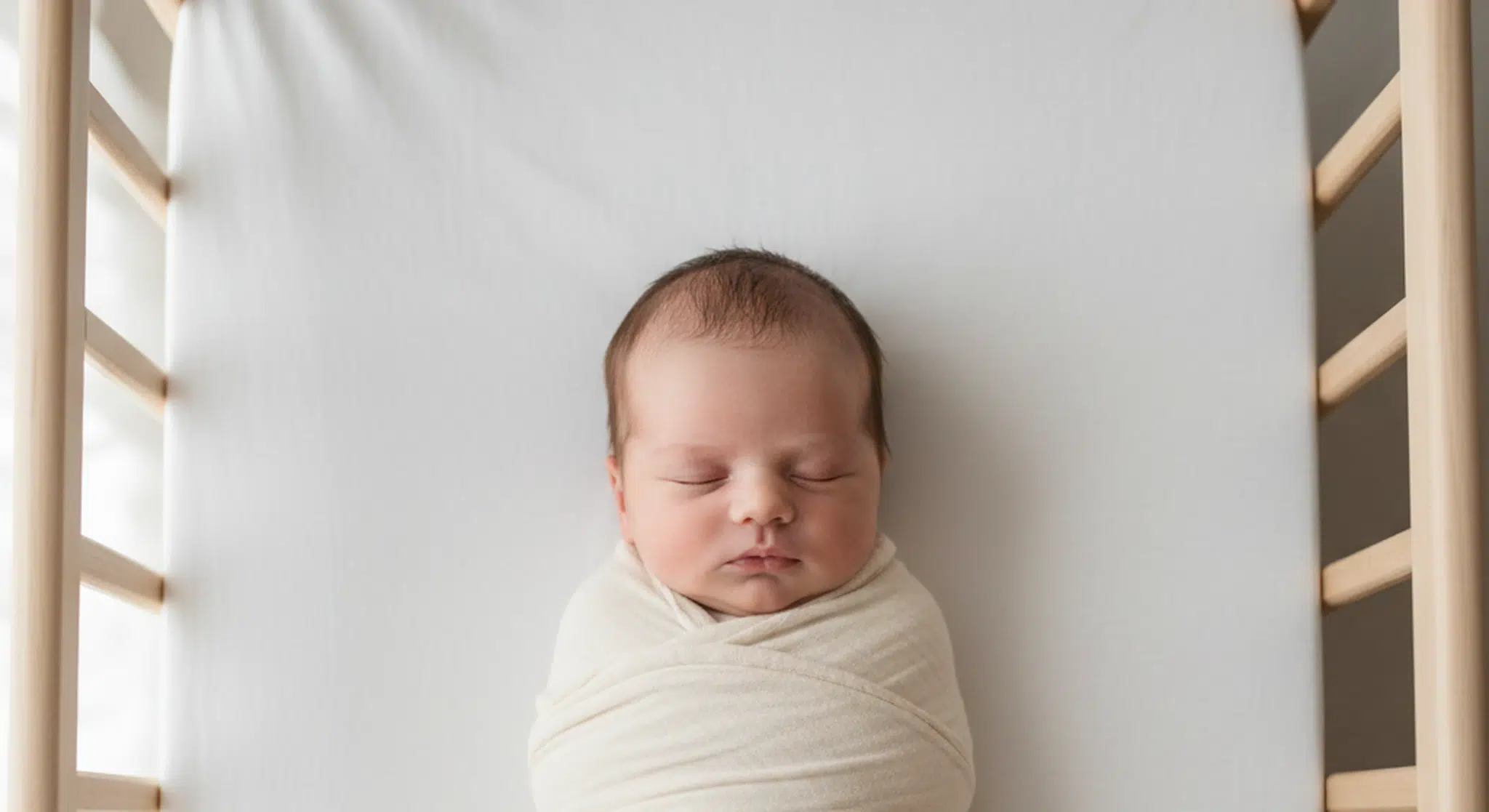
Swaddling can help newborns settle, but stop swaddling as soon as your baby shows any sign of rolling, and never let a swaddled baby sleep on their side or stomach. For the full picture across the first year, see our wake windows by age pillar guide and our newborn sleep routine guide.
When to Talk to Your Pediatrician
- Your newborn is very hard to wake for feeds or seems excessively sleepy day after day.
- Sleep totals are consistently well below 14 hours or your baby never seems to settle at all.
- Feeding, weight gain, or breathing during sleep is a concern.
- Your own exhaustion is affecting your wellbeing. Support for you is part of your baby’s care.
Newborn sleep is rarely a straight line, and a rough day is not a red flag. But you know your baby, and your pediatrician would always rather hear a question early than late.
Frequently Asked Questions
- For the full first 12 weeks, see our week by week newborn sleep schedule.
How long should a newborn stay awake?
In the first few weeks, most newborns can only handle about 45 to 60 minutes awake at a time, including the feed. By 1 to 3 months this stretches toward 60 to 90 minutes. These are averages, and watching your baby’s tired cues is more reliable than the clock.
What is a wake window for a newborn?
A wake window is the total awake time between one sleep and the next, and it includes feeding, diaper changes, and any alert or play time. For newborns it is short because they still need the most total sleep of any age, about 14 to 17 hours per 24 hours.
Are newborn wake windows the same day and night?
Not really. Newborns do not yet have a strong day and night rhythm, so awake stretches happen around the clock. Over the first few months, awake time slowly consolidates toward the day and the longest sleep stretch shifts toward night.
What happens if a newborn stays awake too long?
An overtired newborn usually becomes fussier and harder to settle, and may wake sooner from the next sleep. If you see late tired cues like arching, clenched fists, or hard crying, shorten the next wake window and help your baby fall asleep sooner.
Should I wake a sleeping newborn?
In the early weeks, many pediatricians advise waking a newborn to feed if they sleep longer than about 3 to 4 hours during the day, especially until they regain birth weight. Once weight gain is well established, your pediatrician may say you can let longer stretches happen. Ask what is right for your baby.
Do wake windows help newborns sleep better at night?
Timing sleep before overtiredness sets in tends to make settling easier, which can help. But true night consolidation is developmental and comes with time. In the newborn stage, focus on a gentle feed, awake, sleep rhythm rather than expecting long nights.
Want a rhythm that fits your newborn?
Get a gentle, personalized plan built around your baby’s cues instead of a rigid chart.
- Related reading: 1 month old milestones
Related Betteroo Guides
- things to do with a newborn
- how long the newborn stage lasts
- why your baby cries when put down
- Newborn Day-Night Confusion
4 Sources
- Paruthi S, Brooks LJ, D’Ambrosio C, et al. Recommended Amount of Sleep for Pediatric Populations: A Consensus Statement of the American Academy of Sleep Medicine. J Clin Sleep Med. 2016;12(6):785-786.
https://pubmed.ncbi.nlm.nih.gov/27250809/ - Centers for Disease Control and Prevention. About Sleep.
https://www.cdc.gov/sleep/about/index.html - Mindell JA, Telofski LS, Wiegand B, Kurtz ES. A Nightly Bedtime Routine: Impact on Sleep in Young Children and Maternal Mood. Sleep. 2009;32(5):599-606.
https://pubmed.ncbi.nlm.nih.gov/19480226/ - American Academy of Pediatrics. Sleep-Related Infant Deaths: Updated 2022 Recommendations for Reducing Infant Deaths in the Sleep Environment. Pediatrics. 2022;150(1).
https://pubmed.ncbi.nlm.nih.gov/35726558/