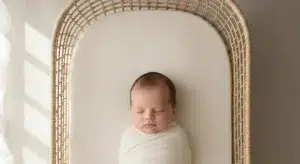
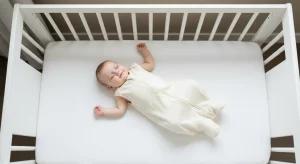
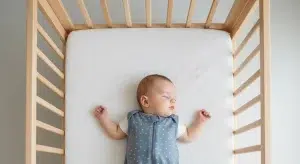
Yes, babies can burp while sleeping. Many pass trapped air on their own without waking, and if your sleeping baby seems settled and comfortable, you usually do not need to wake them to burp.
It is one of those small worries that keeps new parents up at night. Your baby drifts off mid feed, you lay them down, and then you wonder about that little bubble of air still inside them. Will it wake them up? Do you need to sit them up and burp them, or is it safe to let them sleep?
The reassuring answer is that a sleeping baby can and often does burp on their own, and a missed burp is rarely a problem. This guide covers whether babies burp in their sleep, when trapped gas actually matters, and how to help without fully waking your baby.
Key Takeaways
- Babies can burp while sleeping, and many release trapped air on their own without waking.
- You do not always need to wake a sleeping baby to burp them, especially if they seem comfortable.
- Younger newborns and bottle fed babies swallow more air, so they benefit from a burp more often.
- If a burp is needed, keep your baby upright against your shoulder and pat gently with as little movement as possible.
- Never leave a baby propped upright or on their side to sleep. Always return them to their back in a bare crib.
Table of Contents
Can Babies Burp While They Are Asleep?
Burping is a reflex, not something a baby has to be awake to do. When air works its way up, a sleeping baby can release it on their own, sometimes with a small grunt, wiggle, or a brief stir that passes without a full wake up. You may not even notice it happen.
Trapped air can also move down and out as gas rather than coming up as a burp. Either way, the body has a way of clearing the bubble. So while your baby may not burp on cue the way they might when you are actively patting them, they are not stuck holding that air all night.
Do You Need to Wake a Sleeping Baby to Burp Them?
Usually not. If your baby fell asleep during a feed and seems relaxed and comfortable, it is generally fine to lay them down without a burp. Waking a peacefully sleeping baby often causes more disruption than the trapped air itself. Sleep is precious for both of you, and a quiet baby is telling you they are comfortable.
There are times when a gentle burp is worth the effort. Consider trying one if:
- Your baby is squirming, grunting, or arching their back soon after a feed.
- They tend to wake up fussy and gassy within a few minutes of being laid down.
- They are a younger newborn or bottle fed, since both tend to swallow more air.
- They have reflux or have been diagnosed with a sensitive tummy by your pediatrician.
As babies get older and feed more efficiently, the need to burp fades. Many breastfed babies swallow so little air that they rarely need burping at all. You will learn your baby’s pattern over time.
Struggling with your baby’s sleep?
A personalized plan meets your baby where they are, at every age and stage.
How to Burp a Sleeping Baby Without Waking Them
If you do decide a burp is worth it, the goal is to move as little as possible and keep everything calm, dim, and slow. These steps help you release the air while your baby stays drowsy:
- Lift your baby gently against your shoulder or chest so they are upright, supporting the head and neck fully.
- Pat or rub their back slowly and softly. A minute or two is usually enough to bring up a bubble.
- Keep the room dark and quiet, and avoid bright lights or talking so your baby stays in a sleepy state.
- Once the air is up, or after a couple of minutes, ease your baby back down onto their back in the crib.
If your baby stirs a little, keep contact and stay calm before laying them down. A slow, steady hand often settles them right back into sleep.
Is It Safe to Let a Baby Sleep Upright to Help With Gas?
This is where safe sleep matters most. It can be tempting to prop a gassy baby upright or on their side to help them stay comfortable, but that is not safe for sleep. The American Academy of Pediatrics is clear that babies should always be placed flat on their back on a firm, flat surface for every sleep, with nothing else in the crib.
You can hold your baby upright after a feed only while you are awake and holding them. Once they are ready to sleep, they belong on their back in a bare crib or bassinet, no pillows, blankets, bumpers, or positioners. A little trapped gas is a normal, passing discomfort. Unsafe sleep positioning carries far more serious risk, so back sleeping always wins.
When Gassiness Is Worth a Closer Look
Occasional gas and the odd sleep burp are completely normal. But if your baby is regularly waking in obvious pain, arching and crying hard after most feeds, spitting up forcefully, or struggling to gain weight, it is worth talking with your pediatrician. These can be signs of reflux or a feeding issue that a small adjustment can ease.
For most families, though, this is simply part of the newborn stage. As feeding matures and your baby’s digestive system settles, the burps, grunts, and squirms of the early weeks quietly fade on their own.
If night wakings feel bigger than gas alone, it can help to look at the whole rhythm of feeds and sleep. Our baby sleep schedule by age guide walks through age appropriate patterns, and our guide to burping a sleeping baby covers the gentlest techniques step by step.
Frequently Asked Questions
Can babies burp while sleeping?
Yes. Burping is a reflex, so a sleeping baby can release trapped air on their own, sometimes with a small grunt or wiggle that does not fully wake them. Air can also pass down and out as gas. A missed burp is rarely a problem if your baby seems comfortable.
Do I need to wake my baby to burp them?
Usually not. If your baby is sleeping soundly and seems settled, it is generally fine to lay them down without a burp. Try a gentle burp only if they squirm, grunt, or wake fussy soon after a feed.
How can I burp my baby without waking them?
Hold your baby upright against your shoulder, support the head and neck, and pat or rub their back slowly and softly for a minute or two. Keep the room dim and quiet, then ease them back down onto their back in a bare crib.
Is it safe to let my gassy baby sleep upright or on their side?
No. Always place your baby flat on their back for every sleep, on a firm, flat surface with nothing else in the crib. Hold them upright only while you are awake and holding them. Back sleeping is the safest position even with a little gas.
Why does my baby grunt and squirm in their sleep?
Some grunting and squirming is normal as babies pass gas or move through lighter sleep. If your baby regularly wakes in clear pain, arches and cries hard after feeds, or is not gaining weight well, check in with your pediatrician.
Calmer tummies, calmer nights
Get a personalized plan built around your baby’s age, feeds, and temperament.
4 Sources
- American Academy of Pediatrics. Sleep-Related Infant Deaths: Updated 2022 Recommendations for Reducing Infant Deaths in the Sleep Environment. Pediatrics, 2022.
https://publications.aap.org/pediatrics/article/150/1/e2022057990/188304 - American Academy of Pediatrics, HealthyChildren.org. Burping, Hiccups, and Spitting Up.
https://www.healthychildren.org/English/ages-stages/baby/feeding-nutrition/Pages/Burping-Hiccups-and-Spitting-Up.aspx - Paruthi S, et al. Recommended Amount of Sleep for Pediatric Populations: A Consensus Statement of the American Academy of Sleep Medicine. Journal of Clinical Sleep Medicine, 2016.
https://jcsm.aasm.org/doi/10.5664/jcsm.5866 - Mindell JA, et al. A Nightly Bedtime Routine: Impact on Sleep in Young Children and Maternal Mood. Sleep, 2009.
https://academic.oup.com/sleep/article/32/5/599/2454209