Lullabies work because their slow, repetitive melodies and your familiar voice help lower a baby’s heart rate and signal that it is time to wind down, which is why a nightly song is one of the simplest sleep tools you have.
There is a reason nearly every culture on earth has its own lullabies. A soft, steady song is soothing to babies in a way that goes deeper than the words, which they cannot understand yet. The melody, the rhythm, and above all the sound of your voice tell your baby that they are safe and that the day is ending.
This guide explains why lullabies help with sleep, offers a playlist of fifteen gentle songs to try, and shows how to fold singing into a calm bedtime routine that your baby will come to recognize.
Key Takeaways
Lullabies use slow tempos and repetition that help settle a baby’s breathing and heart rate.
Your live voice matters more than a perfect performance, so sing even if you think you cannot.
A song works best as a predictable part of the same short bedtime routine each night.
Keep the volume low and the room dark, and let the song fade as your baby gets drowsy.
Singing supports bonding and early language, not just sleep.
Table of Contents
Why Lullabies Help Babies Sleep
A lullaby is essentially music built for slowing down. Most traditional lullabies sit at a gentle tempo, close to a resting heart rate, with a repeating melody and a rocking, triple meter feel. That predictability is soothing. When there are no surprises in the sound, a baby’s nervous system can ease off alert mode and drift toward sleep.
Your voice is the active ingredient. Babies recognize their parents’ voices from birth and are drawn to them above any recording. Singing also slows your own breathing, which can calm you during a hard bedtime, and a calmer parent tends to make for a calmer baby.
Music at bedtime also becomes a cue. When the same song plays as part of the same routine every night, your baby’s brain begins to link that melody with sleep. Over time the song itself helps trigger drowsiness, the same way a warm bath or dimmed lights can.
Slow tempo and repetition help regulate breathing and heart rate.
A familiar voice signals safety and reduces stress hormones.
A consistent song becomes a learned cue that sleep is coming.
Gentle music can mask small household noises that might otherwise startle a baby.
15 Classic Lullabies and Gentle Songs to Try
You do not need a big repertoire. One or two songs your baby hears every night will do more than a long, ever changing playlist. Here are fifteen gentle options, from timeless lullabies to soft modern songs that work beautifully slowed down.
Song
Why it works
Twinkle, Twinkle, Little Star
Simple, repetitive melody that is easy to sing softly.
Hush, Little Baby
A calm, list like song with a steady, predictable rhythm.
Rock a Bye Baby
A gentle rocking meter that pairs naturally with swaying.
Brahms’ Lullaby
The classic sleep melody, soothing even when hummed.
You Are My Sunshine
Warm and repetitive, great for eye contact and bonding.
Somewhere Over the Rainbow
A tender melody that slows the room right down.
Baby Mine
A soft, loving song that suits a whispery voice.
Golden Slumbers
A short, gentle melody made for winding down.
All the Pretty Horses
A traditional lullaby with a slow, rocking feel.
Edelweiss
Simple, sweet, and easy to sing quietly.
Blackbird
A calm, fingerpicked song that works well hummed.
Godspeed (Sweet Dreams)
A modern lullaby written for exactly this moment.
The Rainbow Connection
A soft, storybook melody for older babies.
Moon River
A slow waltz that feels like a gentle sway.
Your own made up song
Personal, repeatable, and unmistakably yours.
Typical ranges. Small variations are completely normal.
Notice that the last entry is a song you invent. Many parents find that a simple, made up tune, even just your baby’s name set to a few soft notes, becomes the most powerful sleep song of all because it belongs only to the two of you.
Struggling with your baby’s sleep?
A personalized plan meets your baby where they are, at every age and stage.
A lullaby works best inside a short, consistent routine. Research on nightly bedtime routines has found that a predictable wind down helps young children fall asleep faster and wake less during the night. The song is the final, calming step in that sequence.
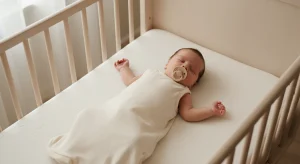
Keep the routine to a handful of steps in the same order each night: a feed, a bath or a wash, into a sleep sack, dim the lights, then a song or two while you rock or hold your baby. Sing quietly, keep your face close, and let the song grow softer and slower as your baby’s eyes get heavy.
Start the same short routine at roughly the same time each night.
Sing live when you can, keeping the volume low and the room dark.
Use the same one or two songs so they become a reliable cue.
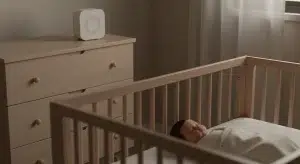
If you use recorded music or white noise, keep it soft and place it away from the crib.
Aim to put your baby down drowsy but awake so they learn to settle in their own space.
A lullaby is one piece of a bigger sleep picture. For the routines and totals that fit your baby’s age, see our baby sleep schedule by age guide, and if bedtime has suddenly gotten harder, our sleep regression ages guide explains the common windows. Singing also supports early language, which you can read more about in our guide on when babies start babbling.
Yes, in a gentle way. Slow, repetitive melodies help settle a baby’s breathing and heart rate, and your familiar voice signals safety. Used as the same final step of a consistent bedtime routine, a lullaby also becomes a learned cue that sleep is coming.
What is the best lullaby for a newborn?
The best lullaby is any calm, slow song you will sing consistently. Classics like Twinkle Twinkle, Hush Little Baby, and Brahms’ Lullaby work well, but a simple tune you make up yourself is often the most soothing because it is uniquely yours.
Is it okay to play recorded lullaby music all night?
A short burst of soft music at bedtime is fine. If you leave sound on overnight, use quiet, continuous white noise or soft music rather than looping songs, keep it at a low volume, and place the device well away from the crib rather than inside it.
Does singing to my baby help their development?
Yes. Singing exposes babies to the rhythm, pitch, and sounds of language, supports early communication, and strengthens your bond through eye contact and shared attention. You do not need to sing well for your baby to benefit.
How loud should a lullaby be?
Keep it soft, roughly the level of a quiet conversation. If you use white noise or recorded music, a common guideline is to keep it low and no closer than a few feet from your baby, since prolonged loud sound is not good for developing ears.
Want a calmer bedtime, night after night?
Get a personalized plan built around your baby’s age, temperament, and sleep needs.
Paruthi S, et al. Recommended Amount of Sleep for Pediatric Populations: A Consensus Statement of the American Academy of Sleep Medicine. Journal of Clinical Sleep Medicine, 2016. https://jcsm.aasm.org/doi/10.5664/jcsm.5866