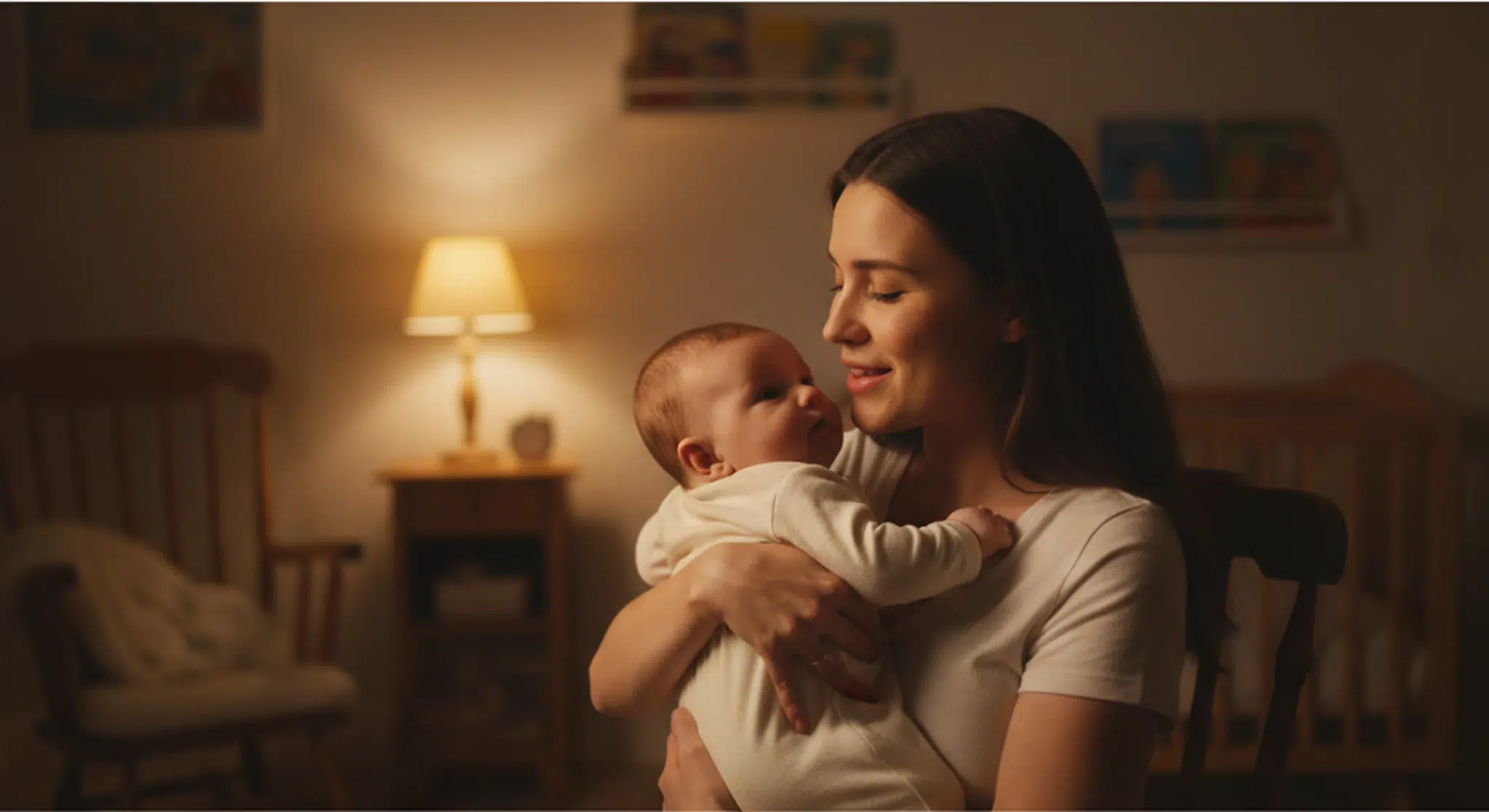
The lullabies parents reach for at bedtime are almost all old, traditional songs, so the words are easy to find and easy to sing, and what soothes your baby most is your steady voice repeating the same gentle tune night after night.
If you have ever gone blank halfway through a lullaby at 2 a.m., you are in good company. Most of us know the first line of a dozen songs and the full words to almost none. The good news is that the classic bedtime songs have been passed down for generations precisely because they are simple, and the complete lyrics are short enough to learn in a single sitting.
Below you will find full, singable lyrics to the most-loved traditional lullabies, a short list of modern favorites to look up, an honest note about why some old lyrics sound a little dark, and simple ways to fold a song into a calm bedtime routine.
Key Takeaways
The best-known lullabies are traditional songs, so the words are short, repetitive, and easy to memorize.
Your baby responds to your voice and the slow melody far more than to the meaning of the words.
Singing the same one or two songs each night turns the lyrics into a reliable cue that sleep is coming.
Some old lyrics sound gloomy, and that is fine, because the tone of your voice is what your baby hears.
A song is the calming last step of a routine, sung softly in a dark room with the crib kept completely bare.
Table of Contents
Do the Words of a Lullaby Actually Matter?
Not in the way you might think. A young baby cannot understand the story a lullaby tells, so the specific words carry very little weight. What settles a baby is the slow tempo, the repeating melody, and above all the familiar sound of a parent’s voice, which babies recognize from birth and prefer to any recording.
There is real physiology behind this. In a large study of premature infants across eleven neonatal units, live lullabies sung by a trained music therapist were linked to lower heart rates and steadier breathing and sleep, and hearing a parent-preferred lullaby lowered parents’ own stress too. You do not need training or a lovely voice to get the calming part. The words are simply a scaffold that helps you keep the tune going, so pick lyrics you can remember and sing them the same way each night.
Classic Lullaby Lyrics to Sing Tonight
These are traditional, well-loved lullabies whose words have been sung for generations. Each one is short, slow, and forgiving of a shaky voice. Sing them quietly, let the last lines trail off, and repeat your favorite as many times as your baby needs.
Twinkle, Twinkle, Little Star
Twinkle, twinkle, little star, How I wonder what you are. Up above the world so high, Like a diamond in the sky. Twinkle, twinkle, little star, How I wonder what you are.
Hush, Little Baby
Hush, little baby, don’t say a word, Mama’s going to buy you a mockingbird. And if that mockingbird won’t sing, Mama’s going to buy you a diamond ring. And if that diamond ring turns brass, Mama’s going to buy you a looking glass. And if that looking glass gets broke, Mama’s going to buy you a billy goat. And if that billy goat won’t pull, Mama’s going to buy you a cart and bull. So hush, little baby, don’t you cry, Mama loves you and so do I.
Rock-a-Bye Baby
Rock-a-bye baby, on the treetop, When the wind blows, the cradle will rock. When the bough breaks, the cradle will fall, And down will come baby, cradle and all.
Brahms’ Lullaby (Lullaby and Goodnight)
Lullaby and goodnight, with roses bedight, With lilies o’er spread is baby’s wee bed. Lay you down now and rest, may your slumber be blessed, Lay you down now and rest, may your slumber be blessed.
All the Pretty Little Horses
Hush-a-bye, don’t you cry, Go to sleep, my little baby. When you wake, you shall have All the pretty little horses. Blacks and bays, dapples and grays, All the pretty little horses.
Golden Slumbers
Golden slumbers kiss your eyes, Smiles await you when you rise. Sleep, pretty baby, do not cry, And I will sing a lullaby.
Are You Sleeping? (Brother John)
Are you sleeping, are you sleeping, Brother John, Brother John? Morning bells are ringing, morning bells are ringing, Ding, ding, dong. Ding, ding, dong.
Struggling with your baby’s sleep?
A personalized plan meets your baby where they are, at every age and stage.
Plenty of newer songs make wonderful lullabies too. These are still under copyright, so we have not printed the full words here, but the melodies are gentle and the lyrics are easy to find online or in a songbook. Any slow, familiar song you love can become your baby’s bedtime song.
Song
Why it works at bedtime
You Are My Sunshine
Warm and repetitive, easy to sing softly while making eye contact.
Somewhere Over the Rainbow
A tender, slow melody that quiets the whole room.
Baby Mine
A loving, whispery tune that suits the very end of the night.
Moon River
A slow waltz that pairs naturally with gentle swaying.
Edelweiss
Simple, sweet, and soothing even when only hummed.
A song you make up yourself
Personal, repeatable, and unmistakably yours.
Any calm, slow song you will sing consistently can become the one.
Notice that the last entry is a song you invent. Many parents find that a made-up tune, even just your baby’s name set to a few soft notes, becomes the most powerful sleep song of all, because it belongs only to the two of you.
Why Are Some Lullaby Lyrics So Dark?
If you have ever paused at a cradle falling out of a treetop, you are not imagining it. Many traditional lullabies carry surprisingly gloomy or strange lines. That is partly because these songs are centuries old and were often sung by exhausted caregivers as a quiet outlet, and partly because the words were never really the point. A tune had to be slow and easy to repeat, and whatever words fit the melody stuck.
Your baby hears none of the meaning, only your calm voice and the steady rhythm, so a slightly odd lyric does no harm at all. If a line still bothers you, change it. Parents have always swapped in softer words, and singing “and safe in your bed, you’ll sleep till the morning” instead of a falling cradle is completely fine. The song is yours to shape.
How to Use Lullabies in a Bedtime Routine
A lullaby works best as the final step of a short, consistent routine. Research on nightly bedtime routines has found that a predictable wind-down helps young children fall asleep faster and wake less during the night. When the same song comes at the same point every evening, your baby’s brain begins to link that melody with sleep, and the song itself starts to trigger drowsiness.
Keep the routine to a handful of steps in the same order each night: a feed, a bath or a wash, into a sleep sack, dim the lights, then a song or two while you rock or hold your baby. Sing quietly, keep your face close, and let the song grow softer as your baby’s eyes get heavy.
Choose one or two songs and sing the same ones each night so they become a reliable cue.
Sing live when you can, keeping the volume soft and the room dark.
If you use recorded music or white noise, keep it low and place it away from the crib, not inside it.
Always put your baby down on their back in a completely bare crib, with no pillows, blankets, bumpers, or toys.
Aim to lay your baby down drowsy but awake so they can learn to settle in their own space.
A lullaby is one piece of a bigger sleep picture. For a fuller list of gentle songs, see our guide to the best lullabies for babies, and for the routines and totals that fit your baby’s age, see our baby sleep schedule by age guide. If bedtime has suddenly gotten harder, our sleep regression ages guide explains the common windows, and singing also supports early language, which you can read about in our guide on when babies start babbling.
Frequently Asked Questions
What are the words to the most popular lullaby?
Twinkle, Twinkle, Little Star and Hush, Little Baby are the two most widely sung. Twinkle Twinkle is a single short verse, and Hush Little Baby is a string of simple promises that ends with “So hush, little baby, don’t you cry, Mama loves you and so do I.” Both are traditional songs, so the words are easy to find and free to sing.
Do the words of a lullaby matter to a baby?
Not really. A young baby cannot understand the meaning of the words, so what soothes them is the slow tempo, the repeating melody, and the familiar sound of your voice. Pick lyrics you can remember easily, since the words are mostly there to help you keep the tune going.
Why do some lullaby lyrics sound sad or scary?
Many lullabies are centuries old, and the words often fit the melody more than they told a comforting story. Your baby hears only your calm voice and the steady rhythm, not the meaning, so an odd line does no harm. If a lyric bothers you, feel free to change it to gentler words.
What are the words to Brahms’ Lullaby?
The most common English version begins, “Lullaby and goodnight, with roses bedight, with lilies o’er spread is baby’s wee bed. Lay you down now and rest, may your slumber be blessed.” The melody comes from a piece Johannes Brahms wrote in 1868, and the English words are traditional, so they are gentle and easy to sing softly.
How many lullabies should I sing at bedtime?
One or two is plenty. Consistency matters more than variety, so singing the same short songs in the same order each night helps them become a cue for sleep. Repeat your baby’s favorite as many times as needed, letting the song grow quieter and slower as they get drowsy.
Want a calmer bedtime, night after night?
Get a personalized plan built around your baby’s age, temperament, and sleep needs.
Paruthi S, et al. Recommended Amount of Sleep for Pediatric Populations: A Consensus Statement of the American Academy of Sleep Medicine. Journal of Clinical Sleep Medicine, 2016. https://jcsm.aasm.org/doi/10.5664/jcsm.5866