At 8 months, most babies sit steadily without support, babble strings of syllables like bababa and dadada, pass toys from hand to hand, and are working out how to get moving, whether that is scooting, rocking on all fours, or full-on crawling. Separation anxiety often makes its debut too.
Eight months sits in the middle of a huge developmental stretch. Your baby is becoming an active, opinionated little person who knows exactly who their favorite people are and has strong feelings about where those people go.
Here is what is typical at 8 months across movement, hands, language, thinking, feeding, and sleep, plus the signs that deserve a mention at the 9 month checkup.
Key Takeaways
Sitting without support is solid for most 8 month olds; many are starting to crawl or scoot.
Babble turns repetitive and speech-like: bababa, mamama, dadada, without specific meaning yet.
Object permanence arrives, which brings peekaboo delight and separation anxiety together.
Expect 12 to 16 hours of sleep across a night and two naps.
Crawling styles and timing vary enormously; some babies skip crawling and still develop normally.
Table of Contents
Movement Milestones: Sitting, Scooting, and (Maybe) Crawling
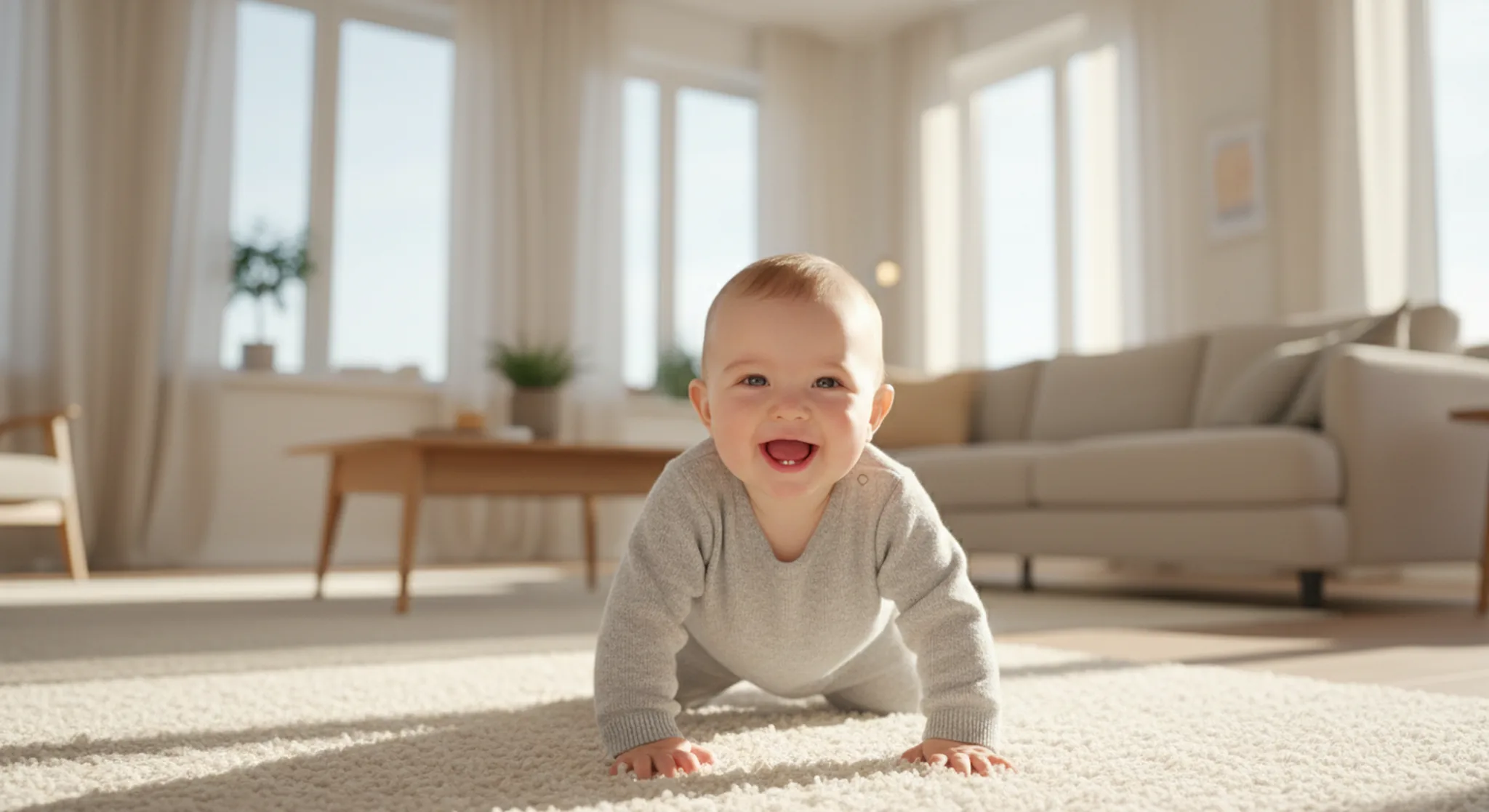
By 8 months, most babies sit independently and steadily, freeing their hands for play, and can get themselves into and out of sitting. Getting mobile is the big project. Some babies are already crawling on hands and knees, others army crawl on their belly, scoot on their bottom, or roll strategically across the room. All of these count as mobility, and crawling itself spans roughly 6 to 10 months, with some babies skipping it entirely on the way to pulling up and cruising.
You may also see your baby rock back and forth on hands and knees, lunge from sitting toward a toy, and begin pulling to stand against furniture toward the end of this month. Now is the time to finish babyproofing: anchor furniture, lower the crib mattress, and clear small objects from floor level. Our when babies crawl guide covers the styles and timeline in depth.
Sits without support and pivots to reach toys.
Gets moving somehow: crawling, army crawling, scooting, or rolling with intent.
Rocks on hands and knees; may begin pulling to stand.
Bears weight on legs and bounces when held standing.
Hands and Fine Motor Skills
Eight month olds are busy with their hands. Expect confident reaching, raking small objects toward themselves with all fingers, passing toys from one hand to the other, and banging two objects together with obvious satisfaction. The precise thumb and finger pincer grasp is still developing and usually sharpens between 9 and 12 months, so self feeding is more successful with larger, soft pieces right now.
Language and Communication at 8 Months
This is peak babble season. Around 6 to 9 months, babble becomes reduplicated: long repeated strings like bababa, mamama, and dadada. Your baby is not naming you yet, but they are practicing the exact sound building blocks of speech. They respond to their name, turn toward voices and sounds, understand your tone, and may recognize the word no (compliance not included). Our babbling guide maps how this babble becomes first words around 12 months.
Just as important as sounds is gesturing and shared attention: reaching to be picked up, looking where you look, and using facial expressions deliberately. Talking, narrating, and reading to your baby now directly builds the vocabulary that shows up next year.
Struggling with your baby’s sleep?
A personalized plan meets your baby where they are, at every age and stage.
Thinking and Social Development: Object Permanence Changes Everything
The signature cognitive leap around 8 months is object permanence: your baby now understands that things continue to exist when out of sight. Watch them look for a toy you cover with a cloth or track something you drop off the high chair tray, repeatedly, as a delightful physics experiment at your expense.
Object permanence has a famous side effect: separation anxiety. Now that your baby knows you exist somewhere else when you leave, they protest the leaving. Expect clinginess, stranger wariness, and bigger reactions at daycare dropoff and bedtime between roughly 7 and 9 months. It is a sign of healthy attachment and healthy cognition arriving at the same time, and it fades as babies learn that you reliably come back.
Feeding at 8 Months
Most 8 month olds eat two to three solid meals a day alongside breast milk or formula, which remains the nutritional backbone until age 1. This is the age to advance textures: mashed and lumpy foods, soft finger foods your baby can palm, and a wide range of flavors. Iron rich foods, meats, beans, lentils, and fortified cereals, matter most right now. Skip honey until age 1 and avoid round, hard, or sticky choking hazards. Our baby purees and baby led weaning guides cover both routes to the same destination.
Sleep at 8 Months
Babies aged 4 to 12 months need 12 to 16 hours of sleep per 24 hours, per the American Academy of Sleep Medicine. At 8 months that usually means 10 to 12 hours at night plus two naps totaling around 2 to 3 hours, with most babies having dropped the third catnap by now.
If nights suddenly get rocky, you are not imagining it. New motor skills (babies practice crawling and standing in the crib), separation anxiety, and teething tend to pile up around this age. Our 8 month sleep regression guide explains the disruption and how to hold steady, and our sleep schedule by age guide shows realistic nap timing for this stage.
When to Talk to Your Pediatrician
Bring these up at the 9 month visit, or sooner if they worry you:
Not sitting, even with support.
No babbling, or no consonant sounds like b, m, or d.
Does not respond to their own name or to nearby sounds.
Does not pass objects from hand to hand or bear weight on legs with support.
Shows no interest in games like peekaboo, or does not look at familiar people when named.
Any loss of skills your baby previously had.
Most babies flagged on one item are simply on their own curve, and the 9 month checkup includes a formal developmental screening designed to sort normal variation from something worth supporting early.
What Comes Next
Between 9 and 12 months, expect confident crawling, pulling to stand, cruising along furniture, a sharpened pincer grasp, first gestures like waving and pointing, and possibly a first word. Our when babies walk guide previews the big one, and the 11 month milestones guide picks up the story.
Play Ideas That Build 8 Month Skills
The best toys at 8 months are the ones that reward action: stacking cups to knock down, containers to empty, balls that roll just out of reach to motivate scooting, and activity boards with flaps and dials. Peekaboo and hiding a toy under a cloth exercise brand new object permanence, and your baby will happily run that experiment dozens of times. Banging two blocks together, splashing in the bath, and crinkling paper are physics lessons, not noise.
For language, keep up the running commentary and add labels at the moment of attention: when your baby looks at the dog, say dog. Respond to babble as if it were conversation, pause for their turn, and read short board books daily even if your baby mostly wants to chew them. Floor freedom is the motor curriculum: several long stretches a day on a safe open floor beat any device, and baby containers like walkers and seats add nothing developmentally, walkers in particular are unsafe and opposed by the American Academy of Pediatrics.
Frequently Asked Questions
What milestones should an 8 month old have?
Most 8 month olds sit without support, pass objects from hand to hand, babble strings of sounds like bababa, respond to their name, look for a dropped toy, and show clear preferences for familiar people. Many are starting to crawl or scoot, though crawling can arrive anywhere from 6 to 10 months, and some babies skip it entirely.
Should an 8 month old be crawling?
Not necessarily. Crawling typically emerges between 6 and 10 months, and some perfectly healthy babies scoot, roll, or go straight to pulling up and walking instead. What matters is that your baby has some way of trying to move toward things they want and is making steady motor progress.
Why is my 8 month old suddenly clingy and crying at bedtime?
Separation anxiety often ramps up around 7 to 9 months as babies develop object permanence: they now know you still exist when you leave. It is a healthy cognitive milestone that happens to be inconvenient at bedtime. Consistent routines and brief, confident goodbyes help it pass.
How much sleep does an 8 month old need?
Most 8 month olds need about 12 to 16 hours of sleep in 24 hours, typically 10 to 12 hours at night plus 2 naps totaling 2 to 3 hours. Most babies have consolidated to two naps by this age.
What should an 8 month old be eating?
At 8 months, babies typically eat 2 to 3 solid meals a day alongside breast milk or formula, and are moving from smooth purees toward lumpier textures and soft finger foods. Iron rich foods matter most at this age. Avoid honey, whole round foods, and other choking hazards.
Milestones and sleep in one plan
Get a personalized plan built around your baby’s stage, naps, and temperament.
Paruthi S, et al. Recommended Amount of Sleep for Pediatric Populations: A Consensus Statement of the American Academy of Sleep Medicine. Journal of Clinical Sleep Medicine, 2016. https://jcsm.aasm.org/doi/10.5664/jcsm.5866