These 20 free winter coloring pages are original printable PDFs you can print at home on US Letter paper, sorted into easy pages for ages 2 to 5, medium pages for ages 5 to 8 and detailed pages for older kids, teens and adults.
Our free printable winter coloring pages are ready for snow days, cold afternoons and quiet evenings all season long. All 20 pages are original Betteroo drawings, from a chunky Snowflake and Mittens for toddlers to a Sleepy Arctic Fox and a detailed Snowy Mountain Village for older kids and grown-ups, and you can print them one at a time or as a single all-in-one PDF.
Below you’ll find printing tips, an age guide, the best supplies for each stage, kid-friendly snowflake and animal science to talk about while you color, snow-day craft pairings, and how to use a page as a calm wind-down before bed.
Key Takeaways
All 20 pages are free, original PDFs that print on US Letter paper, plus an all-in-one PDF of the full set.
Easy pages suit ages 2 to 5, medium pages ages 5 to 8, and detailed pages older kids, teens and adults.
NOAA says snowflakes have six-fold symmetry because ice crystals are six-sided, a fun fact to share while coloring.
Pair pages with simple snow-day crafts like paper snowflakes, salt sparkle snow and cotton ball snowmen.
A short, screen-free coloring session can be a calm step in your winter bedtime routine.
As an Amazon Associate, Betteroo earns from qualifying purchases.
Table of Contents
How to Print and Use These Pages
Quick Answer
Scroll down to the gallery, click any of our 20 free winter coloring pages to open its PDF, and print it on standard US Letter paper (8.5 by 11 inches) with “fit to page” turned on. Want the whole set? Grab the all-in-one PDF with all 20 pages. Pages are sorted from easy (ages 2 to 5) to detailed (ages 8 to adult).
Every page is original Betteroo line art with bold, clean outlines that print crisply on a home printer. A few tips before you hit print:
Print the full set once: The all-in-one PDF is the fastest way to stock up before a storm or a long school break. Print it, staple the pages along the left edge, and you have a 20-page winter coloring book.
Pick the right paper: Regular 20 lb copy paper is fine for crayons and colored pencils. Markers and paint can bleed through thin paper, so use cardstock or slide a scrap sheet underneath.
Turn on “fit to page”: In your printer dialog, choose “fit to page” or “scale to fit” so the edges of the drawing do not get cut off. Portrait orientation works for every page.
A good coloring page matches a child’s grip and attention span. Toddlers need a few big shapes they can scribble across, while older kids and adults enjoy tiny spaces, patterns and whole scenes that fill an afternoon. Use this table as a starting point, then let your child choose.
Level
Best for
Pages
Why it fits
Easy
Ages 2 to 5
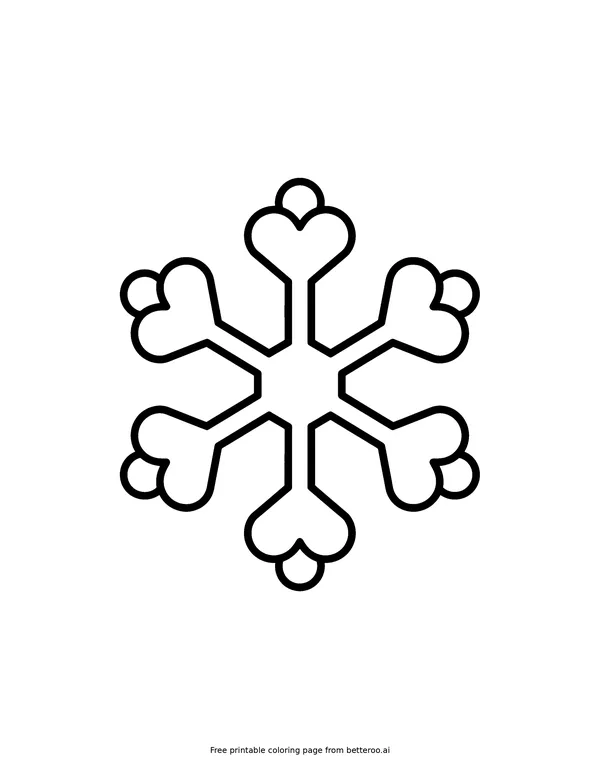
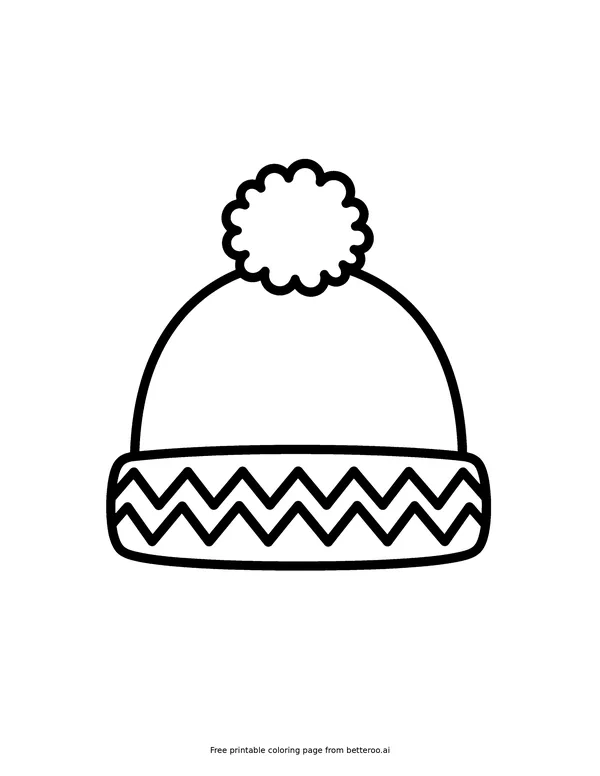
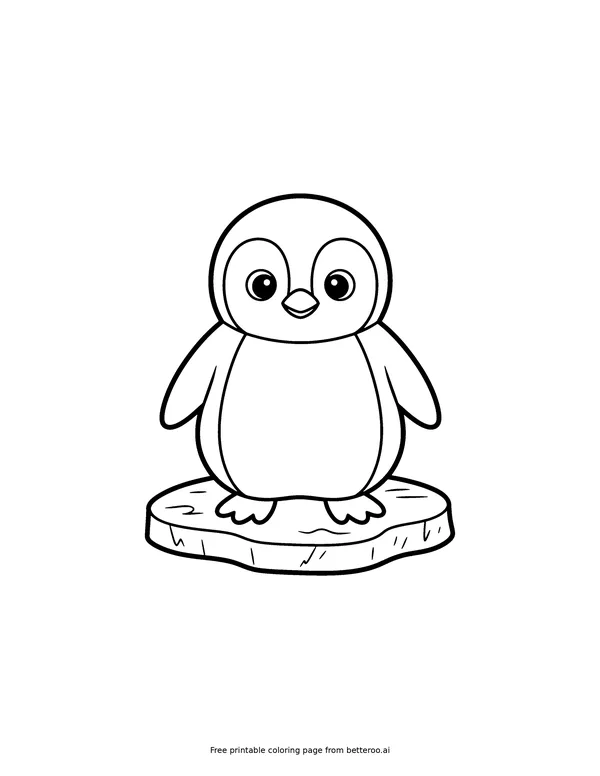
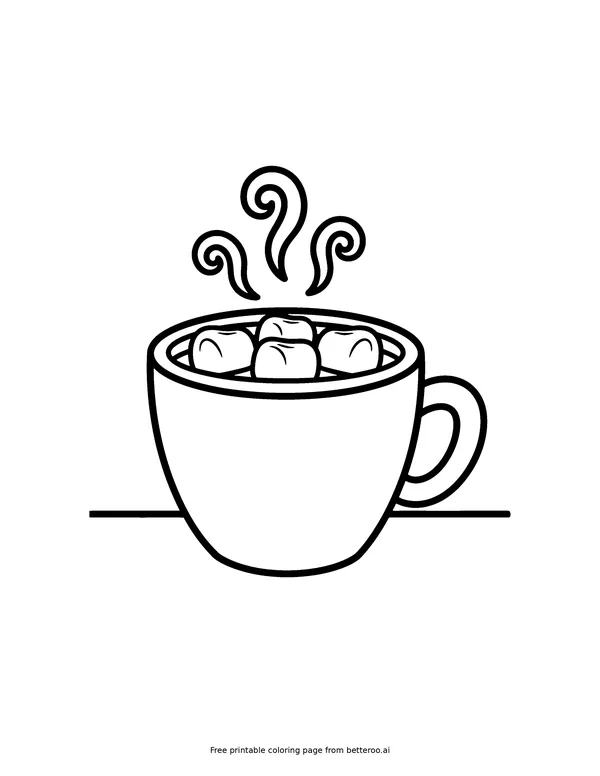
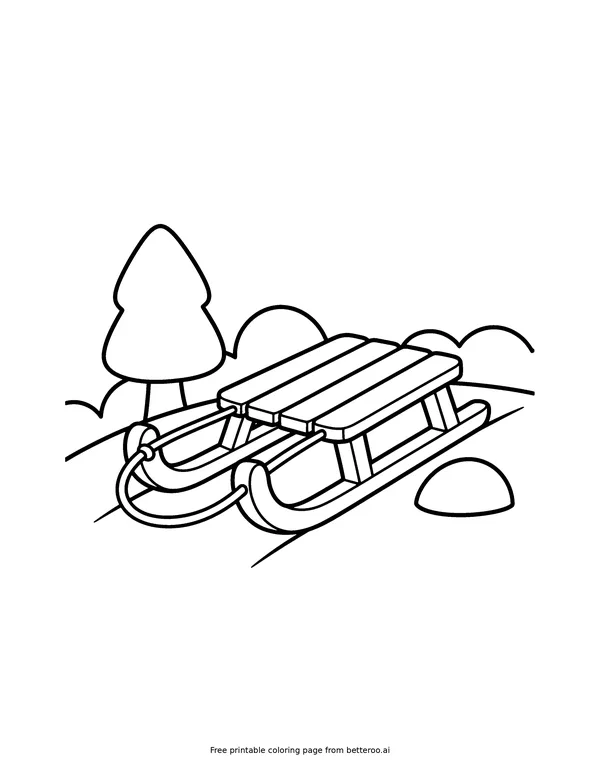
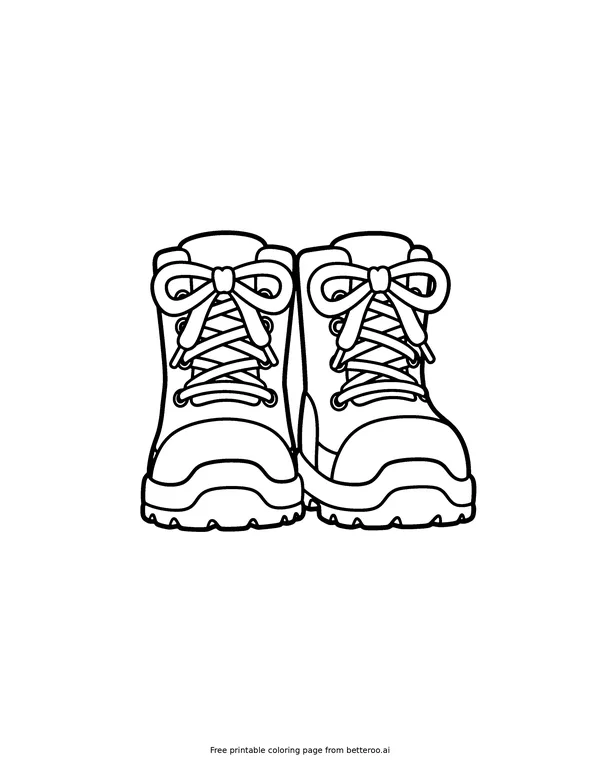
Snowflake, Mittens, Snowman, Winter Hat, Baby Penguin, Hot Cocoa, Sled on a Hill, Snow Boots
One large subject, thick outlines and big spaces that are easy to fill with chunky crayons
Medium
Ages 5 to 8
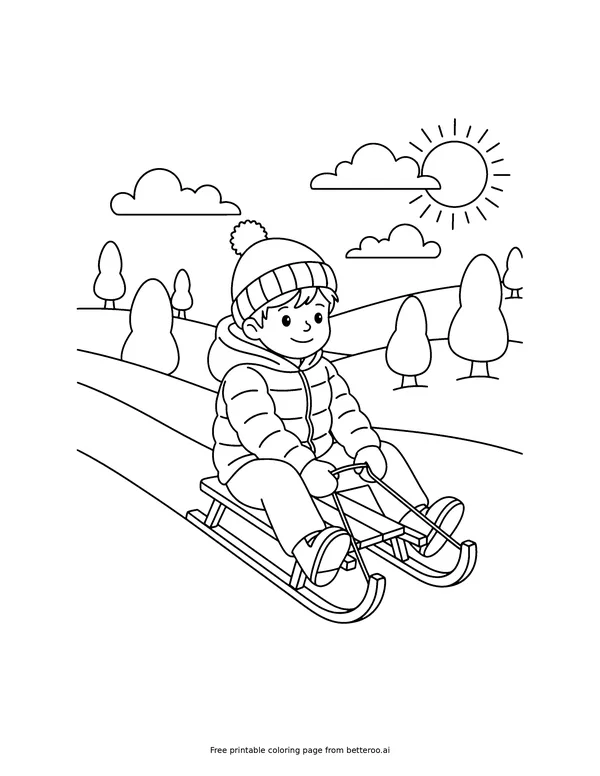
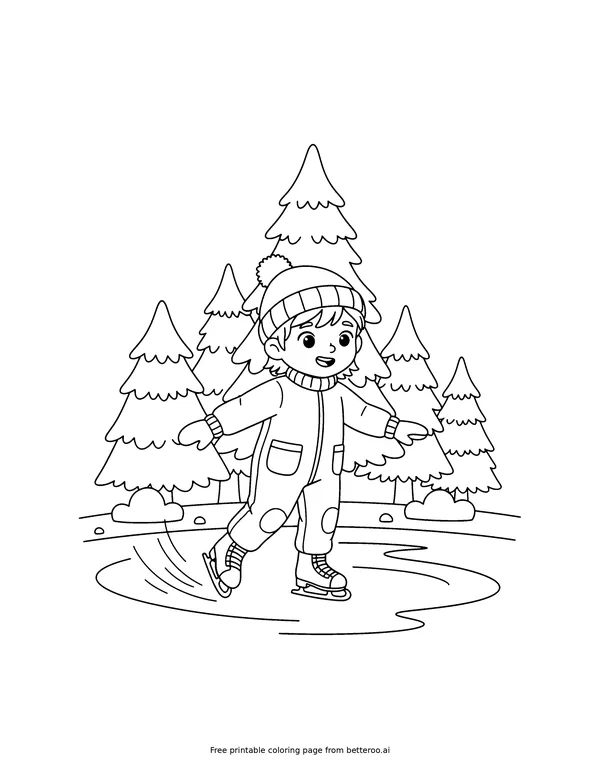
Sledding Down a Hill, Building a Snow Fort, Polar Bear and Cub, Ice Skating on the Pond, Sleepy Arctic Fox, Snowy Owl, Little Bird on a Snowy Branch
A simple scene or animal with some smaller details, good for practicing staying inside the lines
Detailed
Ages 8 and up, teens, adults
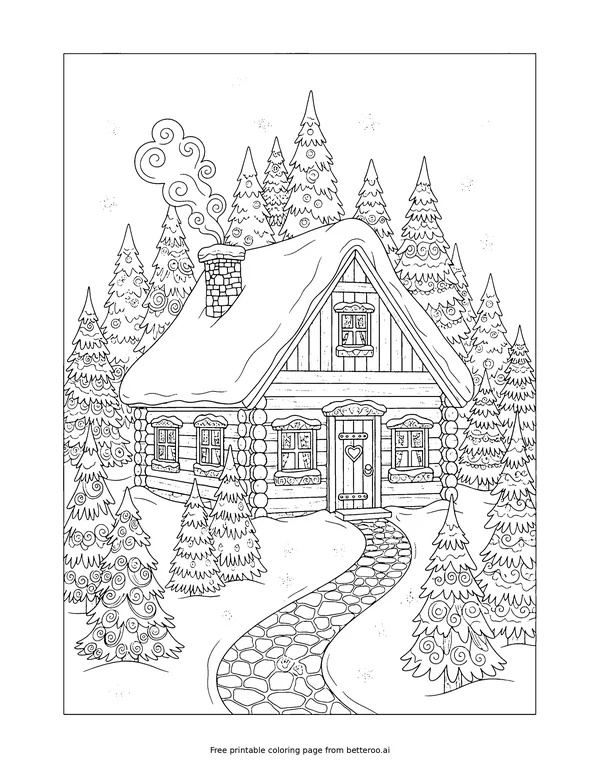
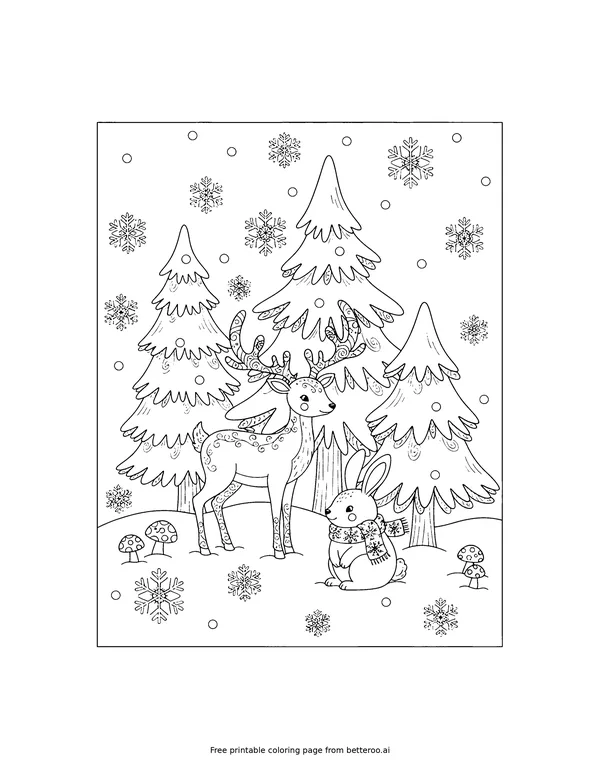
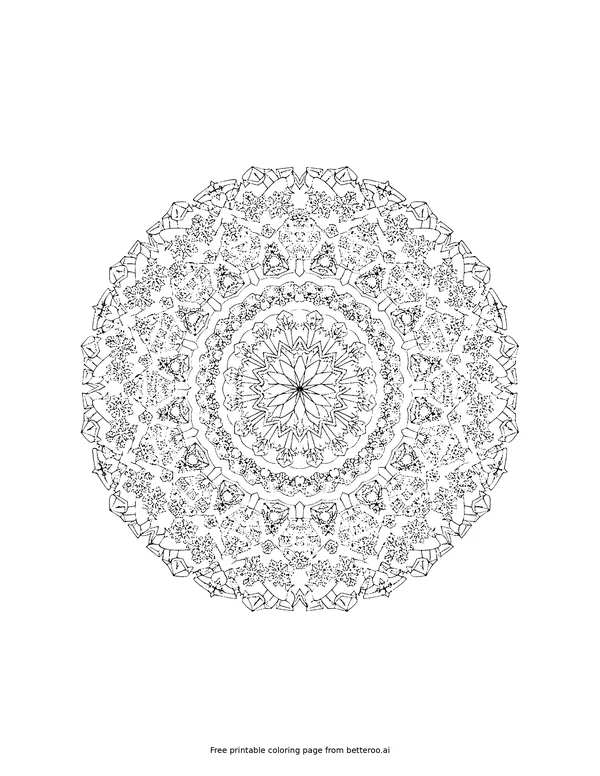
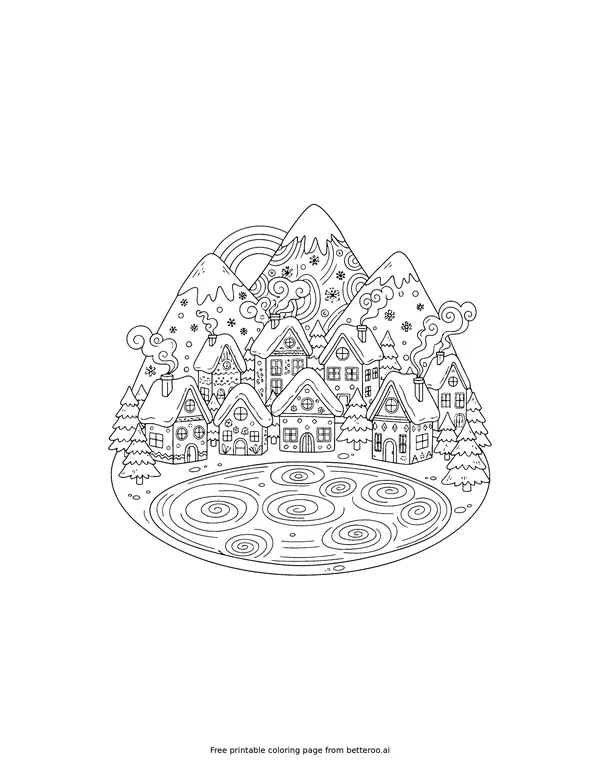
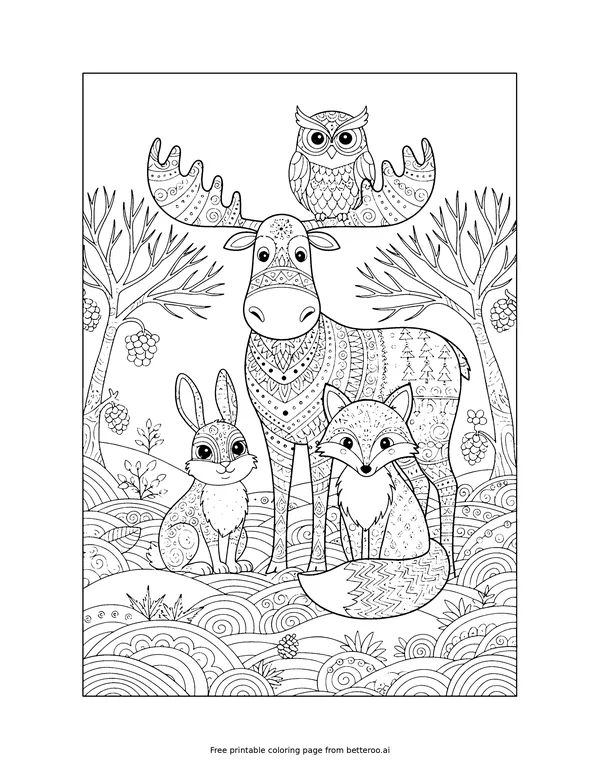
Log Cabin in the Snow, Winter Forest Friends, Snowflake Mandala, Snowy Mountain Village, Winter Animals in the Meadow
Busy scenes and repeating patterns for shading, fine-tip tools and longer quiet sessions
Our 20 winter coloring pages sorted by age and difficulty.
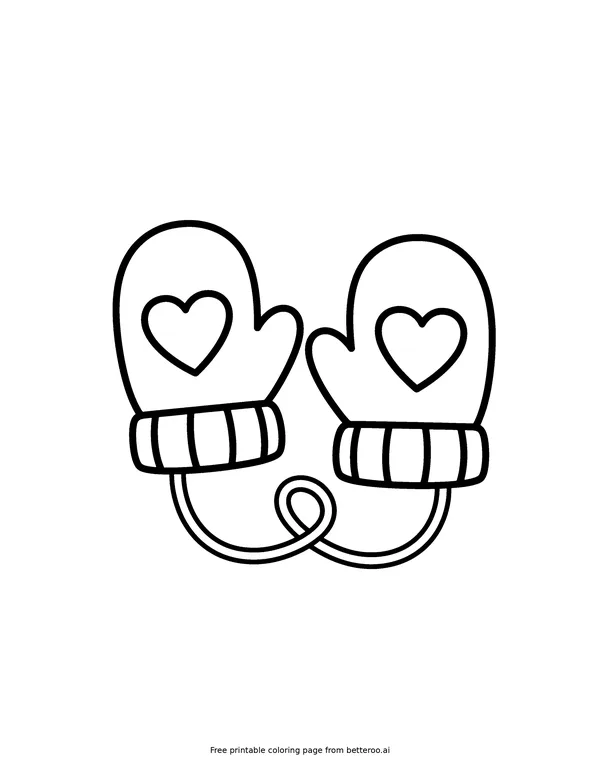
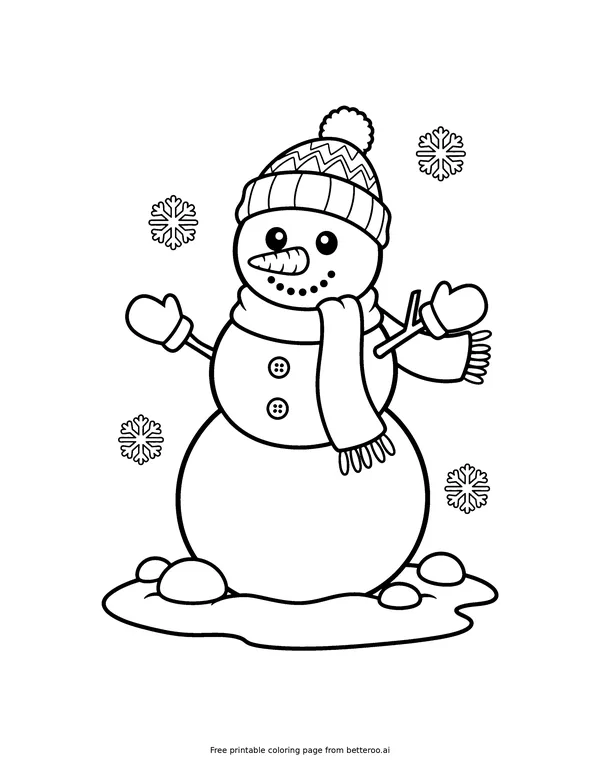
Simple winter coloring pages for preschoolers: start with the Mittens, Winter Hat or Snowman. Each has only a few closed shapes, so a 3 year old can finish a page before losing interest. Finishing is a big part of the fun at that age.
Winter Coloring Supplies by Age
You do not need an expensive art kit. Match the tool to your child’s hands, keep everything in one bin, and you are ready for any snow day.
Winter Learning Tie-Ins: Snowflake Science and Animals in the Cold
Winter coloring pages are a great excuse to talk about how winter actually works. Here are kid-sized facts from scientists, matched to the pages.
Why do snowflakes have six sides? According to NOAA’s satellite and information service (NESDIS), a snowflake forms when water vapor travels through the air and condenses on a tiny particle, then slowly grows into an ice crystal. NOAA explains that the crystal structure of frozen ice is a six-sided shape, which is why snowflakes show six-fold symmetry. Tiny changes in temperature and moisture as a flake moves through a cloud change its final shape, and NOAA says that is why you will never find two truly identical flakes.
Symmetry check (Snowflake and Snowflake Mandala): Ask your child to count the arms on the Snowflake page, then try coloring all six arms with the same pattern so the snowflake stays symmetrical. Older kids can do the same with the rings of the Snowflake Mandala.
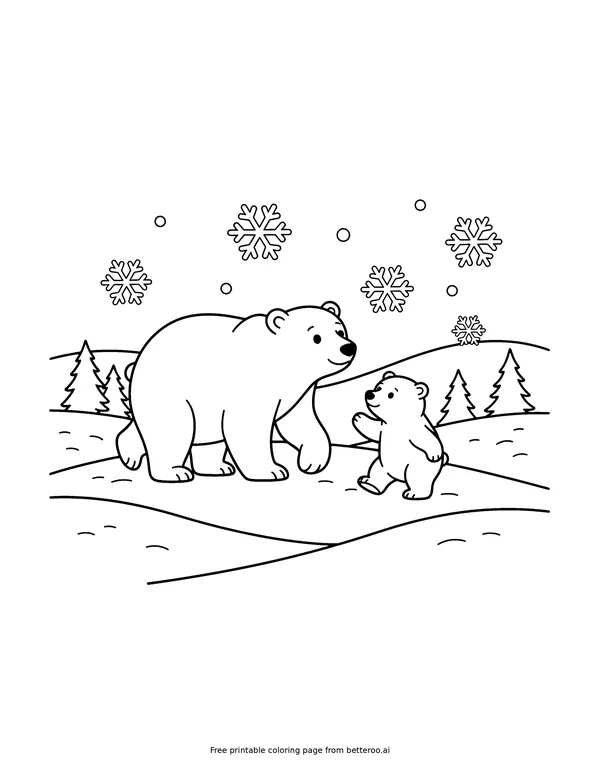
Polar bears (Polar Bear and Cub): The National Park Service says polar bears have a white coat with water-repellent guard hairs and dense, warm underfur. The U.S. Fish and Wildlife Service adds that polar bears have black skin, which is good for absorbing energy from the sun.
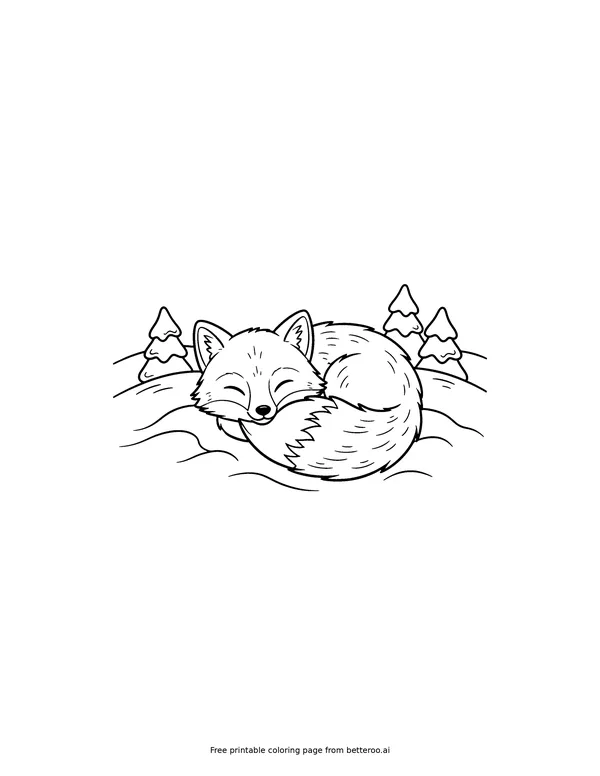
Arctic foxes (Sleepy Arctic Fox): The National Wildlife Federation describes the arctic fox’s bushy tail, which can wrap around it like a scarf to keep its nose warm, and the dense fur on the bottoms of its paws that cuts heat loss through its feet. The National Park Service notes its white winter fur helps it blend in, and that the coat turns brownish gray by summer.
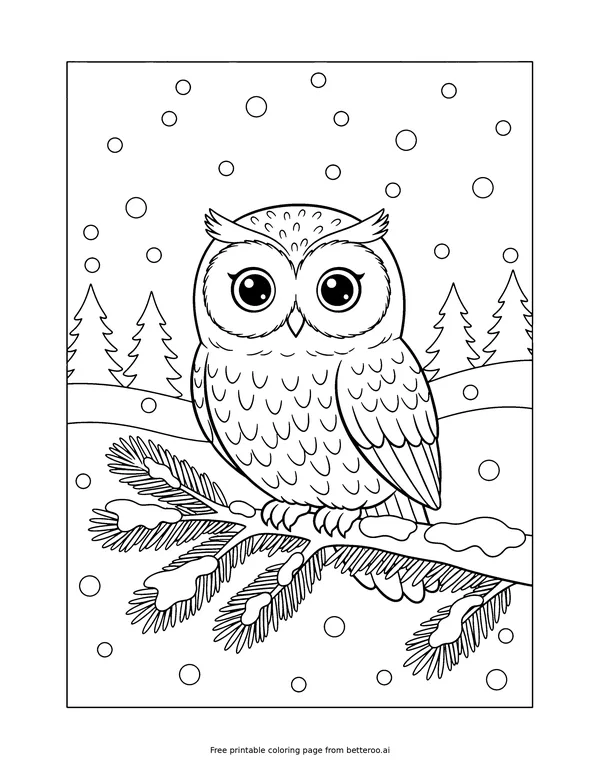
Snowy owls (Snowy Owl): The U.S. Fish and Wildlife Service says snowy owls have a lot of feathers for insulation in the Arctic, and their feet are covered with feathers like fluffy slippers.
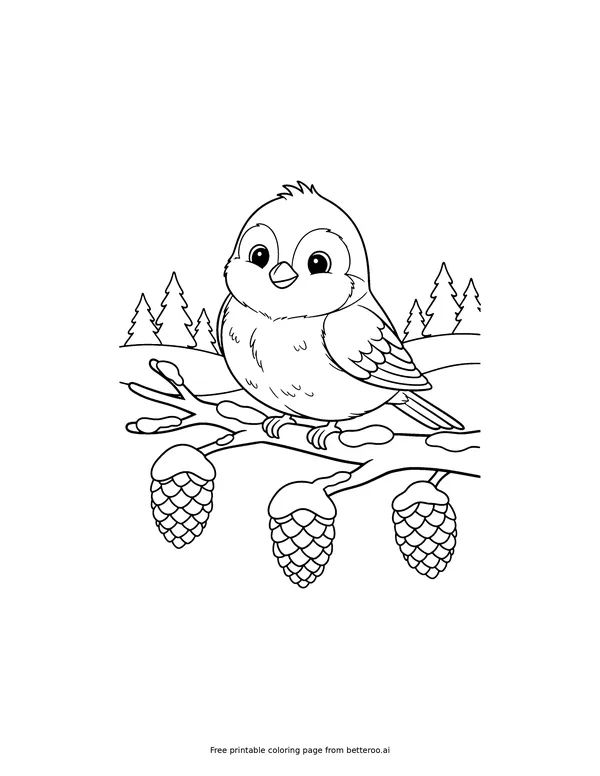
Small birds (Little Bird on a Snowy Branch): The U.S. Fish and Wildlife Service explains that birds fluff their feathers to trap air they can warm with body heat, and that shivering also helps them make heat. The National Wildlife Federation says black-capped chickadees can lower their body temperature overnight to save energy. If your bird looks round and puffy, that is exactly how birds stay warm.
Penguins (Baby Penguin): The U.S. Fish and Wildlife Service lists penguins among the animals that huddle together for warmth, along with bats and sea lions. Try a family “penguin huddle” hug after coloring.
The Winter Forest Friends and Winter Animals in the Meadow pages make a good “find and talk” game: point to each animal and ask, “How do you think this one stays warm?” Animal-loving kids will enjoy more of our fun facts about animals for kids, and our science experiments for kids include easy ideas that work on a cold day indoors.
Snow-Day Activities: Pair Winter Coloring Pages With Crafts
When school is canceled and it is too cold to stay outside for long, a stack of printed pages can carry you through a whole morning. These ideas pair a page with a simple craft, a game or a bit of play.
Cut paper snowflakes: After coloring the Snowflake page, fold a square of plain paper into sixths, snip shapes along the edges, and unfold. Compare it with the six-armed drawing.
Salt-sparkle snow: Trace snowy areas on a page printed on cardstock with white glue, sprinkle salt over it, and shake off the extra for frosty texture. Our salt painting guide shows how to add watercolor for a bigger version.
Matching mittens game: Print the Mittens page twice. Each child colors a pattern on one mitten, and a partner tries to copy it exactly on the second page. It is a sneaky way to practice patterns and symmetry.
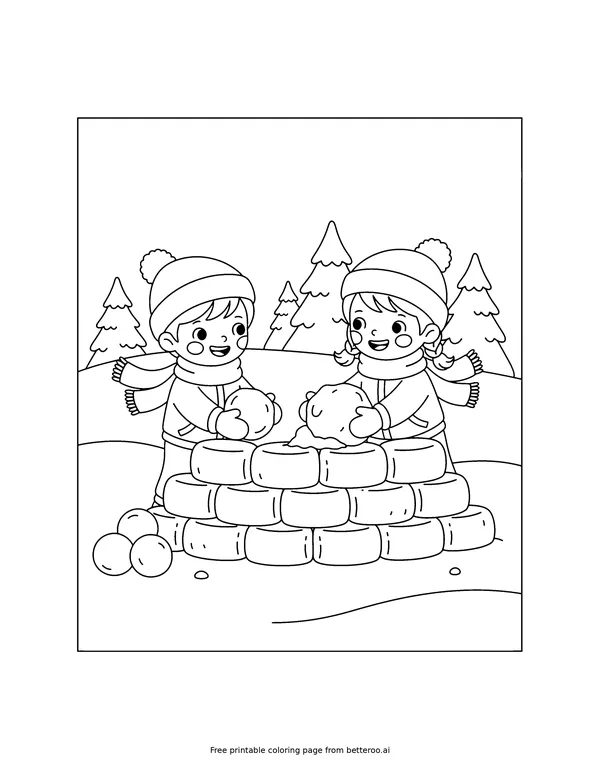
Indoor snow fort: Color Building a Snow Fort, then build a cozy fort out of couch cushions and sheets and read the finished page inside it with a flashlight.
Small-muscle practice: Gripping a crayon, steering it around the edge of a mitten and pressing harder or softer for darker colors all give little hands practice with control.
Thinking and learning: The American Academy of Pediatrics (AAP), in its guide to the power of play, recommends giving children chances to sing, dance and draw, and says music and art activities support cognitive, social-emotional and multisensory skills. Choosing and naming colors is part of that.
Coping with stress: The same AAP guide says play helps children cope with stress. A quiet, hands-on activity is one gentle option when everyone has been cooped up inside for days.
Winter Coloring Pages as a Calm Wind-Down Before Bed
Winter evenings get dark early, and long stretches indoors can leave kids wired at bedtime. A short coloring session can be a calm bridge between dinner and lights out.
The AAP suggests families set screen-free times and zones, including before bed, as part of a family media plan. A coloring page is an easy swap for a show or tablet in that last stretch of the evening because it keeps hands busy without a bright screen or fast-moving content.
Keep it short: 10 to 15 minutes at the table, then bath, pajamas, teeth and books.
Choose sleepy pages: The Sleepy Arctic Fox, Snowy Owl and Little Bird on a Snowy Branch have a calm, quiet mood. Easy pages like the Winter Hat finish quickly, so there is no “one more minute” battle.
If your child needs a quiet spot during the day too, our calm-down corner guide shows how to set one up with a few coloring pages and crayons. For a full step-by-step evening routine, see our toddler bedtime routine guide. Shorter days and snow-day schedule changes can shift naps and bedtimes, and the Betteroo app can help you keep sleep on track through the winter.
Tips for Coloring With Toddlers
Toddlers scribble, mouth things and move on quickly. That is normal.
Start with the biggest shapes: The Mittens, Winter Hat and Snow Boots pages have large open areas. Expect scribbles that go everywhere, not neat filling.
Use chunky crayons: Thick crayons are easier to grip and less likely to snap into small pieces.
Stay close: Young toddlers still put things in their mouths, so keep marker caps, broken crayon bits, cotton balls, salt and glue out of reach and sit with them while they color or craft.
Tips for Older Kids, Teens and Adults
The detailed pages, like the Log Cabin in the Snow, Snowy Mountain Village and Snowflake Mandala, reward longer sessions and are popular with grown-ups who simply enjoy a quiet, screen-free hobby. Try these techniques:
Pick a palette first: Choose three to five colors before you start, such as icy blues and silver for the mandala or warm browns and golds for the cabin.
Shade with pressure: With colored pencils, press lightly first, then build darker layers in shadows, like under the cabin roof or along the sides of the mountains.
Make snow glow: Leave the brightest snow white, shade the rest in pale blue or lavender, and add white gel pen highlights on top of colored areas.
Terms of Use for These Printables
All 20 winter coloring pages on this page, and the all-in-one PDF, are original artwork created by Betteroo. You are welcome to use them freely in these ways:
Print as many copies as you like for personal and home use.
Print copies for your classroom, homeschool group, library program, community event or daycare, at no charge to families.
Please do not resell the pages, include them in paid products or bundles, or repost the PDF files on another website. Looking for holiday pages too? Our Christmas coloring pages and Hanukkah coloring pages are free under the same terms.
Our 20 free winter coloring pages give every age something to enjoy all season long, from a toddler scribbling on big Mittens to a teen shading the Snowy Mountain Village. Print them on US Letter with “fit to page” (or grab the all-in-one PDF), match supplies to your child’s hands, and stay close to little ones around caps and small craft pieces.
Then use them as a jumping-off point: count snowflake arms, talk about how polar bears and snowy owls stay warm, pair a page with a snow-day craft, or color a sleepy arctic fox as a calm, screen-free wind-down before bed.
Frequently Asked Questions
Where can I find free winter coloring pages?
You can print all 20 free winter coloring pages on this page. Click any picture in the gallery to open its PDF, or download the all-in-one PDF with every page. They are original Betteroo line art on US Letter paper, sorted into easy, medium and detailed levels, and free for personal, home and classroom use.
How do I print coloring pages so they fit the paper?
Open the PDF and choose Print. In the printer settings, select US Letter, portrait orientation and the fit to page or scale to fit option so no part of the drawing is cut off. Black and white or draft mode saves ink. Use cardstock or heavier paper if your child will use markers, glue or paint.
What are good winter things for kids to color?
Young kids do best with simple shapes like mittens, hats, snowmen, snow boots and a single snowflake. School-age kids enjoy scenes such as sledding, building a snow fort, ice skating and winter animals like polar bears, arctic foxes and snowy owls. Older kids and adults like detailed cabins, mountain villages and snowflake mandalas.
Why do snowflakes have six sides?
NOAA explains that the crystal structure of frozen ice is six-sided, which gives snowflakes their six-fold symmetry. A flake starts when water vapor condenses on a tiny particle, and small changes in temperature and moisture as it falls shape its arms. That is why no two snowflakes are ever truly identical.
What age can kids start coloring?
Toddlers can start as soon as they can hold a chunky crayon and scribble, and scribbling counts. Expect marks everywhere rather than staying in the lines. Choose simple pages with big shapes, use thick crayons, keep caps and small pieces out of reach, and stay close by while they color.
Can adults use these winter coloring pages?
Yes. The detailed pages, such as the Log Cabin in the Snow, Snowy Mountain Village and Snowflake Mandala, were designed for older kids, teens and adults. Many grown-ups enjoy coloring as a quiet, screen-free hobby, and it is a nice activity to share with kids on a snowy afternoon.
Gentle changes, peaceful nights.
Betteroo builds a personalized sleep plan for your baby or toddler. Take the free two-minute quiz to get started.