The best Christmas sensory bin matches your child’s age: taste-safe oats, yogurt or soft cooked pasta for babies and toddlers who still mouth things, and dry rice, pasta, cotton balls or fake snow once they don’t.
A Christmas sensory bin is one of the easiest holiday activities you can set up: a shallow tub, a festive filler and a few scoops. Kids dig, pour and explore, and you get a little breathing room in December.
Here every bin is labeled by age and mess level, with taste-safe options for the youngest, filler recipes, cleanup tips and safety rules checked against the CPSC and the American Academy of Pediatrics.
Key Takeaways
Choose the bin by whether your child still mouths objects, not by age alone.
Babies and young toddlers get taste-safe bins made from foods they already eat.
Never use water beads, and keep button batteries and small magnets out of every bin.
An adult stays within arm’s reach for every bin, and water bins are emptied right after play.
Bins build fine motor skills, vocabulary and early math while kids play.
As an Amazon Associate, Betteroo earns from qualifying purchases.
Table of Contents
Christmas Sensory Bin Ideas at a Glance
Quick Answer
A Christmas sensory bin is a shallow tub filled with a holiday-colored base (the filler) plus a few things to scoop and find (the add-ins). Match the bin to your child: babies and toddlers who still mouth things get taste-safe bases like cooked oats, soft cooked pasta or plain yogurt with large, mouth-proof add-ins. Children who no longer put things in their mouths (often around age 3) can move on to dry rice, pasta, cotton balls and baking soda snow. Every bin needs an adult right there, and water beads, button batteries and small magnets never go in at all.
If you remember one rule, make it this: pick the bin that matches whether your child still puts things in their mouth.
Bin
Best for
Base (filler)
Mess level
Taste-safe?
1. Snowy Oatmeal Bin
Babies who already eat oats
Cooked, cooled oats
High
Yes
2. Candy Cane Yogurt Swirl Tray
Babies who already eat yogurt
Plain yogurt, berry or beet puree
High
Yes
3. Wreath Noodle Bin
Babies and young toddlers who eat pasta
Soft cooked large pasta
Medium
Yes
4. Unwrap-It Paper Bin
12 months and up
Tissue paper, big empty boxes
Low
No (paper)
5. Ornament Bubble Bath
18 months and up
Shallow warm soapy water
Medium
No
6. Real Snow Bin
18 months and up
Fresh snow from outside
Medium
No
7. Frozen Forest Rescue
2 years and up
Large ice blocks, warm water
Medium
No
8. Santa’s Post Office
2 to 3 years and up
Envelopes, paper, chunky stamps
Low
No
9. Red and Green Rice Bin
3 years and up
Dyed dry rice
Medium
No
10. Holiday Pasta Sorting Station
3 years and up
Dyed dry pasta shapes
Medium
No
11. Cotton Ball Snowball Bin
3 years and up
Cotton balls
Low
No
12. Christmas Tree Farm Bin
3 years and up
Dry soil or brown rice, faux greenery
Medium
No
13. Melting Snowman Fizz Bin
4 years and up
Baking soda snow, vinegar
High
No
14. Gingerbread Spice Bin
4 years and up
Oats or rice with cinnamon, whole spices
Medium
No
Christmas sensory bins by age and mess level. Ages are general guides: go by whether your own child still mouths objects.
Christmas Sensory Bin Safety Rules (Read Before You Fill a Bin)
Stay within arm’s reach: set up a bin when you can sit with your child, not while you cook dinner.
Size up every add-in for kids under 3: the U.S. Consumer Product Safety Commission (CPSC) bans small parts in toys intended for children under 3. Hold bin add-ins to the same standard. The American Academy of Pediatrics (AAP) says to make sure toys and their parts are larger than your child’s mouth.
Never use water beads: the CPSC warns that water beads can keep growing inside the body after being swallowed and cause life-threatening intestinal blockages. Its advice is to remove them from any home with children.
No button batteries or small magnets: keep battery-powered light-up toys and anything with magnets out of the bin. The AAP warns both can be swallowed or pushed into noses and ears, and that swallowing more than one strong magnet can be life-threatening because they pull together inside the gut.
Mouthers get mouth-friendly bins: the AAP’s choking list includes nuts, seeds, popcorn and hard candy, and it names small round objects among the leading causes of choking deaths. For any child who still mouths, skip dry beans, rice, pasta, pom poms, bells and candy.
Water gets full attention: HealthyChildren warns that young children can drown in as little as an inch or two of water, quickly and silently. Stay right there and empty the bin when play ends.
Check food allergies: if a filler is a food, only use foods your child already eats safely at meals. A sensory bin is not the place to try a new food.
No balloons, no real holly or mistletoe: the AAP says balloons are a choking risk for children up to age 8. California Poison Control notes that holly berries are especially attractive to small children and that all parts of mistletoe contain toxic substances, so use faux greenery.
Taste-Safe Christmas Sensory Bins for Babies and Young Toddlers
These first three bins are built for little ones who explore with their mouths. Use them only with babies who sit steadily and already eat the food at meals. Strip down to a diaper and plan on a bath after.
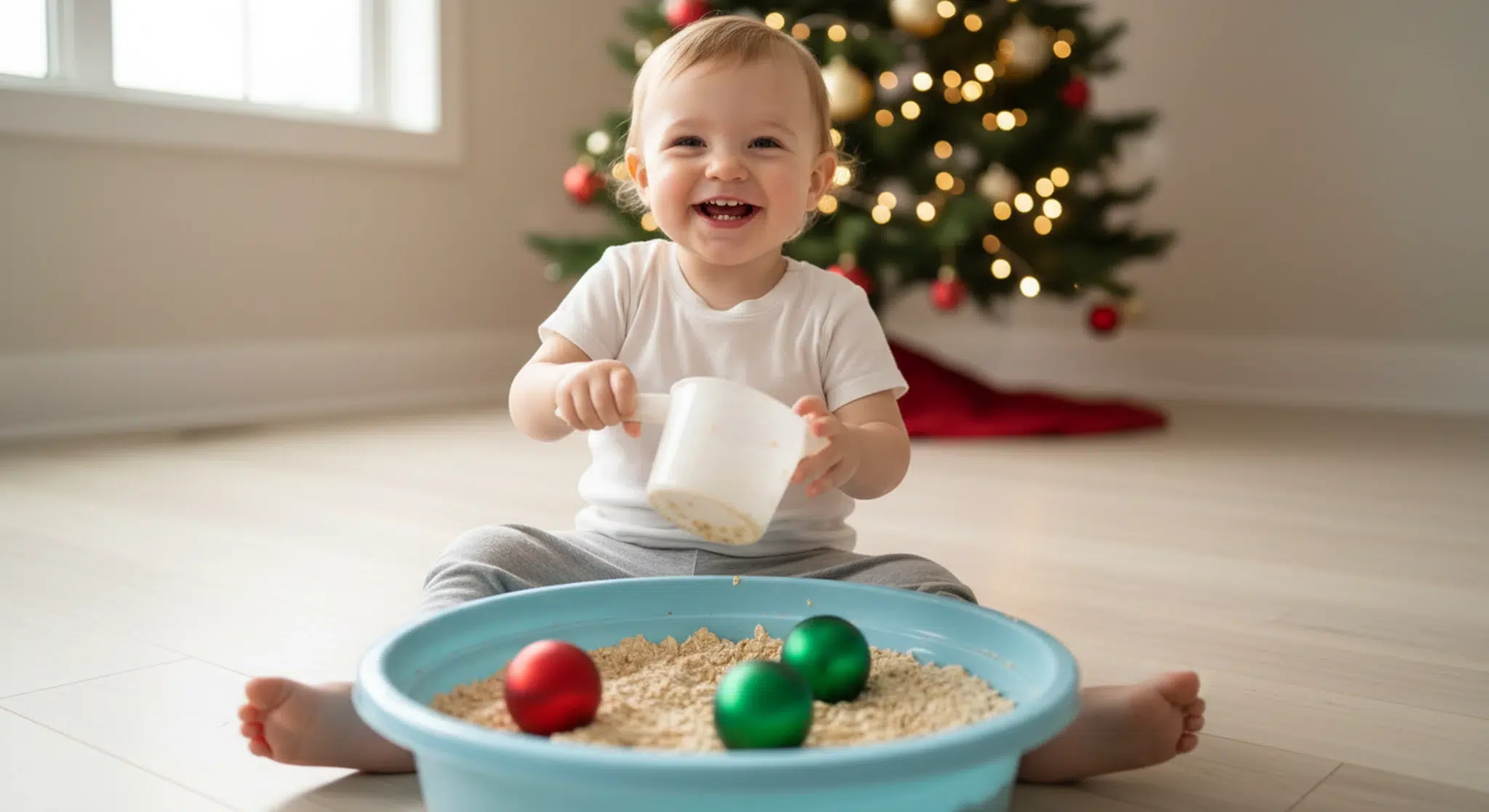
1. Snowy Oatmeal Bin (babies who already eat oats): cook plain oats a little thicker than usual and let them cool completely. Spread them on a tray as “snow” with a big measuring cup and a silicone spatula. Skip sugar, honey and nuts, and toss leftovers after play.
2. Candy Cane Yogurt Swirl Tray (babies who already eat yogurt): spoon plain whole-milk yogurt onto a tray and swirl in a spoonful of red berry or beet puree to make candy cane stripes. Let your baby finger-paint. Ten minutes is plenty at this age.
3. Wreath Noodle Bin (babies and young toddlers who eat pasta): cook large pasta shapes such as rigatoni or big shells until very soft, rinse, cool and toss half with a drop of green food coloring and half with red. Add a wide bowl and a large slotted spoon.
Taste-safe does not mean choke-proof. Keep pieces soft and cooked, watch the whole time, and follow your pediatrician’s guidance for textures. If you are still introducing foods, see our guide to introducing allergens to your baby. More ideas: activities for 1-year-olds.
Christmas Sensory Bins for Toddlers (12 Months to 3 Years)
Toddlers want to dump, fill, wrap, unwrap and splash. These bins use big pieces, so you are not policing tiny parts.
4. Unwrap-It Paper Bin (12 months and up): fill a laundry basket with crinkly tissue paper and a few empty boxes, each hiding one large, familiar toy. Leave out ribbon, string and small stick-on bows.
5. Ornament Bubble Bath (18 months and up): put an inch of warm water and a squeeze of mild soap in a tub on a towel. Add large shatterproof plastic ornaments (caps and hooks removed) and a sponge to give them a bath. Empty the water as soon as play ends.
6. Real Snow Bin (18 months and up): if you have snow, scoop a bin full and bring it to the kitchen floor. Add mittens, cups and large toy trucks. Make sure the snow is clean and that nobody eats it.
7. Frozen Forest Rescue (2 years and up): the night before, freeze a few large plastic animals or chunky figures in a loaf pan of water. Give your toddler the block, warm water and a squeeze bottle to free the “stuck reindeer.” Keep the ice in one big block, not small chips, and take breaks so little fingers can warm up.
8. Santa’s Post Office (2 to 3 years and up): envelopes, old holiday cards, a chunky stamp and a shoe-box mailbox. It pairs well with a letter to Santa, or a thank-you card to grandparents if your family does not do Santa.
For more everyday play at this age, see activities for 2-year-olds, and if you are planning a first holiday with a baby, our baby’s first Christmas guide covers gifts, traditions and tree safety.
Big days go better with a good night of sleep.
Got a little one at home too? Our free two-minute quiz builds a gentle, personalized sleep plan for babies and toddlers.
Christmas Sensory Bins for Preschoolers and Big Kids (3 Years and Up)
Once your child reliably keeps things out of their mouth, dry-filler bins open up. Many 3-year-olds still mouth now and then, so go by your child, not their birthday.
9. Red and Green Rice Bin (3 years and up): dye two batches of white rice (see the recipe below) and pour them side by side in a long storage box. Add funnels, cups and large plastic ornaments to bury and find. Large jingle bells can join in if no younger sibling is around.
10. Holiday Pasta Sorting Station (3 years and up): dye dry bow ties red, green and white. Add a muffin tin and tongs for sorting by color or making patterns.
11. Cotton Ball Snowball Bin (3 years and up): fill a bin with cotton balls and add tongs, clothespins, an ice cube tray and a few toy penguins or polar bears. It is the lowest-mess bin on this list.
12. Christmas Tree Farm Bin (3 years and up): use brown rice or dry potting soil as “dirt,” then plant faux evergreen picks, pine cones and toy trucks for hauling. Use artificial greenery only, and skip real holly and mistletoe.
13. Melting Snowman Fizz Bin (4 years and up): mix baking soda with a little water or hair conditioner until it holds together like packing snow. Build small snowmen in a tray, then let your child drip colored vinegar on top and watch them fizz. Keep vinegar away from eyes; this snow is not for tasting.
14. Gingerbread Spice Bin (4 years and up): toss dry oats or rice with a few shakes of ground cinnamon, then add whole cinnamon sticks, gingerbread cookie cutters and wooden spoons. We use kitchen spices in small amounts, not concentrated essential oils.
How to Make Fillers: Colored Rice, Pasta and Fake Snow
Colored rice: put a cup of white rice in a zip-top bag with about a teaspoon of white vinegar and several drops of food coloring. Seal, shake until evenly colored, then spread on a baking sheet lined with parchment to dry completely before play. Make red and green in separate bags.
Colored dry pasta: same method as rice. Dry it in a single layer.
Baking soda snow: start with a box of baking soda and add water or conditioner a spoonful at a time until it packs.
Dry fillers keep for weeks in a lidded container. Food-based wet fillers (cooked oats, yogurt, cooked pasta) are single-use: throw them out after play.
Setup and Cleanup Tips That Save Your Sanity
Pick a wide, shallow container: an under-bed storage box or a large baking sheet with sides works well. Fill it only a third of the way.
Put down a big base layer: a shower curtain, an old tablecloth or a fitted sheet under the bin catches spills. Afterward, gather the corners and pour it back.
Set two simple rules: “Rice stays in the bin” and “We play with our hands, not our mouths.” End the session kindly if a rule keeps getting broken.
Plan the end before you start: give a five-minute warning and keep a dustpan ready. The AAP suggests checking under furniture and between cushions for small items toddlers might find.
Your child practices a lot of skills while they dig.
Fine motor skills: scooping, pouring and pinching cotton balls with tongs build the hand control your child will later use for buttons, crayons and scissors.
Language: bins are full of words to name: crunchy, squishy, cold, sticky, full, empty. Narrate what your child does and pause so they can answer. See when babies start talking for what to expect by age.
Early math: counting snowballs, sorting pasta by color and making red-green patterns are real early math.
Science thinking: melting snow, freeing animals from ice and fizzing snowmen let kids predict, test and see cause and effect.
Pretend play and sharing: post offices and tree farms invite stories, and two kids at one bin practice taking turns. With siblings of different ages, set up two bins side by side, keep dry fillers out of the baby’s reach, or save them for nap time.
A Christmas sensory bin can keep a toddler happily busy on a cold afternoon. The safest bins match your child’s stage: taste-safe, big-piece bins for anyone who still mouths, and dry fillers once that phase has passed.
Whatever you build, stay within reach, keep water beads, button batteries, small magnets and balloons out of every bin, and empty water bins as soon as you are done. If your child has trouble breathing, call 911. If you think your child swallowed a battery, a magnet or a water bead, get medical care right away; the CPSC lists the Poison Help line, 1-800-222-1222, for questions. If your child strongly avoids or constantly seeks certain textures, mention it at their next checkup.
Frequently Asked Questions
What do you put in a Christmas sensory bin?
Start with a base, such as dyed rice, dry pasta, cotton balls, oats, baking soda snow or real snow. Add a few things to scoop and find, like cups, funnels, tongs and large shatterproof ornaments. For babies and toddlers who still mouth things, use taste-safe foods they already eat and only large add-ins.
What age is appropriate for sensory bins?
There is no single start age. Babies who sit steadily can play with taste-safe bins made from foods they already eat, with an adult right there. Dry rice, dry pasta, cotton balls and small add-ins wait until your child reliably keeps things out of their mouth, which for many children is around age 3.
What can I use instead of water beads?
Skip water beads entirely, since the CPSC warns they can expand inside the body and cause dangerous blockages. Try soft cooked pasta, large ice blocks, soapy water with big plastic ornaments, real snow, or baking soda snow for older kids.
How do you dye rice for a sensory bin?
Put a cup of white rice in a zip-top bag with about a teaspoon of white vinegar and several drops of food coloring. Seal and shake until the color is even, then spread the rice on a lined baking sheet and let it dry completely. Store it in a lidded container.
How do you keep a sensory bin from getting messy?
Use a wide, shallow container filled only a third of the way, and put a shower curtain or old sheet underneath. Offer just a few tools, set a rule that filler stays in the bin. Have a dustpan ready and do wet bins on the kitchen floor.
Are sensory bins safe for toddlers?
They can be, with the right fillers and constant supervision. Toddlers who still mouth things should get taste-safe bases and add-ins larger than their mouth, never dry beans, pom poms, small bells, water beads, button batteries or magnets. Stay within arm’s reach and empty water bins after play.
Gentle changes, peaceful nights.
Betteroo builds a personalized sleep plan for your baby or toddler. Take the free two-minute quiz to get started.