The best road trip ideas for kids are a route built around naps and breaks, a bag of age-right activities, a shared audiobook, choking-safe snacks, and the right car seat on every mile.
These road trip ideas for kids cover the planning side of a family drive: driving days by age, where to stop, busy bags, screens without guilt and safe snacks, in 30 practical tips.
You will also find car seat basics, help for carsick kids, a packing list and the parked-car safety rules that matter most.
Key Takeaways
Plan a break about every two hours and start long stretches at nap time.
Keep every child in the right car seat or booster on every trip, with no bulky coats under the harness.
Audio and window-watching beat books and screens for kids who get carsick.
Keep high-risk choking foods like whole grapes, nuts and popcorn from kids under 4.
Never leave a child alone in the car, and move a sleeping baby out of the car seat when you stop.
As an Amazon Associate, Betteroo earns from qualifying purchases.
Table of Contents
Road Trip Ideas for Kids: Plan by Age
Quick Answer
The best road trip ideas for kids start with the plan: drive around naps, stop about every two hours (the AAP’s suggestion), and give each child a bag of age-right activities. Add audiobooks and scavenger lists, pack age-safe snacks, and keep everyone in the right car seat or booster. Below are 30 practical tips and ideas, plus a packing list.
Start with ages: what keeps a 1 year old happy is very different from what works for a 10 year old.
Age
What they need most
Ideas that work
Baby (under 1)
Feeds, diaper changes, rear-facing seat, time out of the seat at stops
Drive during naps, soft lightweight toys, your voice and songs, floor time on a blanket at stops
Toddler (1 to 2)
Movement breaks, snacks at stops, short activities
Board books, sticker scenes, soft toys, songs, spotting animals out the window
Preschool (3 to 5)
Something new every hour, simple rules
Busy bag surprises, picture scavenger lists, audiobooks, simple car games
School age (6 to 9)
Jobs, choices and a sense of progress
Travel journal, map job, word games, story podcasts, a countdown chain
Tweens (10 to 12)
Independence, music, a say in the plan
Playlist DJ, helping pick stops, longer audiobooks, card games at stops
Road trip planning for kids, by age.
Plan the Route Around Your Kids
A kid-friendly route is mostly about rhythm: when you leave, where you stop, and how long kids sit.
1. Stop about every two hours: the AAP suggests planning a break for you and your child about every two hours. Build them into your drive time up front.
2. Drive through nap time: for babies and toddlers, start a long stretch right before a usual nap. You get quiet miles, and they get rest in a properly buckled seat.
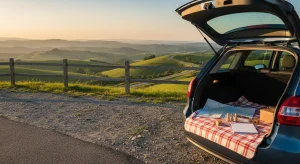
3. Pick stops with room to run: a park, a playground or a grassy picnic area does more for restless legs than a quick fuel stop.
4. Give kids a map job: print or sketch the route and let a school-age child mark each town or stop as you pass it.
5. Plan one fun stop per day: a short hike, an overlook or a small museum gives everyone something to look forward to. Our best family vacation spots guide can spark ideas.
A long drive is the time to check fit, not to cut corners. Everything here comes from the American Academy of Pediatrics (AAP).
7. Use the right seat on every trip: the AAP says to always use a car seat for infants and young children, and to use the correct seat or belt on every trip, every time. Unbuckling waits for the next stop.
8. Rear-facing as long as possible: the AAP says infants and toddlers should ride rear-facing as long as possible, until they reach the highest weight or height the seat’s manufacturer allows. Never put a rear-facing seat in front of an active airbag. Our guide to the car seat after the infant seat covers the next step.
9. Harness, then booster: after rear-facing, the AAP says children ride in a forward-facing harnessed seat as long as possible, at least to age 4, then in a belt-positioning booster until the adult belt fits, usually at about 4 feet 9 inches tall and 8 to 12 years old. See our booster seat age guide for the fit test. The AAP also says children under 13 should ride in the back seat.
10. No bulky coats under the harness: the AAP warns that winter coats and snowsuits can compress in a crash and leave straps too loose. Use thin layers, and lay a blanket or the coat over the buckled harness. If you can pinch the strap at the shoulder, tighten it.
11. Skip add-on gadgets: the AAP notes that products that did not come with the car seat have not been crash tested with it.
Grown-ups set the example: the AAP encourages parents to always wear a seat belt themselves.
Big days go better with a good night of sleep.
Got a little one at home too? Our free two-minute quiz builds a gentle, personalized sleep plan for babies and toddlers.
You do not need to fill every minute; a little boredom and window-watching is fine. These ideas are for when the mood dips.
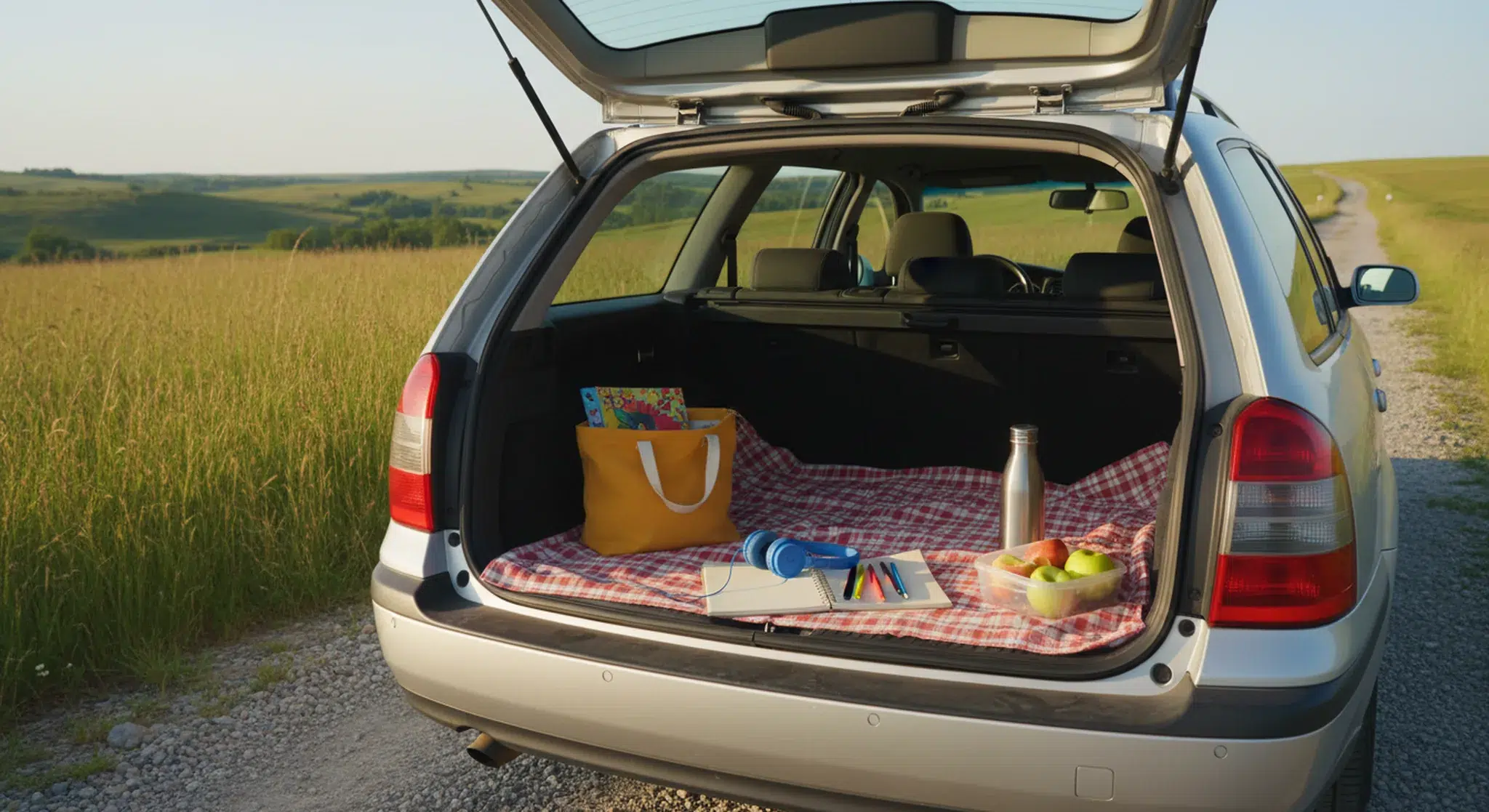
12. Busy bags: one zip bag per child with a few surprises: a notepad, colored pencils, a reusable sticker scene, a small puzzle (no tiny pieces for kids under 3). For toddlers, the AAP suggests soft, lightweight toys for car travel. Hand bags out one at a time, not all at the start.
13. A travel journal: a cheap notebook where kids draw or write one thing from every stop, tape in a receipt or a leaf, and rate the snacks. It doubles as a souvenir.
14. Scavenger lists: a list of things to spot (a red barn, a bridge, a water tower, a tractor). Pre-readers get a list of simple drawings.
15. Drawing on the go: a clipboard with paper or a magnetic drawing board, for kids who do not get carsick.
16. Car games: spotting, word and storytelling games carry a lot of miles; find 45 of them, sorted by age, in our road trip games guide, and older kids who are not carsick can bring card games for rest stops and hotel nights.
17. A countdown chain: a paper chain with one link per stop. Kids tear one off each time, and the trip has a visible end.
Audiobooks, Podcasts and Music for the Car
Audio keeps eyes up and out the window, which makes it the best entertainment for carsick kids.
18. Family audiobooks: pick a long chapter book everyone can follow, or a set of short story collections for little ones. Many public libraries lend audiobooks, often through an app.
19. Story podcasts for kids: look for kids’ story, mystery and science podcasts with short episodes.
20. Each person picks a playlist: rotate DJs every few songs. The AAP mentions favorite music for a sing-along as a way to keep kids from getting restless.
Screen Time in the Car Without the Guilt
A show during the longest stretch of a long drive is a reasonable choice, not a parenting failure. What matters is that it is planned, not the only tool.
21. Decide the rules before you leave: for example, screens after the first two stops, or only during the longest stretch.
22. Download before you go: signal drops on rural roads. Load shows, games and audiobooks onto devices at home.
23. Kid headphones at a low volume: everyone else keeps their sanity, and you can still hear each other. Keep volume low enough that your child can hear you speak.
24. Screens off for carsick kids: looking down at a screen is the kind of visual scanning the CDC suggests avoiding to reduce motion sickness. Swap in audio for anyone who feels queasy.
Road Trip Snacks for Kids (Age-Safe Ideas)
Snacks are entertainment, comfort and fuel. For kids under 4, they also need to be choking-safe. The AAP says to keep high-risk foods from children until at least age 4, depending on each child’s development, including hot dogs, hard, gooey or sticky candy, chewing gum, nuts and seeds, whole grapes, raw carrot sticks, raw apple chunks, popcorn, marshmallows, meat sticks, chunks of meat, chunks of cheese or string cheese, and thick globs of nut butter.
Age
Easy snack ideas
Prep tips
Under 1
Breast milk or formula, plus foods your baby already eats at home if they have started solids
Feed at stops, out of the car seat
1 to 3
Soft banana or ripe pear pieces, grapes chopped into tiny pieces, soft cooked vegetables, yogurt, soft crackers
AAP: cut food into pieces no larger than one-half inch; snack at stops
4 and up
Apple slices, cheese sticks, whole grain crackers, sandwiches cut into quarters, and nuts or popcorn once your child is ready
Use small containers per child to cut down on passing and spilling
Road trip snacks for kids, by age, based on AAP choking-prevention guidance.
25. Pack a snack plan, not just snacks: portion snacks into small containers per child so nobody needs to pass bags back and forth, and pack safe water for everyone, as the AAP suggests.
26. Snack at stops for little kids: the AAP advises supervising meals for young children and having them sit while eating. If no adult can sit next to a toddler, save snack time for a stop.
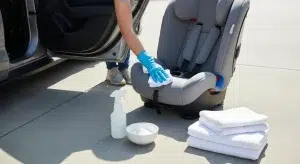
27. Bring a cleanup kit: wipes, paper towels, a few plastic bags and a change of clothes for each child. If someone gets sick, our guide on how to clean vomit from a car walks you through it.
Motion Sickness: How to Help a Carsick Kid
The CDC Yellow Book says children under 2 do not usually get motion sickness, and that susceptibility rises and peaks between ages 7 and 12. That is right when kids want to read, draw and play on devices in the car.
Eyes on the horizon: the CDC lists having a view of the horizon as a way to reduce symptoms in cars.
Skip reading and screens: the CDC lists avoiding reading or visual scanning. Audio and spotting games are the better match for sensitive kids.
Fresh air on the face: the CDC mentions fresh air on the face as a distraction that may help.
Medication only with your pediatrician: the CDC says to try behavioral steps first, use medication in children with caution, and avoid scopolamine in children. Ask your pediatrician before giving any motion sickness medicine.
Keep a sick bag and wipes within reach, and stop soon after anyone feels unwell.
Road Trip Packing List for Kids
Pack in zones: what the front passenger hands back, and what lives in the trunk. Keep the cabin light; the AAP suggests soft, lightweight toys for the car.
Category
What to pack
Where it goes
Safety
Correct car seat or booster for each child, first aid kit, any regular medicines
Seats installed before you leave
Comfort
Thin layers, a blanket to lay over a buckled harness, a familiar lovey, sunshades for side windows
Wipes, paper towels, trash bags, sick bags, a change of clothes per child
Front passenger footwell
Babies and toddlers
Diapers, feeding supplies, a portable crib or play yard
Diaper bag up front
Road trip packing list for kids.
Naps, Rest Stops and Hot Car Safety
The safety rules that matter most on a road trip happen when the car is parked.
28. Never leave a child alone in the car: the AAP says never leave your child alone in a car, even for a minute, because the inside can reach deadly temperatures in minutes. NHTSA says a child’s body temperature rises three to five times faster than an adult’s, and cracking a window does not meaningfully help.
29. Look before you lock: NHTSA suggests putting a personal item such as a purse or bag in the back seat as a reminder to check before you lock. Lock the car and keep keys away from kids.
30. Move sleeping babies to a flat surface: the AAP says car seats are for travel, and if a baby falls asleep in a car seat, stroller, swing or carrier, you should move them to a firm, flat surface on their back as soon as possible. Do not leave a baby sleeping in the car seat at a rest stop or in the hotel room.
At the hotel or a relative’s house, babies under 1 should sleep alone, on their back, on a firm, flat, bare surface such as a portable crib or play yard with only a fitted sheet. Our baby sleep while traveling guide covers naps, time zones and hotel sleep.
Good road trip ideas for kids are about rhythm more than gadgets: shorter driving days, a break about every two hours, age-right activities, a shared audiobook and age-safe snacks. Keep safety non-negotiable: the right seat on every trip, sleeping babies moved to a flat surface when you stop, and never leaving a child alone in the car.
Frequently Asked Questions
What are good road trip ideas for kids?
Good road trip ideas for kids include a busy bag for each child, a travel journal, a scavenger list of things to spot, a family audiobook or story podcast, a countdown chain, and a fun stop each day such as a park or overlook.
How do you keep kids entertained on a long car ride?
Rotate activities instead of handing everything out at once. Start with window-watching and car games, bring out a busy bag after the first stop, switch to an audiobook or music, and save a planned show for the longest stretch. Short, frequent changes work better than one big activity.
How often should you stop on a road trip with kids?
The American Academy of Pediatrics suggests planning to stop and give yourself and your child a break about every two hours. Babies and toddlers may need extra stops for feeds and diaper changes, so choose stops with space to move.
Can a baby sleep in a car seat on a long road trip?
Babies often sleep while riding properly buckled in their car seat. The AAP says car seats are for travel, though, so when you stop, move a sleeping baby to a firm, flat surface on their back as soon as possible.
How do I stop my child from getting carsick on road trips?
The CDC Yellow Book suggests keeping a view of the horizon and avoiding reading or visual scanning, so choose audiobooks and spotting games over books and screens. Ask your pediatrician before giving any motion sickness medicine, since the CDC advises caution with medication in children.
What snacks are good for a road trip with toddlers?
Choose soft foods your toddler already eats, such as banana pieces, soft cooked vegetables, yogurt and grapes chopped into tiny pieces. The AAP says to keep whole grapes, nuts, popcorn, raw carrot sticks, string cheese and other high-risk foods from children under 4.
Gentle changes, peaceful nights.
Betteroo builds a personalized sleep plan for your baby or toddler. Take the free two-minute quiz to get started.