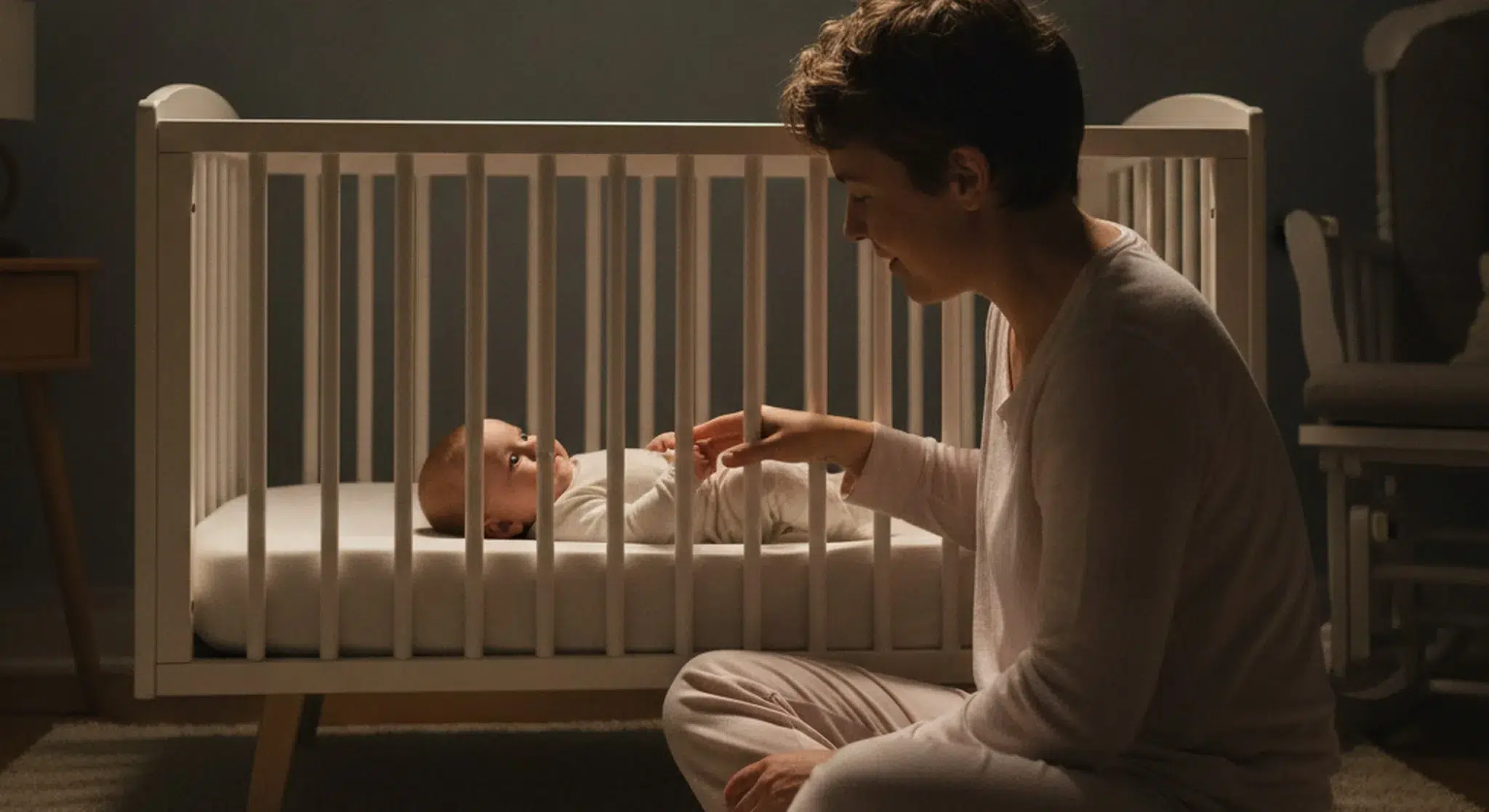
Most sleep experts agree that formal sleep training works best starting around 4 to 6 months, and that the methods involving crying are not appropriate before about 4 months.
Before that age, babies still need to wake through the night to feed, and their sleep is biologically meant to be broken up, so there is nothing to train away yet.
This guide explains the right age to begin, the readiness signs that matter more than the calendar, what the research says about safety, and how to choose a method that fits your family.
Key Takeaways
Formal sleep training, especially methods with crying, is not recommended before about 4 months.
Many experts and researchers point to around 6 months as the sweet spot for graduated extinction and similar methods.
Gentle, low-cry approaches and a consistent routine can start earlier, laying the groundwork without formal training.
Readiness matters more than a birthday: longer stretches, a settled routine, and your pediatrician’s okay on night feeds.
Research following children for years finds no evidence of long-term harm from common sleep training methods.
Why not before 4 months?
In the first months, a baby’s sleep is still maturing and they genuinely need night feeds. Their sleep cycles reorganize around 3 to 4 months, which is why methods that ask a baby to self-settle rarely work and are not advised before then. Waiting until the biology is ready makes training gentler and more effective.
Table of Contents
The Short Answer on Age
There is no single perfect date, but the guidance clusters in a clear range. Pediatricians generally do not recommend traditional sleep training, meaning cry-based methods like graduated extinction, before about 4 months. Many experts, and even researchers who study these methods, point to around 6 months as the age when approaches like the Ferber method tend to work well.
Between 4 and 6 months is a reasonable window for many families, especially with gentler methods, while 6 months and beyond is when more structured approaches are most effective. Preterm babies should be considered by their adjusted age, not their birth date.
Readiness Signs That Matter More Than Age
Longer night stretches: your baby naturally sleeps a longer block sometimes, showing the capacity is developing.
Your pediatrician’s okay on night feeds: confirming your baby no longer medically needs to feed overnight is an important green light.
A predictable routine and bedtime: a consistent wind-down and sleep space give training something to build on.
Healthy growth: a thriving baby on a good growth curve is better positioned than one who needs frequent feeds to gain.
You feel ready: consistency is what makes any method work, so choosing a time you can follow through matters.
Is Sleep Training Safe? What the Research Says
This is the question that keeps parents up at night, understandably. The reassuring news is that the research is consistent. Studies following children who were sleep trained found no evidence of harm to their emotional health, behavior, or the parent-child bond at two-year and five-year follow-ups.
Pediatric experts note that methods like graduated extinction are not harmful when done with care, as long as babies receive consistent love, comfort, and attention during their waking hours. Sleep training is a tool, not an obligation, and choosing not to use it is equally valid.
Gentle Groundwork You Can Start Earlier
Even before you are ready for formal training, you can lay a foundation that makes sleep easier later. None of this involves leaving a young baby to cry.
Build a short, consistent bedtime routine from the newborn weeks.
Practice putting your baby down drowsy but awake when they tolerate it.
Follow age-appropriate wake windows so your baby is not overtired.
Keep the sleep space consistent, dark, and safe.
Give your baby a chance to resettle for a moment before you rush in.
Choosing a Method When You Are Ready
Sleep training is not one thing. Methods range from gentle, hands-on approaches to more structured, faster ones, and the best choice is the one you can apply consistently and feel at peace with.
Our detailed guides compare the options, from the gradual chair method and pick up put down to the Ferber method and full extinction, so you can match an approach to your baby’s temperament and your own comfort level.
Naps often come together after bedtime does. When you are ready for daytime sleep, see our guide to nap training.
Frequently Asked Questions
What age should I start sleep training?
Most experts recommend starting formal sleep training around 4 to 6 months, with cry-based methods not advised before about 4 months. Around 6 months is often the sweet spot for methods like graduated extinction.
Why can’t I sleep train a newborn?
In the first months, babies still need to wake to feed, and their sleep cycles are still maturing. Methods that ask a baby to self-settle rarely work and are not recommended before about 4 months, so there is nothing to train away yet.
Is sleep training safe for my baby?
Research following sleep-trained children at two-year and five-year points found no evidence of harm to emotional health, behavior, or the parent-child bond. Experts consider methods like graduated extinction safe when done with care and plenty of daytime affection.
How do I know my baby is ready to sleep train?
Look for longer natural night stretches, a predictable routine, healthy growth, and your pediatrician’s okay that night feeds are no longer needed. Your own readiness to stay consistent matters just as much as your baby’s age.
Can I do anything before my baby is old enough to sleep train?
Yes. Build a short consistent bedtime routine, practice drowsy but awake, follow age-appropriate wake windows, and keep the sleep space dark and safe. This gentle groundwork makes any later method easier.
Paruthi S, et al. Recommended Amount of Sleep for Pediatric Populations: A Consensus Statement of the American Academy of Sleep Medicine. Journal of Clinical Sleep Medicine, 2016. https://jcsm.aasm.org/doi/10.5664/jcsm.5866