Sleep training 1 year old babies is not too late: with the right schedule, one method you can stick with and about two consistent weeks, most 12 to 15 month olds can learn to fall asleep on their own.
If your 1 year old won’t sleep through the night, you have not missed your chance. The principles are the same as at 6 months, but the child is different: bigger, louder, standing up and very aware that you just left.
Here is what changes at this age, a sample schedule, each method’s pros and cons, a two week plan and what the research shows.
Key Takeaways
It is not too late. Trials of these methods have included babies up to 16 months old.
Expect standing, separation anxiety and louder protest, and plan for them.
Children 1 to 2 need 11 to 14 hours of sleep per 24 hours, and most 12 month olds still take two naps.
Ask your pediatrician about night feeds, then pick one method and stay consistent for two weeks.
Keep the crib bare until the first birthday, with the mattress at its lowest position.
As an Amazon Associate, Betteroo earns from qualifying purchases.
Table of Contents
Sleep Training 1 Year Old Babies: Is It Too Late?
Quick Answer
No, 1 year is not too late to sleep train. A 12 month old can learn to fall asleep without being fed, rocked or held. Plan for standing, separation anxiety and stronger protest, keep two naps, choose one method and give it a consistent two weeks.
Our guide on when to start sleep training explains why 4 to 6 months is the usual starting window, but a window is not a deadline. One well known trial (Gradisar, 2016) enrolled babies from 6 to 16 months old.
You also do not have to sleep train. If feeding or rocking to sleep works for your family, nothing needs fixing.
What Is Different at 12 Months vs 6 Months
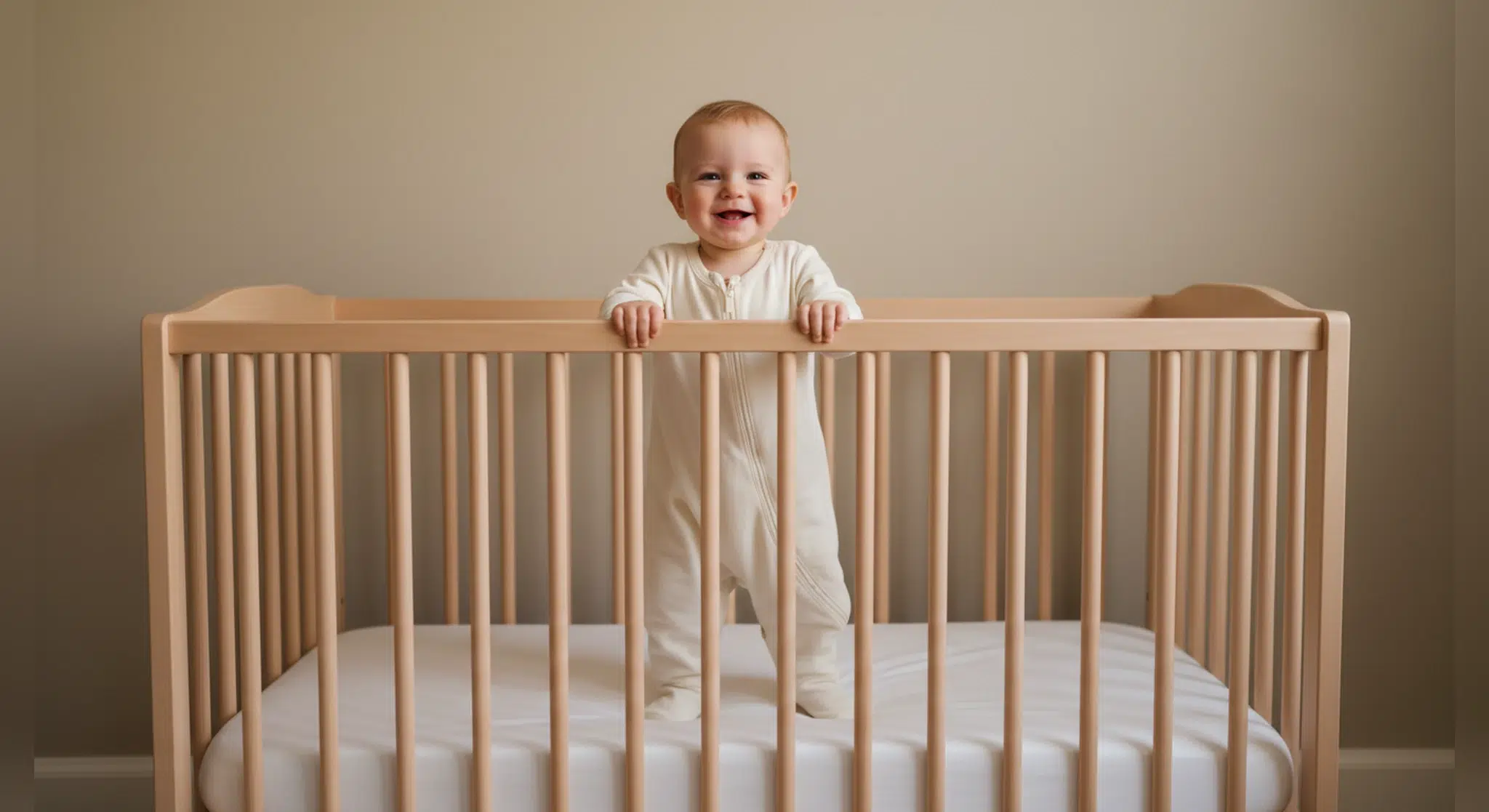
Standing and cruising: a 12 month old pulls up on the rail the moment you leave and may not know how to get back down.
Separation anxiety: the American Academy of Pediatrics (AAP) notes it can disrupt sleep from the second half of the first year and usually fades around the second birthday.
Stronger habits, more stamina: a year of being fed or rocked to sleep is well practiced, and a 1 year old can protest louder and longer.
The 12 month sleep regression: walking, new words and a nap strike often shake up sleep around the first birthday, usually for two to three weeks. See our 12 month sleep regression guide.
The nap question: most 1 year olds still need two naps. The move to one nap usually comes between 13 and 18 months.
How Much Sleep a 1 Year Old Needs, With a Sample Schedule
The American Academy of Sleep Medicine consensus statement, which the AAP supports, recommends 11 to 14 hours of sleep per 24 hours, including naps, for children 1 to 2 years old. For most 12 month olds that is 10 to 12 hours overnight plus 2 to 2.5 hours of naps.
Two naps (most 12 to 14 month olds)
One nap (after the transition)
Wake up
7:00 a.m.
7:00 a.m.
Naps
10:00 to 11:00 a.m. and 3:00 to 4:00 p.m.
12:30 to 2:30 p.m.
Bedtime
7:30 p.m.
7:00 to 7:30 p.m.
Awake time between sleeps
3 to 4 hours
5 to 5.5 hours
Sample 12 to 15 month schedules. Shift the times to match your child’s usual wake-up.
Fix the schedule first: an overtired child will fight any method. Our 12 month old sleep schedule has the full day. Do not start sleep training and the switch to one nap in the same week.
Tired nights don’t have to last forever.
Our free two-minute quiz builds a gentle, personalized sleep plan for your baby’s age and temperament.
Night Feeds at 12 Months: Ask Before You Drop Them
Whether your child still needs calories overnight is a medical question, so ask your pediatrician first. Many healthy 1 year olds who eat well during the day no longer need a night feed, but it depends on your child’s growth and health.
With the go-ahead, drop feeds gradually or all at once (see night weaning). If a feed should stay, offer it at one planned time and use your method for every other waking.
Sleep Training Methods for a 1 Year Old: Honest Pros and Cons
A 2-Week Plan for Sleep Training 1 Year Old Toddlers
Prep (2 to 3 days): ask your pediatrician about night feeds, set the schedule and agree on one plan with every caregiver. Build a short toddler bedtime routine with milk first, so your child is not fed to sleep.
Practice in daylight: let your child pull up on the rail and show them how to bend their knees and sit.
Nights 1 to 3: after the routine, say one short goodnight phrase and put your child down awake. Follow your method exactly, and treat night wakings the same as bedtime. Check-ins are brief and boring, with no picking up or feeding.
Nights 4 to 7: stretch the time between check-ins, or move the chair halfway to the door. Use the same approach for naps.
Week 2: move the chair to the doorway, then out. A flare-up after several good nights passes if your response stays the same.
Day 14: compare with night one. If nothing has improved, recheck the schedule and talk with your pediatrician.
Standing in the Crib, Early Waking and Other Snags
Standing and refusing to lie down: lay your child down once, say your phrase and stop. Repeating it becomes a game. A tired child who knows how to sit will get down.
Early waking: treat anything before 6:00 a.m. as night. Then check for morning light, a first nap that starts too early, or too much daytime sleep. See baby waking up too early.
Teething: comfort freely, ask your pediatrician about pain relief, then return to the plan.
Illness: pause. A child with a fever, ear infection or stomach bug needs you. Restart once they are well.
Travel: keep the routine and go back to your method the first night home.
Twins: keep both on the same schedule, train them together and run white noise between the cribs.
A sibling in the room: offer the older child a temporary sleepover elsewhere for the first week.
What the Research Says About Safety and Effectiveness
Mindell and colleagues, 2006: an American Academy of Sleep Medicine review of 52 studies. Ninety-four percent found behavioral approaches effective, more than 80 percent of treated children improved, gains held for three to six months, and no study identified harmful side effects.
Price, Hiscock and colleagues, 2012: a five-year follow-up in Pediatrics of a randomized trial of behavioral techniques taught at 8 to 10 months. At age 6, the 225 children assessed showed no meaningful differences in emotional health, behavior, sleep or closeness with parents: no lasting harms and no lasting benefits.
Gradisar and colleagues, 2016: a small randomized trial in Pediatrics (43 babies, 6 to 16 months). Graduated check-ins and bedtime fading both improved sleep, with no adverse stress responses and no differences in attachment or behavior 12 months later.
Put modestly: these methods usually improve sleep, studies so far have not found harm, and long-term outcomes look the same either way. The decision is yours.
Safe Sleep at 12 Months
Until the first birthday, the AAP says babies sleep on their back on a firm, flat mattress with a fitted sheet and nothing else: no pillows, blankets, bumper pads or soft toys.
After 12 months, the AAP notes that most experts agree soft objects pose little risk to healthy children, so a small, light blanket is a reasonable choice. A pillow is not needed.
A sleep sack stays the simplest option. Never use weighted sleep sacks or weighted blankets, and skip sleep positioners.
Set the mattress at its lowest position before your child learns to stand, never use bumper pads, and keep the crib away from windows and cords.
Check in before you start if your child was born early or has a medical condition. Call if you notice:
Snoring most nights, pauses in breathing or gasping.
Poor weight gain, or a child who seems truly hungry at night.
Night waking with signs of pain, such as ear pulling, arching or fever (ear infections and reflux can disturb sleep).
A regression that lasts more than a few weeks.
Frequently Asked Questions
Does sleep training 1 year old toddlers still work?
Yes. There is no cutoff age for learning to fall asleep independently, and research on these methods has included babies as old as 16 months. Habits are stronger at 12 months, so expect more protest and plan on two consistent weeks.
How long does it take to sleep train a 1 year old?
Many families see bedtime improve within the first week and night wakings ease over about two weeks. Gentler methods such as the chair method usually take longer than check-ins. If nothing changes after two consistent weeks, talk with your pediatrician first.
What is the best sleep training method for a 1 year old?
There is no single best method. Check-ins and bedtime fading have both been tested in a randomized trial, the chair method suits children with strong separation anxiety, and full extinction is often fastest. Choose one you can repeat every night.
Should a 1 year old still eat at night?
Ask your pediatrician. Many healthy 12 month olds who eat well during the day no longer need a night feed, but the answer depends on your child’s growth and health. If a feed is recommended, keep it at one planned time.
What do I do when my 1 year old stands in the crib and will not lie down?
Lay your child down once, say your goodnight phrase and stop, because repeating it becomes a game. Practice sitting down from standing during the day. With the mattress at its lowest position, standing is safe, and a tired child will eventually lie down.
Can a 1 year old sleep with a blanket or pillow?
Before the first birthday, no: the crib should be bare. After 12 months, the American Academy of Pediatrics notes most experts agree soft objects pose little risk to healthy children. A small light blanket is reasonable, and a pillow is not needed.
Calmer days, better nights.
Betteroo builds a personalized sleep plan for your baby. Take the free two-minute quiz to get started tonight.
Paruthi S, et al. Recommended Amount of Sleep for Pediatric Populations: A Consensus Statement of the American Academy of Sleep Medicine. J Clin Sleep Med. 2016. https://pmc.ncbi.nlm.nih.gov/articles/PMC4877308/