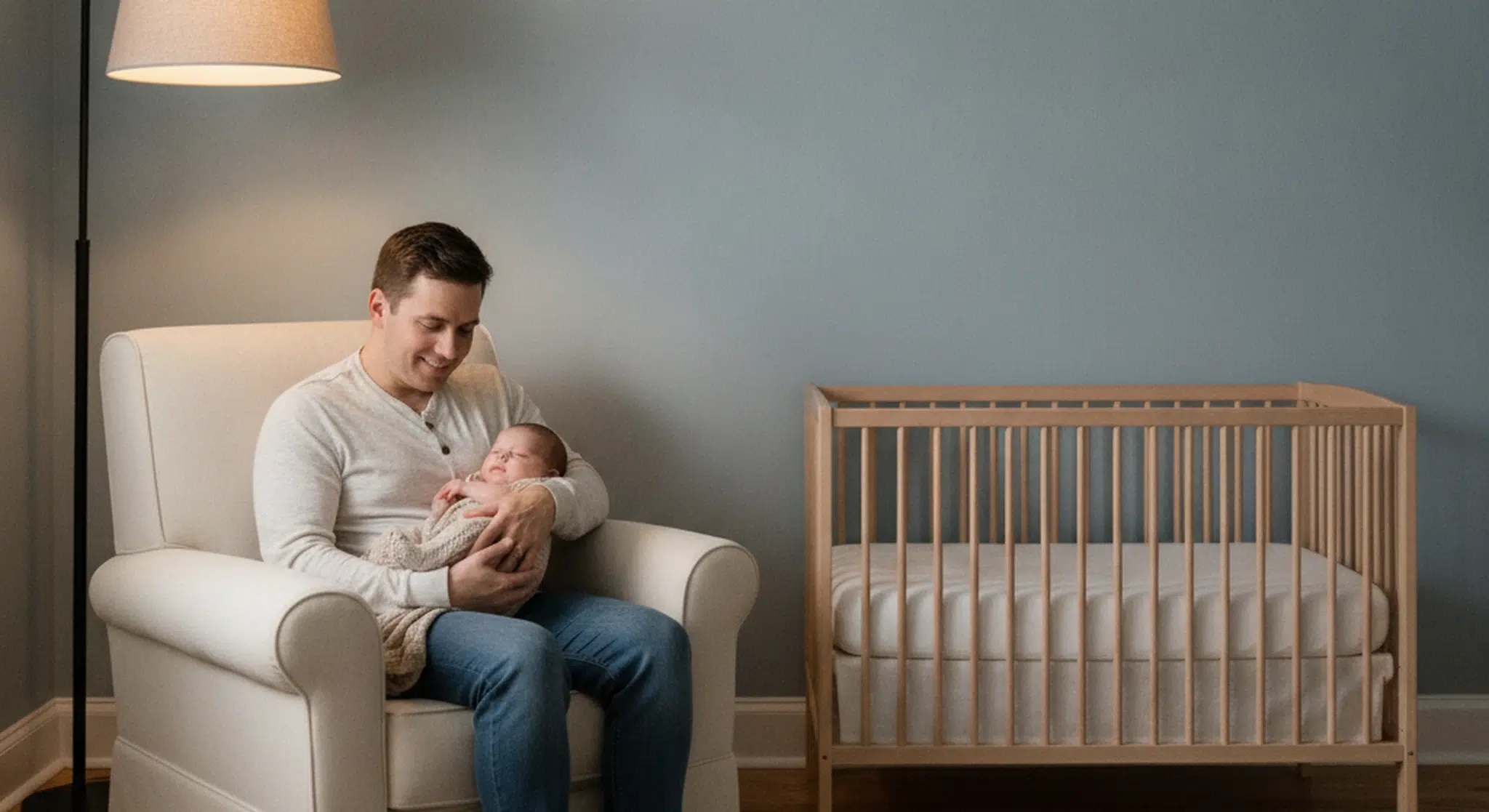
Gentle sleep training is an umbrella term for approaches that help a baby learn to fall asleep more independently with plenty of parental support and as little crying as possible.
Instead of leaving a baby to cry, gentle methods lean on presence, gradual change, and consistent routines. They tend to be slower than faster approaches, but many parents find the trade off worth it for a calmer process.
This guide explains what gentle sleep training means, walks through the main methods, and sets honest expectations about pace and results.
Key Takeaways
Gentle sleep training aims to build independent sleep with lots of support and minimal crying.
Common methods include pick up put down, the chair method, fading, and bedtime routine focused approaches.
The foundation is an age appropriate schedule, consistent routine, and good sleep environment.
Gentle methods are usually slower than check in or extinction approaches and need real consistency.
Most approaches are considered from around 4 to 6 months, after ruling out medical causes with your pediatrician.
Table of Contents
What Gentle Sleep Training Means
Gentle sleep training is less a single method and more a philosophy. The shared goal is to help your baby learn to settle with less reliance on being fed, rocked, or held all the way to sleep, while keeping crying to a minimum and staying responsive throughout. Parents stay close and offer comfort, and change happens in small, gradual steps.
This sits at the opposite end of the spectrum from full extinction, sometimes called cry it out. It also differs from the timed check ins of the Ferber method, though some families see graduated check ins as relatively gentle too. Where you land is a personal choice, and no approach is right for everyone.
Common Gentle Sleep Training Methods
Several established methods fall under the gentle umbrella. Many families mix and match:
Pick up put down. When your baby fusses, you pick them up to calm them, then place them back down drowsy but awake, repeating as needed. It is hands on and works best for younger babies.
The chair method. You sit beside the crib while your baby falls asleep, then move the chair farther away every few nights until you are out of the room.
Fading. You gradually reduce a sleep association over time, for example slowly shortening rocking or lowering how much you help, so your baby leans on it less.
Bedtime routine and schedule focus. You optimize wake windows, the sleep environment, and a consistent wind down first, which sometimes improves sleep without any structured training.
The chair method guide covers that approach in step by step detail if you want to go deeper on one specific option.
Building the Foundation First
Gentle methods work far better on a solid base, and sometimes fixing the fundamentals resolves sleep struggles before you train at all. Focus on these first:
Age appropriate wake windows so your baby is neither overtired nor undertired at sleep times.
A short, consistent, calming bedtime routine that signals sleep is coming.
A cool, dark, quiet sleep space, with white noise if it helps.
Putting your baby down drowsy but awake when possible, so they practice the final drift to sleep.
Our baby sleep schedule by age guide lays out realistic wake windows and nap patterns by age, which is often the missing piece behind bedtime battles.
Struggling with your baby’s sleep?
A personalized plan meets your baby where they are, at every age and stage.
Gentle sleep training trades speed for a calmer experience. Because you are changing habits gradually and offering comfort along the way, progress usually takes longer than faster methods, often a few weeks rather than a few nights. There may still be some crying, since minimal crying is not the same as no crying.
Consistency is the deciding factor. Responding the same way night after night helps your baby learn what to expect. If you switch approaches every few days, learning stalls. Expect ups and downs, and remember that illness, travel, and developmental leaps can temporarily set sleep back.
Speaking of leaps, sleep often wobbles during predictable developmental windows. Our sleep regression ages guide explains those phases so you do not mistake a passing regression for a failed plan.
Safety and When to Get Support
Whatever method you choose, always follow safe sleep. Place your baby on their back in a bare crib with a firm, flat mattress and fitted sheet, and nothing else, no pillows, blankets, bumpers, or toys.
Most sleep training is considered from around four to six months, once your baby is developmentally ready. Before starting, it is worth checking with your pediatrician to rule out medical reasons for night waking. If weeks of consistent effort bring no progress, a pediatrician or a qualified sleep consultant can help you troubleshoot the plan or the schedule.
It is an umbrella term for approaches that help a baby learn to fall asleep more independently with lots of parental support and as little crying as possible. Instead of leaving a baby to cry, gentle methods use presence, gradual change, and consistent routines.
What are the main gentle sleep training methods?
Common ones include pick up put down, the chair method, fading a sleep association gradually, and focusing on wake windows, the sleep environment, and a consistent bedtime routine. Many families combine elements of several.
Does gentle sleep training work?
It can, especially with consistency and a solid foundation of age appropriate wake windows and a calm routine. The main trade off is pace. Gentle methods usually take longer than timed check in or extinction approaches, often a few weeks.
Is gentle sleep training the same as no crying?
Not quite. Gentle methods aim to minimize crying, but they rarely eliminate it entirely, since some protest is normal when habits change. The goal is a supportive, gradual process rather than a completely tear free one.
What age can you start gentle sleep training?
Most approaches are considered from around 4 to 6 months, once your baby is developmentally ready. Check with your pediatrician first to rule out medical causes for night waking, and make sure a consistent routine and schedule are in place.
A gentle plan that fits your baby
Get a personalized plan built around your baby’s age, temperament, and your comfort level.
Paruthi S, et al. Recommended Amount of Sleep for Pediatric Populations: A Consensus Statement of the American Academy of Sleep Medicine. Journal of Clinical Sleep Medicine, 2016. https://jcsm.aasm.org/doi/10.5664/jcsm.5866