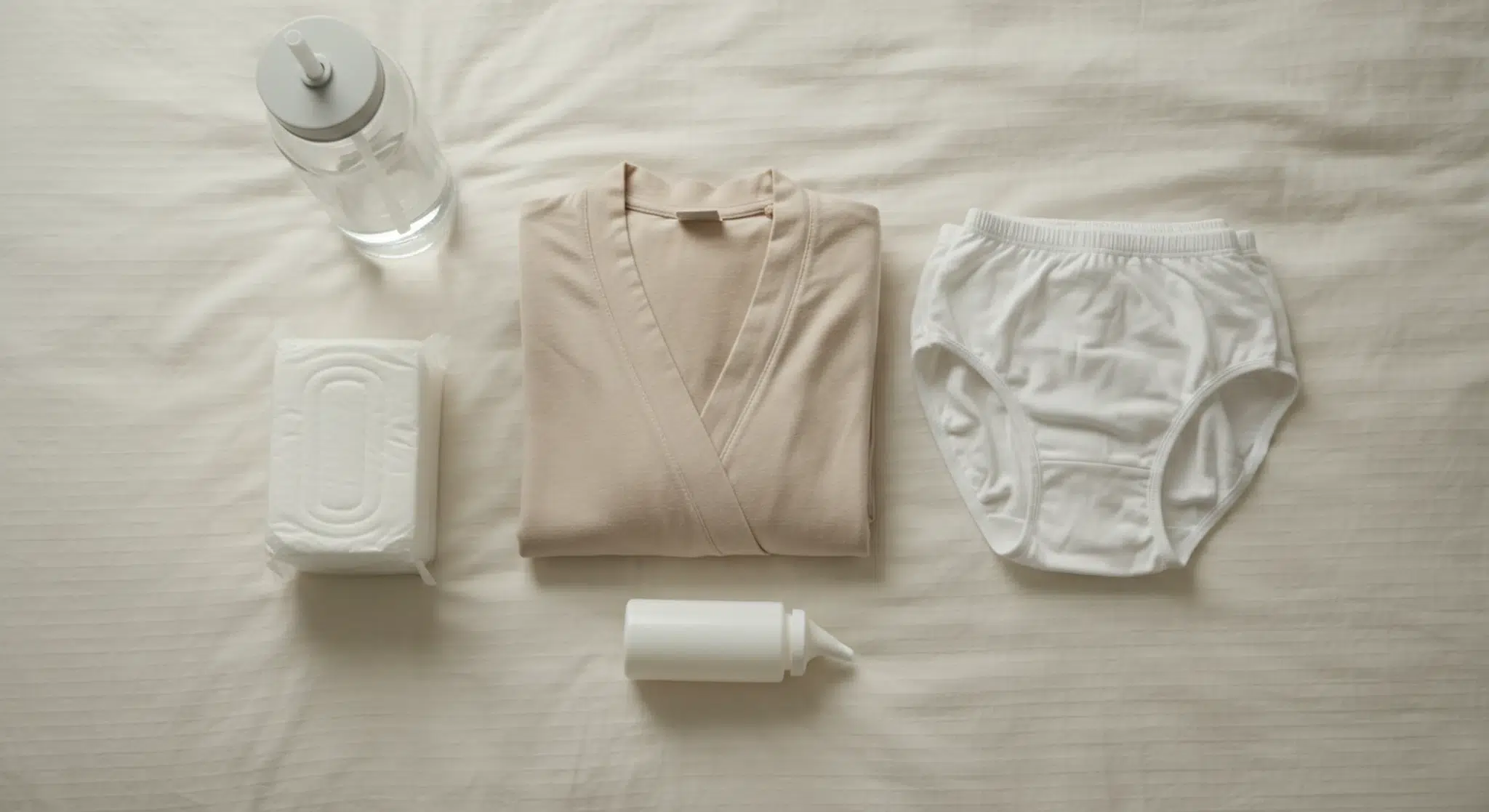


Postpartum essentials are the supplies that help your body heal after birth: heavy pads and roomy underwear, a peri bottle and cold packs, provider-approved pain relief, breast care, water, snacks, and real support.
Most registries are built for the baby. Your body is recovering too, from a vaginal birth or from major surgery, and a few inexpensive supplies make the first weeks far more comfortable.
This checklist is organized by need, uses categories instead of brands, and covers the warning signs that mean you should get help right away. Your own provider’s instructions always come first.
Key Takeaways
- Stock heavy pads and roomy underwear: postpartum bleeding (lochia) can last up to six weeks.
- Use pads only. No tampons or menstrual cups until your provider clears you.
- A peri bottle, cold packs, witch hazel pads, and a sitz bath ease perineal soreness.
- Ask your provider which pain reliever and stool softener to use.
- Know the urgent warning signs, and save 1-833-TLC-MAMA and 988 in your phone.
Table of Contents
Postpartum Essentials Checklist
Quick Answer
This list covers what most parents use in the fourth trimester, by category instead of brand.
| Item | Why you need it | How many or how long |
|---|---|---|
| Heavy maxi pads | Bleeding (lochia) after any birth | 2 to 3 packs to start. Bleeding can last up to 6 weeks. |
| Mesh or disposable underwear | Holds a large pad, and stains do not matter | 1 pack, or 6 to 8 old cotton pairs |
| Peri bottle | Rinsing with warm water instead of wiping | 1, until wiping is comfortable |
| Cold packs | Perineal swelling and breast engorgement | Several. Most helpful in the first 24 to 72 hours. |
| Witch hazel pads and a sitz bath basin | Soothing the perineum and hemorrhoids | 1 of each |
| Pain reliever | Cramps, soreness, incision pain | As your provider directs |
| Stool softener and fiber | Easier first bowel movements | As your provider directs |
| Supportive or nursing bras, breast pads | Support and leaks, however you feed | 2 to 3 bras, 1 box of pads |
| High-waisted underwear | Nothing rubbing a C-section incision | 5 to 7 pairs |
| Water bottle and snacks | Hydration and steady energy | Refill at every feed |
| Thermometer | Checking for a fever of 100.4 degrees F or higher | 1 |
Building a registry? Add these to your baby registry checklist.
Bleeding and Perineal Care
Everyone bleeds after birth, including after a cesarean, although it is usually lighter then. According to Cleveland Clinic, lochia typically lasts up to six weeks:
- Days 1 to 4: dark or bright red and heavy, with small clots. Soaking a thick maxi pad every two to three hours is expected.
- Days 4 to 12: pinkish brown, thinner, and lighter.
- Day 12 on: yellowish white with little or no blood, tapering off by about six weeks.
Use pads only. Do not use tampons or menstrual cups, or put anything in your vagina, for at least six weeks and until your provider clears you.
For a sore perineum, ACOG suggests the following. Ask your provider which products they recommend.
- Peri bottle: rinse with warm water while you use the toilet, then pat dry.
- Cold packs: 10 to 20 minutes at a time, with a thin cloth against your skin.
- Witch hazel pads: applied to the perineal area.
- Sitz bath: sitting in warm, shallow water.
- Numbing spray or cream: only if your provider says it is right for you.
C-Section Recovery Essentials
A cesarean is major surgery. Expect about six weeks to recover fully, and follow your provider’s instructions on incision care and lifting.
- High-waisted underwear and loose pants: with a waistband that sits above the incision.
- A small firm pillow: to hold over your incision when you cough or take deep breaths. It supports your belly.
- Incision care basics: mild soap, water, and a clean towel to pat dry, unless your provider tells you otherwise. Skip hydrogen peroxide and rubbing alcohol, which can slow healing.
- Abdominal binder or heating pad: both can ease incision pain, according to ACOG. Use a binder if your provider recommends it.
- Help with lifting: avoid heavy lifting and strenuous activity until your provider says it is okay.
Getting ready for baby? Plan for sleep, too.
Our free two-minute quiz builds a gentle, personalized sleep plan for your baby, so the first months feel a little calmer.
Pain Relief and Bathroom Comfort
Ask your provider which pain reliever to take and how often. ACOG notes that ibuprofen is usually the preferred first step during breastfeeding because little of it passes into breast milk, and that acetaminophen is also safe while breastfeeding. Check before combining medications.
- Heating pad: for “afterpains,” the cramps you feel as your uterus shrinks. They are more common after second and later births and in the first days of breastfeeding.
- Stool softener: ask your provider about one. Straining makes hemorrhoids worse.
- Fiber and fluids: high-fiber foods, plenty of water, and short walks as soon as you can.
Breast and Chest Care, Whether You Breastfeed or Not
Your breasts may feel very full, hard, and tender as your milk comes in, however you plan to feed your baby.
- If you are breastfeeding: nursing bras, breast pads, and cold packs. ACOG says feeding more often eases engorgement. Nipple pain usually improves with better technique, so see a lactation consultant and ask which nipple cream they recommend.
- If you are pumping: correctly sized flanges, spare pump parts, and milk storage bags.
- If you are formula feeding: a snug, supportive bra and cold packs. ACOG notes that a tight-fitting bra may help milk production stop sooner.
Our guides can help: how to breastfeed, how to increase milk supply, and breast pain after pumping. Call your provider about red streaks or painful new lumps in a breast.
Food, Water, Rest, and Comfortable Clothes
- Water: a large bottle with a straw, parked wherever you feed the baby.
- One-handed snacks: nuts, cheese, fruit, yogurt, and granola bars.
- Vitamins: ask your provider whether to keep taking your prenatal vitamin.
- Clothes: a soft robe, loose button-front pajamas, and non-slip slippers.
- Rest: rest when you are tired, and let others do the chores.
Newborns wake often, especially early on (see second night syndrome). When you are exhausted, place your baby on their back in a bare bassinet or crib before you doze. See our safe sleep environment guide.
Mental Health Support
The “baby blues” are mild, short-lasting mood changes, worry, and exhaustion that many women feel in the first two weeks after birth, according to the National Institute of Mental Health. Feelings that are severe, or that last longer than two weeks, may be postpartum depression. It generally does not get better without treatment, and it is treatable with therapy, medication, or both.
Save these numbers now:
- National Maternal Mental Health Hotline: call or text 1-833-TLC-MAMA (1-833-852-6262). It is free, confidential, and open 24/7 in English and Spanish. Partners and family can use it too.
- 988 Suicide and Crisis Lifeline: call or text 988.
Your Support Team and How Partners Can Help
- Meal train: ask a friend to organize two or three weeks of dinners.
- Postpartum doula: a postpartum doula helps with recovery, feeding, and newborn care at home.
- Lactation consultant: save a number before the birth.
- Gifts that help: if people ask what you need, send them our postpartum gift basket ideas or best gifts for new parents.
Partners, your job is to protect her recovery:
- Take over diapers, laundry, and meals.
- Track medication times and manage visitors.
- Learn the warning signs below, watch her mood, and make the call if she cannot.
What the Hospital Usually Gives You, and What You Can Skip
Many hospitals send you home with some of what you used during your stay: mesh underwear, large pads, a peri bottle, cold packs, witch hazel pads, and sometimes numbing spray or an abdominal binder. This is not guaranteed, so ask what is provided and buy a small starter supply.
What you can skip:
- Large pre-assembled kits. You can build a postpartum care kit from this list.
- Tampons and menstrual cups, until you are cleared.
- Waist trainers. Use a binder only if your provider recommends one.
Postpartum Recovery Timeline: What You Need When
| When | What is happening | What helps |
|---|---|---|
| First 24 hours | Heaviest bleeding, swelling, afterpains | Mesh underwear, heavy pads, cold packs, peri bottle, pain relief |
| Week 1 | Red bleeding turns pinkish brown, breasts fill, baby blues may start | Pads, sitz bath, stool softener, breast pads, meals, rest |
| Weeks 2 to 6 | Discharge lightens to yellowish white | Lighter pads, supportive bras, short walks, a check-in with your provider |
| Beyond 6 weeks | Bleeding has usually stopped | Your comprehensive postpartum visit, and your provider’s okay before using tampons |
Urgent Warning Signs After Birth
Serious complications can appear days, weeks, or even months after delivery. The CDC’s Hear Her campaign lists these urgent maternal warning signs for the year after birth. Get medical care right away if you have:
- Heavy bleeding: soaking through one or more pads in an hour, clots bigger than an egg, or bad-smelling discharge.
- A fever of 100.4 degrees F or higher.
- Chest pain, a fast-beating heart, or trouble breathing.
- A headache that will not go away or gets worse, changes in your vision, dizziness, or fainting.
- Extreme swelling of your hands or face.
- Severe swelling, redness, or pain in a leg or arm, often the calf.
- Severe belly pain that does not go away, or severe nausea and vomiting.
- Overwhelming tiredness.
- Thoughts about harming yourself or your baby.
After a cesarean, also call right away if your incision is red, swollen, leaking, or opening. Call 911 for chest pain, trouble breathing, a seizure, or thoughts of hurting yourself or your baby. Tell whoever treats you that you gave birth within the last year.
Related Betteroo Guides
- The fourth trimester
- Postpartum gift basket ideas
- Best gifts for new parents
- How to breastfeed
- How long is the newborn stage?
- Baby must-haves
When to Talk to Your Doctor or Midwife
ACOG recommends contact with your obstetric provider within the first 3 weeks after birth, followed by ongoing care as needed and a comprehensive postpartum visit no later than 12 weeks after birth. If you had high blood pressure in pregnancy, ACOG recommends a blood pressure check no later than 7 to 10 days after birth, and within 72 hours if it was severe.
Between visits, call about pain that is getting worse, burning when you urinate, or a low mood that lasts more than two weeks. If something feels wrong, say so.
Frequently Asked Questions
What are the most important postpartum essentials?
The most important postpartum essentials are heavy maxi pads, roomy underwear, a peri bottle, cold packs, a pain reliever and stool softener approved by your provider, supportive bras with breast pads, a large water bottle, easy snacks, and a thermometer.
What do I need for C-section recovery?
You still need pads for bleeding, plus high-waisted underwear and loose pants that sit above the incision, a small pillow to hold over your incision when you cough, pain relief your provider recommends, and help with lifting. Use a binder only if advised.
How long does postpartum bleeding last?
Postpartum bleeding, called lochia, typically lasts up to six weeks. It is heavy and red for the first few days, turns pinkish brown, then fades to yellowish white. Get care right away if you soak one or more pads in an hour.
What does the hospital give you after birth?
Many hospitals provide mesh underwear, large pads, a peri bottle, cold packs, and witch hazel pads during your stay, and some send extras home with you. Supplies vary, so ask what is included and buy a small starter supply for home.
Can I use tampons after giving birth?
No. Use pads only. Cleveland Clinic advises not using tampons or putting anything in your vagina for at least six weeks after birth. Wait until your provider confirms that you have healed before you use tampons or a menstrual cup again.
When should I see my doctor after giving birth?
ACOG recommends contact with your obstetric provider within the first 3 weeks after birth and a comprehensive postpartum visit no later than 12 weeks after birth. Do not wait for an appointment if you have an urgent warning sign, such as heavy bleeding.
Better nights start before baby arrives.
Betteroo builds a personalized sleep plan for your baby. Take the free two-minute quiz and feel ready from day one.
7 Sources
- American College of Obstetricians and Gynecologists. Committee Opinion No. 736: Optimizing Postpartum Care.
https://www.acog.org/clinical/clinical-guidance/committee-opinion/articles/2018/05/optimizing-postpartum-care - American College of Obstetricians and Gynecologists. Postpartum Pain Management.
https://www.acog.org/womens-health/faqs/postpartum-pain-management - Centers for Disease Control and Prevention. Hear Her: Urgent Maternal Warning Signs and Symptoms.
https://www.cdc.gov/hearher/maternal-warning-signs/index.html - Health Resources and Services Administration, Maternal and Child Health Bureau. National Maternal Mental Health Hotline.
https://mchb.hrsa.gov/national-maternal-mental-health-hotline - National Institute of Mental Health. Perinatal Depression.
https://www.nimh.nih.gov/health/publications/perinatal-depression - Cleveland Clinic. Lochia.
https://my.clevelandclinic.org/health/symptoms/22485-lochia - Kaiser Permanente. Cesarean Section: What to Expect at Home.
https://healthy.kaiserpermanente.org/health-wellness/health-encyclopedia/he.cesarean-section-what-to-expect-at-home.ud1242