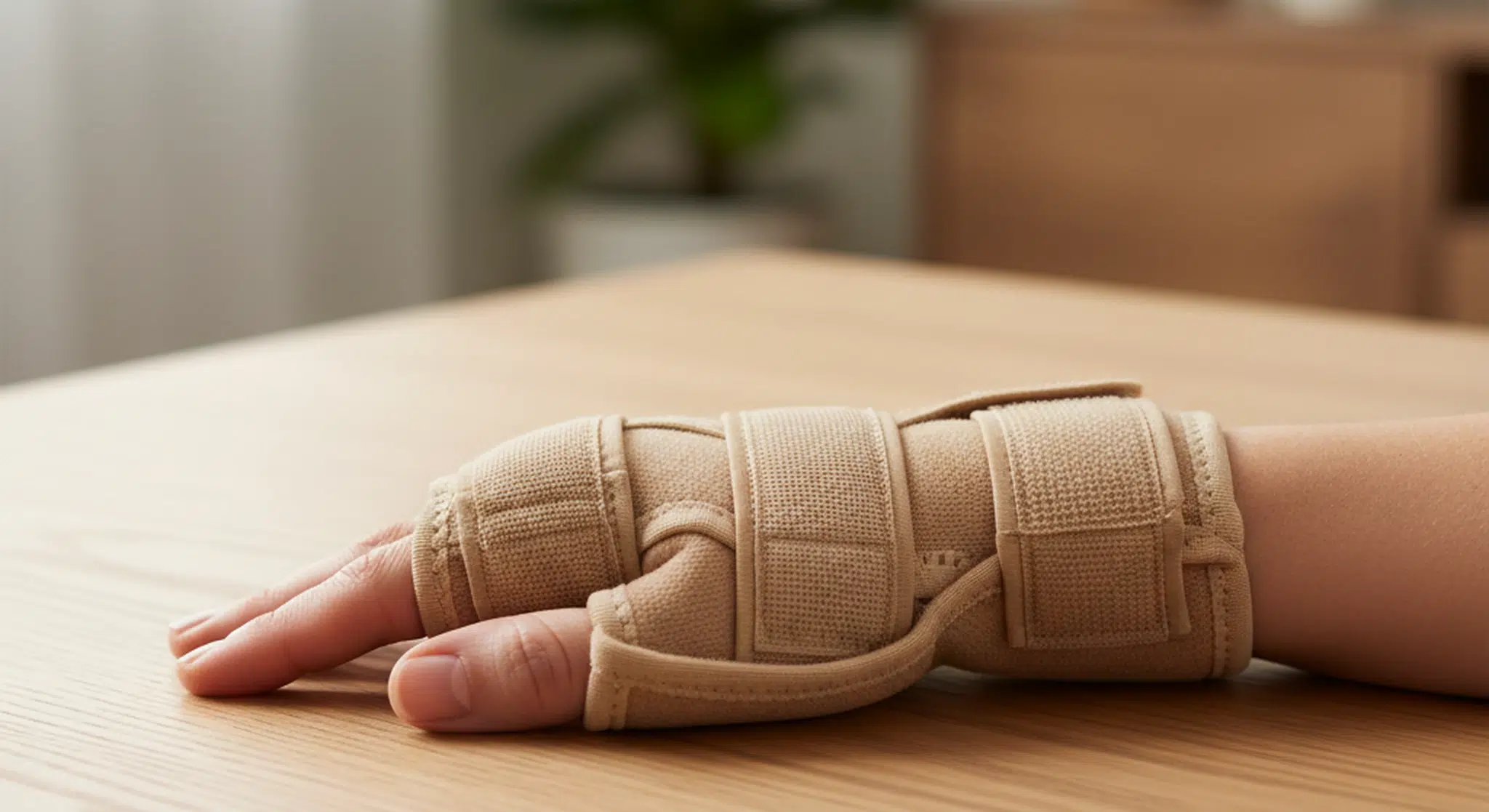
Mommy wrist is the common name for de Quervain’s tenosynovitis, an irritation of the two tendons on the thumb side of the wrist. It flares in new parents from the repeated lifting, holding, and scooping motions of baby care, and it usually improves with rest, a thumb splint, and simple activity changes.
If a sharp pain shoots along the thumb side of your wrist every time you lift your baby, you are not imagining it and you are far from alone. So many new parents develop this exact injury that it earned the nickname mommy wrist, though it affects dads and other caregivers too. The cause is mechanical, not mysterious: the same tender scooping motion, dozens of times a day.
This guide explains what mommy wrist is, why new-parent life triggers it, the at-home measures that actually help, gentle exercises, and the signs that mean it is time to see a doctor. It is general information, not a diagnosis, so check with a clinician about your specific pain.
Key Takeaways
Mommy wrist is de Quervain’s tenosynovitis, an inflammation of the thumb-side wrist tendons.
It comes from repetitive lifting and the C-shaped scoop parents use to pick up a baby.
A thumb spica splint, ice, and modified lifting are the core of at-home relief.
Gentle range-of-motion and strengthening exercises help once the sharp pain eases.
See a doctor if pain is severe, persists beyond a few weeks, or limits daily tasks.
Table of Contents
What Mommy Wrist Actually Is
De Quervain’s tenosynovitis happens when the two tendons that run from the thumb down the wrist become irritated and swollen where they pass through a narrow sheath. That swelling makes movement painful, especially any motion that involves the thumb and wrist together, like gripping, wringing, or lifting.1
The hallmark is pain and sometimes swelling along the thumb side of the wrist, which can radiate up the forearm or into the thumb. It often hurts most when you lift your baby under the arms, turn a doorknob, or pinch and grip. A simple self-check is to tuck your thumb into your fist and gently bend the wrist toward the little finger; sharp pain along the thumb side suggests de Quervain’s.
Why New Parents Get It
New-baby life is a perfect storm for this tendon. You lift a growing weight many times a day, usually with wrists cocked and thumbs spread in a C-shape to cradle the head. Add hours of holding a bottle or supporting the breast, plus one-handed phone scrolling during feeds, and the tendons never get a real break. Hormonal changes and fluid shifts after pregnancy may also make tendons more prone to swelling.
Repeatedly scooping the baby up under the arms with spread thumbs.
Long stretches supporting your baby’s head and neck during feeds.
Holding a bottle or your breast in a fixed grip for long feeds.
Frequent phone and device use with the same thumb.
Carrying car seats and heavy diaper bags on a bent wrist.
Running on no sleep makes everything hurt more
Exhaustion lowers your tolerance for pain and stress. A short, personalized plan to improve your baby’s sleep can help the whole household.
Most cases respond well to conservative care, and the sooner you protect the tendon, the faster it settles. The goal is to reduce the repetitive strain and calm the inflammation.
Wear a thumb spica splint, which holds the thumb and wrist still. Wearing it consistently, including overnight during a bad flare, gives the tendon a chance to rest.
Ice the sore area for about 10 to 15 minutes a few times a day to reduce swelling.
Change how you lift: scoop your baby with flat, open palms under the bottom and back rather than under the arms with spread thumbs.
Support your arm and wrist with a pillow during feeds so the joint is not doing the work.
Cut back on phone scrolling with the affected thumb.
Ask a clinician about short-term anti-inflammatory medication if appropriate for you, especially while breastfeeding.
Give these changes real time. Because you cannot exactly stop caring for your baby, the splint and the new lifting technique do the heavy lifting while you heal.
Gentle Exercises and Recovery Time
Once the sharp pain eases, gentle movement keeps the wrist from getting stiff and rebuilds strength. Do these pain-free and stop if they hurt. A hand or occupational therapist can tailor a program and is worth asking about if progress stalls.
Remove the splint a few times a day for slow, pain-free wrist bends up, down, and side to side.
Gentle thumb stretches: open and spread the fingers, then slowly bring the thumb across the palm.
Later, light strengthening such as squeezing a soft ball, only once pain has settled.
With consistent splinting and activity changes, many people improve over a few weeks, though it can take longer if the strain continues. Full recovery is the norm with proper care. If conservative steps are not enough, a doctor can discuss options like a corticosteroid injection or, rarely, a minor procedure.
The pain is severe, or it is getting worse rather than better despite rest and splinting.
Symptoms persist beyond a few weeks of consistent at-home care.
You have significant swelling, numbness, tingling, or weakness in the hand.
The pain keeps you from lifting or safely caring for your baby.
You want a proper diagnosis, a fitted splint, or a referral to a hand therapist.
A clinician can confirm de Quervain’s, rule out other causes, and offer treatments beyond home care. Persistent or severe wrist pain is worth a visit rather than pushing through.
Frequently Asked Questions
What is mommy wrist?
Mommy wrist is the everyday name for de Quervain’s tenosynovitis, an inflammation of the two tendons on the thumb side of the wrist. In new parents it is triggered by the repeated lifting, holding, and scooping of baby care. It causes thumb-side wrist pain that worsens with gripping and lifting.
How do I get rid of mommy wrist?
Start with rest and a thumb spica splint to hold the wrist and thumb still, ice the area a few times a day, and change how you lift your baby by scooping with open palms instead of spread thumbs. Support your arm during feeds and limit phone use with that thumb. See a doctor if it does not improve in a few weeks.
How long does mommy wrist last?
With consistent splinting and activity changes, many people improve over a few weeks. It can take longer if the repetitive strain continues, which is common when you are caring for a baby. Most people recover fully with conservative care, though some need a doctor’s help if home measures are not enough.
Can I still lift my baby with mommy wrist?
Yes, but change your technique. Instead of scooping under the arms with your thumbs spread, use flat open palms under your baby’s bottom and back, keeping the wrist as neutral as possible. Wearing a thumb splint and supporting your arm during feeds also reduces the strain while you heal.
Is mommy wrist only a problem for moms?
No. Despite the name, de Quervain’s tenosynovitis affects any caregiver who does a lot of repetitive lifting and holding, including dads, grandparents, and nannies. Pregnancy-related fluid and hormone shifts may make new mothers a bit more prone, but the mechanical strain is the main driver for everyone.
Better baby sleep helps you heal too
When your baby sleeps, you rest and recover. Get a gentle, personalized plan built for your family.