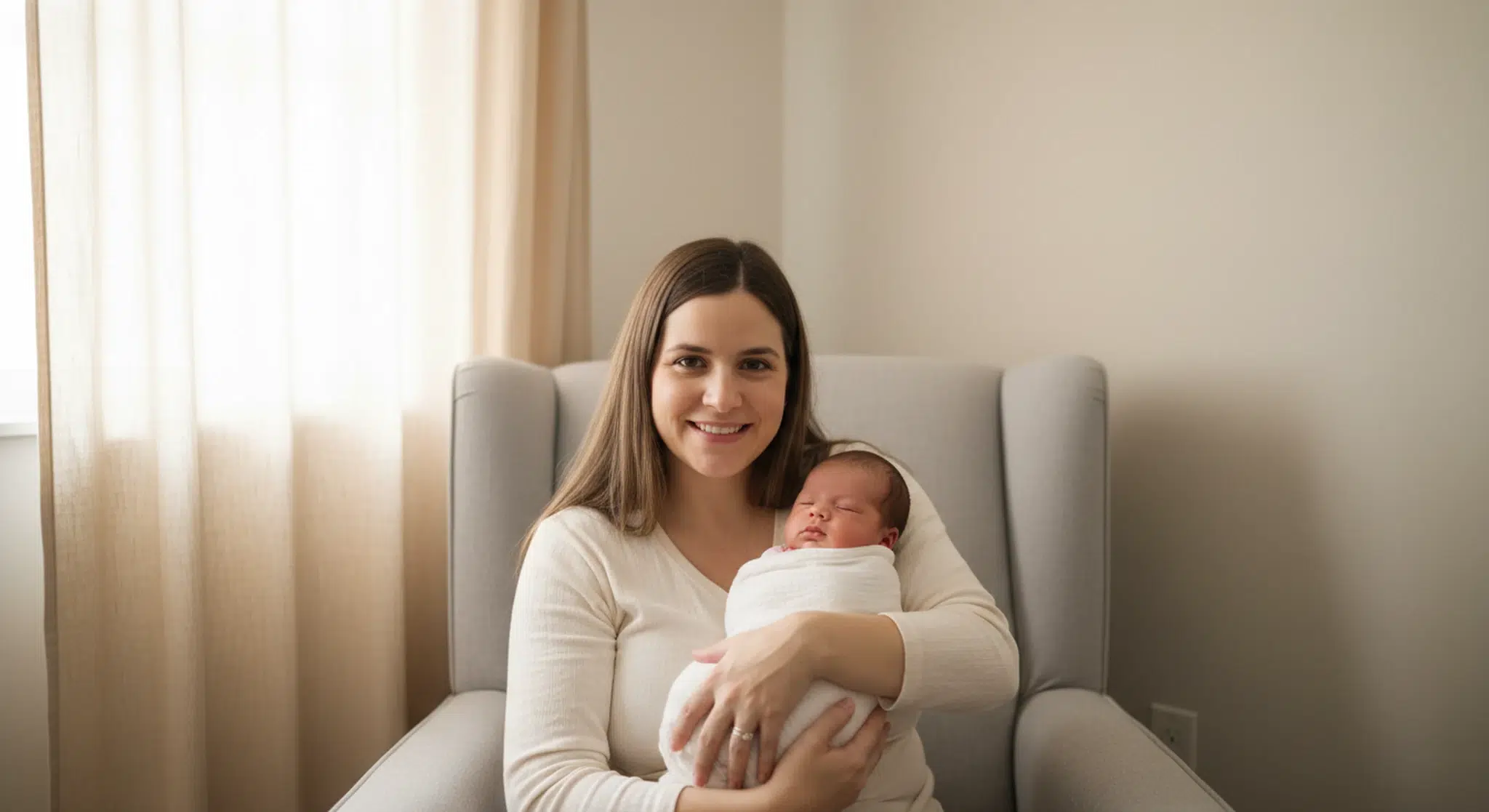
Newborn sneezing a lot is usually normal: sneezing is a reflex that clears mucus, dust and lint from your baby’s small nasal passages, and it is rarely a sign of illness on its own.
Your baby sneezes, then sneezes again, then three more times, and you start to wonder if they are getting sick. If your newborn is sneezing a lot but feeding well and acting like themselves, the American Academy of Pediatrics (AAP) and other pediatric sources say this is a normal, protective reflex.
Below: why newborns sneeze so much, sneezing vs a cold, safe nose clearing, safe sleep, and the fever number every parent of a baby under 3 months should know.
Key Takeaways
Sneezing is a protective newborn reflex that clears mucus, dust, lint and smoke from a small, narrow nose.
The AAP says newborn sneezing is not caused by an allergy.
Sneezing plus fever, cough, fast or labored breathing, poor feeding or unusual sleepiness needs a call to your pediatrician.
Use plain saline drops and gentle suction for stuffiness; never give cold medicine to a baby under 4 unless your pediatrician says so.
Any rectal temperature of 100.4 F (38 C) or higher at 3 months or younger means call right away (AAP).
Table of Contents
Is Newborn Sneezing a Lot Normal?
Quick Answer
Yes, in most cases. Sneezing is a protective reflex that clears dust, lint, mucus and other irritants from your baby’s tiny nose. The American Academy of Pediatrics (AAP) says it is not caused by an allergy. Sneezing alone, in a baby who is feeding, peeing and acting like themselves, is rarely a worry. Call your pediatrician if sneezing comes with fever, cough, fast or hard breathing, poor feeding or unusual sleepiness, and call right away for any fever of 100.4 degrees F (38 C) or higher in a baby 3 months or younger.
In its newborn reflexes guide, the AAP explains that sneezing “helps to open the nose.” What matters more than how many sneezes you count is the company they keep: a baby who sneezes but eats well and has plenty of wet diapers is very different from one who also breathes fast, refuses feeds or feels hot.
Why Newborns Sneeze So Much
KidsHealth explains that babies breathe mostly through their noses and have narrow nasal passages, so even a small amount of mucus can make them breathe noisily or sound congested when they do not have a cold. A sneeze is the body’s fastest way to push that mucus, or a speck of lint, back out.
Tiny, narrow nasal passages: there is very little room inside a newborn’s nose, so small amounts of mucus or dried secretions get noticed quickly (KidsHealth).
Everyday irritants: the AAP lists dust, lint, smoke and strong smells as common sneeze triggers.
Dried mucus: the AAP says nasal noises in newborns are usually caused by dried mucus, and that your baby most likely does not have a cold.
You may read that newborns sneeze to clear leftover amniotic fluid. The pediatric sources we checked describe sneezing as clearing mucus and irritants in general, without naming amniotic fluid, so treat that idea as unconfirmed. For more quirky newborn habits, see why babies sleep with their eyes open and how long the newborn stage lasts.
Newborn Sneezing a Lot vs a Cold: How to Tell the Difference
Newborns can and do catch colds, especially if they have older siblings. Mayo Clinic lists a stuffy or runny nose as often the first sign of a cold in a baby, with mucus that may start clear and turn thicker and yellow or green. Fever, cough, fussiness and trouble sleeping or nursing can follow. Sneezing is a common cold symptom too, which is why it helps to look at the whole picture.
What you notice
More likely a normal newborn sneeze
More likely an illness: call your pediatrician
Sneezing
Bursts of sneezes, then back to normal
Frequent sneezing together with other symptoms below
Nose
A little noisy or snuffly; dried mucus
Runny nose with mucus that thickens or changes color (Mayo Clinic)
Temperature
Normal
100.4 F (38 C) or higher rectally at 3 months or younger: call right away (AAP)
Cough
None
Coughing, especially hard coughing or coughing that changes skin color (Mayo Clinic)
Breathing
Comfortable; occasional fast breathing after crying (KidsHealth)
Breathing that is fast, labored or noisy with every breath (AAP)
Feeding
Feeds as usual
Refusing feeds, or feeding much less than usual (Mayo Clinic)
Energy
Alert when awake, sleeps between feeds
Unusually sleepy, low energy or hard to wake (Mayo Clinic, AAP)
Sneezing on its own vs signs of illness in a newborn. General guide only; when in doubt, call.
Mayo Clinic advises contacting your baby’s health care professional early in the illness, even for a mild cold, when a baby is younger than 3 months, so a more serious illness can be ruled out. For a stuffy nose without fever, see our baby congestion guide; for nighttime rumbles, our newborn snoring guide.
Sneezing During or After Feeds
Many newborns sneeze most during or right after a feed, when they breathe through the nose while sucking and swallowing. We found no pediatric source naming one proven cause, but the practical advice is clear:
A stuffy nose can make babies feed more slowly or lose interest in eating, according to the AAP.
The AAP suggests gently suctioning your baby’s nose before nursing or bottle-feeding, and using saline about 15 minutes before a feed or nap so your baby can eat and rest better.
If congestion makes breastfeeding hard, the AAP says expressing milk into a bottle or cup may help for a while.
Keeping your baby well fed matters: the AAP notes that good hydration can help thin mucus.
If sneezes come with milk returning through the mouth or nose after feeds, that is usually spit-up rather than a sneeze problem. Our baby spit-up guide covers what is normal. If you are unsure whether your baby is getting enough, see how much a newborn should eat.
Big days go better with a good night of sleep.
Got a little one at home too? Our free two-minute quiz builds a gentle, personalized sleep plan for babies and toddlers.
Sneezing often arrives with a whole soundtrack of other newborn noises. KidsHealth groups sneezing and hiccups together as common and “not signs of problems.” The AAP notes that hiccups are often linked to overeating, and that gurgling throat noises tend to build up during sleep.
Hiccups: common and usually harmless. They often stop on their own. Our newborn hiccups guide covers gentle ways to help.
Snuffling and snorting: usually dried mucus in a narrow nose, per the AAP.
Irregular breathing: KidsHealth says newborn breathing is often irregular and can be as fast as 60 breaths per minute when excited or after crying, with pauses of about 5 to 10 seconds that are normal (called periodic breathing).
KidsHealth says to go to the emergency room right away if your baby turns blue or stops breathing for longer stretches, and the AAP advises calling your doctor if breathing pauses last more than 10 seconds. If a cough is part of the picture, see our guide to a baby coughing in sleep.
Dry Air, Dust and Other Everyday Triggers
Because the sneeze reflex responds to irritants, a few habits can reduce how often your baby has to sneeze:
Keep smoke away: no smoking in your home or car. The AAP names smoke as a sneeze trigger.
Go easy on strong scents: the AAP lists strong smells as a trigger.
Reduce lint and dust: wash new baby clothes before wearing and dust regularly.
Consider a cool-mist humidifier: for a stuffy baby, the AAP suggests a cool-mist humidifier or vaporizer in the sleep space, placed close enough for the mist to reach your baby but out of reach.
If you use a humidifier, cleaning is not optional. The AAP says to change the water every day and follow the manufacturer’s directions to keep mold and bacteria away.
How to Clear Your Baby’s Nose Safely
Most sneezing needs no treatment: the sneeze is the treatment. When stuffiness gets in the way of feeding or sleep, the AAP says that if sneezing becomes frequent, you can use nasal washes.
Saline drops and suction, step by step (based on AAP guidance):
Use plain saline drops or spray without added medicine.
Put about two drops in each nostril.
Give the saline a moment to loosen the mucus.
Squeeze the air out of a rubber suction bulb first, then gently place the tip just inside the nostril and slowly release to draw out mucus. Repeat on the other side.
Try doing this about 15 minutes before a feed or nap.
The AAP warns against pushing cotton swabs inside the nose, since they can injure its lining, and notes that suction bulbs work best under 6 months.
Skip cold medicine. The AAP says over-the-counter cough and cold medicines should not be given to infants and children under 4 years of age. Ask your pediatrician before giving any medicine to a newborn. Our congestion guide has more safe comfort ideas.
Could Frequent Sneezing Mean Allergies or Something Else?
Is a sneezy newborn allergic to the dog or the detergent? The AAP says newborn sneezing “is not caused by an allergy.” KidsHealth also describes newborn sneezing as a normal reflex that is not due to allergies. If you suspect a trigger, mention it at your next visit.
In a small number of babies, frequent sneezing is part of a bigger picture that doctors watch for in the hospital. StatPearls, an NIH clinical reference, lists excessive sneezing and nasal stuffiness among the signs of neonatal abstinence syndrome, a withdrawal condition in babies exposed to certain medicines such as opioids before birth, alongside more telling signs like tremors and high-pitched crying. If this applies to your pregnancy, tell your baby’s care team; they can help. For nearly every other baby, a sneeze is just a sneeze.
Safe Sleep When Your Newborn Is Stuffy
It is tempting to prop up a snuffly baby. In its guidance for babies with a stuffy nose, the AAP says babies should always sleep flat on their backs on an even, firm surface, with no pillows, props, pads, blankets or stuffed animals. Propping a baby on towels or pillows, or raising one end of the mattress, may seem harmless, but the AAP says it is not safe.
Back to sleep, every sleep, even with a cold.
A firm, flat, bare sleep surface: no wedges, positioners or inclined sleepers. The AAP notes that the Consumer Product Safety Commission has banned inclined sleepers that raise a baby’s head more than 10 degrees.
Do not let your baby sleep in a swing, rocker or bouncer. The AAP explains that a sleeping baby cannot keep their head upright and airway straight in these.
Fever in Babies Under 3 Months: The Number to Know
The most important number for a sneezing newborn is their temperature. The AAP says that if your baby is 3 months or younger and has a rectal temperature of 100.4 degrees F (38 C) or higher, call your pediatrician right away, even if your baby has no other symptoms.
Use a rectal reading: the AAP says a rectal temperature is the most reliable and accurate for infants, especially under 3 months.
Do not rely on touch: feeling the forehead or using fever strips is not accurate enough, according to the AAP.
Skip ear thermometers for now: the AAP advises against ear thermometers for babies under 6 months.
Call first: for a fever at this age, the AAP says to call your pediatrician right away rather than wait and watch.
For babies 3 to 6 months, the AAP threshold is 101 F or higher.
Is struggling for each breath, or has severe trouble breathing.
Has bluish or gray lips, tongue or face.
Makes new moaning or grunting noises with each breath.
Cannot be woken up, or can barely make sounds or cry.
Seems to have something caught in the throat, or you think it is a life-threatening emergency.
Call your pediatrician right away if your baby:
Is 3 months or younger and has a rectal temperature of 100.4 F (38 C) or higher (AAP).
Has trouble breathing that is not severe, breathing that is much faster than normal (AAP).
Is younger than 1 month old and looks or acts abnormal in any way (AAP).
Refuses feeds, or is feeding much less than usual (Mayo Clinic).
Has noticeably fewer wet diapers than usual.
Is unusually sleepy, low energy or hard to wake (Mayo Clinic, AAP).
Has sneezing along with a cough, runny nose or other cold symptoms. Mayo Clinic advises contacting your provider early in any illness for a baby younger than 3 months.
Bring it up at your next visit if sneezing is constant and you are worried, or saline and suction are not easing a stuffy nose. Trust your instincts; pediatricians would rather hear from you early. This article is general education, not medical advice.
Frequently Asked Questions
Is it normal for a newborn sneezing a lot to have no other symptoms?
Yes. The American Academy of Pediatrics describes sneezing as a reflex that clears dust, lint, smoke and mucus from the nose, and KidsHealth calls it normal, not a sign of infection. If your baby feeds well, has wet diapers and has no fever, frequent sneezing is usually fine.
How can I tell if my newborn has a cold or is just sneezing?
Look beyond the sneeze. Mayo Clinic says a cold in babies often starts with a stuffy or runny nose and can bring fever, cough, fussiness and trouble feeding. A baby who only sneezes is less likely to be sick. Under 3 months, call your pediatrician early in any illness.
Why does my newborn sneeze while feeding?
Newborns breathe mostly through narrow noses, so a little mucus is noticed quickly during feeds. If stuffiness slows feeding, the American Academy of Pediatrics suggests saline drops about 15 minutes before a feed plus gentle bulb suction. Call your pediatrician if your baby feeds much less than usual.
Can newborns have allergies that cause sneezing?
Allergies are not the usual reason newborns sneeze. The American Academy of Pediatrics says newborn sneezing is not caused by an allergy, and KidsHealth calls it a normal reflex. If you notice a trigger such as smoke or strong scents, keep your baby away from it and tell your pediatrician.
How do I clear my newborn’s stuffy nose?
Put about two drops of plain saline in each nostril, then gently suction with a bulb you squeeze before inserting. The American Academy of Pediatrics suggests doing this before feeds or naps and running a clean cool-mist humidifier. Skip cold medicines and never push cotton swabs inside the nose.
When should I worry about my newborn sneezing?
Worry when sneezing comes with other signs. Call your pediatrician right away for a rectal temperature of 100.4 F or higher at 3 months or younger, fast or labored breathing, poor feeding or unusual sleepiness. Call 911 for struggling to breathe, blue or gray lips, or a baby you cannot wake (AAP).
Gentle changes, peaceful nights.
Betteroo builds a personalized sleep plan for your baby or toddler. Take the free two-minute quiz to get started.