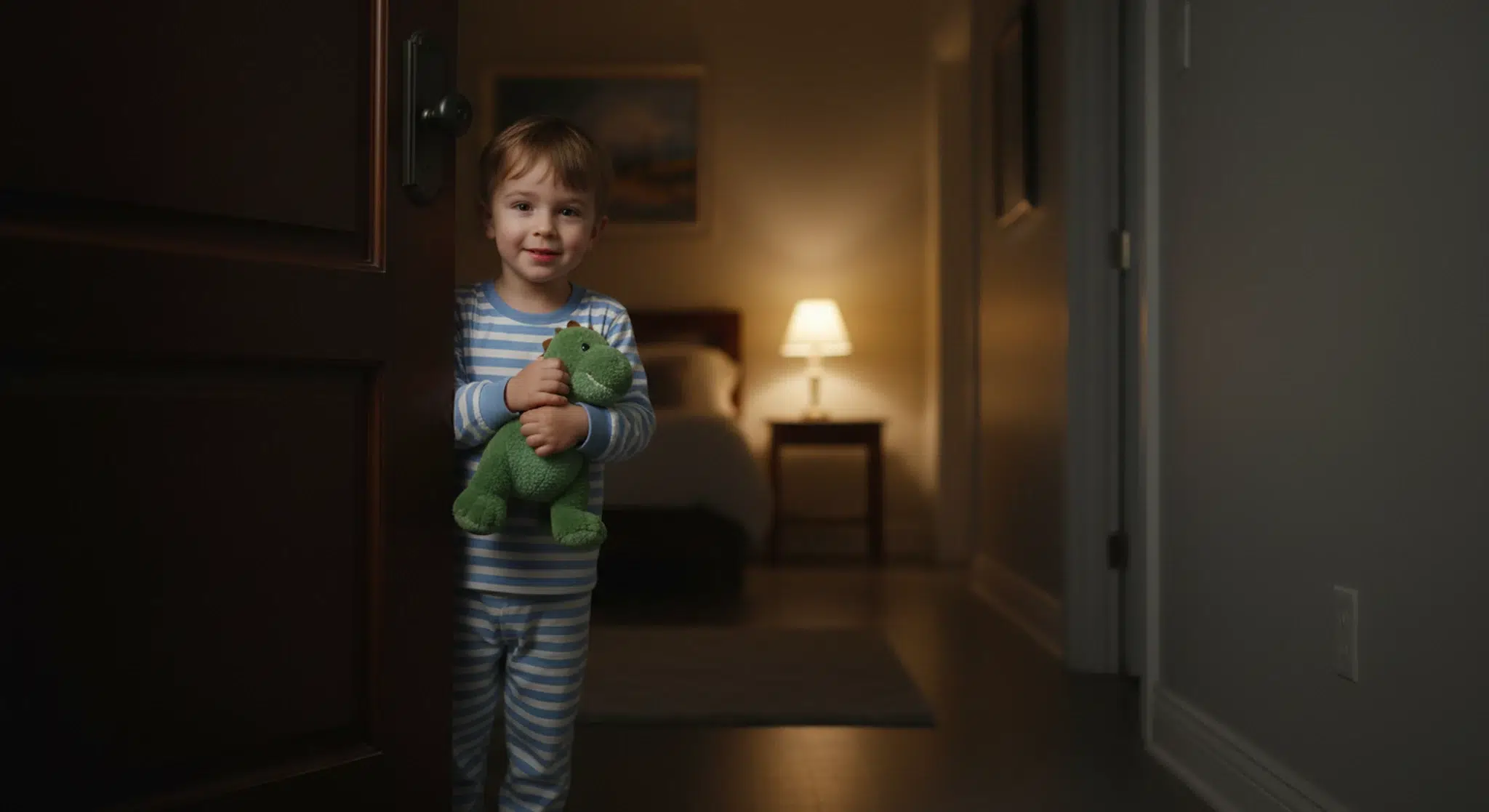
The 4 year old sleep regression is a temporary spell of bedtime stalling, night wakings, nightmares, and too-early mornings in a preschooler who used to sleep well. The usual suspects: a recently dropped nap, a galloping imagination, new independence, and big life changes like starting preschool.
Four year olds are supposed to be past this. They talk in paragraphs, dress themselves, and negotiate like tiny lawyers, which is exactly the problem: all of that new brainpower shows up at bedtime as stalling, fears, and 5:15 a.m. wake-ups.
This guide explains what drives the 4 year old sleep regression, how much sleep a 4 year old actually needs, how to tell nightmares from night terrors, and a calm, boundaried plan that gets your preschooler (and you) back to full nights.
Key Takeaways
Four year olds need 10 to 13 hours of sleep in 24 hours; once the nap is gone, almost all of it must come overnight, so bedtime often needs to move earlier.
The regression is driven by imagination and fears, the nap transition, testing limits, and changes like preschool, a new sibling, or a new bed.
Nightmares are common and comfortable-able; night terrors happen early in the night, the child seems unreachable, and prevention is more sleep, not more comfort.
A visible routine, an OK-to-wake clock, quiet time instead of the nap, and boring, consistent responses to curtain calls fix most cases in 1 to 3 weeks.
Loud snoring, gasping, or breathing pauses are not regression; they are a reason to see the pediatrician.
Table of Contents
Is There a 4 Year Old Sleep Regression?
Yes, though it looks different from baby regressions. There is no single biological switch that flips at 4; instead, several forces converge in the preschool years and produce the same result: a previously solid sleeper who now fights bedtime, wakes at night, or starts the day before the birds. Parents searching for a 3 year old sleep regression and a 4 year old one are usually describing the same continuum.
Signs include bedtime resistance and endless curtain calls, new fear of the dark or monsters, night wakings with trips to your room, nightmares, early morning wakings, and crankiness or meltdowns from accumulated sleep debt.
What Causes It at This Age
The nap is gone but the schedule did not adjust. Most children drop their nap between 3 and 5. A child who napped an hour at 3.5 and now naps zero needs that hour added to the night, which usually means a bedtime 30 to 60 minutes earlier. Skip that adjustment and you get an overtired preschooler: wired at bedtime, restless overnight, and up early. See when kids stop napping for the transition itself.
Imagination outruns reality-testing. Four year olds have rich pretend worlds but cannot yet reliably separate imagination from reality in the dark. Fears of monsters, shadows, and being alone peak in the preschool years and are a sign of normal cognition, not anxiety disorder.
Independence and limit-testing. Preschoolers test rules to learn where the walls are. If bedtime rules flex under pressure, a scientist this dedicated will keep running the experiment.
Life changes. Starting or changing preschool, a new sibling, moving, dropping the crib rail, or giving up a lovey can each disrupt sleep for a few weeks. Stack two of them and you have a regression.
Screens and stimulation. Evening screen time is strongly linked to later sleep onset and more night wakings in preschoolers. The cartoon that seems calming is delivering light and plot twists at exactly the wrong hour.
How Much Sleep Does a 4 Year Old Need?
The American Academy of Sleep Medicine, endorsed by the AAP, recommends 10 to 13 hours per 24 hours for children 3 to 5, including any nap. A 4 year old who no longer naps and wakes at 6:30 a.m. needs lights out between roughly 6:30 and 8:00 p.m. Most bedtime disasters at this age are actually a 8:45 p.m. bedtime problem wearing a monster costume.
Wake time
No-nap bedtime target
6:00 a.m.
6:30–7:30 p.m.
6:30 a.m.
7:00–8:00 p.m.
7:00 a.m.
7:30–8:30 p.m.
Bedtime targets for a 4 year old who has dropped the nap, aiming for 11 to 12 hours overnight.
Is it fears, the schedule, or both?
Take Betteroo’s free sleep quiz and get a personalized preschooler plan, from bedtime math to monster management.
Move bedtime earlier, not later. Counterintuitive but reliable: overtired preschoolers fight sleep harder. Try 30 minutes earlier for a week before concluding anything else.
Replace the nap with quiet time. Forty-five to sixty minutes of books and quiet play in their room after lunch keeps the afternoon civilized and prevents the 5:00 p.m. meltdown-microsleep that wrecks bedtime.
Make the routine visible. A picture chart of the same 4 to 5 steps every night removes the negotiation. The chart says teeth come after bath; take it up with the chart.
Give real choices inside firm rails. Which pajamas, which two books, which stuffed animal stands guard. The bedtime itself is not on the menu.
Take fears seriously, briefly. Validate, check the room together once, add a warm dim nightlight, hand over a brave companion (a specific stuffed animal with a job), and keep goodnight warm and short. Avoid long reassurance tours that teach fear pays in extra parent-minutes.
Use an OK-to-wake clock. Before the light turns green, it is still night, and every appearance gets the same quiet walk back. Consistent for a week, it usually buys back the 5:30 a.m. hour.
Audit the evening. No screens in the last hour before bed, dim the house lights, and land dinner early enough that bedtime is not competing with digestion or dessert lobbying.
Praise the wins. A sticker for every night that follows the rules, cashed for something small. Four year olds will work for recognition that they are big kids doing big-kid sleep.
Nightmares vs. Night Terrors at 4
Both spike in the preschool years, and they need opposite responses. Nightmares happen in the second half of the night during REM sleep; your child wakes fully, is scared, remembers the dream, and wants you. Comfort works and is the right answer. Keep it brief and settle them back in their own bed so the middle-of-the-night migration does not become the new normal. More in our nightmares guide.
Night terrors happen 1 to 2 hours after falling asleep during deep non-REM sleep. The child may scream, thrash, stare glassy-eyed, and push you away; they are not actually awake, will not remember it, and cannot be comforted out of it. Do not wake them; keep them safe and wait it out. The best prevention is more total sleep, since overtiredness is the biggest trigger. Our night terrors guide covers scheduled awakenings for stubborn cases.
How Long Does the 4 Year Old Sleep Regression Last?
With a corrected schedule and consistent responses, most cases improve noticeably within 1 to 3 weeks. Fear-driven phases can wax and wane for a few months, but they should be background noise, not nightly war. What stretches a regression into a lifestyle is inconsistency: a bedtime that floats, screens some nights, walk-backs that sometimes end in your bed. Preschoolers respect systems that do not blink.
If your 4 year old never slept well, this is not a regression; it is a sleep foundation that was never poured. The same plan applies, it just takes a little longer, and it is absolutely still fixable at this age.
When to Call Your Pediatrician
See your pediatrician if your child snores loudly most nights, mouth-breathes, gasps, or pauses breathing during sleep (obstructive sleep apnea peaks at ages 2 to 6 and is treatable); if night terrors are violent, injurious, or occur most nights; if anxiety around sleep is intense, spreads into the day, or follows a frightening event; if your child seems exhausted despite adequate hours; or if bedwetting returns with pain, thirst, or daytime accidents after months of dryness.
Frequently Asked Questions
Is there a sleep regression at 4 years old?
Yes. Preschoolers commonly hit a rough patch of bedtime resistance, night wakings, fears, and early mornings around age 4, driven by the dropped nap, a vivid imagination, limit-testing, and life changes like starting preschool. With a consistent plan it typically resolves in 1 to 3 weeks.
Why is my 4 year old suddenly waking up at night?
The most common causes are an overtired schedule after dropping the nap, nightmares or new fears of the dark, and night visits that got rewarded with a spot in your bed. Less commonly it is snoring or sleep apnea; loud nightly snoring warrants a pediatrician visit.
What time should a 4 year old go to bed?
Work backward from wake time. A 4 year old without a nap needs about 11 to 12 hours overnight, so a 6:30 a.m. riser should be asleep by 7:00 to 7:30 p.m. Preschoolers with a late bedtime and no nap are the classic setup for a regression.
How do I stop my 4 year old stalling at bedtime?
Pre-empt the requests (water, potty, last hug) inside the routine, use a picture chart so the routine is the authority, offer two acceptable choices, then respond to every curtain call the same calm, boring way. Stalling is an experiment; consistent results end it.
Should my 4 year old still nap?
Most 4 year olds have dropped the nap, and forcing one can push bedtime late. If your child still naps happily and falls asleep fine at night, keep it. If bedtime is a battle, cap the nap at 45 minutes ending by 2:30 p.m., or swap it for quiet time and move bedtime earlier.
Preschool sleep, sorted
Betteroo turns your child’s age, schedule, and struggles into a step-by-step plan with scripts for fears, stalling, and 5:00 a.m. wake-ups.