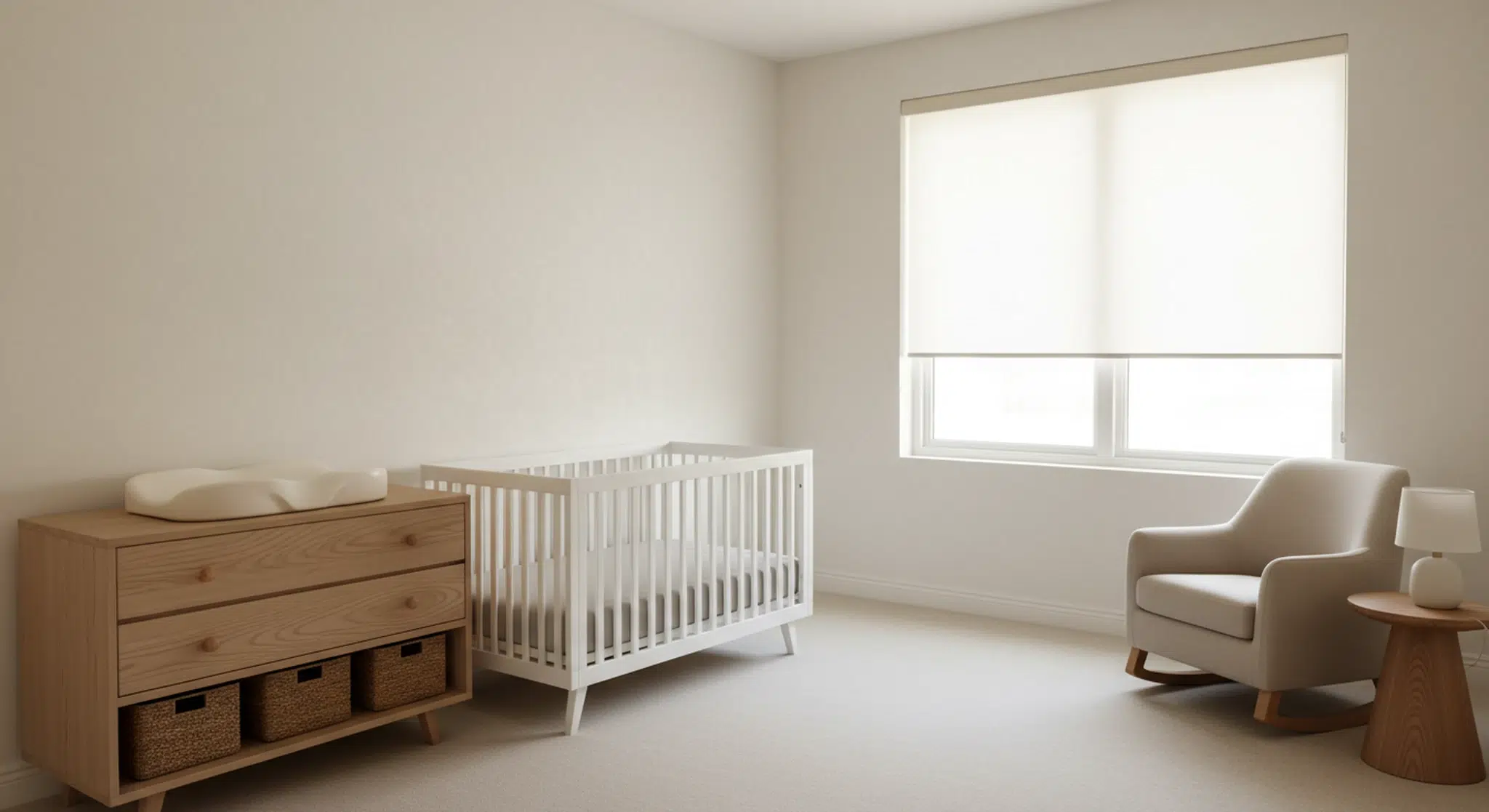
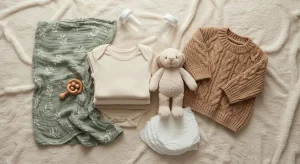
The nursery essentials you actually need are a safe sleep space with a firm fitted mattress and fitted sheets, sleep sacks, a changing station, a comfortable feeding chair, simple storage, dim light with blackout coverings, and safety basics like furniture anchors.
Most nursery essentials lists are long because they are written to sell things. The list you really need is much shorter, and the most important items are about safe sleep and a safe room, not decor. This guide walks through the nursery zone by zone, with what to look for in each item, what can wait, and what to skip entirely.
You will also find a need now vs later table, small-space and budget tips, and a printable nursery checklist, all checked against guidance from the AAP, CPSC and the NICHD Safe to Sleep campaign.
Key Takeaways
The only non-negotiables are a safe sleep space meeting CPSC standards, a snug firm flat mattress, and fitted sheets.
The AAP recommends room sharing for at least the first 6 months, so your first sleep space may be in your room.
Anchor dressers and shelves to the wall, go cordless on window coverings, and keep the crib away from windows.
Spend on the sleep space and feeding chair; decor and extras can wait.
As an Amazon Associate, Betteroo earns from qualifying purchases.
Table of Contents
Nursery Essentials at a Glance
Quick Answer
The true nursery essentials are short: a safe sleep space (crib, bassinet or play yard that meets federal CPSC standards) with a firm, flat mattress that fits snugly and 2 to 3 fitted sheets; a few sleep sacks; a changing station with supplies in reach; a comfortable chair for feeds; simple storage; dim lighting, blackout window coverings and a white noise machine; and safety basics like furniture anchors, cordless window coverings and working smoke and carbon monoxide alarms. Almost everything else can wait.
Zone
Need now
Can wait
Skip
Sleep
Crib, bassinet or play yard; firm fitted mattress; fitted sheets; sleep sacks or swaddles
Furniture anchors; cordless window coverings; smoke and CO alarms; outlet covers
Video or audio monitor; cabinet latches before crawling
Products sold to prevent SIDS
A nursery essentials checklist by zone: what to get now, later, or not at all.
Before You Shop: Room Sharing Comes First
Here is the part most nursery checklists skip. The American Academy of Pediatrics (AAP) recommends that your baby sleep in your room, close to your bed but on a separate surface, ideally for at least the first 6 months. NICHD Safe to Sleep agrees.
That changes how you build the nursery. For the first months, the most important sleep item often lives in your bedroom: a bassinet, play yard or bedside sleeper. The nursery becomes the changing, dressing, storage and feeding hub, and the crib waits until your baby moves in. Our safe sleep environment guide covers how to set up that bedside space.
If you have a spare room: Set up the crib now so it is ready, but plan on a bassinet or play yard in your room at first. Put diapering supplies in both places, or keep a small caddy you can carry.
If you do not have a spare room: You do not need one. A corner of your bedroom with a safe sleep space, a changing pad on a dresser and a basket of clothes is a complete nursery for the first months.
The Sleep Zone: Your Only Non-Negotiables
Safe sleep is the one area where you should not improvise, borrow carelessly or buy on looks. The AAP, CPSC and NICHD agree on the core rules: your baby sleeps alone, on their back, on a firm, flat, bare surface, in a product made for infant sleep.
Crib, bassinet or play yard: Choose one that meets current federal safety standards from the Consumer Product Safety Commission (CPSC). AAP HealthyChildren advises using a crib made after June 2011, when the ban on drop-side cribs took effect, with slats no more than 2 3/8 inches apart.
Firm, flat mattress that fits snugly: Use the mattress made for your specific crib or play yard. AAP HealthyChildren’s test: if you can fit more than two fingers between the mattress and the side or end of the crib, the fit is not safe. The surface should be firm (it springs back quickly when pressed) and flat, not angled.
Fitted sheets only: Get 2 or 3 fitted sheets made for your mattress size so you always have a clean one during a middle-of-the-night change. Nothing else goes in the sleep space.
Sleep sacks and swaddles: Instead of blankets, dress your baby in a wearable blanket. Stop swaddling once your baby shows signs of trying to roll. Our baby sleep sack guide explains sizes and warmth ratings.
Big days go better after a good night of sleep.
Got a baby or toddler at home too? Our free two-minute quiz builds a gentle, personalized sleep plan for little ones.
What to Skip in the Sleep Space (Even if It Is Sold for Nurseries)
Many products on nursery shelves are not safe for sleep. CPSC’s message is “Bare is Best,” and both the AAP and NICHD list these items to keep out of your baby’s sleep area:
Crib bumpers: Padded bumpers and soft liners raise the risk of suffocation and entrapment.
Pillows, blankets, quilts and comforters: Soft objects and loose bedding can lead to entrapment, suffocation or strangulation, according to AAP HealthyChildren. Use a sleep sack instead.
Sleep positioners and wedges: NICHD warns that many wedges and positioners do not meet federal sleep safety guidelines. No product can prevent SIDS.
Inclined sleepers, rockers, swings and loungers for sleep: AAP HealthyChildren says any sleep surface sloped more than 10 degrees is unsafe, and CPSC says inclined products such as rockers, gliders, soothers and swings should never be used for infant sleep.
Weighted sleep products: CPSC and the AAP both say not to use weighted blankets, weighted sleep sacks or weighted swaddles on or near your baby.
Stuffed animals and crib toys: Keep toys out of the sleep space. If you hang a mobile, AAP HealthyChildren says to attach it securely out of reach and remove it when your baby can push up on hands and knees, or at 5 months, whichever comes first.
SIDS monitors: NICHD says heart, breathing and motion monitors are not effective at detecting or preventing SIDS.
The Changing Zone
A dedicated changing table is optional. Many families use a sturdy dresser at a comfortable height with a contoured changing pad attached to the top.
Changing surface: AAP HealthyChildren recommends a sturdy surface with a guardrail of about 2 inches on all four sides and a concave (contoured) pad. Use the safety strap, but never rely on it: always keep one hand on your baby.
Supplies within your reach: Diapers, wipes, diaper cream and a spare outfit should be within your arm’s reach but out of your baby’s.
Diaper pail or lidded bin: A pail that seals well cuts down on odor. A small lidded trash can with liners works too.
Skip baby powder: AAP HealthyChildren warns that inhaled powder can injure a baby’s lungs, so if you use it at all, keep it well away from your baby’s face.
The Feeding and Rocking Zone
You will spend many hours in one chair, so test it in person.
A comfortable chair: Look for supportive arms at a height that holds your elbow while you feed, a seat deep enough to sit back, and a back tall enough to rest your head.
Small side table: For water, a burp cloth, a dim lamp and your phone.
Nursing pillow: Helpful for some parents during feeds while you are awake and holding your baby. It is not a sleep or lounging surface.
A safety note for tired parents: the AAP’s 2022 safe sleep policy warns that falling asleep with your baby on a sofa or armchair is especially dangerous. If you feel yourself dozing during a night feed, put your baby back in their own sleep space.
Storage: Less Furniture Than You Think
Good storage keeps the room calm and your night routine fast.
Dresser or closet system: A dresser doubles as a changing surface. If you use a closet, add shelf dividers or hanging organizers sorted by size, so outgrown clothes can be pulled quickly.
Bins and baskets: Open baskets for diapers, burp cloths and spare sheets.
Books and toys: A low shelf for board books later on. AAP HealthyChildren says a toy box without a lid is best; if a chest has a lid, it should have hinges that hold it open and do not pinch, plus air holes.
Lighting, Sound and Climate
These nursery essentials most affect sleep: aim for dark, quiet and comfortable at night.
Dim lighting: A lamp with a warm, low-wattage bulb or a dimmer lets you feed and change at night without fully waking either of you. If you use a night light, AAP HealthyChildren recommends a cool-running type, kept away from drapes and bedding.
Blackout window coverings: Darkness helps with early morning wake-ups and daytime naps. Choose cordless styles. Our blackout blinds guide covers what to look for.
White noise machine: Steady sound can mask household and street noise. Place it across the room, not in or on the crib, and keep the volume moderate. See our white noise for babies guide for safe volume and distance.
Room thermometer: Overheating is linked to a higher risk of SIDS, according to NICHD. Dress your baby in one more layer than you would need to be comfortable in the same room, keep their head and face uncovered, and skip hats indoors. Our baby room temperature guide explains how to dress for the room.
Cool-mist humidifier (optional): If your home air is dry, AAP HealthyChildren recommends cool-mist rather than warm-mist to avoid burns, cleaned as the manufacturer directs to prevent mold and bacteria.
Safety and Babyproofing: The Nursery Checklist Most Lists Miss
Many nursery dangers are not about what you buy, but where you put it and how you secure it.
Anchor furniture to the wall: CPSC’s Anchor It campaign says anchoring all furniture with drawers, doors and shelves to the wall prevents tip-over injuries and deaths. That includes dressers, bookshelves and any TV.
Keep the crib away from windows: AAP HealthyChildren advises against placing a crib near a window because of fall and cord strangulation risks.
Go cordless with window coverings: CPSC recommends cordless window coverings where young children are present. If you cannot replace corded blinds yet, keep cords out of reach and well away from the crib.
Keep all cords away from the crib: That includes monitor and lamp cords. Mount a camera on the wall or a stand so its cable cannot be reached from the crib.
Smoke and carbon monoxide alarms: AAP HealthyChildren recommends smoke alarms outside every sleeping area and on every level, tested monthly, and carbon monoxide detectors on each floor.
Window guards and outlet covers: Secure window guards so a child cannot fall out, and add outlet covers before your baby starts crawling.
Small-Space and Budget Nursery Essentials
A small room or a shared bedroom can hold everything your baby needs. Focus on items that do more than one job.
Pick multi-use furniture: A dresser with a changing pad on top replaces two pieces. A play yard with a bassinet insert can serve as the bedside sleep space, then as a travel bed later. A mini crib fits tight rooms, as long as it meets the federal standard.
Buy secondhand wisely: Dressers, chairs and lamps are great secondhand buys. For cribs and play yards, check CPSC recalls, confirm all parts are there, and skip any crib made before June 2011 or with a drop side.
Spend where it counts: Put your budget into the sleep space and the feeding chair. Decor and extras can wait.
The nursery essentials that matter most are a safe, bare sleep space that meets federal standards, a changing setup you can use with one hand on your baby, a chair you can feed in, and a room that is dark, calm and secured against tip-overs and cords. Remember that your baby will likely sleep in your room for at least the first 6 months, so start there and build the rest of the nursery at your own pace. Decor is the fun part, and it can always come later. For everything your baby needs beyond the nursery, see our baby must-haves list.
Frequently Asked Questions
What are the nursery essentials for a newborn?
For a newborn, the essentials are a crib, bassinet or play yard meeting federal safety standards, a firm flat mattress that fits snugly, two or three fitted sheets, a few sleep sacks or swaddles, a changing pad and supplies, a comfortable chair for feeds, dim lighting and safety basics like furniture anchors.
What do you need for a nursery in the first month?
In the first month you mainly need a safe sleep space in your room, since the AAP recommends room sharing for at least six months. Add fitted sheets, sleep sacks, a changing setup and a place to feed. The full nursery, including the crib, can be finished later.
When should I set up the nursery?
Many parents aim to have the essentials ready a few weeks before the due date, which leaves time to assemble furniture, wash sheets and clothes, and anchor dressers and shelves. If your baby will room share at first, prioritize the bedside sleep space and changing supplies, and finish the nursery itself at a relaxed pace.
Is it safe to use a secondhand crib?
It can be, if it meets current federal standards. AAP HealthyChildren advises using a crib made after June 2011, with no drop side, slats no more than 2 3/8 inches apart, and no missing, broken or loose parts. Check it for recalls on the CPSC website and use a snug mattress.
Do I need a changing table?
No. A changing table is convenient but optional. Many families put a contoured changing pad with raised sides on top of a sturdy dresser at a comfortable height. Whatever surface you use, keep supplies within your reach, use the strap, and always keep one hand on your baby so they cannot roll off.
What should you not put in a nursery?
Keep bumpers, pillows, blankets, stuffed animals, sleep positioners and weighted sleep products out of the sleep space, and do not use inclined products or swings for sleep. Avoid corded blinds, unanchored furniture, and placing the crib near a window or cords.
Gentle changes, peaceful nights.
Betteroo builds a personalized sleep plan for your baby or toddler. Take the free two-minute quiz to get started.