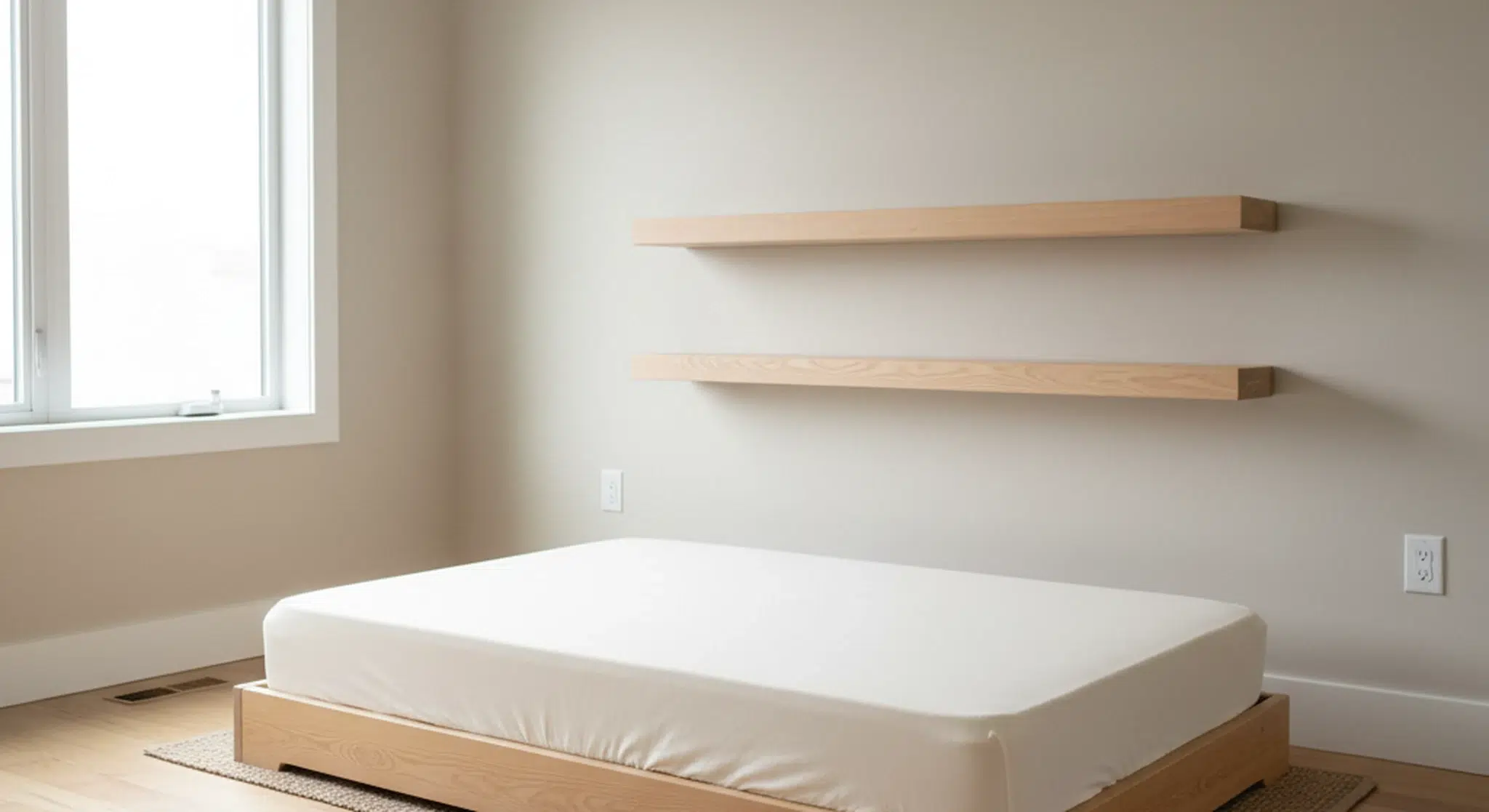
A Montessori floor bed is a low mattress placed on or near the floor so a child can get in and out on their own. It can be a wonderful setup for older babies and toddlers, but only once the room is fully childproofed and, for infants under 12 months, only alongside the AAP’s safe sleep rules.
The Montessori floor bed has moved from niche parenting forums into mainstream nurseries, and for good reason. Instead of confining a child behind crib bars, a floor bed invites free movement and independence, letting a toddler crawl out to explore or climb back in to rest. But a floor bed is not simply a mattress on the ground. It is a decision about the whole room, and getting the timing and the safety right is what separates a calm setup from a stressful one.
This guide keeps things honest. We cover what a Montessori floor bed actually is, the real pros and cons, the safe-sleep caveat for babies under a year, the childproofing that is non-negotiable, and a practical way to transition without turning bedtime into a nightly negotiation. If you are weighing this against other sleep gear, it pairs naturally with our look at whether soft nest products are safe in our guide on are baby loungers safe.
Key Takeaways
A Montessori floor bed is a low mattress that lets a child get in and out independently.
For infants under 12 months, follow AAP safe sleep rules on a firm flat surface; a floor bed is usually introduced for older babies or toddlers.
The whole room becomes the sleep space, so it must be fully childproofed with anchored furniture.
Pros include independence and an easy toddler-bed transition; cons include early roaming and more night check-ins at first.
Transition gradually with a consistent routine and calm, boring returns to bed.
Table of Contents
What Is a Montessori Floor Bed?
A Montessori floor bed is exactly what it sounds like: a mattress placed directly on the floor, or on a very low frame, with no bars or high sides. The idea comes from the Montessori principle of the prepared environment, where the space itself is arranged to support a child’s independence and free movement.3 Rather than waiting to be lifted out of a crib, a child on a floor bed can see their room, move toward what interests them, and return to rest on their own schedule.
Practically, that means the entire bedroom, not just the mattress, becomes the sleep environment. This shift is the heart of the concept and also the source of most of its safety requirements. A floor bed only works when the room around it is as safe as a crib would be, because a child can and will leave the bed to explore.
A low mattress on the floor or a minimal low frame, with open access on at least one side.
No high rails to climb, so no risky climb-out falls from crib height.
The room is treated as the sleep space and childproofed accordingly.
Designed to support free movement, independence, and self-directed rest.
Are Montessori Floor Beds Safe? The Safe-Sleep Caveat
A Montessori floor bed can be safe, but safety depends entirely on age and on how thoroughly you prepare the room. For infants under 12 months, the American Academy of Pediatrics still recommends sleeping on a firm, flat surface in a crib, bassinet, or play yard that meets safety standards, with nothing soft in the sleep space.1 A thin mattress on the floor with a fitted sheet can meet the firm-and-flat standard, but the bigger concern for young infants is the surrounding room and anything soft they could reach.
For that reason, most families introduce a floor bed for older babies who can reliably get in and out, or wait until toddlerhood. Whenever you start, the rule is the same: because the child is not contained, the room itself must be flawless, because your baby now has access to everything in it overnight. If you are still in the crib stage, our sibling guide on safe sleep and baby loungers is a good companion read on what belongs near a sleeping infant.
Under 12 months: prioritize AAP safe sleep, firm and flat, nothing soft in the sleep space.1
Use a firm mattress and a fitted sheet only for younger children, no loose blankets or pillows.
For warmth without loose bedding, use an age-appropriate sleep sack.
Never rely on the bed alone for safety; the whole room must be secured.
Pros and Cons of a Montessori Floor Bed
A floor bed is neither a miracle nor a mistake. It is a trade-off, and being clear-eyed about both sides helps you decide whether it suits your child and your home. The upside centers on independence and an eventual smooth handoff to a big-kid bed. The downside is that, especially at first, freedom can mean a wandering toddler and a few more trips down the hall at night.
Pros
Cons
Supports independence and free movement
Early risers may roam the room unsupervised
Easy in-and-out access, no lifting
More night check-ins while your child learns the boundary
No climbing out of a crib and falling
Requires diligent, ongoing room childproofing
Smooth transition to a toddler bed later
Some children take time to stay put at first
The honest trade-offs of a Montessori floor bed.
Do floor beds help with sleep? For some children they genuinely reduce bedtime battles by giving a sense of control, and they remove the crib-escape phase entirely. For others, the novelty and freedom cause a bumpy first week or two. A floor bed is a setup, not a sleep-training method, so pairing it with a consistent routine matters more than the furniture itself. If you hit a rough patch around age two, our guide to the 2 year sleep regression can help you tell a phase from a problem.
Freedom works better with a rhythm.
Betteroo builds you a calm, consistent bedtime routine that makes a floor bed feel easy.
This is the part you cannot skip. Because your child can leave a floor bed at will, the entire room must be treated as if they will touch, climb, and pull on everything in it, because eventually they will. Furniture tip-overs are a leading cause of injury and death for young children, and the risk climbs once a child has unsupervised overnight access.5 Every dresser, bookshelf, and shelf must be anchored to wall studs so it cannot topple, a step public-safety campaigns have shown prevents tragedies.4
Beyond anchoring, walk the room at your child’s eye level and remove anything that could be pulled down, swallowed, tangled, or climbed. The AAP specifically recommends anchoring furniture, covering outlets, and considering a gate at the door when a young child sleeps in an open bed.2 Treat the doorway and any stairs as part of the plan too.
Anchor all furniture, shelves, and any TV to the wall studs with anti-tip hardware.4
Cover every electrical outlet and secure or shorten all cords, including blind cords.
Remove small objects, choking hazards, and anything the child could pull down.
Secure the doorway with a gate and gate the top of any stairs.
Keep the mattress away from windows, radiators, and cords, and secure window blinds.
Store drawers so they cannot be pulled out and used as steps.
How to Set Up and What Age to Start
What age is a floor bed appropriate? There is no single magic number, but two milestones guide the decision: your child can reliably get on and off the mattress on their own, and the room is completely childproofed. Some families begin in later infancy once a baby is crawling and pulling up, while others wait until 18 to 36 months, closer to a natural toddler-bed transition. If you are debating timing, our guide on when to transition to a toddler bed lays out the readiness signs in detail.
Setup is refreshingly simple. Use a firm, low mattress with a snug fitted sheet and skip loose blankets and pillows for younger toddlers. For warmth, reach for an age-appropriate sleep sack instead of bedding, and our roundup of the best toddler sleep sacks can point you to good options. Keep the surrounding space minimal, calm, and uncluttered so the room invites rest rather than play.
Setup element
What to use
Mattress
Firm, low to the floor, correct size for the room
Bedding
Fitted sheet only for younger toddlers, no loose blankets
Warmth
Age-appropriate sleep sack
Room
Minimal, uncluttered, fully anchored and childproofed
A simple, safe floor bed setup.
How to Transition and Handle Night Wandering
How do you transition to a floor bed without a week of chaos? Go gradually and lean on consistency. Introduce the bed during the day so your child can explore it while awake, keep your existing bedtime routine exactly the same, and start with naps if that feels less daunting. The furniture is new, but the rhythm around sleep should feel familiar, because predictability is what helps a child settle.
Night wandering is the most common worry, and the fix is calm repetition rather than a battle. When your child gets up, walk them back with as little talk, light, and drama as possible, and repeat as many times as it takes. A childproofed room means that even if they roam a little, they are safe, which lowers the stakes for everyone. Most children learn the boundary within one to two weeks of consistent, boring returns.
Let your child play on the bed while awake before the first night.
Keep the same bedtime routine and timing you already use.
Return your child to bed calmly, quietly, and consistently every time.
Use a gate at the door if needed so a wandering toddler stays in a safe space.
Expect a bumpy first week or two, then steadier nights as the habit forms.
When to Talk to Your Pediatrician
Your baby is under 12 months and you are unsure whether a floor bed fits safe sleep guidance.
You have concerns about your child’s development, mobility, or ability to get in and out safely.
Sleep problems persist for weeks despite a consistent routine and a childproofed room.
Your child has a medical condition, reflux, or special needs that affects sleep setup.
You want help distinguishing a normal regression from an underlying issue.
Your pediatrician can help you match the timing of a floor bed to your child’s age and stage, and confirm your safe sleep and childproofing plan. When in doubt about safety, ask before you switch.
Frequently Asked Questions
What age is a Montessori floor bed appropriate?
There is no single right age. The two signals that matter are that your child can reliably get on and off the mattress alone and that the room is fully childproofed. Some families start in later infancy, while many wait until 18 to 36 months. For babies under 12 months, follow AAP safe sleep rules.
Are Montessori floor beds safe?
They can be, when the child is developmentally ready and the entire room is childproofed with anchored furniture, covered outlets, and a secured doorway. For infants under a year, prioritize the AAP’s firm, flat, bare sleep surface guidance and keep anything soft out of reach.
What are the pros and cons of a floor bed?
Pros include independence, easy in-and-out access, no crib climb-out falls, and a smooth path to a toddler bed. Cons include early-morning roaming, more night check-ins at first, and the ongoing need to keep the room rigorously childproofed.
How do you transition to a floor bed?
Go gradually. Let your child explore the bed while awake, keep your usual bedtime routine unchanged, and consider starting with naps. When your child gets up at night, return them calmly and consistently. Most children learn the boundary within a week or two.
Do floor beds help with sleep?
For some children, yes, because the sense of control can ease bedtime and there is no crib to escape. For others, the new freedom causes a short adjustment period. A floor bed is a setup rather than a sleep method, so a consistent routine matters most.
Make the floor bed transition feel calm.
Betteroo gives you a step-by-step, evidence-based plan for easier nights.