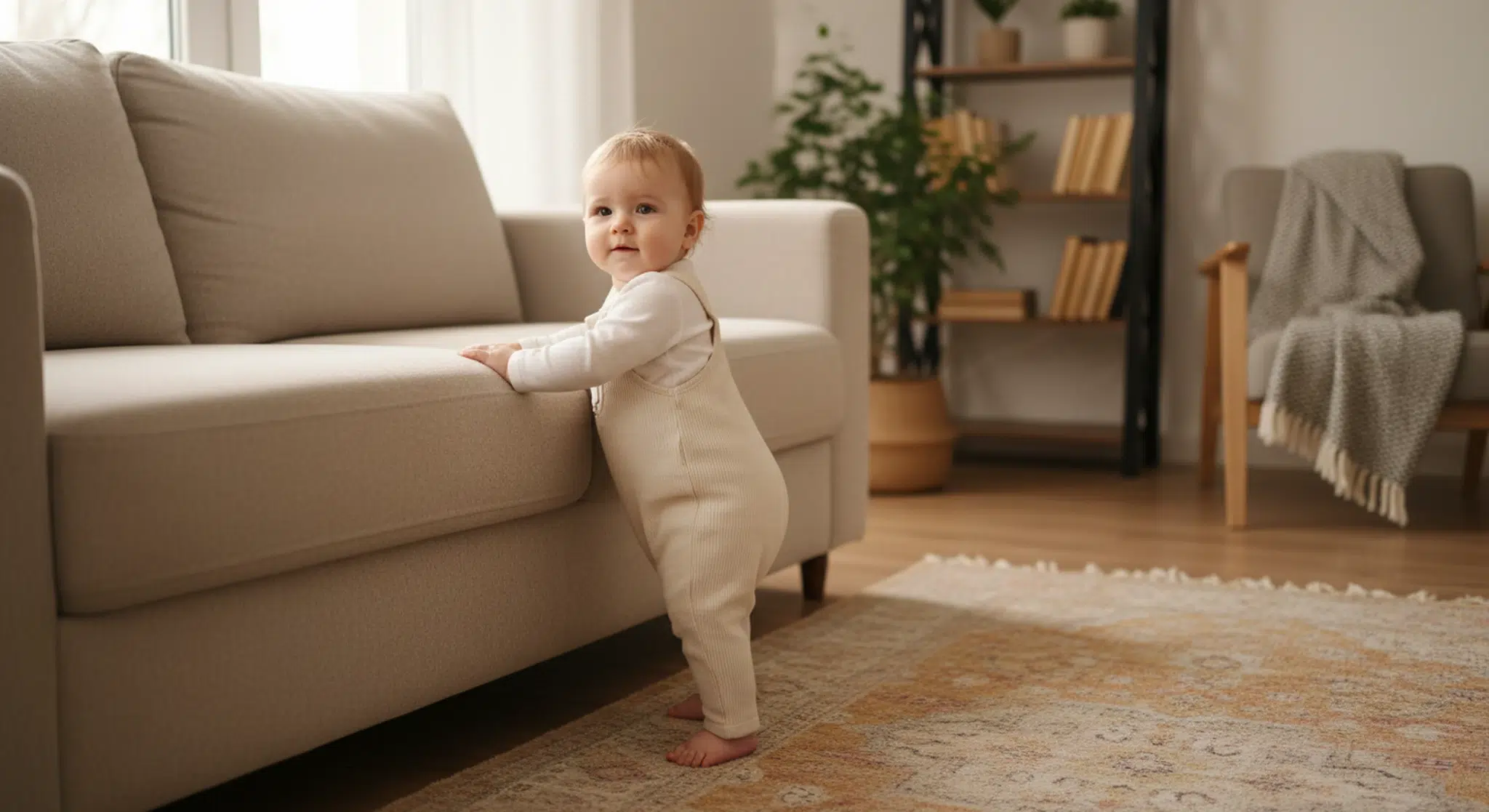
At 10 months, most babies crawl with speed and purpose, pull up to stand on furniture, and may cruise sideways along the couch. The pincer grasp is coming online, so tiny foods get picked up with thumb and forefinger. Babbling starts to sound like conversation, waving and clapping often appear, and games like peekaboo and pat-a-cake become full-blown rituals.
Ten months sits in the quiet gap between the 9 month and 12 month checkups, but development does not pause for the calendar. This is a month of consolidation and momentum: skills that flickered at 9 months become reliable, and the first previews of walking and talking appear.
Here is what typical 10 month old milestones look like across movement, fine motor, language, and social development, what is happening with sleep and feeding, and the signs that deserve a conversation with your pediatrician.
Key Takeaways
Crawling, pulling to stand, and early cruising along furniture are the big gross motor themes at 10 months.
The pincer grasp (thumb and forefinger) typically sharpens between 9 and 12 months, making self-feeding much more precise.
Expect conversational-sounding babble, response to their name, and possibly “mama” or “dada” aimed at the right parent.
Waving, clapping, and pointing often emerge around now; all three are important social communication signals.
Walking is not expected yet: the normal range for first steps runs roughly 9 to 18 months.
As an Amazon Associate, Betteroo earns from qualifying purchases.
Table of Contents
Movement Milestones at 10 Months
Most 10 month olds are efficient crawlers, and many have discovered the vertical world: grabbing the coffee table, hauling themselves up to standing, and standing there wobbling with enormous pride. Cruising, stepping sideways while holding furniture, often starts within a few weeks of pulling up. Some babies also begin standing briefly without support, a genuine preview of first steps, though independent walking usually waits until around the first birthday and anywhere from 9 to 18 months is normal. Our guide to when babies start walking maps the whole sequence.
Practical consequences of the new altitude: lower the crib mattress to its lowest setting, anchor furniture and TVs to the wall, and expect some falls onto padded bottoms. Babies learning to stand also famously practice in the crib at 2 am, then cry because they cannot figure out how to get back down. Teaching the sit-back-down move during daytime play saves everyone sleep.
Fine Motor Skills: The Pincer Grasp Arrives
The star fine motor development of this stretch is the pincer grasp: picking up small objects between thumb and forefinger instead of raking with the whole hand. It usually emerges between 9 and 12 months, and once it clicks, your baby will practice on everything: puffs, peas, lint, and any crumb the vacuum missed, which is why floor patrol matters now. Ten month olds also bang objects together, drop and throw things deliberately to study the result, poke with an index finger, and start putting objects into containers, the beginning of a dump-and-fill obsession that lasts well into toddlerhood.
Language and Communication at 10 Months
Babble gets sophisticated at 10 months. Instead of flat repetition, you will hear varied syllables with the rise and fall of real speech, sometimes called jargon, as if your baby is speaking a fluent language you simply do not know. Many babies now say “mama” or “dada” with intent, respond reliably to their name, understand “no” and a handful of familiar words like “bottle” or “bye-bye,” and follow your point or gaze across the room.
Gestures do the heavy lifting before words: waving bye-bye, clapping, lifting arms for “up,” shaking the head, and, soon, pointing with the index finger. Gestures are language development, not a substitute for it, and babies who gesture richly tend to talk on time. Keep narrating your day, name what your baby points at, and consider a few baby signs for high-traffic words like “more” and “milk.”
Social and Cognitive Development
Object permanence is now solid: hide a toy under a blanket and your 10 month old will yank the blanket off, delighted with their own detective work. Games with predictable structure, peekaboo, pat-a-cake, “I’m gonna get you,” become beloved rituals, and your baby may start initiating them. Imitation ramps up too: fake coughing, tongue clicks, banging the table because you did. Separation anxiety usually remains strong through this month, and stranger wariness is at full strength; both are signs of healthy attachment, not spoiling. If drop-offs are rough, our guide to separation anxiety has practical scripts.
Standing in the crib at 2 am?
New motor skills are the classic 10 month sleep wrecker. Betteroo builds a plan matched to your baby’s exact stage and temperament.
Expect roughly 12 to 16 total hours of sleep: 10 to 12 at night plus two naps, with wake windows around 3 to 3.75 hours. Pulling-to-stand practice and separation anxiety fuel the 10 month sleep regression for many families; a consistent response and well-timed schedule usually settle it within a couple of weeks. See our 10 month old sleep schedule for sample days.
Meals now look like real participation: three solid meals plus snacks, 24 to 32 ounces of breast milk or formula, and a baby who wants the spoon. Lean into finger foods that exercise the pincer grasp, offer an open cup or straw cup with water at meals, and keep exposing them to a wide variety of textures and flavors, including previously rejected foods. It can take more than ten tries before a food is accepted, so a pushed-away pea is a data point, not a verdict.
When to Talk to Your Pediatrician
There is no formal 10 month checkup, but call your pediatrician rather than waiting for the 12 month visit if your baby:
Does not sit steadily without support
Is not moving somehow (crawling, scooting, rolling, or army crawling)
Does not bear weight on their legs when you hold them upright
Does not babble, or has gone quiet after babbling before
Does not respond to their name or to familiar voices
Does not use any gestures, such as reaching up, waving, or shaking their head
Shows a strong preference for one hand or one side of the body
A regression, losing a skill your baby previously had, always deserves a prompt call at any age. For everything else, remember that milestone lists describe when most babies do things, not deadlines. If your gut says something is off, ask; early intervention evaluations are free in every US state and no referral is too small.
Frequently Asked Questions
What should a 10 month old be doing?
Typical 10 month milestones include crawling well, pulling up to stand, possibly cruising along furniture, developing the pincer grasp, babbling with speech-like intonation, responding to their name, and playing interactive games like peekaboo and pat-a-cake. Many babies also wave, clap, and say “mama” or “dada” with meaning around this age.
Should a 10 month old be walking?
No. Most babies take independent first steps around 12 months, and anywhere from about 9 to 18 months is considered normal. At 10 months the expected skills are crawling, pulling to stand, and perhaps cruising along furniture. A 10 month old who walks early is ahead of schedule, not the standard.
What words should a 10 month old say?
Many 10 month olds say “mama” or “dada” directed at the right parent, and some have another word or two, but plenty of babies this age have no true words yet and that is normal. The stronger signals are rich, varied babble, response to their name, understanding familiar words, and communicative gestures like waving and reaching.
What is the pincer grasp and when does it develop?
The pincer grasp is picking up small objects between the thumb and forefinger rather than raking with the whole hand. It typically develops between 9 and 12 months and is a key fine motor milestone: it powers precise self-feeding, and later skills like holding crayons. Practice it with small soft foods such as puffs, peas, and diced banana.
Why does my 10 month old stand in the crib and cry?
Babies compulsively practice new motor skills, including at night, and many can pull to stand before they can get back down. Practice the sit-down move repeatedly during daytime play, keep the crib mattress at its lowest setting, and respond calmly and consistently at night. This phase usually passes within a few weeks.
Big skills, broken nights? There is a plan for that.
Betteroo builds a personalized sleep plan around your 10 month old’s schedule, temperament, and brand-new tricks.