An obstacle course for kids is a loop of 4 to 10 simple stations, such as crawling under a chair tunnel, hopping through hoops, walking a tape balance line and tossing socks into a basket, built from household items and matched to your child’s age.
Few activities beat an obstacle course for kids when energy is high and plans are thin. With couch cushions, painter’s tape and a laundry basket, you can build a course in ten minutes indoors or spread one across the backyard.
Below you will find more than 35 station ideas, versions for toddlers through tweens, three ready-made layouts, ways to time and score, party and field day setups, and the safety rules that matter most.
Key Takeaways
Mix stations from each group: under, over, balance, aim, carry and a silly or brain task.
Toddlers need 3 to 5 floor-level stations; tweens can handle 8 to 12 with timing and points.
Keep every station low with soft landings, and never use dressers, bookcases or TV stands.
Racing your own last time is the fairest way to score mixed-age groups.
The CDC says kids 6 to 17 need at least 60 minutes of activity daily, and a course covers several kinds.
As an Amazon Associate, Betteroo earns from qualifying purchases.
Table of Contents
How to Set Up an Obstacle Course for Kids
Quick Answer
To build an obstacle course for kids, pick a clear space, choose 4 to 10 stations that mix crawling, jumping, balancing, throwing and carrying, lay them out in a loop with a start and finish, and walk through it once yourself. Use floor-level household items (cushions, painter’s tape, laundry baskets, chairs with a sheet), keep landings soft, and never use dressers, bookcases or TV stands as climbing stations.
A five-step setup that works indoors or out:
Clear the space: move breakables, cords and sharp corners. Outdoors, check for holes and sticks.
Pick a mix of moves: one station from each group below: under, over, balance, aim, carry, and a silly or brain task.
Make a loop: end near the start so kids can go again. Mark both with tape or chalk.
Test it yourself: crawl it on your knees and fix anything that wobbles or slides.
Explain, demo, go: show each station once; the first run is slow.
Let kids name each station and invent a new one every round. For more screen-free ideas, browse our indoor activities for kids.
35+ Obstacle Course Stations Using Household Items
Under: crawl and wiggle
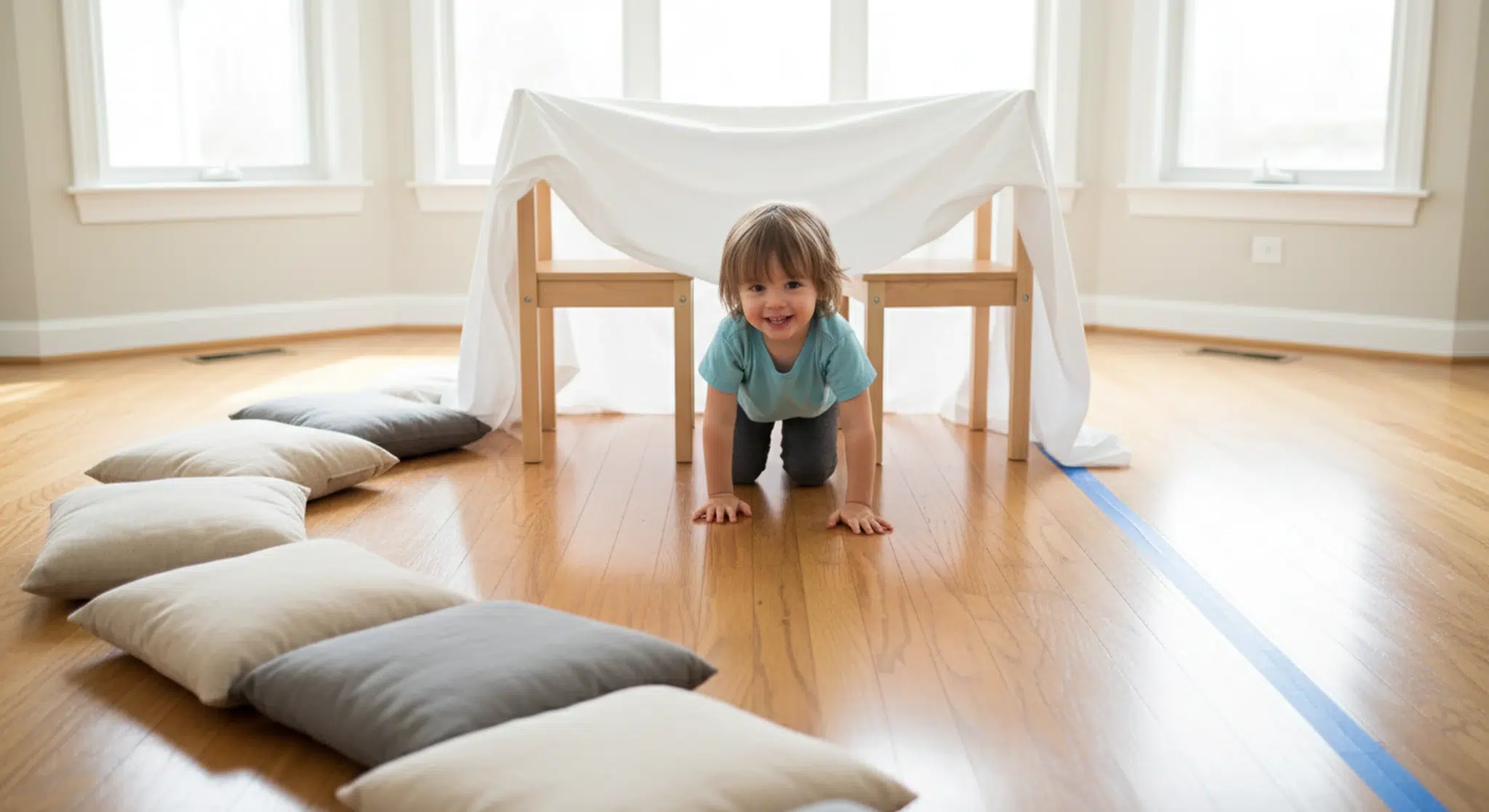
Chair tunnel: line up two or three kitchen chairs and drape a sheet over them to crawl through.
Laser hallway: painter’s tape streamers or yarn across a hallway at different heights and wiggle through without touching.
Table army crawl: belly crawl under the dining table from one side to the other.
Cardboard box tunnel: open both ends of a big shipping box, or tape two together.
Broom limbo: rest a broom across two chair seats and go under it. Lower it each round.
Over: jump, hop and step
Cushion stepping stones: lay couch cushions on the floor in a path and step from one to the next.
Pillow mountain: pile pillows and cushions on the floor and climb over the heap.
Pool noodle hurdles: lay them flat for little kids, or rest them on two shoeboxes so they fall away if bumped.
Hula hoop hops: lay hoops in a row and jump into each one with two feet.
Tape hopscotch: make a hopscotch grid with painter’s tape indoors or chalk outdoors.
Jump the river: lay two jump ropes or strips of tape apart as a “river” and jump across. Widen it as kids grow.
Frog jumps: squat and leap from one tape line to the next.
Floor is lava: step only on carpet squares, towels or tape squares. Skip paper plates on hard floors, since they slide.
Balance
Tape balance beam: a straight line of painter’s tape, then a zigzag or wavy line for older kids.
Flat board beam: outdoors, lay a wide piece of lumber flat on the grass and walk heel to toe.
Bean bag head walk: walk a short line with a bean bag or folded sock on your head.
Spoon carry: carry a plastic egg or small ball on a spoon without dropping it.
Freeze statue: stop at a marked spot and hold a one-foot pose for a count of five.
Aim: throw and toss
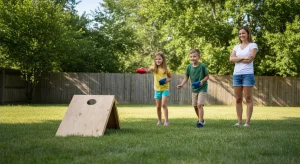
Sock ball basket: toss rolled socks into a laundry basket from a tape line.
Bean bag bucket toss: use a bucket, pot or box as the target.
Bottle bowling: set up empty plastic bottles and knock them down with a soft ball.
Ring toss: cut the centers out of paper plates and toss them over an upright paper towel tube or empty bottle.
Beach ball keep-up: tap a beach ball into the air five times without letting it touch the floor.
Sponge splat: outdoors, throw wet sponges at a chalk target on a fence or driveway.
Carry, push and pull
Basket push: push a laundry basket loaded with stuffed animals across the room.
Animal walks: bear crawl, crab walk, bunny hop or inchworm between two markers.
Wheelbarrow walk: a partner holds the ankles while the child walks on their hands (ages 5 and up).
Heavy carry: carry a reusable bag with a few cans or books from one tape mark to another.
Tug of war: a short tug against a parent with a rope or towel before the next station.
Towel scoot: sit or lie on a towel on a smooth floor and pull yourself along with your hands.
Brain, sensory and silly stations
Puzzle stop: finish three pieces of a simple puzzle before moving on.
Color hunt: find something blue (or round, or soft) and bring it to the finish.
Jumping jack counter: do five jumping jacks or five squats.
Log rolls: roll sideways across a rug or soft grass.
Bin dig: dig in a bin of dry pasta or crinkled paper to find a hidden toy. Watch closely with toddlers, who still put small things in their mouths.
Stair climb: for toddlers, climb a few steps holding your hand and come back down.
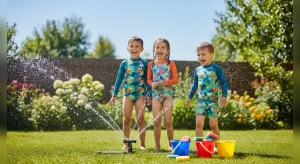
Sprinkler dash: on hot days, run through the sprinkler as the last station.
Laser hallway, hopscotch, bottle bowling, spoon carry, wheelbarrow walk
Timer, course designer, referee
Climbing on furniture of any kind
Ages 9 to 12
8 to 12
Zigzag beam, sponge splat targets, heavy carry, tug of war, brain challenges
Judge, scorekeeper, or competitor
Flips and stunts
How to adjust an obstacle course for kids by age.
Toddlers (1 to 3). Keep it short and low. The American Academy of Pediatrics (AAP) notes that many 19 to 24 month olds are running, jumping and climbing stairs while holding a hand, and suggests games like crab walk races and The Floor Is Lava for children around 31 to 36 months. See toddler activities and sensory activities for toddlers.
Preschoolers love story themes (cross the crocodile river, rescue the stuffed animal) From about age 5, add counting and timing, and by 9 to 12, hand kids the tape and let them design a course for younger siblings.
Big days go better with a good night of sleep.
Got a little one at home too? Our free two-minute quiz builds a gentle, personalized sleep plan for babies and toddlers.
Hallway course: streamer laser maze, tape balance line and a sock ball toss into a basket at the end.
Living room loop: cushion stepping stones, pillow mountain, chair tunnel, then five jumping jacks before going again.
Small apartment course: everything on one rug: bear crawl, freeze statue, beach ball keep-up and a puzzle stop.
Use painter’s tape on floors and move rugs that slide. For more gray-day ideas, see our rainy day activities for kids.
Backyard Obstacle Course for Kids
A backyard obstacle course for kids can be bigger and messier, with stations spread out so kids run between them.
Use the yard’s features: run around a tree, step along a garden border, crawl under a low picnic table.
Chalk stations: on a patio or driveway, draw a hopscotch grid, a wiggly balance line and arrows to the next station.
Water stations: sponge splat, a sprinkler dash or carrying a cup of water to fill a bucket.
Swing set stations: if you have one, add “swing five times” or “go down the slide.” Keep play equipment on soft ground.
Nature stations: collect three leaves, hop over a row of sticks, or balance on a fallen log close to the ground.
The U.S. Consumer Product Safety Commission (CPSC) playground handbook says concrete, asphalt and other hard surfaces should never be directly under play equipment, and that grass and dirt lose their cushioning with wear and weather. It also advises removing hood and neck drawstrings and taking off bike helmets before play on equipment. For more lawn ideas, see backyard games and outdoor games for kids.
3 Sample Obstacle Course Layouts
1. Toddler living room loop (3 to 4 stations)
Crawl through the box tunnel.
Step across three couch cushions laid on the floor.
Climb over the pillow mountain.
Drop a ball into the laundry basket. Cheer and repeat.
2. Preschool jungle adventure (6 stations)
Bear crawl to the “river.”
Jump the river (two jump ropes).
Walk the tape balance line like a tightrope.
Hop through three hula hoops.
Toss a bean bag into the bucket.
Rescue a stuffed animal from the finish line and carry it back.
3. Big kid backyard challenge (8 stations)
Sprint to the tree and around it.
Hop the chalk hopscotch grid.
Crab walk to the next cone.
Walk the flat board beam heel to toe.
Five sponge splats at the chalk target (count the hits).
Sprinkler dash to the finish.
How to Time and Score an Obstacle Course
Beat your own time: the fairest format for mixed ages.
Penalty seconds: add seconds for touching a laser strand or stepping off the beam, instead of disqualifying.
Points per station: for older kids, score hits at aiming stations and seconds held at balance stations.
Team relays: teams run one at a time, passing a rolled sock as a baton.
Untimed rounds: alternate fast rounds with “perfect form” rounds so younger kids do not rush balance stations.
Write times on paper taped to the wall so kids see their progress. Toddlers need no clock at all.
Party and Field Day Obstacle Courses
Birthday parties: match the theme (pirate plank walk, superhero training camp) and give everyone a finisher’s sticker. See kids birthday party ideas.
Field day: set up two identical courses side by side for head-to-head relays. Our field day games guide has more stations and scoring ideas.
Large groups: rotate one or two kids per station every 60 seconds, so nobody waits in line.
Put one adult at the trickiest station and add water breaks. More group ideas are in our party games for kids roundup.
What Kids Get Out of Obstacle Courses
The Centers for Disease Control and Prevention (CDC) says children ages 3 to 5 should be physically active throughout the day, and that children and teens ages 6 to 17 need at least 60 minutes of moderate to vigorous activity daily. That should include muscle-strengthening (like climbing) and bone-strengthening (like jumping) activity on at least three days a week each.
The CDC lists tug of war as a muscle-strengthening game for school-aged kids, and hopping, skipping and jumping as bone-strengthening. The AAP also encourages quality one-on-one play time with toddlers, about 15 minutes a day, which supports physical development and social skills. For more, see our kids fitness activities.
Obstacle Course Safety Checklist
Supervise: an adult watches every round, especially with toddlers.
Keep it low: every station stays on or near the floor. No standing on chairs, tables or the back of the couch.
Never climb furniture that can tip: dressers, bookcases and TV stands are not obstacles. CPSC Anchor It data show that 93 percent of reported child tip-over deaths from 2000 to 2018 involved children 5 and under, and about 11,000 children a year (2016 to 2018) were treated in emergency rooms for tip-over injuries. Anchor furniture and TVs to the wall.
Soft landings: grass, rugs or cushions under every jump.
Skip the home trampoline station: the AAP recommends keeping kids off trampolines except in settings with professional coaches and specialized equipment, and says children under 6 should never jump on one.
Check footing: bare feet or grippy socks indoors, sneakers outdoors.
Mind small parts: keep small objects and bins of small items away from toddlers, who still mouth things.
An obstacle course for kids is cheap, flexible and endlessly reusable: a few cushions, some tape and a laundry basket can fill a rainy afternoon. Match the stations to your child’s age, keep everything low with soft landings, never use furniture that can tip, and let your kids help design the next one. Make cleanup the last station: cushions back, tape peeled slowly and rolled into a ball, and a small bin of tape, bean bags and a jump rope saved so the next course takes five minutes.
Frequently Asked Questions
How do you make an obstacle course for kids at home?
Clear a hallway or room, then choose 4 to 10 stations that mix crawling, jumping, balancing, throwing and carrying. Use cushions, painter’s tape, chairs with a sheet and a laundry basket. Arrange them in a loop, test it yourself, then demonstrate each station first.
What can I use for an indoor obstacle course?
Couch cushions on the floor, pillows, painter’s tape lines, chairs draped with a sheet, cardboard boxes, hula hoops, pool noodles, laundry baskets, rolled socks and plastic bottles all work well. Keep everything at floor level and avoid climbing on furniture, especially dressers, bookcases and TV stands, which can tip over.
What age can kids do an obstacle course?
Toddlers can start as soon as they are walking with a short course of crawling, stepping and tossing, with an adult holding their hand. Preschoolers enjoy story themed courses with 5 to 7 stations. School-age kids and tweens can handle longer courses, timing, points and stations they design themselves.
How many stations should a kids obstacle course have?
Three to five stations suit toddlers, five to seven suit preschoolers, six to ten suit ages 5 to 8, and eight to twelve suit ages 9 to 12. Short, varied courses that kids can repeat several times usually beat one long course that leaves them waiting.
What are the benefits of obstacle courses for kids?
Obstacle courses pack running, jumping, climbing, balancing and throwing into one activity. The CDC recommends that children 6 to 17 get at least 60 minutes of activity daily, including muscle and bone strengthening activities like climbing and jumping. Courses also give kids practice taking turns.
How do you make a backyard obstacle course for kids?
Use what the yard already has: trees to run around, a picnic table to crawl under, chalk on a patio for hopscotch and balance lines, and a sprinkler for a finish. Keep stations on grass or other soft ground, check for holes and sticks, and offer water breaks on hot days.
Gentle changes, peaceful nights.
Betteroo builds a personalized sleep plan for your baby or toddler. Take the free two-minute quiz to get started.
Related reading: Building a course for a one or two year old? For more indoor movement ideas sized for toddlers, see Gross Motor Activities for Toddlers.