To host a baby shower, agree on the plan with the parents-to-be, pick a date 4 to 8 weeks before the due date, send invitations 4 to 6 weeks out, and keep the party to two or three relaxed hours.
Hosting a baby shower is a generous way to celebrate a growing family, and it does not have to be expensive or stressful. Good planning, a few helpers, and a clear timeline do most of the work.
This step-by-step guide covers who hosts, when to hold the shower, a planning timeline, budget and venue ideas, invitation etiquette, pregnancy-safe food, themes and games, a sample schedule, gift opening, and popular variations like sprinkles and co-ed showers.
Key Takeaways
Ask the parents-to-be what they want and get the guest list from them first.
Hold the shower about 4 to 8 weeks before the due date; two to three hours is ideal.
Send invitations 4 to 6 weeks ahead with the registry and RSVP date.
Keep the menu pregnancy-safe: no unpasteurized cheeses, cold deli meats, or raw seafood or eggs.
Assign helpers to log gifts, take photos, and manage food.
Table of Contents
Who Hosts a Baby Shower?
Traditionally, a close friend or a relative outside the immediate family hosted the baby shower, because it was considered awkward for family to “ask for gifts.” Today that rule has relaxed. Mothers, sisters, best friends, coworkers, and even the parents-to-be themselves host showers, and many showers have co-hosts who split the work and cost.
Before you start, sit down with the parent-to-be and ask what they want: big or small, traditional or co-ed, games or no games, and who must be on the guest list. A shower is for them, so their preferences come first.
When to Have a Baby Shower
Most baby showers happen about 4 to 8 weeks before the due date, often between 28 and 36 weeks. That gives the parents time to set up the nursery with their gifts while the pregnant parent still feels comfortable enough to enjoy a party. Some people prefer an earlier date if they are expecting twins, which often arrive early, or if they are on modified activity.
Weekend afternoons, roughly 1 to 4 p.m., are the most popular, and two to three hours is the sweet spot. Long enough to eat, chat, play a game, and open gifts; short enough that the guest of honor is not exhausted.
Baby Shower Planning Timeline
When
What to do
8 to 10 weeks before
Agree on date, style, budget, and co-hosts. Get the guest list from the parents-to-be.
6 to 8 weeks before
Book the venue. Choose a theme. Confirm the parents have a registry.
4 to 6 weeks before
Send invitations with the date, time, address, registry, and RSVP date.
3 to 4 weeks before
Plan the menu and order the cake. Pick games and buy prizes and decor.
1 to 2 weeks before
Follow up on RSVPs. Make a shopping list and day-of schedule. Assign helpers.
2 to 3 days before
Shop for food. Prepare make-ahead dishes. Set up any DIY decorations.
Day of
Set up 2 to 3 hours early. Assign someone to log gifts and someone to take photos.
A simple baby shower planning timeline.
Setting a Budget and Choosing a Venue
Decide the budget before you book anything, and decide who is paying. Co-hosts can split costs evenly, or each take a category (food, decor, cake). The biggest costs are usually the venue and food.
Home: the most affordable and relaxed option. Works best for 25 guests or fewer.
Restaurant private room: food and cleanup handled for you, often with a per-person minimum.
Community room or church hall: lots of space for big groups at a low cost.
Backyard or park pavilion: great for co-ed showers, with a backup plan for weather.
Virtual or hybrid: a video call for faraway guests, or a livestream of the in-person party.
Invitations and the Guest List
Get the guest list from the parents-to-be. Send invitations about 4 to 6 weeks before the shower so people can plan and shop. Include:
Who the shower honors, and the parents’ names
Date, start and end time, and full address
RSVP name, contact, and deadline (about 1 to 2 weeks before)
Registry link or store names (on the invite is now widely accepted)
Any theme or special requests, like “Bring a book instead of a card” or “Diapers welcome”
Digital invitations are perfectly acceptable and make tracking RSVPs easy. Mail paper invitations to older relatives who may not check email. For help building the registry itself, share our baby registry checklist and baby registry must haves with the parents.
Getting ready for baby? Plan for sleep, too.
Our free two-minute quiz builds a gentle, personalized sleep plan for your baby, so the first months feel a little calmer.
Shower food should be easy to eat standing up and safe for the pregnant guest of honor. Popular setups include a brunch spread, a grazing board, a taco or pasta bar, or light sandwiches and salads.
Keep the menu pregnancy-safe so the guest of honor can eat anything on the table. The FDA advises pregnant people avoid:
Unpasteurized soft cheeses (like some brie, feta, and queso fresco) and unpasteurized juice
Deli meats and hot dogs unless heated until steaming hot
Raw or undercooked seafood, meat, and eggs, including homemade dressings or desserts with raw eggs
Raw sprouts
Refrigerated smoked seafood unless cooked
Offer a mocktail bar alongside any alcohol, and plan on about 1 to 1.5 servings of each dish per guest for a mid-afternoon shower. Do not leave perishable food out more than two hours.
Themes, Decorations, and Games
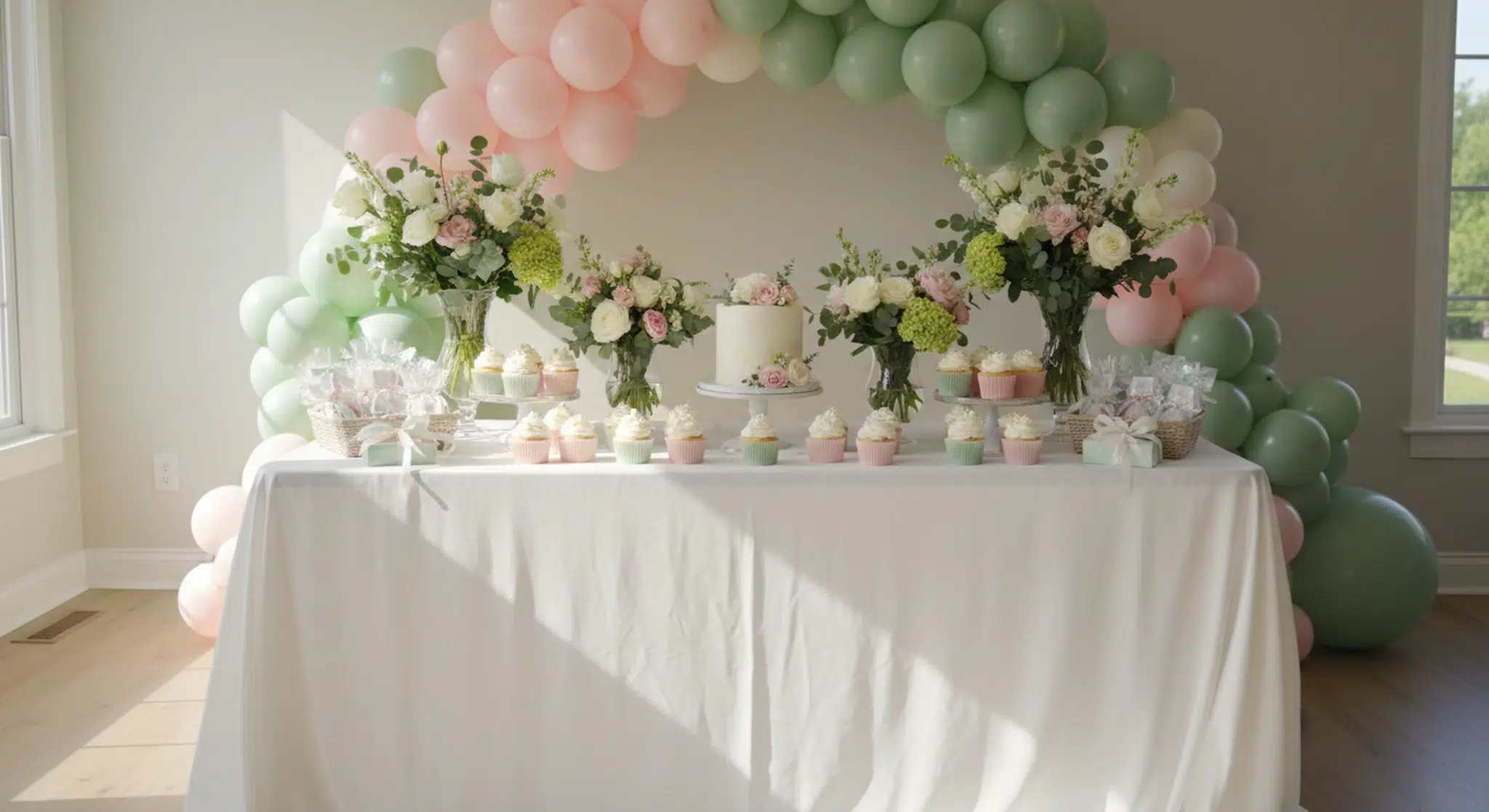
A theme ties decor, invitations, and food together. Popular baby shower themes include “Oh baby,” “Baby in bloom” (florals), “Ready to pop” (balloons and popcorn), “Little cutie” (citrus), woodland animals, “Twinkle, twinkle, little star,” storybook, and a simple color palette with greenery.
For decor, focus your budget on two spots: the food table and a backdrop for photos. Balloons, fresh flowers, and a simple banner go a long way. For entertainment, two or three games is plenty. See our list of 35 baby shower games for classic, funny, co-ed, and virtual options.
Sample Baby Shower Schedule (3 Hours)
Time
What happens
0:00 to 0:30
Guests arrive, mingle, drinks and appetizers
0:30 to 1:15
Food is served; a passive game like bingo cards or a guessing jar
1:15 to 1:45
One or two group games
1:45 to 2:30
Gift opening (or skip and display gifts)
2:30 to 3:00
Cake, thank-yous, and favors as guests leave
Adjust to fit your guest of honor’s energy.
Gift Opening Etiquette
Opening gifts at the shower is traditional, but many parents now skip it or open only a few, especially with a large crowd. If gifts are opened, assign one person to hand gifts over and another to write down who gave what. That list makes thank-you notes far easier. The parents should send thank-you notes within a few weeks, though everyone understands if they come a little later once the baby arrives.
Sprinkle: a smaller, lighter shower for a second or later baby, often focused on diapers and essentials.
Co-ed or couples shower: includes partners and friends of all genders; lean on team games and a backyard or barbecue feel.
Meal train shower: guests sign up to bring dinners in the first weeks after birth instead of, or in addition to, gifts.
Diaper party: each guest brings a pack of diapers or wipes in different sizes.
After-baby “sip and see”: a casual gathering after the baby arrives so friends can meet the newborn. Ask guests to stay home if they are sick and to keep visits short.
Late pregnancy can bring swelling, back pain, and fatigue. Give the guest of honor a comfortable chair with back support, keep the room cool, have water within reach, and build in breaks. If she has a high-risk pregnancy or is on modified activity, choose a seated, shorter shower or a virtual one.
Plan a backup in case the baby comes early or she does not feel up to it. Many hosts keep the shower date flexible, or plan to hold it as a sip and see after the birth if needed.
Frequently Asked Questions
Who is supposed to host a baby shower?
Traditionally a close friend hosted, but today anyone can host a baby shower, including mothers, sisters, friends, coworkers, or the parents-to-be. Co-hosting to share the work and cost is common.
How far in advance should you plan a baby shower?
Start planning about 8 to 10 weeks ahead. Book the venue 6 to 8 weeks before, send invitations 4 to 6 weeks before, and finalize food and games 3 to 4 weeks before.
When should a baby shower be held?
Most baby showers are held 4 to 8 weeks before the due date, usually between 28 and 36 weeks of pregnancy. Showers for twins are often held earlier.
How long should a baby shower last?
Two to three hours is the typical length of a baby shower. That leaves time for food, a couple of games, and gift opening without wearing out the guest of honor.
What food should you avoid at a baby shower?
Avoid foods the FDA warns pregnant people against: unpasteurized soft cheeses and juice, deli meats unless heated until steaming, raw or undercooked seafood, meat, and eggs, raw sprouts, and refrigerated smoked seafood.
Better nights start before baby arrives.
Betteroo builds a personalized sleep plan for your baby. Take the free two-minute quiz and feel ready from day one.