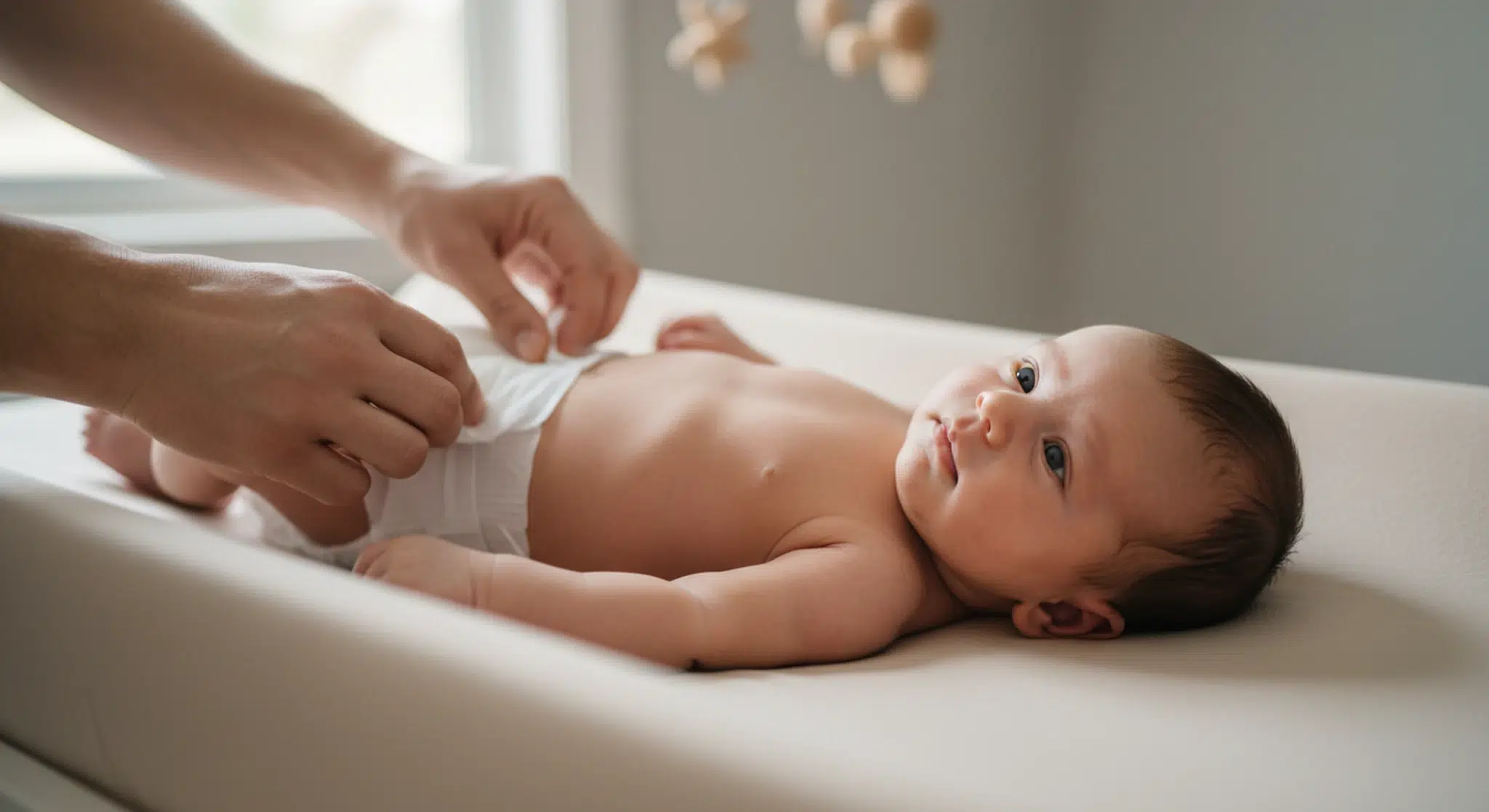
How often should newborns pee? Expect about 1 wet diaper on day 1, rising to roughly 6 or more a day by days 5 to 7, then usually 6 to 8 or more a day after the first week.
In the first days with a newborn, the diaper becomes your dashboard. You cannot see how much milk went in, but you can count what comes out, and knowing how often newborns pee is one of the easiest ways to tell feeding is on track.
This guide covers wet diaper counts day by day, what changes after the first week, normal and worrying urine colors, the orange crystals that scare so many parents, dehydration signs, and when to call your pediatrician.
Key Takeaways
Wet diapers build over the first week: the CDC’s minimum is 1 on day 1 and 2 on day 2, rising to about 6 a day by days 4 to 7.
After the first week, the Merck Manual says most infants have 6 to 8 or more wet diapers a day.
Pale yellow to nearly clear urine is the goal. Dark yellow urine is concentrated.
Orange brick dust crystals can be normal in the first couple of days, but not later.
Under 3 months, a rectal temperature of 100.4 F or higher means calling your pediatrician right away.
Table of Contents
How Often Should Newborns Pee? The Short Answer
Quick Answer
Expect very few wet diapers at first and a steady climb over the first week. The CDC’s breastfeeding guide lists a minimum of 1 wet diaper on day 1, 2 on day 2, and about 5 to 6 a day from day 3 or 4 onward, and the AAP’s HealthyChildren.org says a baby should have 6 or more wet diapers a day by 5 to 7 days old. After the first week, the Merck Manual says infants usually have 6 to 8 or more wet diapers a day.
The first days are the confusing part. Milk intake starts small and the diaper may look nearly dry even after a pee, which is why the expected number rises day by day.
The CDC publishes a day-by-day minimum for breastfed newborns, and the AAP gives the end-of-week target. Treat these as a floor, not a quota.
Baby’s age
Minimum wet diapers (CDC)
What else you may notice
Day 1
1
Very small amounts; urine may be darker
Day 2
2
Orange or pink-red crystals in the diaper can be normal now
Day 3
5
Output climbing quickly
Day 4
6
Urine getting lighter in color
Days 5 to 7
6
AAP: 6 or more a day by 5 to 7 days, nearly colorless or pale yellow
Minimum wet diapers in the first week. Sources: CDC Newborn Breastfeeding Basics; AAP HealthyChildren.org.
Discharge sheets vary a little between hospitals. If yours gave you a diaper log with its own targets, follow it.
The CDC lists fewer than 6 pees and fewer than 3 poops a day by 5 days old as a possible sign a breastfed baby is not getting enough milk. That is a reason to call your pediatrician or lactation consultant. Track poops too: our guide to meconium and your newborn’s first poops explains how stool should change from black to yellow over the same days.
How Often Should Newborns Pee After the First Week?
After the first week, the Merck Manual says infants should have at least 6 to 8 wet diapers a day and may have more. HealthyChildren.org describes the normal range for newborns as peeing as often as every one to three hours or as infrequently as four to six times a day, which shows how much healthy babies vary.
What matters most is your baby’s own pattern. A sudden drop from 7 or 8 diapers a day to 3 deserves a call.
Illness, fever or heat: HealthyChildren.org notes that when a baby is sick, feverish or in very hot weather, urine output can drop by half and still be normal. Keep offering feeds and watch for dehydration signs.
Growth spurts and cluster feeding: when your baby feeds more often for a day or two, diapers often follow. Read about cluster feeding if your baby suddenly wants to eat constantly.
Big days go better with a good night of sleep.
Got a little one at home too? Our free two-minute quiz builds a gentle, personalized sleep plan for babies and toddlers.
The wet-diaper targets apply to every baby. The CDC day-by-day counts come from its breastfeeding guidance, since you cannot see how much a breastfed baby drinks. HealthyChildren.org lists 6 or more wet diapers a day with pale yellow urine by 5 to 7 days as one sign a breastfed baby is getting enough milk.
Formula-fed babies are held to the same general picture: increasing wet diapers in the first week, then 6 or more a day. INSPQ, Quebec’s public health institute, advises checking that formula is mixed correctly if a baby is peeing less and the urine is darker with a stronger smell. Always follow the mixing directions on the container.
If you combine breast and bottle, keep one diaper log for the whole day. Our formula feeding chart shows typical amounts by age.
How to Tell If a Disposable Diaper Is Wet
Disposables pull urine away from the skin, so a newborn’s small pee can be hard to spot in the first days. A few ways to check:
Weight: a wet diaper feels heavier and slightly puffy. Compare it with a clean, dry diaper in your other hand.
Wetness indicator: many disposables have a line on the outside that changes color when wet.
A diaper with both pee and poop counts as a wet diaper. Step-by-step changing tips are in our guide on how to change a diaper.
Normal Newborn Urine Color, and What Changes Mean
HealthyChildren.org says healthy baby urine ranges from light to dark yellow, and darker urine is more concentrated, which happens when a baby is not taking in much fluid. The Merck Manual describes infant urine as anywhere from nearly clear to dark yellow.
What you see
What it often means
What to do
Nearly clear to pale yellow
Well hydrated
Nothing, this is the goal after the first days
Dark yellow
Concentrated urine, often lower intake
Offer feeds more often, watch the diaper count
Orange or brick-red powder or stain, days 1 to 3
Urate (uric acid) crystals, common early
Mention it at the first checkup; call if it continues past the first few days
Pink or red stain after the first week
Concentrated urine, or possibly blood
Call your pediatrician
Small spot of blood or blood-tinged mucus, baby girl, first week
Reaction to birth parent’s hormones
Usually normal; mention it at the next visit
Cloudy, foul-smelling, or with fever
Could signal infection
Call your pediatrician
Newborn urine colors. Based on HealthyChildren.org, INSPQ, MedlinePlus and the Merck Manual. Not a diagnosis.
A strong smell usually goes along with dark, concentrated urine. INSPQ notes that a baby with a fever may also have darker, smellier urine, so check your baby’s temperature if you notice it.
Orange Brick Dust Crystals in the Diaper
One of the most alarming sights in the first days is an orange, rusty or pinkish-red powdery stain in the diaper, often called “brick dust.” These are urate crystals, salts of uric acid in concentrated urine.
INSPQ describes orange spots in the diaper in the first couple of days as urate crystals that are normal and not dangerous. HealthyChildren.org adds that in the first week a pink or brick-red stain often looks like blood but is usually concentrated urine.
Timing is the key detail. Early on, crystals fit with a small milk intake that is still building. INSPQ says that if they are still showing up after those first couple of days, your baby may not be drinking enough, and HealthyChildren.org says to talk with your pediatrician if pink staining persists. Crystals plus fewer wet diapers than expected for your baby’s age is worth a same-day call.
If your baby also looks yellow and diapers are light, read our baby jaundice guide and call your pediatrician.
Blood in the Diaper and Pink or Red Urine
Not every pink stain is crystals.
Baby girls in the first week: HealthyChildren.org explains that a small spot of blood can appear in a newborn girl’s diaper because of the birth parent’s hormones, a temporary “mini period” sometimes called pseudo-menses. You may also see white or blood-tinged mucus.
After the first week: HealthyChildren.org says blood in the urine or a bloody spot in the diaper is never normal and should be reported to your pediatrician. It may be something minor, such as a sore from diaper rash, but it needs to be checked.
Urgent signs: seek care right away if blood comes with belly pain, poor feeding, vomiting, fever, or bleeding anywhere else, per HealthyChildren.org.
Our guide to diaper rash vs yeast infection helps you tell the two common rashes apart, but let your pediatrician look at any blood you cannot explain. Red or black in the stool is a different question: see our baby poop color chart.
Signs Your Newborn May Be Dehydrated
Wet diapers are an early signal, but dehydration shows up in other ways too. HealthyChildren.org lists these signs of mild to moderate dehydration in infants:
Fewer than six wet diapers a day
Parched, dry mouth
Fewer tears when crying
A sunken soft spot (fontanelle) on top of the head
Playing or engaging less than usual
Signs HealthyChildren.org lists for severe dehydration include being very fussy or excessively sleepy, sunken eyes, cool or discolored hands and feet, wrinkled skin, and peeing only one or two times a day. The AAP page advises notifying your pediatrician immediately if any of these signs develop.
A newborn who is too sleepy to feed well is a common way dehydration starts. Our guide on whether to wake a newborn to feed can help you keep feeds regular in the early weeks.
Crying While Peeing, Fever and Urinary Tract Infections
Newborns often grunt or squirm during a diaper change, and a cold wipe can make anyone cry. Pain is different. HealthyChildren.org says urination should never be painful, and distress while peeing should be reported to your pediatrician because it could point to an infection or another urinary tract problem.
Urinary tract infections (UTIs) in babies rarely look the way they do in adults. MedlinePlus, from the National Library of Medicine, says young children with UTIs may have a fever, poor appetite, vomiting, or no symptoms at all. It also lists bad-smelling, bloody or discolored urine among the reasons to contact a provider.
Who is at higher risk: MedlinePlus notes that uncircumcised boys have a slightly higher UTI risk before age 1, and that girls get UTIs more often overall.
Fever in a young baby: for a baby under 3 months, a rectal temperature of 100.4 F or higher means calling your pediatrician right away, per HealthyChildren.org. A UTI is one of the things a pediatrician will consider, which is why they may ask for a urine sample.
Do Newborns Pee in Their Sleep? Nights, Boys and Girls
Yes. Newborns pee around the clock, including while asleep, so a wet diaper at most night feeds is normal.
Changing at night: you do not have to change every damp diaper at night. Many parents change when the diaper is heavy, after a poop, or if your baby has diaper rash. Keep the lights low and the change quick, then put your baby back down on their back on a firm, flat, bare sleep surface.
Leaks: if your baby wakes up soaked, try a snugger fit or the next size up. Never add blankets or pads to the crib to catch leaks.
The wet-diaper targets are the same for boys and girls. The differences are at the changing table. Boys often pee the moment the diaper comes off, so cover the penis with a clean cloth while you work and point it down before closing the new diaper. For girls, wipe from front to back. MedlinePlus explains that wiping back to front can bring bacteria to the opening where urine comes out.
You never need a perfect reason to call. Pediatric offices expect diaper questions in the first weeks.
Call 911 or go to the emergency room if your baby:
Is very hard to wake, limp, or not responding normally
Is breathing with difficulty, or has blue or gray lips or skin
Shows signs of severe dehydration: very sleepy or very fussy, sunken eyes, cool or blotchy hands and feet, or only one or two wet diapers in a day
Has blood in the diaper together with belly pain, vomiting, poor feeding, fever, or bleeding elsewhere
Call your pediatrician now (day or night) if:
Your baby is under 3 months and has a rectal temperature of 100.4 F or higher (HealthyChildren.org)
Wet diapers are below the expected range for your baby’s age, such as fewer than about 6 a day by day 5 (CDC)
Orange or pink crystals keep appearing after the first few days
Your baby cries or seems to be in pain while peeing
Urine is foul-smelling, cloudy or bloody, or there is any blood in the diaper after the first week
Your baby has a dry mouth, a sunken soft spot, or is too sleepy to feed
Your baby looks more yellow, or you see weight concerns at checkups
Bring your diaper and feeding log to early visits. It is one of the most useful things you can hand your pediatrician.
Frequently Asked Questions
How often should newborns pee in the first week?
Wet diapers increase day by day. The CDC lists a minimum of 1 wet diaper on day 1, 2 on day 2, 5 on day 3, and 6 a day from day 4 through day 7. HealthyChildren.org says babies should have 6 or more wet diapers a day with pale urine by 5 to 7 days old.
How many wet diapers should a newborn have after the first week?
The Merck Manual says infants should have at least 6 to 8 wet diapers a day after the first few days, and may have more. HealthyChildren.org lists fewer than six wet diapers a day as a sign of dehydration in infants, so a drop below your baby’s usual pattern is worth a call.
Is it normal for a newborn to go 6 hours without peeing?
In the first day or two, long gaps can happen because intake is small. After that, a long stretch without a wet diaper, especially with a dry mouth, dark urine, or unusual sleepiness, is a reason to call your pediatrician. Check the full day’s count rather than one gap.
What are orange crystals in my newborn’s diaper?
They are usually urate crystals from concentrated urine. INSPQ, Quebec’s public health institute, says orange spots in the first couple of days are normal. If they keep appearing after that, your baby may not be getting enough to drink, so call your pediatrician and count wet diapers.
Does a diaper with poop count as a wet diaper?
Yes. Babies often pee and poop at the same time, so a dirty diaper usually counts as wet too. If you cannot tell whether there was urine, count it and note it in your log. If your daily totals look low, call your pediatrician rather than guessing.
What color should newborn pee be?
After the first few days, newborn pee should be nearly clear to pale yellow. HealthyChildren.org says healthy urine ranges from light to dark yellow, and darker urine is more concentrated. Pink stains in the first week are often crystals, but blood after the first week should be reported.
Gentle changes, peaceful nights.
Betteroo builds a personalized sleep plan for your baby or toddler. Take the free two-minute quiz to get started.