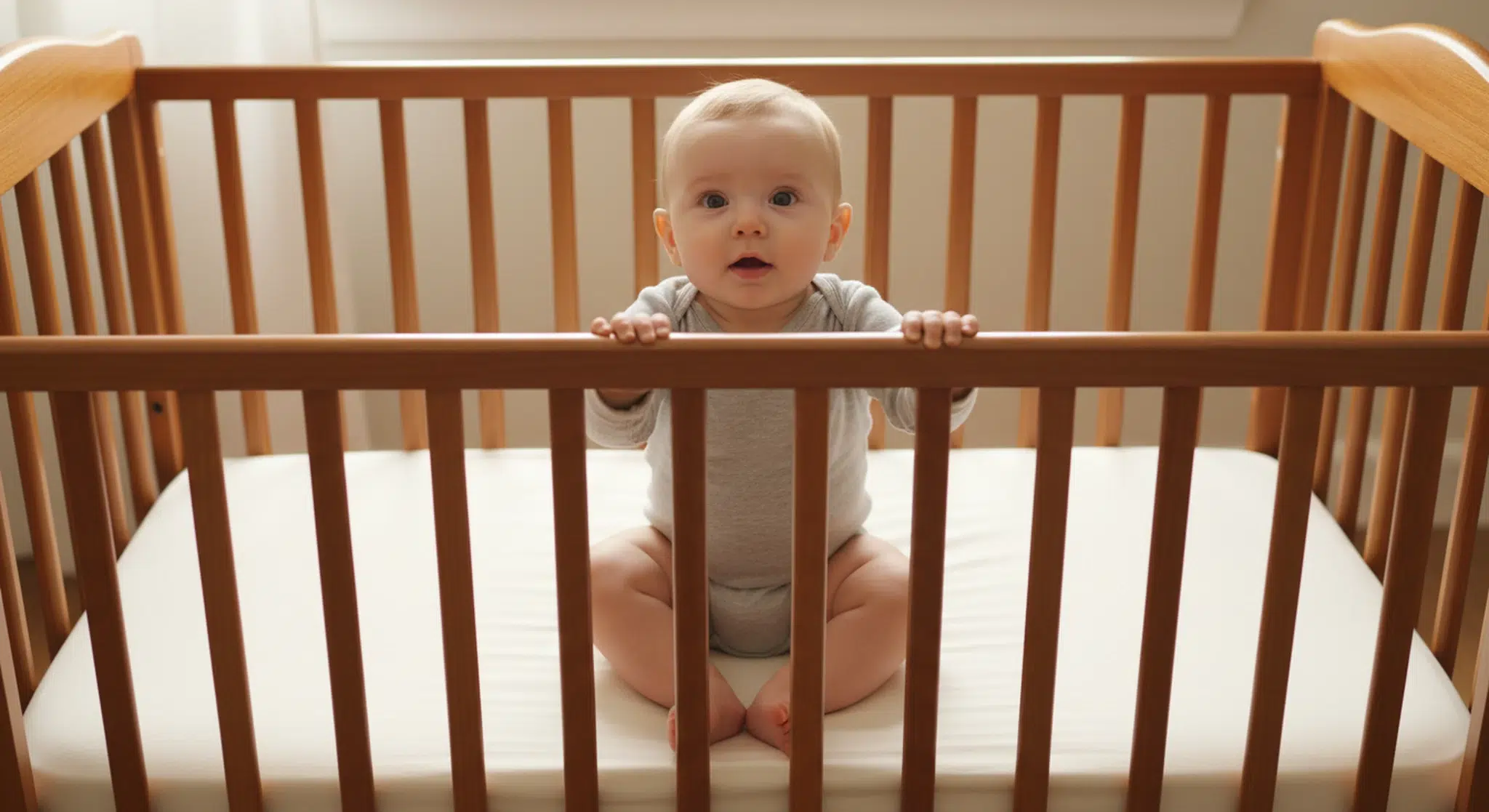
A FOMO baby is the alert, busy, endlessly curious baby who fights sleep because the world is simply too interesting to leave. It is a temperament, not a disorder, and it responds to a specific playbook: tighter wake windows, a darker and more boring sleep space, a longer wind-down, and relentless consistency.
Some babies drift off mid-feed in a bright living room. Yours cranes their neck at every voice, fights the pram nap like it is a hostage situation, and treats bedtime as an outrage because clearly things are still happening out there. Congratulations: you have what sleep consultants affectionately call a FOMO baby, a baby with fear of missing out.
FOMO is not a diagnosis; it is shorthand for a real and well-described temperament cluster: high alertness, high social interest, low sensory threshold. This guide covers how to recognize it, what else masquerades as FOMO, and the practical playbook for getting a world-watcher to actually sleep, at home and on the go.
Key Takeaways
A FOMO baby is highly alert, curious, and social, and protests sleep when anything interesting is happening, which is always.
It is temperament, not a problem to fix. The goal is working with it, not training it away.
Rule out the imposters first: overtiredness, undertiredness, a developmental leap, or separation anxiety all mimic FOMO.
The playbook: watch wake windows closely, darken the room seriously, lengthen the wind-down, and keep the routine identical.
FOMO babies often have subtle sleepy cues; the clock is more reliable than waiting for yawns.
Expect naps on the go to be short and imperfect. Protect one good crib nap a day and let the rest be flexible.
As an Amazon Associate, Betteroo earns from qualifying purchases.
Table of Contents
What Is a FOMO Baby?
FOMO baby is parent shorthand for a recognizable temperament: a baby who is unusually alert and engaged with the world, tracks every sound and face, would rather play than eat or sleep, and escalates in stimulating environments instead of tuning them out. In temperament research terms, these babies tend to score high on approach and low on sensory threshold: everything registers, and everything is worth investigating.
The classic signatures: fighting sleep at home when guests are over, refusing to nod off in carriers or strollers where sleepy babies usually melt, popping off the breast or bottle at every noise, waking fully during the car-seat-to-crib transfer, and showing barely any sleepy cues because constant motion and interest mask them.
Two reframes help. First, this is the same wiring that makes these babies delightful: engaged, fast-learning, hilarious company. Second, FOMO babies are not bad sleepers by nature; they are babies for whom the environmental details matter more. Get the conditions right and they sleep like anyone else. Leave a gap and they will find it.
Is It Really FOMO? The Four Imposters
Before building a FOMO playbook, rule out the four things that get misdiagnosed as personality when they are actually schedule or phase.
Overtiredness. A baby kept awake past their window gets a cortisol second wind that looks exactly like FOMO: wired, busy, refusing sleep. Check actual awake times against our wake windows by age chart before blaming temperament.
Undertiredness. The opposite error: wake windows that have stretched with age while the schedule stayed put. A cheerful baby chatting in the crib for 40 minutes needs more awake time, not more soothing.
A developmental leap. Babies practicing rolling, sitting, pulling up, or new sounds will drill the new skill at sleep times for a week or two. That passes; FOMO persists. See our guide to sleep regressions.
Separation anxiety. From around 8 months, protest at sleep can be about you leaving rather than the party continuing. The tell: it is worse at bedtime than nap time and eases with brief reassuring check-ins. More in separation anxiety and sleep.
And one medical footnote: a formerly fine sleeper who suddenly fights sleep hard deserves an ears-and-illness check before a temperament label.
The FOMO Playbook at Home
Run the schedule by the clock, not the cues. FOMO babies hide their tiredness behind busyness, so waiting for yawns means chronically missing the window. Use age-appropriate wake windows as the primary signal and treat visible sleepy cues as a lagging indicator.
Make the sleep space aggressively boring. This is the temperament that blackout curtains were invented for. Aim for genuinely dark (you cannot read a book in it), a steady white noise source to blur the household soundtrack, a comfortable temperature, and no mobiles, light shows, or crib toys. For a baby who finds everything interesting, the winning room has nothing to find.
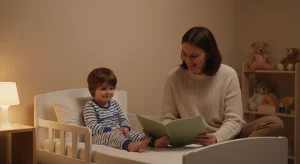
Lengthen the off-ramp. Where an easygoing baby needs a 10 minute wind-down, a FOMO baby often needs 20 to 30: lights dimmed, stimulation tapering, same order every time. The routine is a runway that lets a busy brain descend gradually instead of being asked to land from altitude.
Be more consistent than they are persistent. Alert babies are superb pattern-detectors. If protest sometimes reopens the door, brings back the light, or restarts the show, they will run that experiment nightly. Decide your response to protest once, make it calm and boring, and repeat it identically.
Have a world-watcher on your hands?
Betteroo builds a sleep plan tuned to your baby’s temperament and exact age, including wake windows that fit an alert baby. Two minutes to start.
On-the-go sleep is where FOMO babies struggle most, because the whole premise, sleeping in the middle of interesting things, is exactly what they refuse. Adjust expectations and tactics accordingly.
Anchor one good nap at home. Usually the first nap of the day. With one quality crib nap banked, short or skipped on-the-go naps stop being a crisis.
Reduce the view. A breathable stroller shade, parking the stroller facing a wall, or babywearing facing your chest removes the show. Portable white noise blurs the rest.
Use motion deliberately. Continuous walking, a moving car, a gentle bounce in the carrier. For a FOMO baby, stopping the motion is an invitation to resume surveillance.
Extend the wake window slightly on big days. Stimulation genuinely does buy these babies extra runway. A content, engaged baby 20 minutes past their usual window is fine; recalibrate with an earlier bedtime that night.
Accept the 25 minute nap. On-the-go naps for alert babies are frequently one sleep cycle or less. Count them, move on, and protect tomorrow’s home nap.
For the visiting-grandparents scenario, the honest advice is to do the crib nap ritual in the guest room exactly as at home, warn the audience that the baby will not perform sleep in the living room, and let the schedule flex around one anchor nap rather than defending all of them.
Does FOMO Go Away?
The alertness does not; the sleep problem does. Highly alert babies generally stay highly alert toddlers and curious kids, but their sleep consolidates on the same timeline as everyone else’s once the environment and schedule support it. Many parents of former FOMO babies report the pattern inverting with age: the same child who once fought every nap becomes the kid who conks out hard at night because their days run at full throttle.
What determines how bumpy the ride is between here and there is mostly the boring stuff: whether the sleep space stays dark and dull, whether wake windows keep pace as they grow, whether the routine survives travel and holidays, and whether independent falling-asleep gets learned at some point. If you are months into nightly battles and depleted, a structured approach helps; our overview of sleep training methods lays out the options, including very gradual ones suited to sensitive, alert babies.
When to Talk to Your Pediatrician
FOMO is a temperament description, not a medical finding, but a few adjacent patterns deserve a professional look.
Sleep resistance plus fewer total hours than roughly the bottom of the normal range for age, with daytime effects.
A sudden change in a previously settled sleeper, especially with fever, ear-pulling, or feeding changes.
Extreme reactivity to sound, light, or touch that disrupts feeding and daily care, not just sleep.
Arching, crying, and refusing to be put down flat that could suggest reflux rather than curiosity.
Parental exhaustion reaching unsafe levels. That is a legitimate medical topic, and pediatricians want to hear it.
Bring a few days of simple logs (wake windows, naps, bedtime, night wakings). Patterns beat anecdotes, especially with alert babies whose bad nights are memorable and good nights forgettable.
Frequently Asked Questions
What is a FOMO baby?
A FOMO baby is an alert, curious, highly social baby who fights sleep because they do not want to miss what is happening around them. It is parent and sleep-consultant shorthand for a normal temperament, high alertness and engagement, not a disorder or a sign of a sleep problem in itself.
How do I get my FOMO baby to sleep?
Run the schedule by age-appropriate wake windows rather than waiting for sleepy cues, make the sleep space very dark and boring with steady white noise, use a longer 20 to 30 minute wind-down routine, and respond to protest the same calm way every time. Alert babies sleep well when the environment stops competing with sleep.
Why does my baby fight sleep when people are around?
Highly alert babies process every voice and face as something worth staying awake for, so stimulating environments directly compete with sleep pressure. Anchor one nap a day in a dark familiar room, reduce the view with a shade or a wall-facing stroller, and expect social-setting naps to be shorter than home naps.
Is FOMO the reason my baby suddenly will not nap?
Probably not, if it is sudden. True FOMO is a stable temperament you will have noticed for months. A sudden nap strike more likely means a wake window that needs lengthening, a developmental leap, separation anxiety, or illness. Check the schedule and rule those out before reaching for a temperament explanation.
Do FOMO babies grow out of it?
The alertness tends to stay, and it is a genuine asset, but the sleep struggles fade as consolidation matures and the right conditions stay in place. With dark rooms, age-matched wake windows, and a consistent routine, most alert babies sleep as well as their mellow peers by toddlerhood, often crashing harder because their days are so full.
Alert babies need a smarter plan, not a louder one
Betteroo tunes wake windows, routines, and settling methods to your baby’s temperament. Set it up in about two minutes.