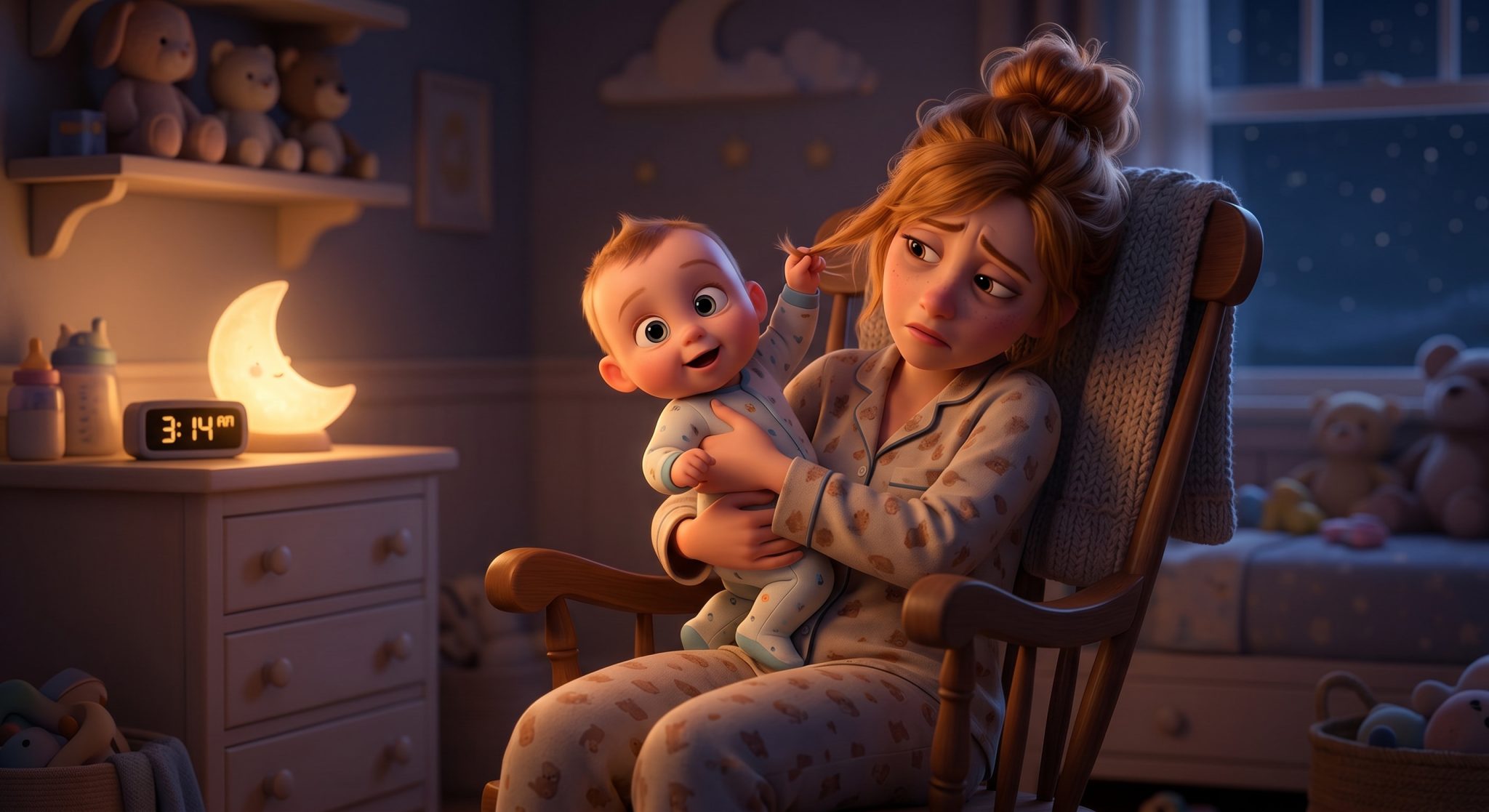
Your baby was finally sleeping in long, predictable stretches, and then almost overnight the night waking, the short naps and the fussy bedtimes came roaring back. If that sounds familiar, you are very likely dealing with a sleep regression. It is one of the most common and most confusing parts of the first few years, and the question almost every exhausted parent types into a search bar is a simple one: what is a sleep regression, and is this normal? This guide explains exactly what a sleep regression is, the ages they tend to strike, why they happen, how long they last, and what actually helps you get through one.
Quick Answer
A sleep regression is a temporary stretch, usually 2 to 6 weeks, when a baby or toddler who had been sleeping well suddenly starts waking more, fighting sleep or napping poorly. It is not a sign that anything is wrong. Regressions are typically tied to normal leaps in development, and they pass. The most common ages are around 4 months, 6 months, 8 to 10 months, 12 months, 18 months and 2 years.
Table of Contents
What Is a Sleep Regression?
A sleep regression is a period when a child who had been sleeping reasonably well suddenly starts sleeping noticeably worse, with no obvious cause such as illness. The “regression” in the name simply describes how it feels to a parent: your child seems to slide backward, losing sleep skills they appeared to have mastered.
It usually shows up as some combination of more frequent night waking, harder and longer bedtimes, early morning waking, shorter naps or skipped naps altogether, and more daytime fussiness from being overtired. The key word is temporary. A sleep regression is a phase, not a permanent change, and it is not a reflection of anything you did wrong.
Are Sleep Regressions Real?
This is a fair question, because “sleep regression” is a parenting term rather than a formal medical diagnosis. You will not find it printed in a pediatric textbook the way you would find an ear infection. Some sleep experts point out that the phrase can be a little misleading, since children are not truly going backward.1
But the experience behind the term is absolutely real. Babies and toddlers genuinely do go through predictable windows where sleep becomes harder, and those windows line up with well-documented bursts of brain development and physical growth. So whether you call it a regression, a progression or a developmental leap, the practical reality is the same: your child’s sleep gets temporarily disrupted, and then it settles again. The label matters far less than knowing what to expect.
What Causes Sleep Regressions?
Most sleep regressions are driven by your child’s development rather than by anything in their environment. Several things tend to be happening at once:
Developmental leaps. Rolling, crawling, pulling to stand, walking and language milestones all light up the brain. A child who is busy practicing a new skill often wants to rehearse it at 2 a.m.
Changing sleep architecture. Especially around 4 months, the way sleep is organized matures and becomes more adult-like, with more frequent surfacing between cycles.
Shifting sleep needs. As children grow, they need fewer naps and longer wake windows. A schedule that fit perfectly a month ago can quietly become a poor fit.
Separation anxiety. Around 8 months and again in toddlerhood, children become more aware that you exist even when out of sight, which can make bedtime separations harder.
Teething, illness and travel. These are not true regressions, but they cause similar disruption and often get lumped in.
Because the underlying cause is usually growth, regressions are best seen as a sign your child is developing on track, even though they feel like the opposite in the moment.
Sleep Regression Ages: A Month-by-Month Timeline
Regressions do not happen on a fixed calendar, and not every child experiences every one. Still, certain ages come up again and again. Here is what tends to happen and when:
Around 4 months. Often the most talked-about regression, and the only one tied to a permanent change. Your baby’s sleep cycles mature, so they surface more between cycles and need to resettle. Our dedicated guide to the 4-month sleep regression covers this one in depth.
Around 6 months. Often linked to rolling, sitting and the start of solid foods.
8 to 10 months. A big one. Crawling, pulling to stand and a surge in separation anxiety frequently collide here.
Around 12 months. Walking, early words and a possible move toward one nap can all unsettle sleep.
Around 18 months. Toddler independence, molars and bedtime testing make this regression as much behavioral as developmental.
Around 2 years. New fears, a vivid imagination, potty learning and the eventual transition out of the crib all play a role.
If your child’s wake-ups seem to follow a schedule that no longer fits their age, it is worth checking their wake windows and nap totals against a current reference. Our baby sleep schedule by age guide makes that easy to do.
Signs Your Baby Is Going Through a Sleep Regression
A regression usually announces itself with a cluster of changes rather than a single one. Common signs include:
Waking more often at night after a stretch of better sleep
Taking much longer to fall asleep at bedtime, or resisting it outright
Shorter naps, or refusing naps that used to go smoothly
Waking very early in the morning
More crying, clinginess and fussiness during the day from being overtired
Increased appetite, since growth and regressions often overlap
One thing a true regression does not include is feeling unwell. If your child has a fever, is pulling at their ears, has a rash, is unusually lethargic or seems to be in pain, that points to illness rather than a developmental regression, and it is worth a call to your pediatrician.
How Long Do Sleep Regressions Last?
Most sleep regressions last somewhere between two and six weeks. Many families find the worst of it lasts only one to two weeks, with sleep gradually improving from there as the new skill or developmental change becomes routine for the child.
The length depends a lot on how you respond. If brand-new habits get built during the rough patch, such as a baby who now needs to be rocked fully to sleep for every wake-up, those habits can outlast the developmental cause and make the disruption feel much longer. That is why the goal during a regression is to offer extra comfort without permanently changing how your child falls asleep. If wake-ups are still frequent and intense after about six weeks, it is reasonable to check in with your pediatrician to rule out other causes.
How to Survive a Sleep Regression
You cannot skip a regression, but you can shorten it and protect your own sanity along the way. These steps tend to help most:
Hold the routine steady. A predictable, calming wind-down is the single most stabilizing thing you can offer. Keep it consistent even when nights are messy.
Watch for overtiredness. An overtired child sleeps worse, not better. An earlier bedtime during a regression often helps more than a later one.
Recheck the schedule. Regressions are a common signal that wake windows have stretched or a nap is ready to drop. Adjusting the day can fix the night.
Offer comfort without creating new crutches. Reassure, soothe and stay close, but try to let your child finish falling asleep in their own bed where you can.
Give daytime practice space. If a new skill like standing is driving the wake-ups, lots of daytime practice helps it lose its novelty.
Share the load. Trade night shifts with a partner where possible. Surviving a regression is a team effort.
Not sure if it is a regression or just the wrong schedule?
Betteroo reads your child’s age and recent sleep, tells you what is most likely driving the wake-ups, and gives you a clear plan to ride it out.
If a regression has revealed that your child relies entirely on you to fall asleep, it can also be a natural moment to gently teach more independent sleep. Our overview of common sleep training methods walks through the gentler and more structured options so you can pick one that fits your family.
When to Call Your Pediatrician
A typical sleep regression does not need a doctor’s visit. But it is worth reaching out to your pediatrician if:
The disruption lasts well beyond six weeks with no sign of improvement
Your child has a fever, rash, ear-pulling, vomiting or other signs of illness
Your child seems to be in pain or is unusually difficult to console
You notice snoring, gasping or long pauses in breathing during sleep
Feeding, weight gain or daytime development also seem off
Your own exhaustion is affecting your mental health or ability to cope
Trust your instincts. If something feels different from a normal rough patch, a quick conversation with your pediatrician is always reasonable.
The Bottom Line on Sleep Regressions
A sleep regression is a temporary, normal stretch of disrupted sleep, almost always driven by your child’s development rather than by anything going wrong. They tend to cluster around 4 months, 6 months, 8 to 10 months, 12 months, 18 months and 2 years, and most pass within two to six weeks. The most useful mindset is to expect them, hold your routine steady, adjust the schedule as your child grows, and offer comfort without building habits you will later need to undo. It is hard in the moment, but a regression is one of the clearest signs your child is growing exactly as they should.
A sleep regression is a temporary period, usually 2 to 6 weeks, when a baby or toddler who had been sleeping well suddenly starts waking more, fighting sleep or napping poorly. It is normal and is usually caused by a leap in development.
At what ages do sleep regressions happen?
The most commonly reported ages are around 4 months, 6 months, 8 to 10 months, 12 months, 18 months and 2 years. Not every child goes through every one, and the timing varies from child to child.
How long does a sleep regression last?
Most last between two and six weeks, and the hardest part is often just the first one to two weeks. Avoiding new sleep crutches during the rough patch helps keep it from dragging on.
Are sleep regressions real?
“Sleep regression” is a parenting term rather than a medical diagnosis, and children are not truly going backward. But the experience is real: sleep genuinely does get harder during predictable windows of brain and body development.
Should I sleep train during a regression?
If your child is healthy and old enough, a regression can be a reasonable time to teach more independent sleep, especially if it revealed a heavy sleep crutch. If your child is unwell or the timing feels too chaotic, it is fine to wait until things settle.
How is a regression different from teething or illness?
A true regression is driven by development and does not come with signs of feeling unwell. Fever, rash, ear-pulling, vomiting or obvious pain point to illness or teething instead, and those are worth mentioning to your pediatrician.
Make it through the next regression with a plan
Betteroo gives you an age-based sleep plan that adapts as your child grows, so the next rough patch is something you are ready for instead of something that catches you off guard.