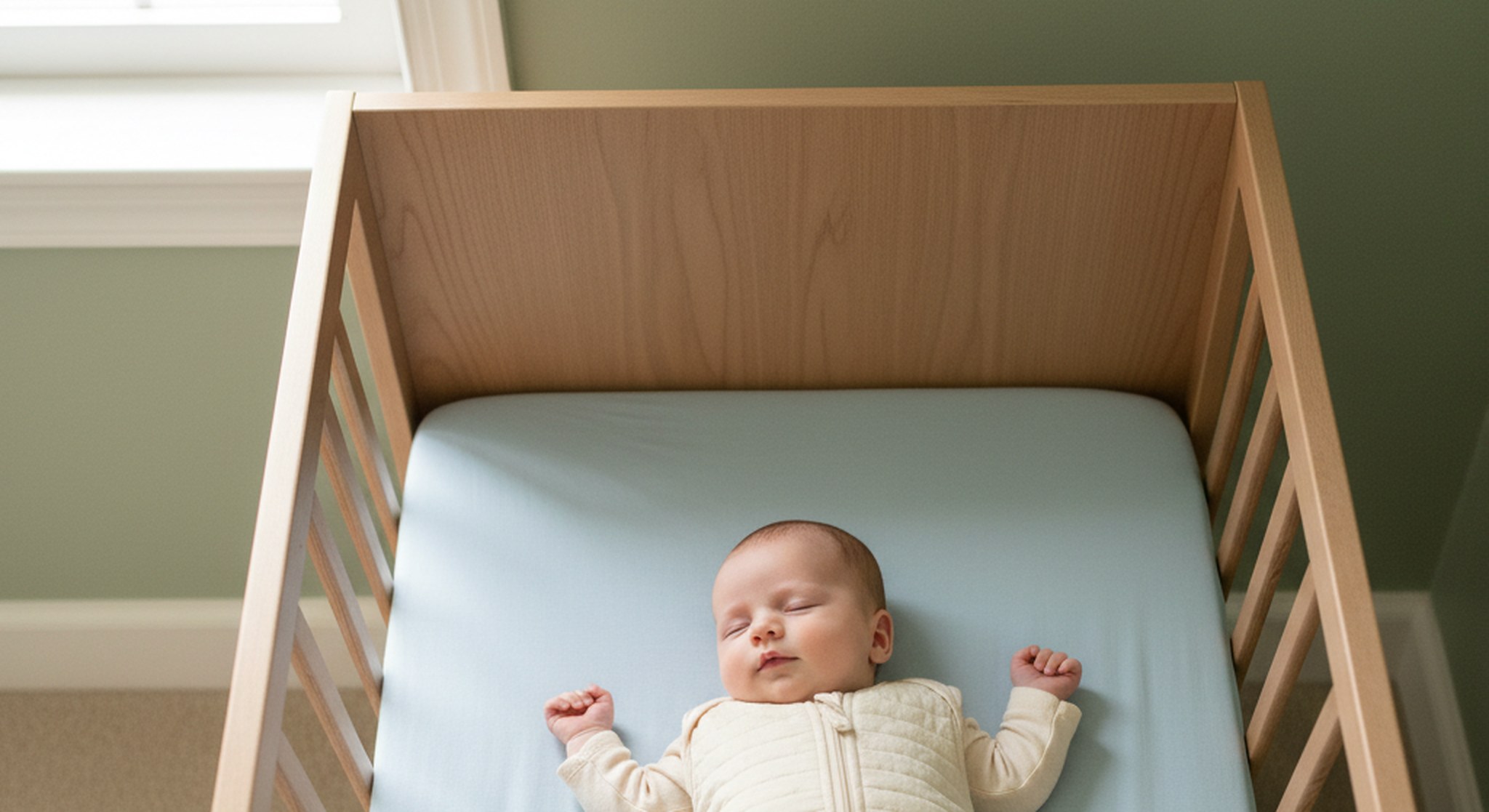


Many parents notice their baby sleeping more during a growth spurt, since the body does much of its growing during deep sleep, but growth spurts can also bring more frequent feeds and lighter, more broken sleep, so the picture varies from baby to baby.
One week your baby is in a nice groove, and the next they seem to want to eat and sleep constantly, or wake far more than usual. Growth spurts are often blamed, and for good reason, though the science behind them is less tidy than the parenting lore suggests.
This guide looks at what growth spurts are, why they can change your baby’s sleep in either direction, the ages parents commonly notice them, and how to support your little one through a few unsettled days.
Key Takeaways
- A hormone that drives growth is released largely during deep sleep, which is one reason extra sleep and growth go together.
- Some babies sleep noticeably more during a spurt, while others cluster feed and wake more, so both patterns are normal.
- Growth spurts are often described around 2 to 3 weeks, 6 weeks, 3 months, and 6 months, but the exact timing varies.
- A spurt is usually short, often lasting only a few days before your baby settles again.
- Feed on demand, offer extra comfort, and keep safe sleep the same, then watch for signs that a longer change is really a regression or illness.
Table of Contents
The Link Between Sleep and Growth
There is a real biological reason sleep and growth are connected. Growth hormone, which supports the rapid physical development of infancy, is released in pulses and largely during deep, slow wave sleep. Babies grow at an astonishing rate in the first year, so protecting sleep genuinely supports healthy growth.
This is part of why a baby who is putting on a burst of length or weight may seem sleepier than usual for a stretch of days. Their body is doing hard work, and rest is part of it.
Why Growth Spurts Can Also Disrupt Sleep
Here is the twist that surprises many parents. A growth spurt does not always mean more sleep. Just as often, it shows up as a hungry baby who wants to feed far more frequently, a pattern called cluster feeding, along with fussiness and more night waking.
That extra feeding is exactly what the body needs to fuel growth, and it often means broken nights for a few days. So depending on your baby, a spurt might look like long, deep naps, or like a suddenly ravenous baby who is up more at night. Both are normal responses to the same underlying growth. Our cluster feeding guide explains the feeding side in more detail.
Struggling with your baby’s sleep?
A personalized plan meets your baby where they are, at every age and stage.
When Do Growth Spurts Usually Happen?
Growth spurts are widely described by parents and lactation experts, though they do not follow a strict schedule and research on exact timing is limited. The ages most commonly mentioned are:
- Around 2 to 3 weeks old.
- Around 6 weeks old.
- Around 3 months old.
- Around 6 months old, often near the start of solid foods.
Treat these as rough guideposts rather than rules. Your baby may have spurts on their own schedule, and you will not always be able to pinpoint one. What matters is responding to your baby’s cues rather than watching the calendar.
How to Help Your Baby Through a Growth Spurt
A few simple approaches make these short phases easier on everyone:
- Feed on demand. Extra feeds during a spurt help your milk supply keep up if you are nursing, and they meet your baby’s real hunger.
- Follow your baby’s sleep cues and allow extra rest, even if naps run longer than usual for a few days.
- Offer plenty of comfort and contact. More fussiness is common and temporary.
- Keep safe sleep exactly the same, on the back in a bare crib, no matter how the spurt changes your baby’s rhythm.
- Look after yourself too, and lower your expectations for a few days while things are unsettled.
Because growth spurts are brief, you usually do not need to change your routine or worry about habits. Ride it out and return to your usual rhythm once it passes.
Growth Spurt, Regression, or Something Else?
If the unsettled sleep lasts only a few days and your baby is feeding eagerly, a growth spurt is a likely explanation. If disrupted sleep drags on for a couple of weeks and lines up with new skills like rolling or crawling, it may be a sleep regression instead. Fever, congestion, or obvious discomfort point toward illness, not growth.
When your baby is otherwise happy, feeding well, and making regular wet diapers, a few sleepy or hungry days are nothing to worry about. Our sleep regression ages guide can help you tell these phases apart, and you should always call your doctor if your baby seems unwell.
When a Growth Spurt Turns Into a Sleep Habit
Here is something worth knowing for babies older than about 3 months. The extra night feeds and rocking a growth spurt calls for can quietly become a new sleep habit. If your baby gets used to falling asleep at the breast, bottle, or in your arms during a spurt, they may start needing that same help to fall back asleep between every sleep cycle, which can look like a sleep regression once the spurt is over.
You do not need to withhold comfort during a spurt. Just know that if broken sleep lingers well beyond a few days, the cause may have shifted from growth to a new sleep association, and gently giving your baby chances to practice falling asleep more independently can get things back on track.
A growth spurt is usually winding down when your baby’s appetite and sleep drift back to their normal baseline after a few days. If instead the disruption stretches to a couple of weeks and lines up with a developmental leap, it is more likely a regression. Common regression windows cluster around 4 months, 8 to 9 months, 18 months, and 2 years, which is different from the earlier, feeding driven timing of growth spurts.
Frequently Asked Questions
Do babies sleep more during growth spurts?
Many do, because growth hormone is released largely during deep sleep and the body does much of its growing while resting. However, some babies instead cluster feed and wake more during a spurt, so both extra sleep and broken sleep are normal.
How long does a growth spurt last?
Growth spurts are usually short, often lasting only a few days before your baby settles back into their normal pattern. If unsettled sleep lasts a couple of weeks, it may be a sleep regression rather than a spurt.
When do babies have growth spurts?
Parents and experts commonly describe growth spurts around 2 to 3 weeks, 6 weeks, 3 months, and 6 months, though timing varies and research on exact ages is limited. Respond to your baby’s cues rather than the calendar.
Should I feed my baby more during a growth spurt?
Yes, feed on demand. Extra feeds meet your baby’s increased hunger and, if you are nursing, help your milk supply keep up with their needs. This is exactly what fuels the growth.
How can I tell a growth spurt from a sleep regression?
A growth spurt is usually brief, lasts a few days, and comes with eager feeding. A regression tends to last longer, often a couple of weeks, and lines up with new developmental skills like rolling or crawling. Illness brings fever or congestion instead.
Steady sleep through every leap and spurt
Get a personalized plan that adapts as your baby grows and changes.
Related Betteroo Guides
4 Sources
- Paruthi S, et al. Recommended Amount of Sleep for Pediatric Populations: A Consensus Statement of the American Academy of Sleep Medicine. Journal of Clinical Sleep Medicine, 2016.
https://jcsm.aasm.org/doi/10.5664/jcsm.5866 - Iglowstein I, et al. Sleep Duration From Infancy to Adolescence: Reference Values and Generational Trends. Pediatrics, 2003.
https://publications.aap.org/pediatrics/article/111/2/302/28577 - Cleveland Clinic. Sleep in Your Baby’s First Year.
https://my.clevelandclinic.org/health/articles/14300-sleep-in-your-babys-first-year - American Academy of Pediatrics. Sleep-Related Infant Deaths: Updated 2022 Recommendations for Reducing Infant Deaths in the Sleep Environment. Pediatrics, 2022.
https://publications.aap.org/pediatrics/article/150/1/e2022057990/188304