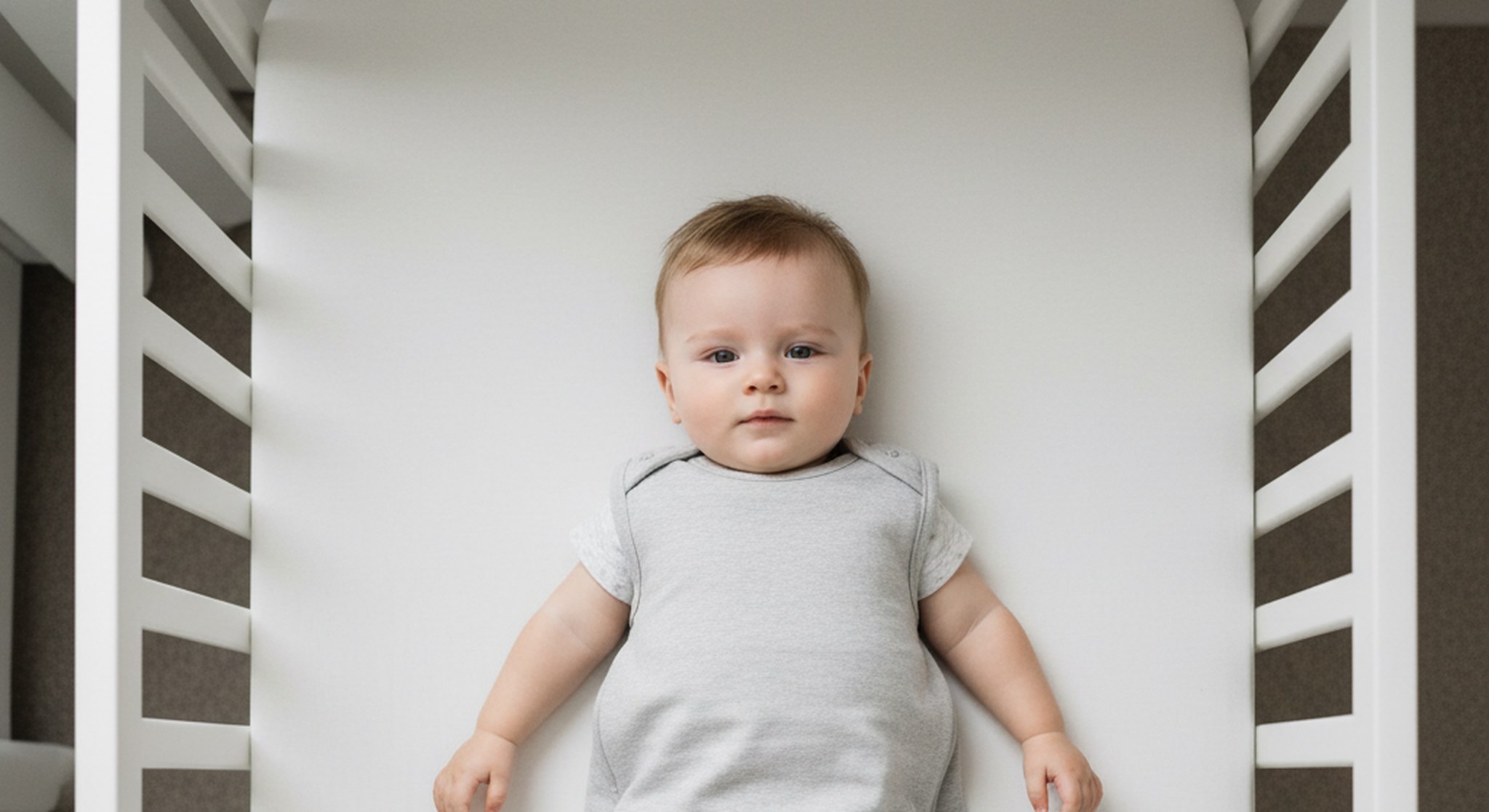
Fifteen months is a loud, busy, wonderful age. Your toddler is walking or nearly there, pointing at everything, testing new words, and discovering that they have opinions. All of that daytime intensity has a way of showing up at night. Parents searching for a 15 month old sleep schedule are usually trying to solve one of three things: a nap that has suddenly become a fight, night waking that crept back after a stretch of calm, or a bedtime that turned into a standoff overnight.
Here is the reassuring part: by fifteen months, most toddlers have a genuinely solid sleep foundation to work with. One consolidated nap, long stretches of alert playtime, and a full night are all normal and within reach. If sleep has wobbled lately, it is very likely the 15 month sleep regression at work, and that is a temporary storm layered on top of a schedule that is not actually broken.
This guide walks through how much sleep a fifteen month old needs, a sample 15 month sleep schedule built around one nap, what our survey of tens of thousands of parents shows about night waking at this age, and how to ride out the regression without throwing your whole routine overboard.
Table of Contents
At a Glance: 15 Month Sleep Expectations
At fifteen months, most toddlers sleep 11 to 14 total hours per day: roughly 10 to 12 hours overnight plus 1.5 to 3 hours in a single midday nap. Wake windows stretch to about 5 to 5.5 hours, and bedtime typically falls between 7:00 and 8:00 p.m. Some toddlers are still holding onto two naps, and that is fine too; the shift to one nap usually happens somewhere between 14 and 18 months.
Here is some perspective from Betteroo’s State of Baby Sleep survey: night waking peaks earlier in infancy, when 67.3% of babies aged 7 to 9 months wake three or more times a night. By 13 to 18 months that share falls to 53.5% (n=5,002). Fifteen months sits on the improving side of the curve, even if a regression makes it feel otherwise for a few weeks.
How Much Should a 15 Month Old Sleep?
The American Academy of Sleep Medicine recommends 11 to 14 hours per 24 hours for toddlers aged 1 to 2 years, naps included 1. Most fifteen month olds land right in that band, and reference studies of early-childhood sleep show broad, healthy variation around those numbers 2.
Sleep Type
Typical Range at 15 Months
Total Sleep
11–14 hours
Night Sleep
10–12 hours
Naps
1 per day (1.5–3 hours), some still on 2
Wake Windows
5–5.5 hours
The one-nap day is becoming the norm at this age, but the transition is rarely tidy. Many toddlers spend a few weeks in a messy middle where two naps is too much and one nap is a stretch. If your fifteen month old fights the second nap, takes forever to fall asleep, or starts waking early, those are classic signs the 2-to-1 shift is underway. Our wake windows guide shows how the day stretches as toddlers consolidate to a single nap.
A Sample 15 Month Old Sleep Schedule (An Example, Not a Rule)
7:00 a.m. – Wake
12:30–2:30 p.m. – Nap (one nap, about 2 hours)
7:30 p.m. – Bedtime
Notice the shape of the one-nap day: a long morning wake window of roughly 5.5 hours before the nap, then about 5 hours between waking from the nap and bedtime. That first stretch is long, so watch for overtired signals in the late morning, especially in the early weeks of the transition. On the days the nap runs short or refuses to happen, protect the night by moving bedtime earlier rather than letting an overtired toddler power through to a normal bedtime.
Bedtime between 7:00 and 8:00 p.m. is where most families land. In our survey, 39% of all babies have a bedtime between 7:00 and 7:59 p.m., the single most common window, and that anchor tends to hold well into toddlerhood. A consistent bedtime backed by a predictable wind-down routine is one of the most evidence-backed sleep tools you have 3.
Why 15 Month Old Sleep Gets Bumpy
If sleep fell apart recently, the 15 month sleep regression is the usual explanation. It is not a sign that your schedule failed. It is a pile-up of developmental changes hitting at once:
Molars and canines. The bigger back teeth start pushing through around this age, and that ache is real. It tends to cause a few rough nights rather than a rough month.
Separation and independence. Your toddler now has strong preferences and a strong attachment to you. Bedtime protest and middle-of-the-night calls for a parent often spike as they test what happens when you leave the room.
A language and motor explosion. Walking, climbing, and a burst of new words all get rehearsed at the worst possible times, including in the crib at 5 a.m.
Nap resistance. As the second nap falls away, the single nap can get bumpy for a while. A skipped or short nap feeds overtiredness, which feeds more night waking, which can look like the regression getting worse.
Whatever you call it, the pattern is the same: a temporary disruption sitting on top of an otherwise stable schedule. The move that works is almost always to hold the schedule steady and ride the regression out, not to rebuild everything mid-storm. Our 15 month sleep regression guide digs into the timeline and the day-to-day tactics in detail.
From Betteroo’s State of Baby Sleep
Night waking by age, share of babies waking 3+ times: 4–6 months 65.6%, 7–9 months 67.3% (the peak), 10–12 months 60.5%, 13–18 months 53.5%. If your fifteen month old is waking through a regression, that is squarely within the norm for this age band, and the longer trend is steadily down. Explore the full data →
Helping Your 15 Month Old Sleep Better
A few high-leverage moves while you ride this out:
Hold the schedule, do not rebuild it. A regression is not the time for big changes. Keep wake time, nap time, and bedtime steady so the routine can do its stabilizing work while the storm passes.
Protect the one nap. A well-timed midday nap is your best defense against night waking right now. Do not drop the nap early; most toddlers need it until at least age three.
Give new skills and words daytime reps. The more walking, climbing, and talking your toddler does at 10 a.m., the less novelty there is to rehearse at 4 a.m.
Keep night responses calm and brief. Offer comfort, keep it short and boring, and let your toddler settle. Long interventions at this age tend to become the new expectation.
Audit the sleep environment. A dark room and steady white noise matter more now that your toddler is alert, curious, and easily pulled back into the day by a sliver of light.
If falling asleep independently is still a struggle once the regression settles, fifteen months is a workable age for gentle change. Toddlers this age respond quickly to consistency, and research shows a nightly bedtime routine alone significantly reduces night wakings 3.
When to Talk to a Pediatrician
Reach out if your toddler consistently sleeps well under 11 total hours, snores or has breathing pauses, wakes screaming inconsolably most nights, or if feeding and growth are a concern. Now that climbing is in play, keep the crib mattress at its lowest setting and the sleep space bare, in line with AAP safe sleep guidance 4. If your toddler is repeatedly climbing out of the crib, that is a safety signal worth discussing.
15 Month Old Sleep Schedule FAQ
What are wake windows for a 15 month old?
On a one-nap day, wake windows run about 5 to 5.5 hours, with a long stretch before the nap and another before bedtime. Toddlers still on two naps will have shorter windows of roughly 3 to 4 hours. If bedtime battles appear, the last wake window is usually the one to adjust first.
How many naps should a 15 month old take?
Most fifteen month olds are moving to one midday nap of 1.5 to 3 hours, though plenty are still on two naps. The 2-to-1 transition typically happens between 14 and 18 months, so either pattern can be normal at this age.
Is there a 15 month sleep regression?
Yes. Many families hit a rough patch around fifteen months driven by molars, separation and independence, a burst of language and motor skills, and the shift toward one nap. It is temporary. Holding the schedule steady and keeping night responses brief usually resolves it within a few weeks.
How do I handle the 2-to-1 nap transition?
Watch for a fought or skipped second nap, a longer time to fall asleep, or early waking. When those signs are consistent, shift to a single midday nap and use an earlier bedtime on the days the nap runs short. Expect a few messy weeks while the day settles.
Why is my 15 month old suddenly waking at night?
New night waking at this age is usually the 15 month regression: teething, separation, new skills, and nap changes all colliding. Keep the schedule consistent, keep responses calm and short, and protect the daytime nap. In our survey, 53.5% of babies aged 13 to 18 months still wake three or more times a night, so you are far from alone.
Molars, big feelings, a nap in flux: 15 months is a lot
Get a personalized sleep plan built around your toddler’s age, temperament, and your family’s needs.
Fifteen month old sleep is mostly a story of a good schedule colliding with big development. The schedule is not the problem; the growth is the point. Hold the frame, protect the nap, give new skills and words plenty of daylight hours to burn off, respond at night with calm brevity, and the regression passes. Night waking keeps trending down from here through toddlerhood.
Paruthi, S., et al. (2016). Recommended Amount of Sleep for Pediatric Populations: A Consensus Statement of the American Academy of Sleep Medicine. Journal of Clinical Sleep Medicine, 12(6), 785–786.https://pmc.ncbi.nlm.nih.gov/articles/PMC4877308/
Iglowstein, I., Jenni, O.G., Molinari, L., & Largo, R.H. (2003). Sleep duration from infancy to adolescence: Reference values and generational trends. Pediatrics, 111(2), 302–307.https://pubmed.ncbi.nlm.nih.gov/12563055/
Mindell, J.A., Telofski, L.S., Wiegand, B., & Kurtz, E.S. (2009). A Nightly Bedtime Routine: Impact on Sleep in Young Children and Maternal Mood. Sleep, 32(5), 599–606.https://pubmed.ncbi.nlm.nih.gov/19480226/
American Academy of Pediatrics. (2022). Sleep-Related Infant Deaths: Updated 2022 Recommendations for Reducing Infant Deaths in the Sleep Environment.https://pubmed.ncbi.nlm.nih.gov/35726558/