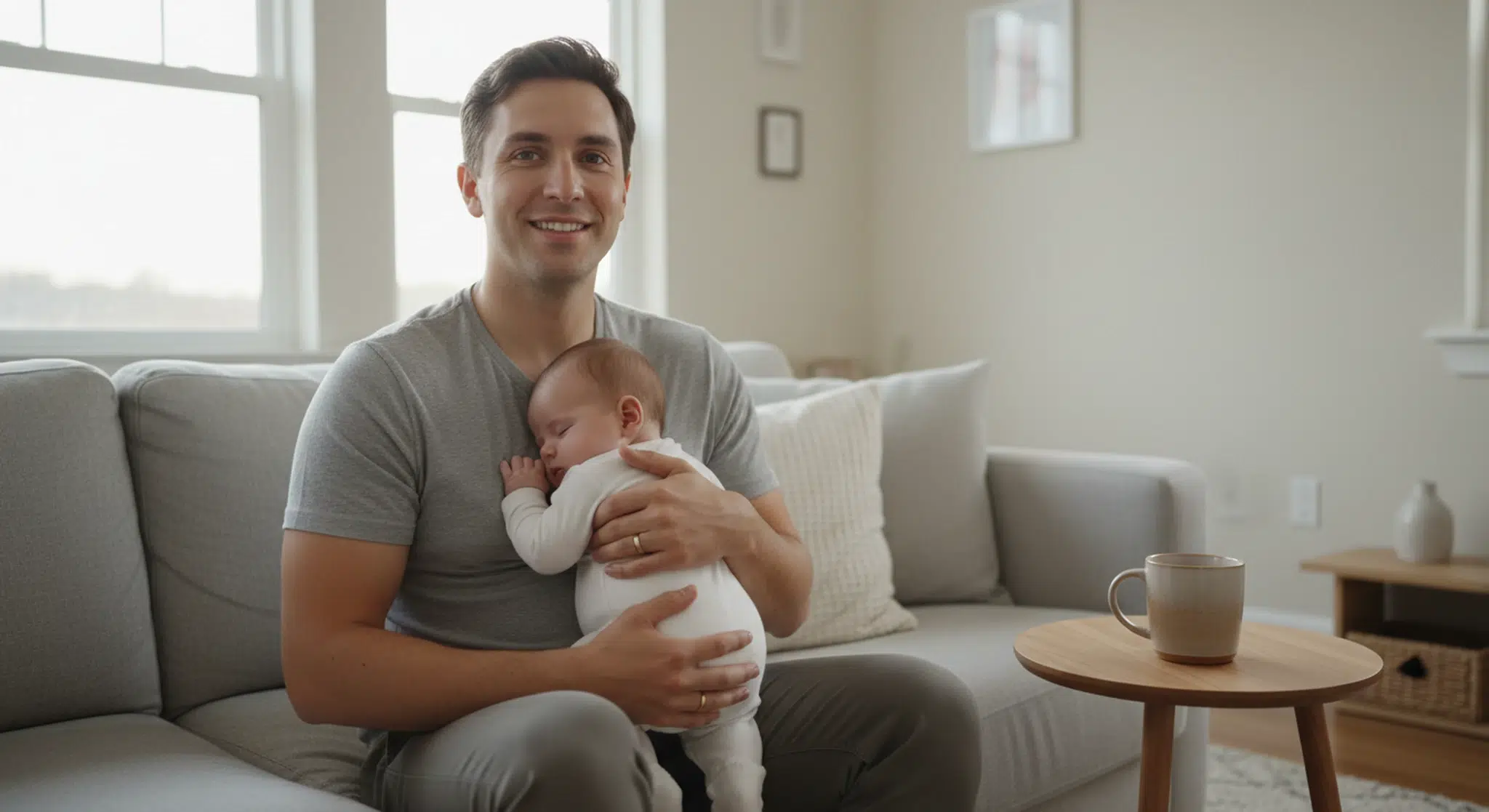
Yes, sleep deprivation in new parents is normal and very common, and the way to cope is to protect one longer block of sleep for each adult, share the nights, and get help early if exhaustion turns into hopelessness, constant anxiety or thoughts of harm.
Being tired is expected with a baby. Feeling like you cannot function after months of broken nights is also very common: a signal to change something, not a sign you are failing.
Below we answer the questions parents actually ask, from “I can’t function at work” to “I haven’t slept properly in a year”, with survey data, guidance from the CDC and NIMH, a simple plan, and signs it is time to call a doctor.
Key Takeaways
Exhaustion is normal: in Betteroo’s 2026 survey of parents seeking sleep help, 80% sleep less than 6 hours.
Adults need 7 or more hours, per the AASM and SRS. Less is linked to errors and accidents.
Protect one long block of sleep per adult and split the night shifts.
Never doze with your baby on a couch or armchair. The AAP advises against bed sharing.
Low mood past 2 weeks, nonstop worry, or thoughts of harm need a doctor. In a crisis, call or text 988.
Table of Contents
Sleep Deprivation in New Parents: The Plain Answer
Quick Answer
Yes, it is normal. In Betteroo’s 2026 survey, 80% of parents seeking help with their child’s sleep got under 6 hours a night. To cope, protect one longer block of sleep for each adult, split the nights, drop non-essentials, and fix what wakes your baby most. Hopelessness, constant anxiety, not sleeping even when you can, or thoughts of harming yourself or your baby are not just tiredness: call your doctor, the National Maternal Mental Health Hotline (1-833-TLC-MAMA), or 988 in a crisis.
Betteroo’s State of Parent and Baby Sleep 2026 report counted 83,901 parent responses from 118 countries (July 2025 to October 2026). Among unique parents:
What parents reported
Share of parents
Sleep less than 6 hours a night
80%
Feel exhausted or drained
82%
Often feel depleted
65%
Often feel guilty
54%
Feel distant from their partner
74%
Betteroo State of Parent and Baby Sleep 2026, unique parents of children aged 0 to 6 (rounded, as published).
One caveat: respondents are parents who came to Betteroo for help with their child’s sleep, so this is not a random population sample. If you are struggling, you are in the majority, not failing.
Is It Normal to Feel Like You’re Losing Your Mind From Lack of Sleep?
Feeling foggy, teary or short-tempered after weeks of broken nights is a very common reaction to sleep loss, not a sign you are a bad parent. The American Academy of Sleep Medicine and the Sleep Research Society say adults should sleep 7 or more hours per night on a regular basis. Their 2015 joint consensus statement adds that sleeping less than 7 hours is associated with impaired performance, increased errors and a greater risk of accidents, and with health problems including depression.
Newborn nights are also fragmented: you rarely get a long, unbroken stretch. Many newborns mix up day and night for a while (see newborn day and night confusion), and the fourth trimester is irregular by nature.
Where is the line? The National Institute of Mental Health (NIMH) describes the baby blues as mild, short-lasting mood changes and feelings of worry, unhappiness and exhaustion in the first 2 weeks after birth. NIMH says symptoms that last longer than 2 weeks after childbirth may be signs of postpartum depression. If the feeling lifts after a good sleep, it is usually sleep loss. If it does not, or comes with the signs in the table below, talk to a doctor. One self-check: NIMH lists difficulty sleeping even when the baby is asleep as a symptom of perinatal depression.
“I’m So Tired From the Baby Waking Up All Night That I Can’t Function at Work”
Work does not slow down to match your nights. A few things help:
Tell your manager: saying nights are rough for now can open options such as a later start or fewer early meetings.
Put the hard thinking first: since short sleep is linked to more errors (AASM and SRS), do detail work in your sharpest hours and use checklists.
Treat caffeine as a short boost, not a fix: the National Highway Traffic Safety Administration (NHTSA) notes that the alertness boost from coffee or energy drinks is short-lived and that caffeine alone is not always enough. If you are breastfeeding, ask your doctor what is right for you.
Guard sleep on work nights: let the other adult take the late or early feeds before your workdays, and return the favor before theirs.
Do not drive drowsy. NHTSA estimates that in 2017, crashes involving drowsy drivers led to about 50,000 injuries and nearly 800 deaths. If you feel drowsy at the wheel, pull over in a safe place such as a lighted rest stop, or let someone else drive.
“I Haven’t Slept Properly in a Year and I Don’t Feel Like Myself Anymore”
Two things can be true at once: your baby’s sleep may be fixable now, and how you feel may be more than tiredness. Start with your baby. If nights are still very broken late in the first year, look at the usual suspects: how your baby falls asleep at bedtime, whether night feeds are still needed (talk to your pediatrician, and see our night weaning guide), and whether the daily schedule fits their age. Our baby sleep expectations for the first year guide shows what is typical, and when to start sleep training covers timing.
Then check in with yourself. The CDC lists depression symptoms including a lasting sad, anxious or “empty” mood, loss of interest in hobbies and a lack of energy, and for postpartum depression adds crying more than usual, feeling angry and doubting your ability to care for the baby. Weeks of “I don’t feel like myself” are worth raising with a doctor.
The CDC reports that about 1 in 8 women with a recent live birth reported symptoms of postpartum depression, and Cleveland Clinic cites studies showing postpartum anxiety affects about 1 in 5 women. NIMH notes postpartum depression generally does not improve without treatment, such as therapy, medication, or both.
Running on empty?
Our free two-minute quiz builds a gentle, personalized sleep plan so the whole family can get more rest.
Normal New-Parent Exhaustion vs Signs to Call a Doctor
A rough guide, not a diagnosis. When in doubt, call.
Usually expected with sleep loss
Call your doctor or midwife
Get help now (988 or 911)
Tired and foggy, but better after a longer sleep
Sad, anxious or “empty” mood most of the day for 2 weeks or more (NIMH)
Thoughts about harming yourself or your baby (CDC Hear Her urgent warning sign)
Moody in the first 2 weeks (baby blues, NIMH)
Hopelessness, loss of interest or trouble bonding (NIMH, CDC)
Thoughts of suicide: call or text 988 (NIMH)
Short temper on bad nights
Constant worry, panic attacks, or obsessing over fears (Cleveland Clinic)
Confusion, hallucinations or paranoia: NIMH calls postpartum psychosis an emergency; call 911
Falls asleep quickly whenever there is a chance
Cannot sleep even when the baby is asleep (NIMH)
Overwhelming tiredness (a CDC urgent maternal warning sign)
Based on NIMH, CDC and Cleveland Clinic pages read October 2026.
Free support lines (U.S.): the National Maternal Mental Health Hotline is 1-833-TLC-MAMA (1-833-852-6262), call or text, 24/7. The Postpartum Support International HelpLine is 1-800-944-4773 (support and referrals, not a crisis line). In a crisis, call or text 988. In an emergency, call 911.
Tonight, This Week, This Month: A Plan to Get More Sleep
Tonight
Protect one long block per adult: as a planning target, give each adult one uninterrupted block of several hours (many families aim for 4 to 5) while the other is fully on duty.
Go to bed soon after your baby: skip the chores and scrolling.
Sleep only when your baby is with another adult or in their own safe sleep space: never on a sofa or armchair with your baby.
This week
Split the night: for example, one adult covers until about 2 a.m., the other covers early morning. If one parent breastfeeds, the other can handle diapers, burping and resettling.
Ask for specific help: “Can you take the baby from 2 to 4 on Saturday so I can nap?” works better than “let me know”.
Drop non-essentials: lower the bar on housework and social plans for now.
This month
Find the one thing that wakes your baby most: for newborns, frequent feeds are expected (see our newborn sleep schedule week by week). For older babies, look at how they fall asleep and whether naps fit their age.
Stay consistent: both adults using one plan for a couple of weeks beats a new trick each night.
Book a check-in for you: your postpartum visit or your baby’s checkup is a good moment to say, “I’m not coping with the sleep loss.”
How to Stay Safe When You Are This Tired
The American Academy of Pediatrics (AAP) recommends that parents avoid bed sharing with their baby under any circumstances, and suggests sharing a room with your baby, with the baby in their own sleep space, for at least the first 6 months. The AAP says room sharing can decrease the risk of SIDS by as much as 50%.
The AAP warns that the risk is up to 67 times higher when infants sleep with someone on a couch, soft armchair or cushion. If you are nodding off while feeding on the sofa, put your baby on their back in their own crib or bassinet, then rest.
If you feed or comfort your baby in your bed, the AAP advises placing them back in their own sleep space before you go to sleep. If you do fall asleep, move your baby back as soon as you wake up. Babies under 12 months should always sleep alone, on their back, on a firm, flat, bare surface. Our safe sleep environment checklist covers the setup.
“I Feel Like I’m Failing as a Mom Because My Baby Still Doesn’t Sleep Through the Night”
In Betteroo’s survey, 54% of parents said they often feel guilty. Guilt is not evidence that you are doing something wrong, and babies vary a lot. In the same report, the share of babies waking 3 or more times a night was 48% at 0 to 3 months, 64% at 4 to 6 months, 66% at 7 to 9 months and 59% at 10 to 12 months, falling to 39% at 19 to 24 months and 30% at 2 to 6 years (among families seeking sleep help). Our guide to when babies sleep through the night explains what “through the night” really means at each age.
Your baby’s sleep is not a grade on your parenting, and asking for help is a parenting skill. But if the guilt is constant, comes with hopelessness or worthlessness, or you doubt your ability to care for your baby, NIMH and the CDC list those as possible signs of depression. Tell your doctor.
For Dads and Partners
Partners lose sleep too, and while postpartum depression and anxiety are discussed mostly in mothers, partners can be affected as well.
Betteroo’s report found that 74% of parents feel distant from their partner. It also found that 90% of parents who disagree with their partner about how to fix their baby’s sleep feel distant from them, and that 71% of married-couple households with no outside help felt distant, compared with 49% of households with extended-family help.
Agree on one plan: talk in daylight, not at 3 a.m., and pick one approach together.
Own a shift: take a defined block of the night so the other parent can truly sleep.
Watch for signs in each other: if your partner seems persistently low or anxious, help them book an appointment.
How Betteroo Can Help
If night waking drives your exhaustion, Betteroo builds a personalized sleep plan for your child; see how it works in our sleep training app for exhausted parents guide. On the hard days, our tired mom quotes show you are not alone.
Talk to your doctor, midwife or your baby’s pediatrician if any of these apply:
Your low, anxious or “empty” mood has lasted more than 2 weeks, or is getting worse (NIMH).
You are worrying all day, every day, or your anxious thoughts are getting worse (Cleveland Clinic).
You have lost interest in things you used to enjoy, feel hopeless or worthless, or are struggling to bond with your baby.
You are too exhausted to drive, work or care for your baby safely.
Get help right away for thoughts about harming yourself or your baby, which the CDC lists as an urgent maternal warning sign in the year after delivery: call or text 988, or call 911 or go to the nearest emergency department. The CDC also lists overwhelming tiredness among its urgent warning signs after pregnancy. The National Maternal Mental Health Hotline, 1-833-TLC-MAMA (1-833-852-6262), is open 24/7 by call or text. Do not be alone in a crisis.
Frequently Asked Questions
Is sleep deprivation in new parents normal?
Yes. Broken sleep is a normal part of caring for a baby. In Betteroo’s 2026 survey of parents seeking help with their child’s sleep, 80% slept less than 6 hours a night. Common does not mean harmless, so protect some sleep and ask for help early.
How do new parents cope with sleep deprivation?
Give each adult one protected block of several hours while the other is on duty, split the night, go to bed early, accept specific help, and drop non-essentials. Then work on what wakes your baby most. Never sleep with your baby on a sofa or armchair.
Is it normal to feel like you’re losing your mind from lack of sleep with a newborn?
Feeling foggy, forgetful and emotional is a common effect of sleep loss. NIMH describes the baby blues as mild mood changes in the first 2 weeks after birth. If low mood lasts longer, or you have frightening thoughts, talk to a doctor.
How much sleep do new parents need?
Adults should sleep 7 or more hours per night on a regular basis, according to the American Academy of Sleep Medicine and the Sleep Research Society. Few new parents manage that nightly, so aim for one protected longer stretch and naps when another adult has the baby.
Can lack of sleep be a sign of postpartum depression?
It can be. NIMH lists trouble sleeping even when the baby is asleep as a symptom of perinatal depression, and the CDC reports about 1 in 8 women with a recent live birth reported postpartum depression symptoms. If you feel low for over 2 weeks, see your provider.
Is it safe to nap with my baby on the couch?
No. The American Academy of Pediatrics warns the risk is up to 67 times higher when infants sleep with someone on a couch, soft armchair or cushion, and it advises against bed sharing. If you feel sleepy, put your baby on their back in their own crib first.
Gentle changes, peaceful nights.
Betteroo builds a personalized sleep plan for your baby or toddler. Take the free two-minute quiz to get started.
Watson NF, et al. Recommended Amount of Sleep for a Healthy Adult: A Joint Consensus Statement of the American Academy of Sleep Medicine and Sleep Research Society. J Clin Sleep Med. 2015;11(6):591-592. https://www.aasm.org/resources/pdf/adultsleepdurationconsensus.pdf