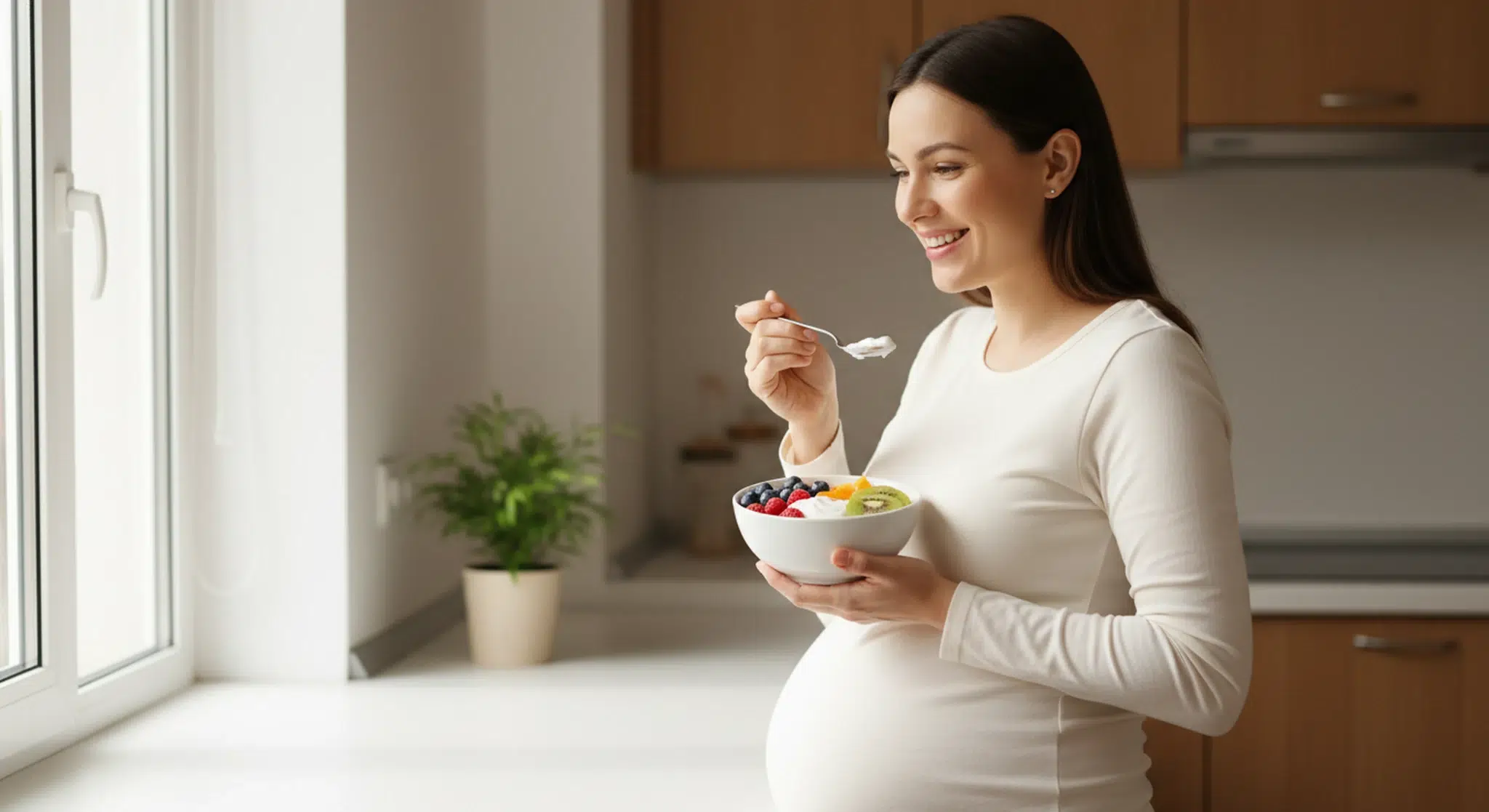


Pregnancy cravings are strong urges for specific foods that usually start in the first trimester, peak in the second and fade before birth, and most are safe to enjoy in moderation.
Pregnancy cravings are among the best-known parts of pregnancy: research estimates 50 to 90% of U.S. women have them. Whatever yours is, you are far from alone.
Below: when cravings start, what science knows about the cause, sweets and gestational diabetes, pica, foods to handle carefully, and healthy swaps.
Key Takeaways
- Cravings usually begin in the first trimester, peak in the second and decline toward birth.
- The cause is not well understood. Hormones, nausea, taste and smell changes, and culture may all play a part.
- Sweets are the most common craving in U.S. data. Enjoy them in moderation alongside nutritious food.
- Craving ice, dirt, clay or starch is called pica. Tell your provider, since it can be linked to low iron.
- Satisfy cravings safely: skip raw seafood, high-mercury fish and unpasteurized foods, heat deli meat until steaming, and keep caffeine under 200 mg a day.
Table of Contents
Pregnancy Cravings: The Short Answer
Quick Answer
A craving is more than ordinary hunger: it is a pull toward one particular food that can feel hard to ignore. MedlinePlus, the National Library of Medicine’s consumer site, puts it plainly: no one knows why, but many pregnant women have cravings. Keep that in mind, because popular claims (cravings mean you lack a nutrient, cravings reveal the baby’s sex) are not backed by good evidence.
When Do Pregnancy Cravings Start?
For most people, cravings show up in the first trimester. The Frontiers in Psychology review by Orloff and Hormes (2014) says cravings usually begin by the end of the first trimester, become most frequent and intense in the second trimester, then decline as you approach your due date. In one study it cites, 76% of 400 women reported at least one craving by week 13.
MedlinePlus says cravings often pass after about the first 3 months. Both can be true for different people: some have a short early burst, others crave the same foods well into mid-pregnancy.
| Stage | What the research describes |
|---|---|
| First trimester | Cravings often begin, frequently alongside nausea and aversions. Savory cravings tend to be strongest early. |
| Second trimester | Cravings typically peak in frequency and intensity. Sweet preferences peak here. |
| Third trimester | Cravings tend to decline toward term, though salty cravings tend to rise later. |
| After birth | Cravings drop sharply after delivery. |
What Causes Pregnancy Cravings? What Science Does and Does Not Know
The honest answer: nobody knows for sure. The Orloff and Hormes review calls pregnancy cravings poorly understood and notes the research base is small. Where the main theories stand:
- Hormones: popular, but with little direct support. Hormones may act indirectly by changing taste and smell.
- Nutrient deficiencies: not supported for ordinary food cravings. People rarely crave nutrient-dense foods, and diet quality was not linked to cravings. Pica, the urge to eat nonfood items, is the exception (more below).
- Easing nausea: a plausible idea with early evidence. Cravings and aversions tend to show up together, and nausea is linked to cravings, but the review says the timing and direction of that link are unclear.
- Culture and habits: the best-supported theory in the review. Craving rates are similar across countries, but what people crave differs by culture.
In practice: a chocolate craving does not mean your body is short on something. A craving for ice, clay or dirt is different and worth raising with your provider.
The Most Common Pregnancy Cravings
When Orloff and Hormes analyzed 200 posts on pregnancy blogs in a small pilot study, sweets such as chocolate and candy were the most common craving, mentioned in 25.9% of posts. The other top categories were:
- Savory high-calorie carbs: pizza, chips and similar foods (19.3%).
- Animal protein: meat and other protein foods (19.3%).
- Fruit: 18.8%.
- Savory high-calorie dairy and other carbs: cheese-heavy foods, bread and pasta (17.8% each).
- Fast food: 17.3%.
The same review notes that earlier studies also found sweets, high-fat foods and fast foods to be the most common cravings in the U.S. The classic pickles and ice cream combination is famous enough that the review uses it in its title, but the data point to sweets and calorie-dense comfort foods as the everyday reality.
Baby on the way? Get ahead on sleep.
Our free two-minute quiz builds a gentle, personalized sleep plan you can use from the first weeks at home.
Craving Sweets During Pregnancy
If you are craving sweets during pregnancy, you are in good company: sweets top the U.S. data. The Orloff and Hormes review notes that sweet preferences tend to peak in the second trimester. It also links sweet cravings to eating more sugary foods and more total calories.
You do not have to cut sweets out: MedlinePlus says occasional indulgence is fine if you meet your nutritional needs. Some ideas:
- Have treats after a meal instead of grazing on sweets alone.
- Keep single servings at home rather than a family-size bag.
- Try fruit first, such as frozen grapes or berries.
- Watch sweet drinks. MedlinePlus advises avoiding sugary drinks during pregnancy.
Do sweet cravings mean gestational diabetes? Not by themselves. Mayo Clinic says experts do not yet know why some people get gestational diabetes, pointing to pregnancy hormones that make blood sugar harder to use. It usually causes no obvious symptoms, which is why your provider checks for it during routine prenatal care. Being more thirsty and urinating more often are possible symptoms (Mayo Clinic).
If you have gestational diabetes, ask your care team or a dietitian how treats fit your meal plan. A survey cited by Orloff and Hormes found women with gestational diabetes often craved sweets, so you are not alone. Our guide on whether gestational diabetes affects the baby explains why blood sugar control matters.
Pregnancy Cravings vs Food Aversions
A food aversion is the opposite of a craving: a food you used to like suddenly seems unbearable. The Orloff and Hormes review notes that aversions and cravings co-occur and that protein-rich foods are common aversions.
Aversions often line up with morning sickness. Mayo Clinic says nausea and vomiting of pregnancy typically starts before 9 weeks and usually improves by the middle or end of the second trimester. See when morning sickness starts for a week-by-week look.
| Craving | Aversion | |
|---|---|---|
| What it feels like | A strong pull toward a specific food | Disgust or nausea at a food or smell |
| Common examples | Sweets, savory carbs, fruit, dairy | Meat and other protein-rich foods |
| Typical timing | Usually starts in the first trimester and peaks in the second | Often in the first trimester, along with nausea |
If an aversion knocks out a whole food group, such as meat, mention it at your next visit so your provider can review your diet.
Pica in Pregnancy: Ice, Dirt, Clay and Starch Cravings
Pica is the urge to eat things that are not food, and Cleveland Clinic lists pregnancy as one of the times it tends to occur. Common examples:
- Ice: Cleveland Clinic describes eating ice as common in pregnancy and usually harmless, but a strong, constant urge is worth mentioning.
- Dirt or clay: sometimes called geophagia (Cleveland Clinic).
- Laundry starch or cornstarch: Cleveland Clinic lists laundry starch among commonly eaten items.
- Other items: chalk, soap or detergent.
The iron link. MedlinePlus says nonfood cravings such as dirt, clay, laundry detergent or ice chips may be caused by too little iron in the blood, which leads to anemia. Cleveland Clinic names iron, calcium and zinc deficiencies among the most common nutritional causes of pica. That is why your provider may order blood tests if you mention these cravings.
Why it matters. Cleveland Clinic lists lead poisoning, parasites carried in soil, intestinal blockage, dental damage and electrolyte imbalance as possible complications.
What to do. Tell your provider about any nonfood craving, even if it feels embarrassing, as MedlinePlus advises. Cleveland Clinic notes pica in pregnancy usually goes away on its own, but your provider can check for anemia meanwhile. Do not start extra supplements without asking.
Do Pregnancy Cravings Predict a Boy or Girl?
Folklore says sweet cravings mean a girl and salty or sour cravings mean a boy. None of the medical sources we reviewed, including the research review on cravings, identify the baby’s sex as a cause. Cravings are tied to factors like nausea, taste and smell changes, and culture.
Ultrasound and prenatal testing are how your care team can tell you the sex. For more classic predictions, see our roundup of old wives’ tales about baby gender.
How to Enjoy Pregnancy Cravings Safely: Foods to Limit or Avoid
A few foods need extra care in pregnancy because of mercury, bacteria such as Listeria, or caffeine. From Mayo Clinic’s pregnancy nutrition guidance:
| If you crave | What to know | Safer way to enjoy it |
|---|---|---|
| Sushi or raw seafood | Mayo Clinic says not to eat raw fish or shellfish, including sushi, ceviche and raw oysters. | Cooked rolls, or seafood cooked to an internal temperature of 145 F. |
| Tuna steak, swordfish or other big fish | Mayo Clinic, citing the FDA, says to skip bigeye tuna, king mackerel, marlin, orange roughy, swordfish, shark and tilefish (mercury). | Lower-mercury seafood, 8 to 12 ounces a week (Mayo Clinic). |
| Deli sandwiches or hot dogs | Mayo Clinic says to heat lunch meats and hot dogs until steaming hot, or skip them, and to avoid refrigerated pates. | Heat the meat until steaming first. |
| Soft cheese or milk | Avoid anything made with unpasteurized milk. Skip brie, feta and blue cheese unless the label says pasteurized (Mayo Clinic). | Pasteurized cheeses and milk. |
| Runny eggs or rare meat | Cook eggs until yolks and whites are firm, and cook meat and poultry fully (Mayo Clinic). | Check meat with a thermometer. |
| Fresh juice or cider | Skip unpasteurized juice or cider (Mayo Clinic). | Pasteurized juice or whole fruit. |
| Coffee, tea or cola | ACOG states moderate caffeine (less than 200 mg a day) does not appear to be a major factor in miscarriage or preterm birth. Mayo Clinic lists about 95 mg in an 8-ounce cup of brewed coffee. | Keep the daily total under 200 mg, or less if your provider advises. |
Mayo Clinic also advises against raw sprouts, says no amount of alcohol has been proven safe in pregnancy, and says to skip herbal tea unless your provider approves it (see our guide to chamomile tea during pregnancy).
Food-specific guides: can you eat shrimp while pregnant and can you eat bacon while pregnant. If spicy or greasy cravings come back to bite you at night, see heartburn during pregnancy.
Healthy Swaps and Tips for Managing Cravings
These swaps keep the flavor or texture you want while adding nutrition. Ideas, not rules:
| Craving | Try instead (or alongside) |
|---|---|
| Ice cream | Yogurt with frozen fruit, or a smaller scoop topped with berries |
| Candy or chocolate | Frozen grapes, dates, or a square of chocolate with nuts |
| Chips | Air-popped popcorn, roasted chickpeas, or whole-grain crackers with cheese |
| Pickles or something sour | Citrus segments, cucumber with vinegar, or tart berries |
| Soda | Sparkling water with a splash of pasteurized juice |
| Something crunchy and cold (instead of ice) | Frozen fruit or crisp raw vegetables, and tell your provider about the ice craving |
- Eat regularly: so you do not get ravenous, when cravings are hardest to resist.
- Stay active: MedlinePlus recommends at least 30 minutes of exercise a day.
- Know your needs: MedlinePlus estimates about 300 extra calories a day in pregnancy.
MedlinePlus lists total weight gain of 25 to 35 pounds for a normal starting weight, 28 to 40 if underweight, and 10 to 20 if overweight; your provider may set a different target. Our pregnancy weight gain guide breaks it down by trimester.
Related Betteroo Guides
- When Does Morning Sickness Start
- First Trimester
- Pregnancy Weight Gain
- Does Gestational Diabetes Affect the Baby
- Prenatal Vitamins
- Can You Eat Bacon While Pregnant
When to Call Your Provider
Call your provider’s office, or raise it at your next visit, if:
- You crave nonfood items: ice, dirt, clay, starch, chalk or soap. MedlinePlus links pica to low iron and anemia.
- You have already eaten a nonfood item: especially paint chips, soil or anything that might contain lead (Cleveland Clinic lists lead poisoning as a pica complication).
- You may have signs of high blood sugar: such as being very thirsty or urinating more often than usual. Mayo Clinic lists these as possible gestational diabetes symptoms.
- Aversions or cravings crowd out whole food groups: or you are worried about your diet.
Call right away, the same day, if you have signs that severe nausea and vomiting are causing dehydration. Mayo Clinic lists these warning signs:
- You cannot keep liquids down.
- You produce no urine, or only a little dark urine.
- You feel dizzy or faint when you stand up.
- Your heart races.
Call 911 or go to the emergency room if you faint, or have severe belly pain with vomiting after eating a nonfood item (a possible blockage). Cleveland Clinic advises prompt care for signs of blockage, lead poisoning or an irregular heartbeat. This article is general education, not medical advice.
Frequently Asked Questions
When do pregnancy cravings start?
Pregnancy cravings usually begin during the first trimester. A research review in Frontiers in Psychology says they typically start by the end of the first trimester, peak in the second trimester and decline toward the due date. In one study it cites, 76% of women reported a craving by week 13.
What are the most common pregnancy cravings?
In U.S. data, sweets such as chocolate and candy are the most common craving. A pilot study of pregnancy blog posts also found frequent cravings for pizza and chips, meat, fruit, cheesy or carb-heavy foods, and fast food. Sour foods like pickles and citrus are also often described.
Do cravings mean your body needs something?
Usually not. A research review found little evidence that ordinary food cravings reflect a nutrient deficiency, since people rarely crave nutrient-dense foods. The exception is pica, a craving for nonfood items like ice, dirt or clay, which MedlinePlus says may be caused by low iron. Tell your provider about those cravings.
Is it bad to give in to pregnancy cravings?
Not usually. MedlinePlus says it is fine to give in to cravings once in a while as long as you are meeting your nutritional needs. Keep portions moderate, pair treats with nutritious food, and avoid unsafe options such as raw seafood, high-mercury fish, unpasteurized foods and cold deli meat.
Why do I crave ice when pregnant?
Craving ice is a form of pica. MedlinePlus says nonfood cravings, including ice chips, may be caused by too little iron in the blood, which leads to anemia. Cleveland Clinic notes ice eating is common in pregnancy and usually harmless, but mention it to your provider so they can check your iron.
Can cravings tell you if you are having a boy or girl?
No reliable evidence supports that. The idea that sweet cravings mean a girl and salty or sour cravings mean a boy is folklore. Research links cravings to factors like nausea, taste and smell changes and culture, not the baby’s sex. Ultrasound and prenatal testing are how your care team can tell you.
Calmer days, better nights.
Betteroo builds a personalized sleep plan for your baby. Take the free two-minute quiz and have it ready before the newborn weeks.
7 Sources
- Orloff NC, Hormes JM. Pickles and ice cream! Food cravings in pregnancy: hypotheses, preliminary evidence, and directions for future research. Frontiers in Psychology, 2014.
https://www.frontiersin.org/journals/psychology/articles/10.3389/fpsyg.2014.01076/full - MedlinePlus (National Library of Medicine). Eating right during pregnancy.
https://medlineplus.gov/ency/patientinstructions/000584.htm - Cleveland Clinic. Pica: What It Is, Causes, Symptoms and Treatment.
https://my.clevelandclinic.org/health/diseases/22944-pica - Mayo Clinic. Pregnancy nutrition: Foods to avoid during pregnancy.
https://www.mayoclinic.org/healthy-lifestyle/pregnancy-week-by-week/in-depth/pregnancy-nutrition/art-20043844 - American College of Obstetricians and Gynecologists. Committee Opinion No. 462: Moderate caffeine consumption during pregnancy (PubMed).
https://pubmed.ncbi.nlm.nih.gov/20664420/ - Mayo Clinic. Gestational diabetes: Symptoms and causes.
https://www.mayoclinic.org/diseases-conditions/gestational-diabetes/symptoms-causes/syc-20355339 - Mayo Clinic. Morning sickness: Symptoms and causes.
https://www.mayoclinic.org/diseases-conditions/morning-sickness/symptoms-causes/syc-20375254