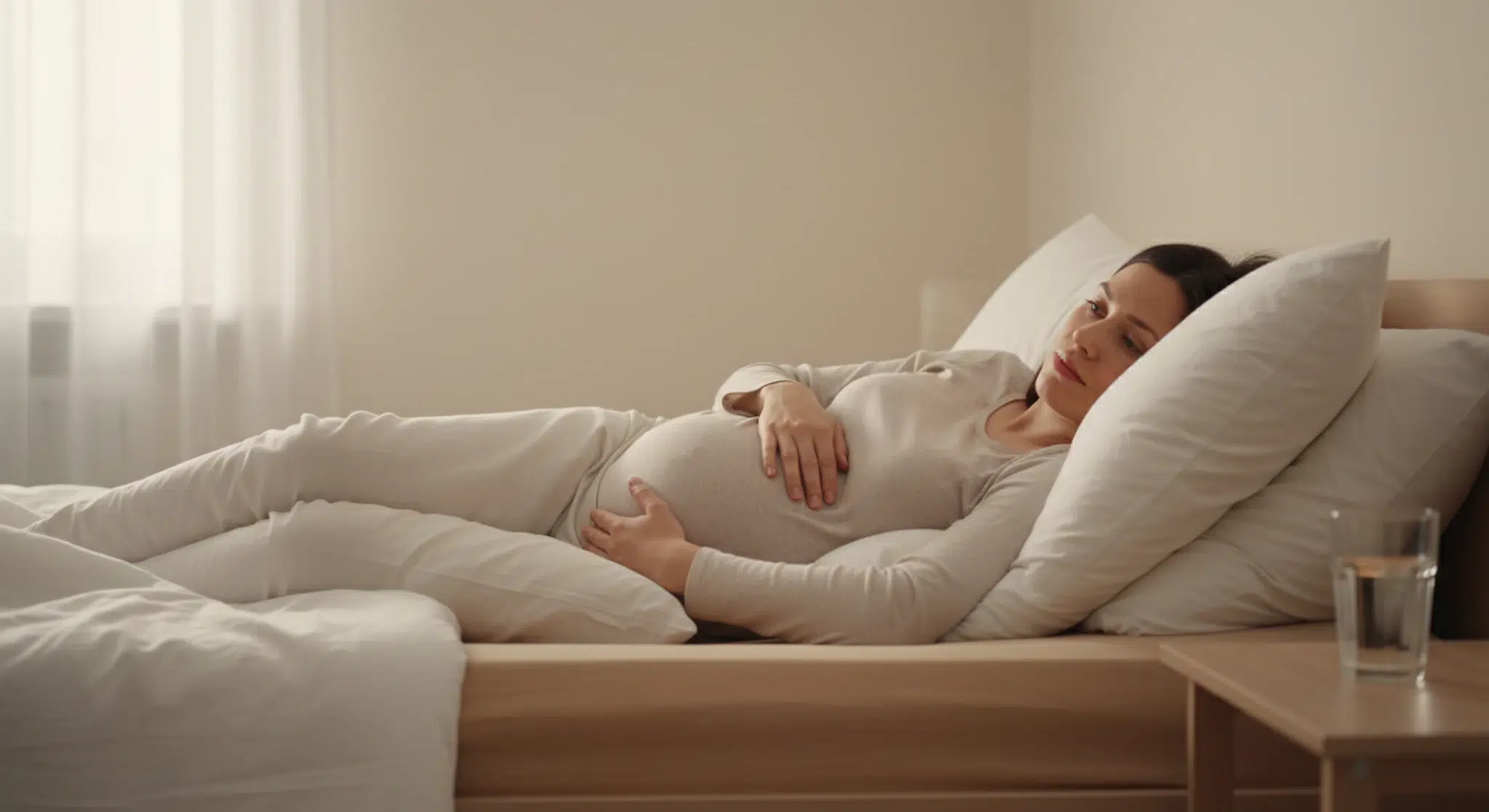


Pregnancy dreams are often more vivid, frequent and memorable than usual, mostly because broken sleep, stress and worry, and hormonal changes to sleep help you remember more of what you dream.
Almost everyone who has been pregnant has a story about a dream that felt startlingly real. Some are sweet, some are bizarre and some are frightening enough to leave you shaken the next morning.
Here is what the evidence says about why pregnancy dreams change, which themes people commonly report, how to sleep better, and when bad dreams deserve a conversation with your provider.
Key Takeaways
- The NHS says strange dreams and nightmares about the baby, labor and birth are normal in pregnancy.
- Broken sleep, stress and better dream recall are the best-supported explanations for more vivid dreams.
- Dreams do not predict the future, the birth or your baby’s sex.
- Go to sleep on your side, especially after 28 weeks, and roll back over if you wake on your back.
- Frequent, distressing nightmares or a lasting change in mood are worth raising with your provider.
Table of Contents
Pregnancy Dreams: The Short Answer
Quick Answer
If you have woken up from a dream so vivid it took a minute to shake off, you are in good company. Pregnancy changes how you sleep and what is on your mind, and both shape what you dream and remember.
Why Do You Have Vivid Dreams During Pregnancy?
There is no single proven cause. Researchers point to several overlapping factors, mostly about sleep.
- Broken sleep: a 2023 survey study by Bušková and colleagues, published in Brain Sciences, proposed that fragmented sleep and frequent awakenings may help explain why nightmares and vivid dreams rose during pregnancy. The authors named waking to urinate and struggling to get comfortable as common reasons for those awakenings. Waking more often may give you more chances to surface during or right after a dream, when it is easiest to remember.
- Better dream recall: in a 2016 study of 397 women in the last trimester, published in BMC Pregnancy and Childbirth, Schredl and colleagues found that the pregnant women recalled their dreams more often than a representative sample of the general population.
- Stress and worry: in the same Schredl study, every stress measure the team used was linked to how often women had nightmares. Cleveland Clinic notes that anxiety about having a baby can raise the stress hormone cortisol and make sleep harder.
- Hormones: Cleveland Clinic says rising estrogen and progesterone are usually behind insomnia in early pregnancy and can affect sleep cycle phases. The sources we reviewed do not show that hormones directly create dream content.
- Physical discomfort: Cleveland Clinic lists the baby’s weight, bathroom trips, heartburn, leg cramps and restless legs. Our guide to heartburn during pregnancy covers one of the most common culprits.
In short: lighter sleep, more waking, more on your mind and better recall. If you also feel foggy during the day, our guide to pregnancy brain explains what is going on there.
What Research Says About Pregnancy Dreams and Nightmares
Dream research in pregnancy is a small field, and most studies rely on women reporting their own dreams.
| Study | Who was studied | What it found |
|---|---|---|
| Schredl et al., BMC Pregnancy and Childbirth, 2016 | 397 women in the last trimester | Over 11% reported nightmares about once a week or more. Pregnant women reported nightmares more often than a representative population sample, even after accounting for age and dream recall. About two-thirds reported dreaming about the baby. |
| Bušková et al., Brain Sciences, 2023 | 325 women who completed an online survey | Nightmares and vivid dreams increased during pregnancy compared with the 3 months before, and generally persisted in the 3 months after delivery. Aggressive dream content also became more intense. |
In the Schredl study, age and number of previous births made no difference to nightmare frequency, so first-time and experienced parents were similarly affected.
The Bušková study also found a modest link between nightmares and depression scores after delivery. That does not mean bad dreams cause depression, but persistent, distressing nightmares are worth mentioning at prenatal visits along with your mood.
Common Pregnancy Dreams People Report
People describe an enormous range of dreams in pregnancy. The themes below are ones commonly reported in research and by health services. They are descriptions of what people experience, not codes with hidden meanings.
- Dreams about the baby: the most consistent finding. About two-thirds of the women in the Schredl study reported dreaming about the baby, and younger women and first-time mothers reported these dreams more often. Many describe meeting, holding or caring for the baby.
- Something going wrong with the baby: dreams where the baby is in danger or something goes wrong. Schredl and colleagues noted that negatively toned baby dreams may reflect ordinary daytime worries about the baby’s health, and women with more nightmares also reported more baby dreams.
- Labor and birth: the NHS specifically mentions strange dreams or nightmares about labor and birth as a normal part of pregnancy.
- Threatening or aggressive dreams: being chased, attacked or caught up in conflict. The Bušková survey found that aggressive dreams grew more intense during pregnancy.
- Just plain strange dreams: the NHS uses exactly that word: strange. Dreams that make little sense are part of the normal range, and there is no evidence that their details carry a message.
These themes line up with what most expecting parents think about while awake: the baby’s health and getting through birth.
Baby on the way? Get ahead on sleep.
Our free two-minute quiz builds a gentle, personalized sleep plan you can use from the first weeks at home.
Pregnancy Dreams by Trimester
Most dream research focuses on late pregnancy, so evidence for a trimester pattern is thin. Sleep changes are better documented, and sleep shapes dream recall.
| Trimester | What tends to change in sleep | What that can mean for dreams |
|---|---|---|
| First (weeks 1 to 13) | Cleveland Clinic says about 1 in 4 women have insomnia in the first trimester, usually linked to rising estrogen and progesterone. The NHS notes tiredness is common. | More time asleep or napping, plus more night waking, can mean you notice dreams you would usually forget. |
| Second (weeks 14 to 27) | ACOG says side sleeping may be best from this point as the belly grows. | Dream research on this stretch is limited. Changing position and growing discomfort can still bring more night waking for some people. |
| Third (weeks 28 to birth) | Cleveland Clinic says up to 80% of women report insomnia symptoms by the end of the third trimester, mainly from the weight of the baby pressing on joints, back and bladder. | The Schredl study of this trimester found over 11% reporting weekly nightmares. Birth and baby dreams are commonly reported. |
For a wider look at each stage, see our guides to the first trimester, second trimester and third trimester.
Nightmares and Anxiety Dreams During Pregnancy
A nightmare about the baby can feel like a warning. It is not one. The NHS puts it plainly: just because you dream something, it does not mean it is going to happen.
What nightmares often do reflect is stress. In the Schredl study, women with higher stress scores had more frequent nightmares, and the researchers suggested that negative baby dreams may mirror normal daytime concerns about the baby’s health.
A few things can help after a bad dream:
- Ground yourself: try slow breathing. The NHS says relaxation and breathing techniques may help reduce anxiety.
- Get up if you cannot settle: Cleveland Clinic suggests doing something calming in dim light if you cannot fall back asleep.
- Talk about it: the NHS suggests talking with your partner or midwife. Cleveland Clinic suggests writing down worries and talking them through with a partner, friend or therapist.
Can Dreams Predict Your Baby’s Sex?
No. A dream about a boy or a girl can feel convincing, but the NHS is clear that dreaming something does not mean it will happen, and none of the research we reviewed suggests otherwise.
Your baby’s sex is set by chromosomes at conception, which our guide to what determines the sex of a baby explains. Only medical testing can tell you before birth, so ask your provider which tests are available to you and when. Dream predictions sit in the same category as the folklore in our roundup of old wives’ tales about gender: fun to talk about, but no better than a coin toss.
Do Pregnancy Dreams Mean Anything?
Online lists assign meanings to pregnancy dreams, but there is no scientific evidence behind these interpretations.
| Common claim | What the evidence says |
|---|---|
| A dream about the baby being harmed is a warning sign | No. The NHS says dreaming something does not mean it will happen. Researchers link these dreams to everyday worry. |
| Dreaming of a boy or girl predicts the baby’s sex | No. Only medical testing can tell you the baby’s sex before birth. |
| Vivid dreams mean something is wrong with the pregnancy | No. The NHS describes strange dreams and nightmares in pregnancy as normal. |
| Lots of nightmares are always harmless | Not always. Frequent, distressing nightmares can travel with anxiety, depression or past trauma and deserve a conversation with your provider. |
What a dream can tell you is what is on your mind. If you keep dreaming about birth, that may be a nudge to ask questions at your next appointment.
How to Sleep Better With Pregnancy Dreams
You cannot switch off dreaming, but steadier sleep can mean fewer awakenings. These tips come from the NHS, ACOG and Cleveland Clinic.
- Go to sleep on your side: the NHS says the safest position to go to sleep in is on your side, left or right, and that research suggests falling asleep on your back after 28 weeks can double the risk of stillbirth. ACOG says side sleeping during the second and third trimesters may be best, because lying on your back may compress a major blood vessel, which can make you dizzy and may reduce blood flow to the baby.
- Do not panic if you wake on your back: the NHS says this is not a problem: just roll onto your side and go back to sleep.
- Use pillows for support: ACOG suggests bending one or both knees, putting a pillow between your knees and another under your belly, or trying a full-length body pillow. See how to use a pregnancy pillow for set-ups that work.
- Keep a steady schedule: Cleveland Clinic recommends regular sleep and wake times and a cool, dark, quiet bedroom.
- Watch caffeine and late fluids: the NHS suggests skipping tea, coffee and cola in the evening. Cleveland Clinic suggests avoiding caffeine for eight hours before bed and limiting fluids near bedtime.
- Keep naps short: Cleveland Clinic suggests naps under 30 minutes, early in the day.
Cleveland Clinic says pregnant people may need 8 to 10 hours of sleep, compared with 7 to 9 for the average adult, so allow extra time in bed. Before trying any sleep aid, including supplements, talk to your provider; our guide to melatonin during pregnancy explains why.
Related Betteroo Guides
- Pregnancy Brain
- How to Use a Pregnancy Pillow
- Heartburn During Pregnancy
- Third Trimester
- Sleep Deprivation and Postpartum Depression
- Linea Nigra
When to Talk to Your Provider
Most pregnancy dreams, even unpleasant ones, are not a medical problem. Bring them up at your next prenatal visit, or call sooner, if:
- Nightmares are frequent and distressing: they keep you from sleeping, leave you dreading bedtime or affect how you function during the day. Cleveland Clinic advises seeing a provider when sleep loss affects your ability to function, and notes that treatments such as cognitive behavioral therapy can help.
- Your mood has changed: NIMH lists signs of perinatal depression, which can start during pregnancy, including a persistent sad, anxious or “empty” mood most of the day for at least 2 weeks, trouble sleeping, loss of interest, hopelessness and trouble concentrating. The NHS notes that sleeplessness alongside other symptoms can be a sign of depression. After birth, see sleep deprivation and postpartum depression.
- Dreams replay a real trauma: MedlinePlus lists repeated nightmares of a traumatic event, flashbacks and upsetting memories as symptoms of post-traumatic stress disorder (PTSD). Contact your provider if symptoms do not improve or are making you very upset.
- You snore heavily or your legs will not keep still: Cleveland Clinic suggests asking whether sleep apnea or restless legs syndrome is contributing to poor sleep.
Get help right away if you feel overwhelmed, cannot control your behavior, or have thoughts of harming yourself or your baby (NIMH, MedlinePlus). Call or text 988 to reach the 988 Suicide & Crisis Lifeline, available 24/7. The National Maternal Mental Health Hotline offers free, confidential support for pregnant and new parents by call or text at 1-833-TLC-MAMA (1-833-852-6262), 24/7, in English and Spanish (numbers checked on official pages November 20, 2026). If you or someone else is in immediate danger, call 911. This article is general education, not medical advice.
Frequently Asked Questions
Are pregnancy dreams normal?
Yes. The NHS says strange dreams or nightmares about the baby, labor and birth are normal during pregnancy. A 2023 survey study in Brain Sciences found vivid dreams and nightmares increased during pregnancy compared with before it. Talk to your provider if nightmares are frequent, distressing or affecting your mood or daytime functioning.
Why are my dreams so vivid while pregnant?
Researchers point to fragmented sleep and frequent awakenings, which give you more chances to remember dreams, along with stress and worry about the baby. A 2016 study found pregnant women in the last trimester recalled dreams more often than the general population. Cleveland Clinic notes pregnancy hormones also change sleep itself.
Can vivid dreams be an early sign of pregnancy?
They are not a reliable sign. Cleveland Clinic says rising estrogen and progesterone can disrupt sleep in early pregnancy, and some people notice dreams more, but many other things change dreams too. If you think you might be pregnant, a pregnancy test and a visit with your provider are the way to find out.
Can dreams predict the gender of your baby?
No. Dreaming of a boy or girl is common but has no predictive value. The NHS notes that dreaming something does not mean it will happen. Your baby’s sex is set by chromosomes at conception, and only medical testing can tell you before birth. Ask your provider which tests are available and when.
Are bad dreams during pregnancy a bad sign?
No. A frightening dream is not a warning about your baby or your birth. Studies link nightmares in pregnancy to stress and worry, which are very common. If nightmares are frequent, leave you anxious during the day, or replay a past trauma, mention them to your provider, who can help.
Do pregnancy dreams continue after birth?
Often, for a while. A 2023 survey in Brain Sciences found vivid dreams and nightmares generally persisted for 3 months after delivery, when sleep is still broken. If your mood or anxiety is severe or lasts longer than two weeks after birth, the National Institute of Mental Health advises talking to a provider.
Calmer days, better nights.
Betteroo builds a personalized sleep plan for your baby. Take the free two-minute quiz and have it ready before the newborn weeks.
7 Sources
- NHS. Tiredness and sleep problems in pregnancy.
https://www.nhs.uk/pregnancy/related-conditions/common-symptoms/tiredness/ - American College of Obstetricians and Gynecologists (ACOG). Can I sleep on my back when I’m pregnant?
https://www.acog.org/womens-health/experts-and-stories/ask-acog/can-i-sleep-on-my-back-when-im-pregnant - Cleveland Clinic. Pregnancy Insomnia.
https://my.clevelandclinic.org/health/diseases/pregnancy-insomnia - Schredl M, et al. Nightmare frequency in last trimester of pregnancy. BMC Pregnancy and Childbirth. 2016;16:346.
https://bmcpregnancychildbirth.biomedcentral.com/articles/10.1186/s12884-016-1147-x - Bušková J, et al. Parasomnias in Pregnancy. Brain Sciences. 2023;13(2):357. PubMed Central (NIH).
https://pmc.ncbi.nlm.nih.gov/articles/PMC9954207/ - National Institute of Mental Health (NIMH). Perinatal Depression.
https://www.nimh.nih.gov/health/publications/perinatal-depression - MedlinePlus (NIH). Post-traumatic stress disorder.
https://medlineplus.gov/ency/article/000925.htm