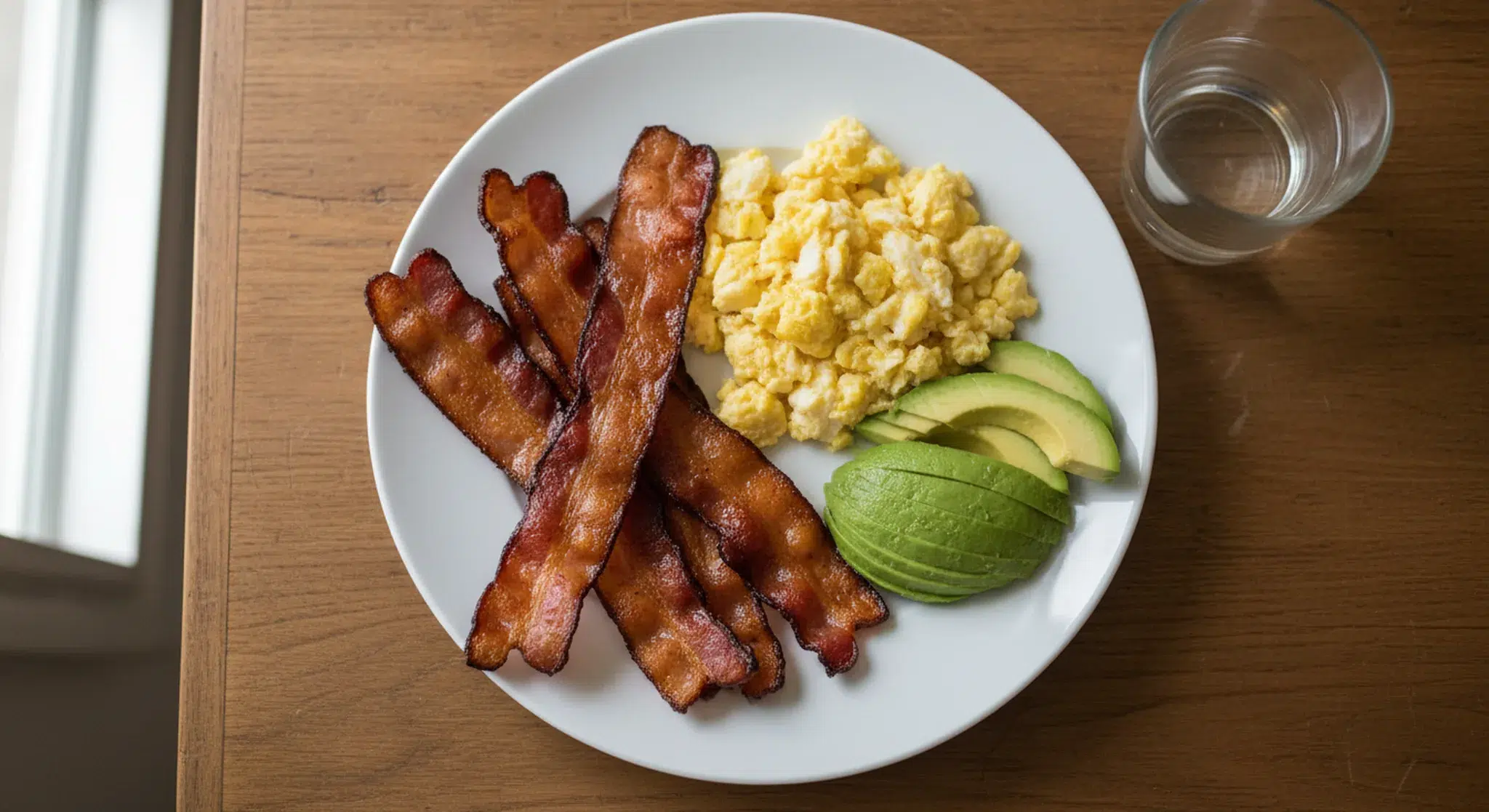
Can you eat bacon while pregnant? Yes: bacon is safe during pregnancy when it is cooked all the way through until crisp and sizzling hot, and enjoyed in moderation as a salty, processed meat.
Bacon shows up on a lot of pregnancy food lists, usually with a vague warning. The real issue is undercooked meat, not bacon itself, and the fix is simple once you know what done looks like.
Here is how to cook it safely, which types need extra care, and which symptoms mean you should call your provider.
Key Takeaways
Bacon is safe in pregnancy when it is cooked until crisp and sizzling hot; regular pork bacon is sold raw.
FSIS says thin bacon is hard to check with a thermometer, so cook until crisp and do not judge by pink color alone.
Cold cured meats like prosciutto and raw pancetta should be cooked until steaming hot first.
Reheat precooked bacon and Canadian bacon until steaming hot, like other ready-to-eat meats.
Bacon is a salty processed meat, so enjoy it occasionally and call your provider about fever or flu-like symptoms.
Table of Contents
Can You Eat Bacon While Pregnant? The Short Answer
Quick Answer
Yes, you can eat bacon while pregnant as long as it is cooked all the way through, until it is crisp and sizzling hot. Regular pork bacon is sold raw and must be cooked before eating, according to the U.S. Department of Agriculture’s Food Safety and Inspection Service (FSIS). Thorough cooking destroys the germs that matter most in pregnancy, including Listeria and Toxoplasma. Skip limp or barely warm bacon, and cook cured meats like prosciutto before eating them.
None of the health agencies we reviewed list cooked bacon as a food to avoid. The concern is how it is cooked. The FDA tells moms-to-be to cook meat thoroughly. FSIS says Salmonella, Listeria, Trichinella and other pork pathogens are destroyed by cooking.
The second question is how much. Bacon is a salty processed meat, which is a good reason to treat it as an occasional food rather than a daily one. If you are working through other foods too, see our guides to eating shrimp while pregnant and eating calamari while pregnant.
Why Undercooked Bacon Is the Real Concern
The FDA notes that a pregnant woman’s immune system is constantly changing during these nine months, and the CDC lists pregnant women among the groups at higher risk from Listeria. Two germs matter most with meat, and heat kills both:
Listeria: a bacterium found in refrigerated, ready-to-eat foods, according to the FDA. The CDC says infection during pregnancy can lead to miscarriage, stillbirth, premature delivery or a life-threatening newborn infection, even when symptoms are mild.
Toxoplasma: a parasite. The FDA lists raw and undercooked meat as a place it is found. The NHS (the UK’s National Health Service) says eating raw, undercooked or cured meat carries a small risk of toxoplasmosis, which can cause miscarriage.
How to Cook Bacon Safely During Pregnancy
Any common method works if the bacon ends up fully cooked:
Pan: cook strips in a single layer over medium heat and turn them so both sides crisp. Crowding the pan steams the bacon and leaves soft, undercooked spots.
Oven: bake strips in a single layer on a rimmed sheet until evenly crisp.
Microwave: cook strips between paper towels on a microwave-safe plate. FSIS notes that microwaved bacon has less nitrosamine than fried bacon (more on nitrosamines below).
From frozen: FSIS says bacon can be cooked from frozen. Separate the strips as they thaw and keep going until every one is crisp.
Three FSIS rules are worth memorizing:
Never brown or partially cook raw bacon and then refrigerate it to finish cooking later.
Never thaw bacon on the counter or at room temperature. Thaw it in the refrigerator, in cold water in a leak-proof bag (changing the water every 30 minutes and cooking it right away), or in the microwave (and cook it right away).
Do not wash raw bacon before cooking it.
And do not taste meat before it is cooked: the CDC’s toxoplasmosis advice is simply not to sample meat until it is cooked.
How to Tell Bacon Is Fully Cooked
For most meats, the CDC advises cooking whole cuts of meat (not poultry) to at least 145 F with a three-minute rest, and ground meat to at least 160 F. But FSIS says it is difficult to check the temperature of a thin slice of bacon, and that if bacon is cooked crisp, it should be safe.
What you see
What it means
What to do
Crisp, browned edges and center, fat rendered and bubbling
Fully cooked
Safe to eat right away
Pale, soft, translucent fat, floppy
Undercooked
Return to the heat until crisp
A pink tint in a crisp strip
Normal for cured meat
FSIS says cured bacon can stay pink from its curing agents
Doneness cues for bacon during pregnancy, based on FSIS guidance
So judge bacon by texture and heat (crisp, sizzling, no translucent fat), not by color alone. Thick-cut bacon needs extra time, so do not pull it when only the edges look done.
One trade-off: FSIS cites a study in which no nitrosamines formed at frying temperatures of 210 F to 275 F, but some formed at 350 F and 400 F, and it concludes that well-done or burned bacon is potentially more hazardous than less well-done bacon. Aim for crisp and golden, not blackened.
Baby on the way? Get ahead on sleep.
Our free two-minute quiz builds a gentle, personalized sleep plan you can use from the first weeks at home.
Here is how FSIS describes the common types and what each means for you:
Type
What it is (per FSIS)
Pregnancy tip
Regular (streaky) bacon
Cured pork belly with layers of lean and fat; sold raw
Cook until crisp
Turkey bacon
Made from turkey meat; any pork must be on the label
Still a processed meat; check whether the label says raw or precooked, then cook or reheat until hot and crisp
Canadian bacon
Round slices of lean pork loin, called back bacon in Canada
Check the label; cook raw slices, and heat fully cooked slices until steaming hot
Uncured bacon
No added nitrite or nitrate; must be labeled and kept refrigerated
Same cooking rules as regular bacon
Pancetta
Italian bacon, salt and spice cured and air-dried, smoked or unsmoked
Cook it in your dish; do not eat it cold
Precooked bacon
Cooked before packaging; some is shelf stable
Reheat until sizzling hot
Common bacon types and how to handle them in pregnancy
Is turkey bacon safer? Not automatically. It is still a processed meat, and germs are killed the same way: by cooking. Compare Nutrition Facts labels if fat or sodium matters to you.
Canadian bacon: check the package. If it is labeled fully cooked, it is a sliced, ready-to-eat meat, so the CDC’s advice for deli meats applies: heat it to 165 F or until steaming hot. If it is raw, cook it through.
Pancetta, Prosciutto and Other Cured Meats: Can You Have Them When Pregnant?
Pancetta and prosciutto are cured and air-dried, and they are often served without cooking. That raw, cured style is the one to watch.
Prosciutto, salami, chorizo, pepperoni: the NHS says cold cured meats such as these should be cooked until steaming hot before eating during pregnancy. Prosciutto crisped in a pan or baked on pizza is fine; cold slices over melon are not.
Dry and fermented sausages: the CDC lists fermented or dry sausages with deli meats and hot dogs as foods to avoid unless heated to 165 F or until steaming hot.
Pancetta: cook it until the edges crisp; skip raw slices on a charcuterie board.
The CDC also notes that freezing meat for several days at 0 F before cooking greatly reduces the chance of a Toxoplasma infection, but that freezing does not reliably kill other parasites or bacteria. The simplest rule is heat.
Precooked Bacon, Bacon Bits and Restaurant Bacon
Precooked bacon. FSIS says precooked bacon can be reheated in the microwave in about 10 seconds per strip. During pregnancy, treat it like other ready-to-eat meats: the CDC advises heating deli meats and hot dogs to 165 F or until steaming hot. Skip lukewarm precooked strips or ones eaten straight from the package.
Bacon bits. Real bacon bits are made from 100% bacon, and FSIS says one tablespoon equals about 1.5 strips. Imitation bacon bits are made from soy and are regulated by the FDA instead. Follow the label’s storage directions once opened.
Restaurant bacon and BLTs. A BLT is fine when the bacon arrives crisp and hot. If it is limp, pale or cold, send it back or ask for it extra crispy. The same test works for bacon-wrapped appetizers and buffet trays.
Nitrates, Nitrites and Processed Meat: How Much Bacon Is OK?
Bacon is cured with salt and nitrite. FSIS explains that sodium nitrite gives bacon its pink color, slows the development of botulism toxin, adds cured flavor and limits rancidity. Nitrites can form nitrosamines, many of which cause cancer in test animals, though FSIS says levels are usually very small.
The World Health Organization’s International Agency for Research on Cancer (IARC) classifies processed meat, which the WHO defines as meat transformed through salting, curing, fermentation, smoking or similar processes, as Group 1, carcinogenic to humans. But the WHO says the categories reflect the strength of the evidence, not how likely cancer is, and that meat can be part of a healthy diet. It also notes that many national dietary guidelines recommend limiting processed meat.
Sodium. Salt is a key curing agent, FSIS explains, so bacon is salty. Nutrition Facts labels are generally required on raw and cooked bacon, so compare them if your provider has asked you to watch your salt.
Official sources do not give a set number of bacon strips that are safe during pregnancy. A practical approach is to enjoy it now and then as part of a varied diet. See pregnancy weight gain for the bigger picture. If you have gestational diabetes, see how gestational diabetes affects the baby and follow your care team’s meal plan.
Buying, Storing and Handling Bacon: A Safety Checklist
FSIS recommends picking up bacon last at the store, refrigerating it promptly at 40 F or below, and using it within 7 days or freezing it. Its storage times:
Product
Refrigerator (40 F or below)
Freezer (0 F)
Raw bacon
7 days
4 months
Sliced Canadian bacon
3 to 4 days
4 to 8 weeks
Leftover cooked bacon
4 to 5 days
1 month
Real bacon bits, opened
Up to 6 weeks
1 to 2 months
Bacon storage times from USDA FSIS (freezer times are for quality; freezing keeps food safe indefinitely)
Separate raw bacon from ready-to-eat foods like bread, lettuce, tomatoes and fruit, as the FDA advises for all raw meat.
Wash your hands with warm water and soap, and wash cutting boards, utensils and countertops with hot water and soap (FDA).
Observe any use-by date. FSIS says to cook or freeze a sell-by product within 7 days of purchase.
Refrigerate leftovers promptly and reheat them until sizzling hot.
Bacon Cravings, Nausea and Heartburn
A bacon craving is not a problem in itself. Our guide to pregnancy cravings covers why they happen and how to satisfy them without overdoing it.
Bacon can also go the other way. The smell of frying bacon can bother some people with morning sickness, especially in the first trimester. An open window or someone else at the stove can help, and if you want a warm drink instead, check our guide to chamomile tea during pregnancy. If greasy, fried foods seem to set off your heartburn during pregnancy, a smaller portion earlier in the day, rather than right before bed, may sit better.
What If You Ate Undercooked Bacon While Pregnant?
First, take a breath. One underdone strip does not mean you will get sick. It is still worth knowing what to watch for.
Know the timing: the CDC says intestinal Listeria illness usually starts within 24 hours of eating contaminated food, while invasive illness, the type that can affect a pregnancy, usually starts within 2 weeks.
Know the signs: in pregnancy, the CDC lists fever and flu-like symptoms such as muscle aches and fatigue. Symptoms are often mild, and some pregnant people have none.
Tell your provider: the CDC advises telling your healthcare provider about any food you may have eaten that was contaminated, and says this is especially important if you are pregnant.
Stomach upset after a meal can have many causes. If you have loose stools, our guide to diarrhea during pregnancy covers hydration and other warning signs.
Call your OB, midwife or doctor the same day if you are pregnant and you have:
A fever with flu-like symptoms: such as muscle aches or unusual tiredness, especially if you recently ate undercooked meat, cold deli meat, cold cured meat or a recalled food. The CDC lists these as signs of listeriosis in pregnancy.
Vomiting or diarrhea that will not stop: or you cannot keep fluids down.
Get emergency care (call 911 or go to labor and delivery) if you have a high fever with severe pain, signs of dehydration such as dizziness or very little urine, bleeding, leaking fluid, or if your baby is moving less than usual.
This article is general education, not medical advice.
Frequently Asked Questions
Can you eat bacon while pregnant if it is crispy?
Yes. Crisp bacon is the goal. USDA FSIS says thin bacon is hard to check with a thermometer and that bacon cooked crisp should be safe. Cooking destroys Listeria, Toxoplasma and other pork germs. Avoid strips that are pale, floppy or lukewarm, and aim for golden rather than burned.
Is turkey bacon safe during pregnancy?
Turkey bacon is safe when it is cooked until hot and crisp, just like pork bacon. It is still a cured, processed meat, so it is not automatically healthier or safer. Check the label to see whether it is raw or precooked, compare sodium and fat, and reheat precooked strips until sizzling hot.
Can I eat pancetta while pregnant?
Yes, if it is cooked. Pancetta is cured and air-dried, so treat it like other cold cured meats. The NHS says cold cured meats such as prosciutto and salami should be cooked until steaming hot during pregnancy. Pancetta crisped in a pan for pasta is fine; raw slices on a charcuterie board are not.
Can you eat bacon in the first trimester?
Yes. The cooking rules are the same in every trimester: cook bacon until crisp and hot and handle raw bacon carefully. In early pregnancy the smell of frying bacon can trigger nausea for some people, so oven-baking, ventilation or letting someone else cook may help.
Can you eat bacon bits while pregnant?
Real bacon bits are made from cooked bacon, and USDA FSIS says one tablespoon equals about one and a half strips. Imitation bacon bits are soy based. Follow the storage directions on the label after opening, and if you want to be extra careful, sprinkle them on hot food instead of cold salads.
What happens if you eat undercooked bacon while pregnant?
Most likely nothing, but watch for symptoms. The CDC says Listeria infection in pregnancy can cause fever and flu-like symptoms such as muscle aches and fatigue, usually within 2 weeks, and some people have no symptoms. Call your provider if you develop a fever and tell them what you ate.
Calmer days, better nights.
Betteroo builds a personalized sleep plan for your baby. Take the free two-minute quiz and have it ready before the newborn weeks.