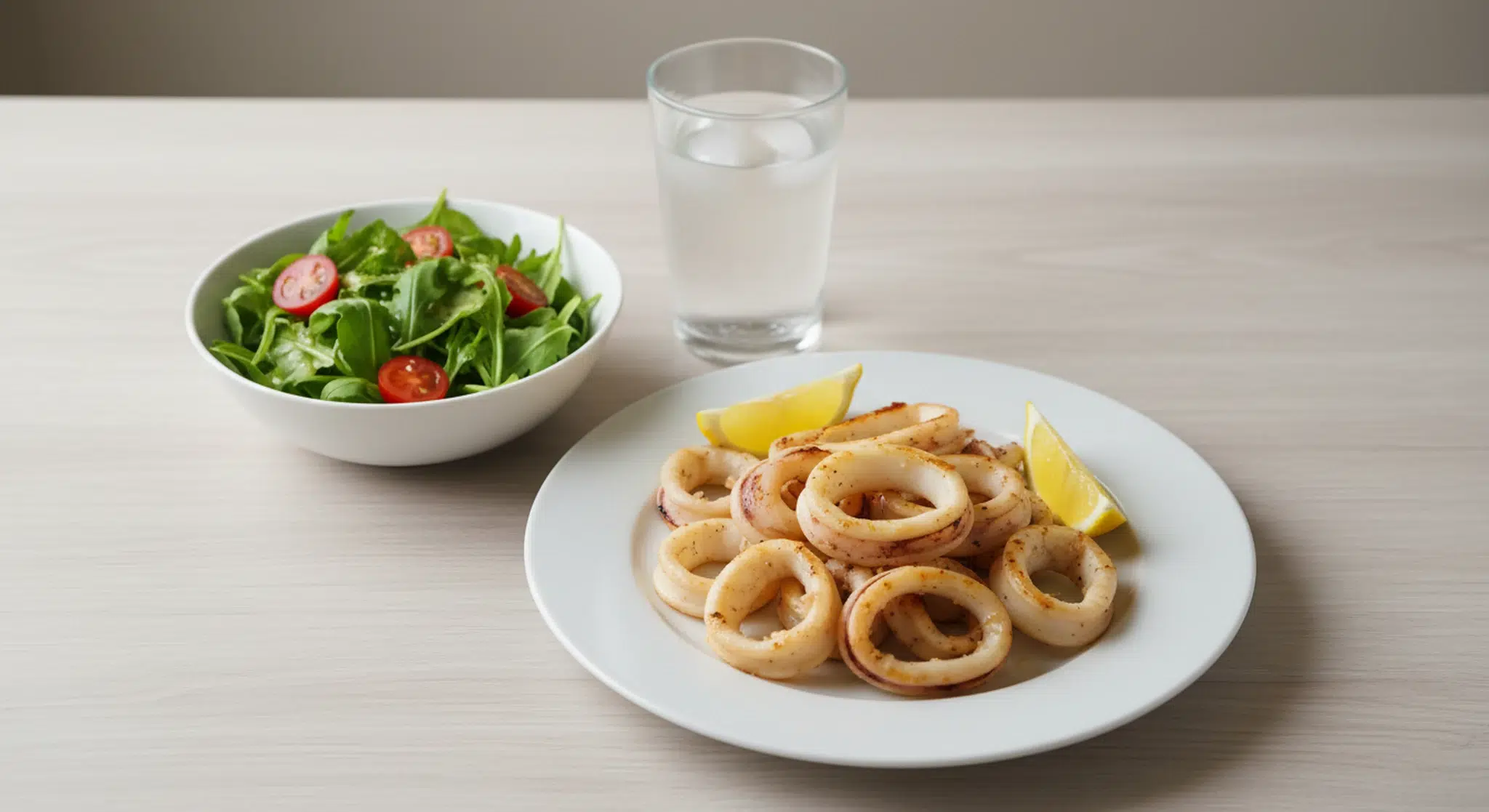
Can I eat calamari while pregnant? Yes: fully cooked calamari (squid) is a low mercury Best Choice on the FDA and EPA fish chart, but raw squid in sushi, sashimi or ceviche is off the menu.
Calamari shows up on appetizer menus, in seafood salads and in snack aisles. Can you eat squid while pregnant without worrying about mercury? Yes, and the details are mostly about cooking and handling.
This guide covers where squid sits on the FDA and EPA mercury chart, its nutrition, how much you can eat in a week, fried and grilled calamari, raw squid and ceviche, dried squid snacks and sodium, squid allergy, and what to do if you ate it undercooked.
Key Takeaways
Squid is a Best Choice on the FDA and EPA fish chart, the lowest mercury group.
Aim for 2 to 3 Best Choice servings (8 to 12 ounces) a week; one serving is 4 ounces.
Cook seafood to 145 F; squid should be opaque and firm with no glassy flesh.
Skip raw squid sushi, sashimi and ceviche. Check dried squid snacks for cooking and sodium.
Squid is a mollusk, and U.S. allergen labels are not required to flag it.
Table of Contents
Can You Eat Calamari While Pregnant? The Short Answer
Quick Answer
Yes, if it is fully cooked. Squid, the animal calamari is made from, is a Best Choice in the FDA and EPA advice about eating fish, the group lowest in mercury. The FDA advises 2 to 3 servings a week of Best Choices during pregnancy, with one serving being 4 ounces. Cook seafood to an internal temperature of 145 F, and skip raw squid in sushi, sashimi or ceviche.
Calamari is simply squid prepared as food, most often sliced into rings and fried. Two questions decide whether it fits your pregnancy: how much mercury it carries (very little) and whether it is cooked and handled safely (that part is up to you and the kitchen).
The same answer applies in the first trimester and the third trimester. What changes the answer is the dish, so each one gets its own section below.
Where Squid Sits on the FDA and EPA Fish Chart
The FDA and EPA sort common seafood into three groups based on mercury: Best Choices, Good Choices and Choices to Avoid. Squid is on the Best Choices list, alongside other mollusks such as clams, oysters and scallops. The FDA also names squid among the fish that children can eat in larger amounts, which tells you how low its mercury is.
King mackerel, marlin, orange roughy, shark, swordfish, Gulf of Mexico tilefish, bigeye tuna
Source: FDA and EPA, Advice about Eating Fish (advice revised October 2021).
A seafood platter often mixes calamari with other fish. As long as everything on it comes from the Best Choices list, it all counts toward the same weekly target. If it includes swordfish or another Choice to Avoid, skip that part. For a shellfish deep dive, see our sibling guide, can you eat shrimp while pregnant.
Calamari Nutrition and the Benefits of Seafood in Pregnancy
The FDA says fish provide nutrients that support a baby’s brain development, and lists omega-3 fats (DHA and EPA), iron, iodine during pregnancy, choline (which also supports development of the baby’s spinal cord), zinc, protein, vitamin B12, vitamin D and selenium.
Nutrient
Amount per 100 grams
What it means for you
Protein
15.58 g
A lean protein source
Total fat
1.38 g
Low in fat; frying and breading add fat
Cholesterol
233 mg
Ask your provider if you have been told to limit cholesterol
Sodium
44 mg
Low on its own; breading, sauces and drying with salt add more
Longfin squid nutrition per 100 g serving. Source: NOAA Fisheries, Longfin Squid species profile.
Plain squid is lean and low in sodium, so most of the fat and salt in a calamari dish comes from preparation. That matters if you are watching pregnancy weight gain or have been told to watch your salt.
How Much Calamari Can You Eat While Pregnant?
The FDA advises 2 to 3 servings a week from the Best Choices list during pregnancy and breastfeeding, and the Dietary Guidelines for Americans suggest 8 to 12 ounces a week of a variety of lower mercury seafood. One serving is 4 ounces, which the FDA says is about the size of your palm.
Your week
Seafood servings
Fits FDA advice?
Fried calamari appetizer (shared) and baked salmon
2 Best Choice servings
Yes
Grilled squid salad, crab cakes and a canned light tuna sandwich
3 Best Choice servings
Yes
One halibut fillet this week instead of Best Choices
1 Good Choice serving
Yes: the FDA advises 1 Good Choice serving a week
Seafood platter with calamari and swordfish
Includes a Choice to Avoid
No: skip the swordfish
Example weeks built from the FDA and EPA Advice about Eating Fish.
The FDA encourages choosing a variety of lower mercury seafood, so you do not need to weigh every ring. A simple habit: count a shared appetizer as part of a serving and a main course as one serving, and fill the rest of the week with other Best Choices.
Baby on the way? Get ahead on sleep.
Our free two-minute quiz builds a gentle, personalized sleep plan you can use from the first weeks at home.
Cooking is what makes calamari safe. The FDA says most seafood should be cooked to an internal temperature of 145 F. The FDA’s Food Safety for Moms-to-Be guidance adds that raw mollusks can accumulate more bacteria and viruses than finfish, and that fresh does not mean bacteria free.
The FDA does not publish a separate doneness cue for squid. For shellfish such as shrimp and scallops, it says the flesh turns firm, pearly and opaque, and for shucked clams and oysters, opaque (milky white) and firm. Use the same test for squid: no translucent, glassy flesh anywhere. For thicker squid steaks or whole bodies, check the thickest part with a food thermometer.
Buy cold: The FDA says to buy seafood only if it is refrigerated or on a thick bed of fresh ice.
Smell it: Seafood should smell fresh and mild, not fishy, sour or like ammonia (FDA).
Check frozen packages: Skip open or torn packages and ones with frost or ice crystals (FDA).
Store it fast: Keep it at 40 F or below and use it within 2 days, or freeze it (FDA).
Fried Calamari: Restaurant and Homemade
Fried calamari is the version most people mean. Frying is a cooking method, but a rushed batch or a thicker piece can still be undercooked, so run these simple checks:
Look inside a ring: the flesh should be opaque white all the way through, not glassy.
Eat it hot: the FDA says not to leave seafood out of the refrigerator for more than 2 hours, or 1 hour above 90 F. A platter that has sat at room temperature at a party is a skip.
Fried calamari is breaded and cooked in oil, so it carries a lot more fat and sodium than plain squid. That does not make it unsafe, just an occasional choice. If rich, fried food sets off heartburn during pregnancy for you, grilled or sauteed squid gives you the same seafood with less oil.
Raw Squid, Sushi and Ceviche
Raw squid (often called ika on sushi menus) is not a pregnancy food. The FDA’s Food Safety for Moms-to-Be guidance says raw fish, such as sushi or sashimi, is more likely to contain parasites or bacteria, and advises moms-to-be to avoid raw or undercooked finfish or shellfish.
Sushi and sashimi: skip raw squid. A roll is fine only if every filling is fully cooked.
Ceviche: the FDA names ceviche among the raw seafood dishes pregnant women should avoid. Lime juice changes the texture, but it is not cooking.
Previously frozen fish: the FDA says freezing kills parasites but does not kill all harmful germs, so frozen raw squid is still on the skip list.
Out for sushi? Choose rolls with fully cooked fillings, and ask the restaurant if you are unsure.
Calamari Salad, Grilled Squid and Other Dishes
Dish
OK in pregnancy?
What to check
Grilled or sauteed squid
Yes, when fully cooked
Opaque, firm flesh; 145 F in thicker pieces
Calamari salad (cold seafood salad)
Usually, if the squid was cooked and kept cold
Squid cooked first, then refrigerated; not left out over 2 hours
Squid in stew, pasta or paella
Yes
Simmered until opaque throughout
Stuffed squid
Yes, when fully cooked
Both the squid and the stuffing reach a safe temperature
Squid ceviche or tiradito
No
Citrus is not cooking; FDA lists ceviche to avoid
Raw squid sushi or sashimi
No
Raw seafood is on the FDA avoid list
Dried squid snacks
Only if cooked and the sodium fits your day
See the next section
Calamari dishes and pregnancy, based on FDA guidance.
For cold dishes, the FDA’s 2 hour rule (1 hour above 90 F) applies to a calamari salad on a buffet too.
Dried Squid Snacks and Sodium
Shredded or whole dried squid is sold as a packaged snack. Two questions decide whether it fits your pregnancy.
Was it cooked?: The FDA advises pregnant women to avoid raw or undercooked shellfish, and a dried product is not necessarily a cooked one. If the package does not make clear that the squid was cooked or roasted, skip it, or heat it in a dish until steaming hot.
How much sodium?: Plain squid is low in sodium (44 mg per 100 grams in NOAA’s longfin squid profile), so the salt in a snack comes mostly from curing and seasoning. Check the Nutrition Facts label: the FDA says 5% Daily Value or less per serving is low, and 20% or more is high.
The FDA’s Daily Value for sodium is less than 2,300 mg a day. If you have high blood pressure or swelling, your provider may give you a different target, so ask before making salty snacks a habit.
Squid Allergy: Mollusks vs Crustaceans
Squid belongs to the mollusk family (NOAA lists its phylum as Mollusca), the same broad group as clams, oysters and scallops. Shrimp, crab and lobster are crustaceans. The difference matters for allergies and for labels.
Different groups, different reactions: The American College of Allergy, Asthma and Immunology (ACAAI) says crustaceans cause the most shellfish reactions and that many people with a shellfish allergy can still eat mollusks.
Labels may not warn you: ACAAI explains that U.S. allergen labeling rules under the Food Allergen Labeling and Consumer Protection Act apply only to crustacean shellfish, not mollusks. Squid in a sauce, broth or snack mix may not be flagged.
Allergies can start in adulthood: ACAAI says shellfish allergies are most often first seen in adults.
ACAAI lists symptoms such as hives, vomiting, stomach cramps, wheezing, trouble breathing, swelling of the lips or tongue, dizziness and confusion. If you have any shellfish allergy, ask your allergist whether squid is safe for you before trying it. Thinking ahead to your baby? See how to introduce allergens to your baby.
What If You Ate Raw or Undercooked Squid?
Take a breath. Here is what the CDC says to watch for, and when to call.
Listeria: The CDC says pregnant people with listeriosis usually have fever and flu-like symptoms such as muscle aches and fatigue, and some have no symptoms. Infection during pregnancy can lead to miscarriage, stillbirth, premature delivery or a life-threatening infection of the newborn.
Timing: The CDC says invasive Listeria illness usually starts within 2 weeks of eating contaminated food, while intestinal illness (diarrhea and vomiting) usually starts within 24 hours and lasts about 1 to 3 days.
If you feel fine: The CDC says experts generally believe you do not need tests or treatment if you ate a possibly contaminated food and have no symptoms, but you can ask your provider for guidance.
The CDC advises telling your provider if you have fever or other symptoms after eating a food that was recalled or linked to an outbreak, especially when you are pregnant. If you have diarrhea, our diarrhea during pregnancy guide covers staying hydrated.
Call your doctor or midwife if, after eating calamari or any seafood, you have:
Fever or flu-like symptoms: such as muscle aches and fatigue, especially within 2 weeks of eating raw or undercooked seafood (CDC).
Vomiting or diarrhea that will not settle: or you cannot keep fluids down.
A mild allergic reaction: such as a few hives or an itchy mouth, even if it fades. Your provider may refer you to an allergist.
Questions about how much seafood fits your plan: especially if you have high blood pressure, diabetes or a known allergy.
Call 911 right away for trouble breathing, wheezing, swelling of the lips, tongue or throat, dizziness or confusion after eating squid or other shellfish. ACAAI says epinephrine is the first-line treatment for anaphylaxis; if you have an auto-injector, use it and then call 911. This article is general education, not medical advice. Planning ahead? See how to prepare for pregnancy and, for the end of the road, castor oil for labor.
Frequently Asked Questions
Can I eat calamari while pregnant?
Yes, as long as it is fully cooked. The FDA and EPA list squid as a Best Choice, the lowest mercury group, and advise 2 to 3 servings of Best Choices a week in pregnancy. Cook it until opaque and firm, or to 145 F, and avoid raw squid in sushi or ceviche.
Is calamari high in mercury?
No. Squid is on the Best Choices list in the FDA and EPA Advice about Eating Fish, the group with the lowest mercury. The FDA even lists squid among the fish children can eat in larger amounts. High mercury fish to avoid include swordfish, shark, king mackerel and bigeye tuna.
Can I eat fried calamari while pregnant?
Yes, if it is cooked through and served hot. Frying usually cooks thin rings fully, but check that the flesh is opaque inside. Avoid platters that have sat out more than 2 hours, and remember that fried calamari is higher in fat and sodium than plain squid.
Is calamari considered shellfish?
Squid is a mollusk, the same group as clams, oysters and scallops, and it is often grouped with shellfish. It is not a crustacean like shrimp or crab. ACAAI notes that U.S. allergen labeling rules cover only crustacean shellfish, so foods containing squid may not carry an allergen warning.
Can you eat squid while pregnant if it is raw, like in sushi?
No. The FDA says raw fish such as sushi or sashimi is more likely to contain parasites or bacteria and advises pregnant women to avoid raw or undercooked shellfish. Freezing kills parasites but not all germs, so choose rolls with fully cooked fillings instead.
How much calamari can I eat while pregnant?
The FDA suggests 2 to 3 servings a week of Best Choice seafood, such as squid, during pregnancy. One serving is 4 ounces, about the size of your palm, for a total of 8 to 12 ounces a week. Mixing calamari with other low mercury fish gives you more variety.
Calmer days, better nights.
Betteroo builds a personalized sleep plan for your baby. Take the free two-minute quiz and have it ready before the newborn weeks.