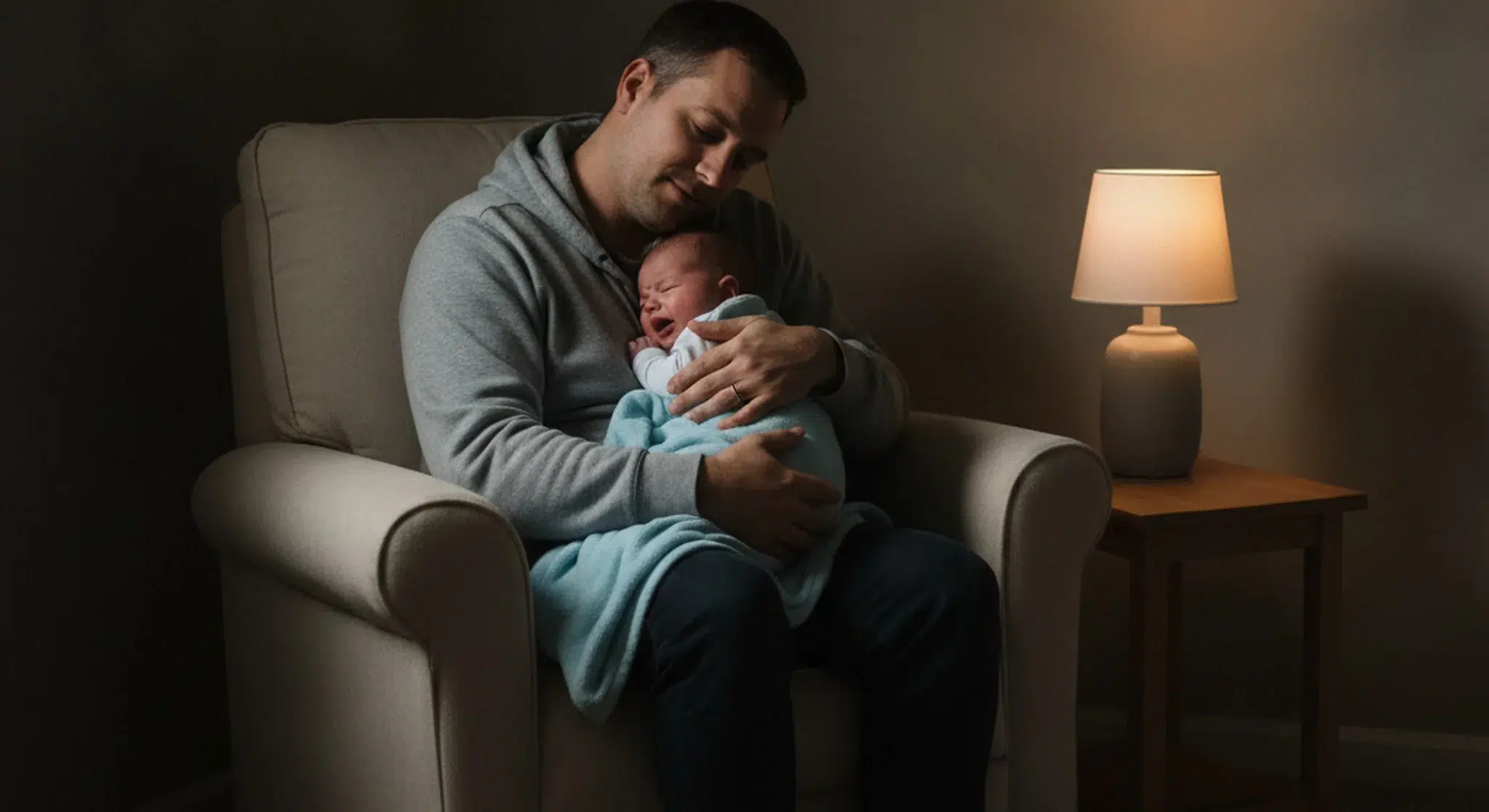
A baby who wakes up screaming, red faced and inconsolable, is one of the most alarming things a parent can hear, and it almost always looks worse than it is.
Most sudden night screaming comes from ordinary causes: an overtired baby, a night terror during deep sleep, a bad dream, teething, or the churn of a sleep regression. Very little of it signals anything serious.
This guide walks through the common reasons babies wake up screaming, how to tell a night terror from a nightmare, how to respond in the moment, and the signs that mean it is time to call your pediatrician.
Key Takeaways
Sudden screaming is usually caused by overtiredness, night terrors, nightmares, teething, or a sleep regression, not by anything dangerous.
Night terrors happen in deep sleep early in the night, and the child is not truly awake, so you comfort by keeping them safe rather than waking them.
Nightmares happen later in the night, and afterward your child is awake, aware, and reassured by your comfort.
An overtired baby wakes more often and more intensely, so protecting daytime sleep frequently reduces night screaming.
Call your doctor for screaming with fever, vomiting, breathing trouble, or a pattern that suddenly changes and does not settle.
Night terror or nightmare?
A night terror strikes in the first few hours of sleep during deep non-REM sleep. Your child may scream, thrash, and stare, yet stay asleep and remember nothing. A nightmare happens later in the night during dream-rich sleep, and afterward your child is fully awake, upset, and comforted by your presence.
Table of Contents
Why Babies Wake Up Screaming
Screaming on waking is a startle, not a message with fixed meaning. A baby’s brain is still learning to move smoothly between sleep cycles, and a jarring transition can tip into a full cry before they are even aware of it. The most common triggers are surprisingly ordinary.
Overtiredness: too little daytime sleep raises stress hormones that fragment night sleep and make wakings more intense.
Night terrors: a partial arousal from deep sleep that can look terrifying but does not distress the child, who stays asleep.
Nightmares: vivid frightening dreams, more common in toddlers, that leave a child awake and needing comfort.
Teething or pain: sore gums, an ear infection, or gas can jolt a baby awake crying.
Sleep regressions: developmental leaps around 4, 8 to 10, 12, and 18 months bring more frequent, dramatic wakings for a few weeks.
Night Terrors: Scary to Watch, Harmless to Your Baby
Night terrors usually appear in toddlers and preschoolers, though they can start earlier. They happen in the first third of the night, when deep sleep is heaviest. Your child may sit up, scream, sweat, kick, and look wide eyed, all while still asleep.
The counterintuitive rule is to not wake them. Waking a child mid terror tends to confuse and prolong it. Instead, keep them safe, dim the room, and wait it out. It usually passes in a few minutes, and your child will not remember it. Our full guide on night terrors in toddlers covers prevention, including protecting sleep and easing overtiredness.
Nightmares and Bad Dreams
Nightmares come from the dream-rich sleep that dominates the second half of the night. Younger babies rarely have the imagination for true nightmares, but as toddlers develop, bad dreams become more common, especially during big changes or stress.
After a nightmare your child is genuinely awake and scared, and this is exactly when comfort helps. Hold them, reassure them, and keep the response calm and brief so sleep can return. You can read more in our guides on baby dreams and whether babies have nightmares.
How to Respond in the Moment
Pause and observe for a few seconds. If the eyes are closed and your child is not responding to you, it is likely a night terror, so keep them safe and wait.
If your child is awake and reaching for you, offer calm, low-key comfort. Keep lights dim and your voice quiet to protect the drift back to sleep.
Check for obvious needs: a fever, a soaked diaper, signs of teething pain, or hunger in a young baby.
Avoid turning a night waking into playtime or a big feed if it is not needed, which can accidentally reinforce the waking.
Keep your own nervous system calm. Babies borrow our regulation, and a steady parent settles a startled baby faster.
Preventing Night Screaming
Because overtiredness is such a common driver, the best prevention is age-appropriate daytime sleep and a consistent, calming bedtime routine. A predictable wind-down helps the brain shift gears smoothly instead of crashing into sleep and rebounding with a scream.
Watch wake windows for your baby’s age, keep bedtime from creeping too late, and hold a steady routine even through regressions. When the body is not fighting exhaustion, transitions between sleep cycles get quieter.
When to Call the Doctor
Screaming paired with a fever, vomiting, a rash, or pulling at an ear.
Any breathing difficulty, lip color change, or a limp, hard to rouse baby.
Inconsolable crying that lasts a long time and is unlike your baby’s normal.
A sudden new pattern of screaming that does not settle over several nights.
Your own instinct that something is off. You know your baby best, and a check-in is always reasonable.
Usually because of overtiredness, a night terror, a nightmare, teething or pain, or a sleep regression. A baby’s brain is still learning to move smoothly between sleep cycles, and a rough transition can tip into a scream before they are fully aware.
How do I tell a night terror from a nightmare?
Night terrors happen early in the night during deep sleep, and your child stays asleep and remembers nothing. Nightmares happen later during dream sleep, and afterward your child is awake, aware, and comforted by you.
Should I wake my baby during a night terror?
No. Waking a child mid terror tends to confuse and prolong it. Keep them safe, dim the room, and wait a few minutes for it to pass. They will not remember it.
Can overtiredness make my baby wake up screaming?
Yes. Too little daytime sleep raises stress hormones that fragment night sleep and make wakings more intense. Protecting naps and keeping bedtime from getting too late often reduces night screaming.
When should I worry about my baby waking up screaming?
Call your doctor if screaming comes with fever, vomiting, a rash, breathing trouble, or ear pulling, or if a sudden new pattern does not settle over several nights. Trust your instinct if something feels off.
Paruthi S, et al. Recommended Amount of Sleep for Pediatric Populations: A Consensus Statement of the American Academy of Sleep Medicine. Journal of Clinical Sleep Medicine, 2016. https://jcsm.aasm.org/doi/10.5664/jcsm.5866