Feeding · Months 6 to 24
The best sippy cups, and why you may not need one.
An open cup for the table and a straw cup for out of the house. A sealed bottle can wait until about 18 months. Both first cups are in our Budget band.
- 2 cups + 1 for later
- Recall-checked Oct 2026
- Includes the $0 option
Independent picks. If you buy through our Amazon links we may earn a commission; as an Amazon Associate, Betteroo earns from qualifying purchases. It never decides what makes the list. How we choose
The short answer
Most babies need two cups, and neither is a classic sippy. Use an open cup at the table, the ezpz Tiny Cup, with your hands over theirs. Use a straw cup for the stroller and the bag, the Munchkin Any Angle. The AAP says you can start offering a cup as early as 6 months, either an open cup or a cup with a straw, and that if you use a sippy cup, you should choose one with no valve.
Move from bottle to cup gradually, finishing sometime between 12 and 18 months (AAP). A sealed steel bottle for the bag can wait until about 18 months.
At a glance
Two first cups, and one for later
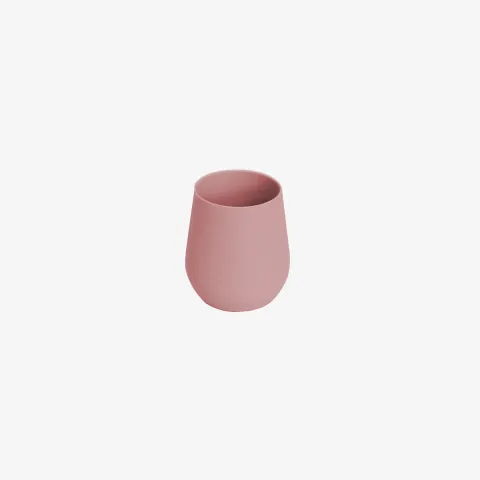
ezpz Tiny Cup
A two-ounce open cup sized for a baby’s hands.
Price band: Budget Check price Why it made the list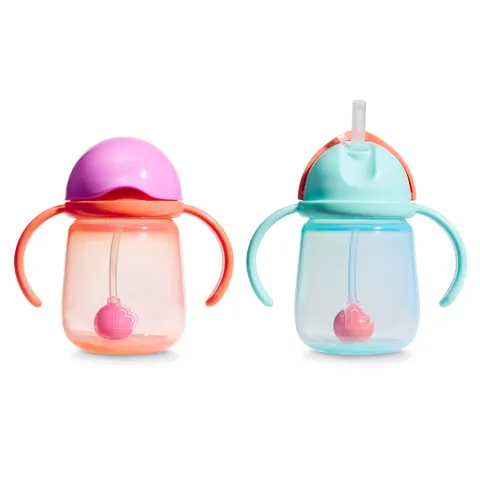
Munchkin Any Angle Weighted Straw Trainer Cup, 2 pack
A weighted straw that follows the water, whatever angle the cup is held at.
Price band: Budget Check price Why it made the list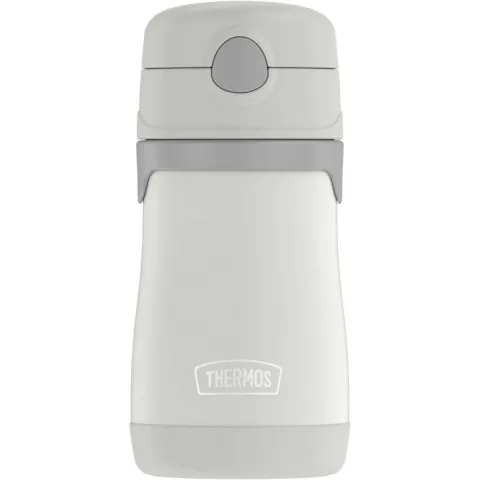
Thermos Baby 10 oz Straw Bottle
Push the button and the straw pops up. Close it and it seals.
Price band: Budget Check price Why it made the listBefore you buy
What a first cup has to do
A common mistake is buying a cup that works like a bottle with a different shape. The point of a first cup is to learn a new way of drinking, so an open cup or a straw does more than a spout with a valve.
We assess both first cups on the same three things: how they drink, how many parts there are to wash, and whether they suit the place you’ll use them.
Teaches a new way to drink
An open cup or a straw asks the mouth to do something a bottle doesn’t. If you use a sippy cup, the AAP says to choose one with no valve.
Few parts to wash
Every valve and vent is another part to take apart and somewhere for milk to sit.
Cheap
Both first cups are in our Budget band. You may only need one of them.
The picks
Why each one made the list
ezpz Tiny Cup
A two-ounce open cup sized for a baby’s hands.
A small silicone open cup with a weighted base and an angled inside rim that evens out the flow (listing). It holds two ounces, so a spill is a small spill, and it is small enough for a baby to grip with both hands. At first your hands go over theirs.
Why it’s worth it
- Weighted base
- Holds two ounces, so spills stay small
- One piece, dishwasher safe
Key specs
- Age range
- 4 months and up
- Holds
- 2 oz
- Lid
- None, open cup
- Cleaning
- Dishwasher safe
From the amazon.com listing, checked October 1, 2026.
Safety check
- No recalls found in the CPSC recall database (searched by product name, Oct 9, 2026).
Munchkin Any Angle Weighted Straw Trainer Cup, 2 pack
A weighted straw that follows the water, whatever angle the cup is held at.
The straw is weighted at the bottom, so it follows the water when the cup tips. It has handles for small hands, a flip-top lid for the bag, and a straw brush in the box (listing). A cup with a straw is one of the options the AAP suggests for learning to drink from a cup.
Why it’s worth it
- Weighted straw works when the cup tips
- Handles and a flip-top lid
- Two cups in the pack
Key specs
- Age range
- 6 months and up
- Holds
- 7 oz
- Lid
- Flip-top lid
- Cleaning
- Straw brush included; dishwasher not stated
From the amazon.com listing, checked October 1, 2026.
Safety check
- No recalls found in the CPSC recall database (searched by product name, Oct 9, 2026). Munchkin’s past CPSC recalls were bath toys, pacifiers and clips, and a bottle warmer, not cups.
Later, from about 18 months
A bottle that seals, for the bag
Once water travels with you every day, a bottle with a lid that seals over the straw saves the spare clothes in the diaper bag. The one we picked is labeled for 18 months and up, so it isn’t a first cup.
Thermos Baby 10 oz Straw Bottle
Push the button and the straw pops up. Close it and it seals.
A small insulated steel bottle from Thermos’s baby range, labeled for 18 months and up. The push-button lid closes over the straw, which keeps it clean in a bag, and the contoured body is shaped for small hands (listing).
Why it’s worth it
- Lid covers and seals the straw
- Keeps drinks cold
- Top-rack dishwasher safe
Key specs
- Age range
- 18 months and up
- Holds
- 10 oz
- Lid
- Push-button lid over the straw
- Cleaning
- Top-rack dishwasher safe
From the amazon.com listing, checked October 1, 2026.
Safety check
- No recalls found in the CPSC recall database (searched by product name, Oct 9, 2026). Thermos’s April 2026 CPSC recall covered Stainless King food jars and Sportsman bottles (models SK3000, SK3020 and SK3010), not this straw bottle.
Side by side
How they compare
| | |
|---|---|---|
| Use as | At the table, with your help | Out of the house |
| Price band | Price band: Budget | Price band: Budget |
| Age on listing | 4 months and up | 6 months and up |
| Holds | 2 oz | 7 oz |
| Lid | None, open cup | Flip-top lid |
| Cleaning | Dishwasher safe | Straw brush included; dishwasher not stated |
Which one is yours
Start with your situation
At the table, and you're holding itThe ezpz Tiny Cup.
Stroller, car, diaper bagThe Munchkin Any Angle straw cup.
Already own a spout sippyUse it for now, and buy a straw cup next time.
Baby refuses every cupA small glass or an egg cup, your hands over theirs.
Toddler, and the cup leaks in the bagA sealed straw bottle, from about 18 months.
The $0 version
An ordinary small glass or an egg cup, with your hands around theirs and an inch of water at each meal. The AAP notes that some children drink from an open cup without a straw, and that’s fine. Around 6 months you can start offering a little water, about 4 to 8 ounces a day (AAP).
An egg cup is a perfectly good first cup.
What we would skip
Three things we’d leave on the shelf
They’re everywhere in the cup aisle. Here’s why we’d pass.
Sippy cups with a valve
Spill-proof valves are convenient for you, but the AAP‘s advice is that if you use a sippy cup, choose one with no valve, and use sippy cups only while your child is learning.
'Transition' bottles with handles and soft spouts
They are still bottles. If your baby will only take milk from a bottle right now, keep the bottle they know and practice with a cup alongside it.
Bite-valve sports bottles, for now
Tough and nearly leakproof, but many are labeled for older children, and a chewed valve can tear. Check the age on the listing before buying one for a toddler.
Cups we passed on
- Munchkin Miracle 360 Trainer Cup. Spoutless and spill-proof, but its seal works as a valve, and the AAP says to choose a cup with no valve.
- Hard-spout sippy cups with a valve. The most common sippy cup on the shelf, and the kind the AAP’s no-valve advice rules out.
Questions parents ask
FAQ
When should a baby start using a cup?
The AAP says you can start offering a cup as early as 6 months: an open cup, a cup with a straw, or a sippy cup with no valve.
Are sippy cups bad for babies?
They aren’t dangerous, but the AAP says sippy cups should be used only while children are learning, and to choose one with no valve. An open cup or a straw cup does the same job.
When should a baby stop using a bottle?
Reduce bottle feeds slowly and finish the move to a cup sometime between 12 and 18 months (AAP). Drop the bedtime bottle last.
How much water can a baby have?
Around 6 months you can start offering a little water, about 4 to 8 ounces a day (AAP). Breast milk or formula is still the main drink.
What about the Munchkin Miracle 360?
It’s spill-proof and has no spout, but its seal works as a valve. The AAP‘s advice is to choose a cup with no valve, so we didn’t pick it.
Why trust Worth It
How we choose
We don’t run a product lab, and we won’t pretend we do. Worth It picks are researched from makers’ instructions, retailer listings and official safety guidance, not lab-tested. Each is chosen for a specific age and a specific job, the way a friend a couple of years ahead of you would choose: a few products, each with a reason, and an honest note on what could go wrong.
We check every listing on amazon.com for a live US offer and sort it into a price band: Budget (under $30), Mid-range ($30 to $100) or Premium (over $100). We don’t print exact prices because they change daily. If you buy through our links we may earn a commission. That pays for this, and it never decides what makes the list.
For safety, we search the CPSC recall database by product name, and we note the US safety standard the maker says a product meets. Where the maker doesn’t say, we tell you what the law requires for that kind of product. The JPMA’s certification list (now run by the Baby Safety Alliance) isn’t publicly searchable, so we only mention certification when the maker states it. Specs come from the maker first, and the Amazon listing second.
Sources for this page
- AAP: discontinuing the bottle
- AAP: recommended drinks for young children
- CPSC recall database, searched by product name on October 9, 2026
- Product listings on amazon.com, checked October 9, 2026
This page, every week, for your baby’s exact age.
Worth It is a weekly email matched to your baby’s age. Around month 6 it covers the first cup, around month 11 the move off the bottle, and every week in between, something you’ll actually need.
- Two or three picks for what changes that week, from month 4 to month 24
- The free version and the skip list, every time
- Free, one email a week, unsubscribe in one click
Expecting? Add your due date, and Worth It starts when your baby turns four months. It runs until month 24.
By signing up you agree to get Worth It emails from Betteroo. Privacy policy.
Keep going